

The best time to visit Goat Island NZ is during the summer months (December to March) for the warmest water temperatures and family-friendly beach conditions. However, for serious divers seeking the clearest underwater visibility, late autumn and winter offer the best clarity, often exceeding 20 meters, provided the wind is from the south.
Seasonal Overview: When is the Best Time to Visit Goat Island NZ?
Goat Island, officially known as the Cape Rodney-Okakari Point Marine Reserve, is New Zealand’s first marine reserve and a jewel in the crown of the Hauraki Gulf. Determining the best time to visit Goat Island NZ depends largely on your objectives: are you looking for a warm family beach day, or are you a dedicated diver seeking crystal-clear interactions with snapper and crayfish?
While the reserve is accessible year-round, the experience varies drastically between seasons. The marine ecosystem follows a distinct cycle, and the local microclimate plays a significant role in water clarity and safety.

The Peak Season (December – February)
Summer is undeniably the most popular time. During these months, air temperatures hover between 20°C and 25°C (68°F – 77°F), and the water temperature peaks at around 22°C (71°F). This makes it the ideal window for casual snorkelers who may not own thick wetsuits and for families wanting to picnic on the shore.
However, popularity comes with congestion. The car park fills up rapidly by 9:00 AM, and the shallow waters can become crowded, which sometimes scares the larger fish into deeper waters. If you visit in summer, early mornings or late afternoons are essential strategies to beat the crowds.
The Shoulder Season (March – May)
Many locals argue that autumn is the true “golden hour” for Goat Island. The water retains its summer heat well into April, but the crowds dissipate as school holidays end. Furthermore, as the equinox winds settle, you often get long stretches of calm days which are crucial for visibility.
Understanding Goat Island Weather Patterns
The weather at Leigh (the nearest town to the reserve) dictates the quality of your experience. Unlike a swimming pool, the ocean is a dynamic environment. Understanding the meteorological nuances is key to planning a successful trip.
Wind Direction: The Critical Factor
The most critical factor for Goat Island is not just sunshine, but wind direction. The beach faces north/north-east.
- Southerly Winds (Best): Because the beach faces north, winds coming from the south (offshore winds) flatten the sea. A strong southerly wind usually results in calm, flat water at the beach, making for perfect snorkeling conditions.
- Northerly/Easterly Winds (Avoid): Winds blowing directly onto the beach create chop and swell. This stirs up sediment from the bottom, reducing visibility to near zero and making entry and exit dangerous.
Water Temperature Guide
New Zealand waters are temperate, not tropical. Managing thermal comfort is essential for safety.
- Summer (Dec-Feb): 20°C – 22°C. A 3mm wetsuit or rash top is usually sufficient for short swims.
- Autumn (Mar-May): 17°C – 20°C. A 3mm to 5mm wetsuit is recommended.
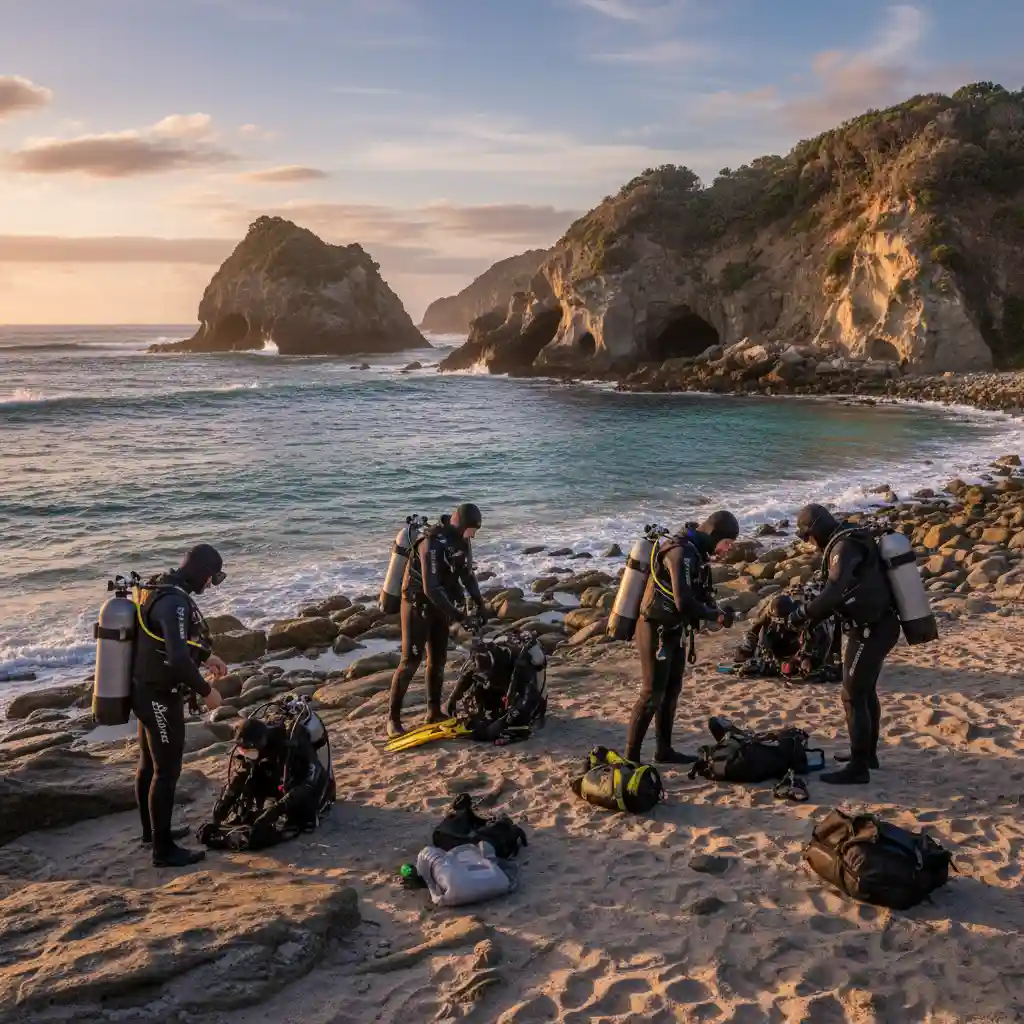
- Winter (Jun-Aug): 13°C – 15°C. A 7mm wetsuit with hood and booties is standard for divers.
- Spring (Sep-Nov): 15°C – 17°C. The water is still cold from winter; thick gear is required.
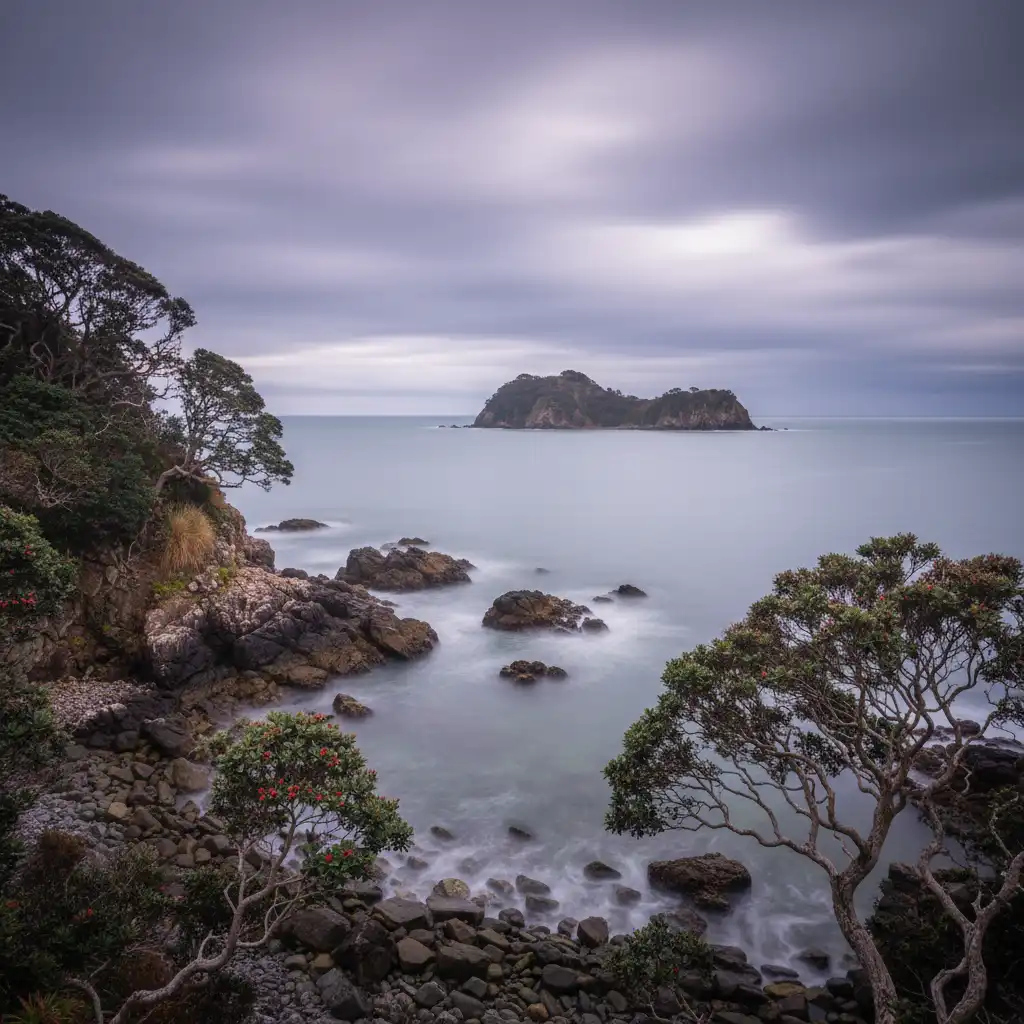
Tides, Visibility, and Marine Life
To see the famous massive snapper and crayfish, you need clear water. Visibility at Goat Island can range from 1 meter (murky) to over 20 meters (oceanic clarity).
What is the best tide to snorkel Goat Island?
The best tide for snorkeling at Goat Island is generally mid-to-high tide. At low tide, you have to walk over slippery, barnacle-encrusted rocks to reach the water, which can be hazardous. Furthermore, the shallow water at low tide is easily churned up by sand movement, reducing visibility.
High tide allows for an easier beach entry and generally brings in clearer oceanic water. Aim to be in the water 1 hour before high tide to enjoy the slack water (the period when the tide is not moving much), which offers the easiest swimming conditions.
Factors Affecting Visibility
Aside from wind, plankton blooms affect clarity. These usually occur in Spring (September/October). While bad for visibility, these blooms are the foundation of the marine food chain and bring in schools of baitfish, which in turn attract larger predators like Kingfish. If you visit during a spring bloom, the water may look green and murky, even if it is calm.
Summer vs. Winter Activities
Your itinerary should change based on the season. Here is a comparative breakdown of what to expect and do.
Summer: The Full Marine Experience
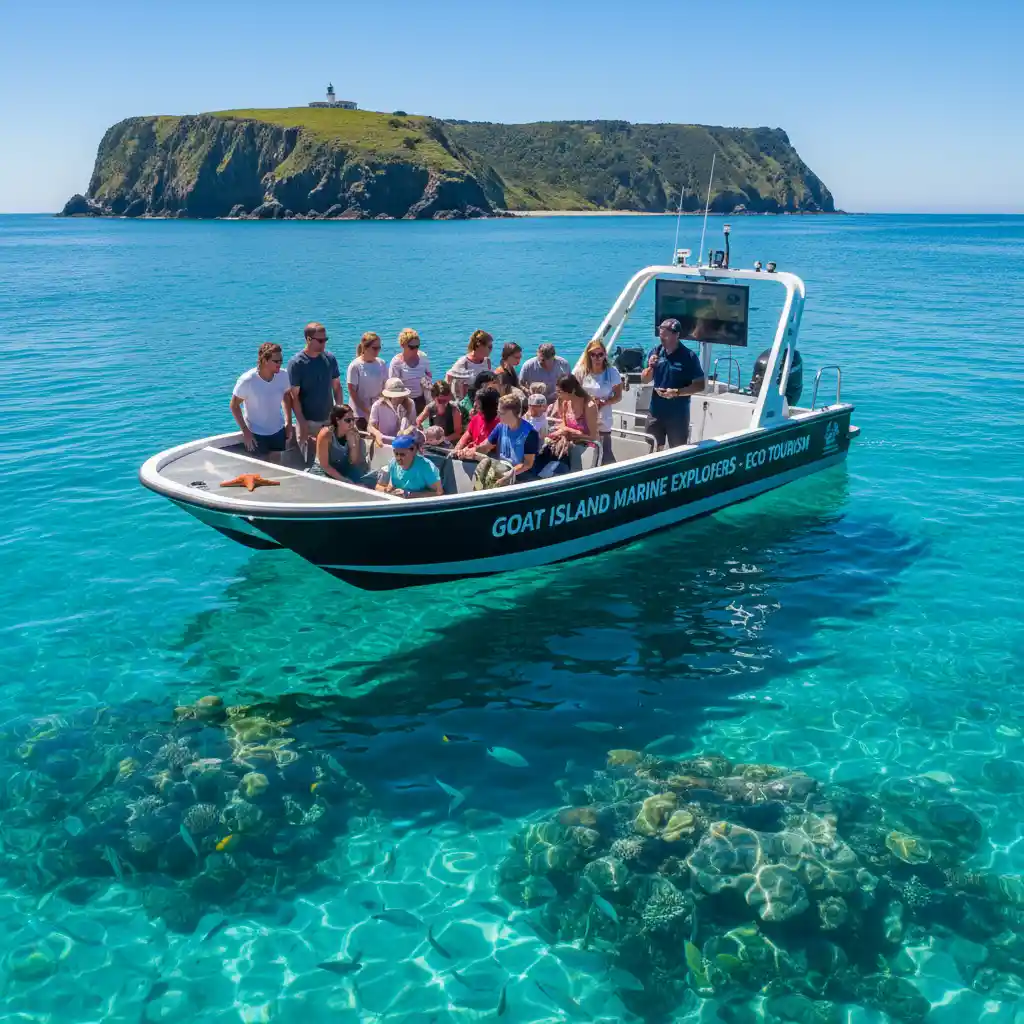
Summer allows for a full day of diverse activities. You can spend the morning snorkeling, have a picnic on the grass reserves, and spend the afternoon kayaking. The Glass Bottom Boat runs frequently, offering a look at the marine life without getting wet.
Highlights:
- Swimming without thick thermal protection.
- Kayaking to the outer island boundaries.
- Walking the coastal track to Cape Rodney.
- Exploring the Discovery Centre (Marine Discovery Centre) nearby.
Winter: For the Enthusiast and Observer
Winter is the secret season for photographers and serious divers. The cooler water temperatures suppress plankton growth, often resulting in “gin-clear” water. While the beach is too cold for sunbathing, the underwater views are often at their best.
Highlights:
- High-Visibility Diving: Spotting crayfish and stingrays clearly.
- Glass Bottom Boat: A perfect winter option as you stay warm and dry while viewing the ecosystem below.
- Coastal Walks: The cooler air makes the hike up the farm track to the lookout much more pleasant than in the summer heat.
Packing for the Seasons
Being unprepared for the elements is the most common mistake visitors make. The Hauraki Gulf weather can change rapidly.
Summer Packing List
- Sun Protection: The NZ sun is harsh. Use high SPF, but ensure it is reef-safe sunscreen. Chemicals in standard sunscreens can harm the marine larvae in the reserve.
- Footwear: Reef shoes or booties are highly recommended. The rocks are sharp and slippery.
- Hydration: There are limited facilities right on the beach, so bring plenty of water.
- Snorkel Gear: Mask, snorkel, and fins. (Rentals are available at the top of the hill if you don’t own them).
Winter Packing List
- Thick Wetsuit: Minimum 5mm, ideally 7mm. Hoods and gloves are recommended for dives longer than 30 minutes.
- Windbreaker: Essential for when you exit the water. The wind chill can be significant.
- Thermos: Hot tea or soup is a lifesaver after a cold winter snorkel.
- Change of Clothes: Warm, woolly layers to change into immediately.
How to Check Conditions Before You Drive
Goat Island is approximately an hour and a half drive from Auckland. To avoid disappointment, you must check the conditions before leaving home. If the swell is high, the reserve is not safe for swimming.
1. The “Leigh” Marine Forecast: Check the MetService marine forecast for the “Auckland – East Coast” or specifically for Leigh. Look for swell height (under 0.5m is ideal) and wind direction (Southerly is ideal).
2. Webcams: There are local webcams available online that show the beach conditions in real-time. A quick Google search for “Goat Island Webcam” will give you a live visual.
3. Swellmap: This is a favorite tool for divers. Look for the rating for “Leigh.” If the color code is green, conditions are likely good. If it is red or orange, expect chop and poor visibility.
People Also Ask
Is Goat Island open every day of the year?
Yes, the Goat Island Marine Reserve is open to the public 365 days a year. However, commercial operations like the Glass Bottom Boat and snorkel hire may close on Christmas Day or during severe weather events. Always check their websites before traveling on public holidays.
Do I really need a wetsuit at Goat Island?
In summer (January/February), many people swim in just swimwear, but a thin wetsuit is recommended for buoyancy, warmth, and protection against stinging hydroids. In winter and spring, a wetsuit is absolutely essential due to cold water temperatures (13-15°C).
Can you fish at Goat Island?
No. Goat Island is a “no-take” marine reserve. This means strictly no fishing, no gathering shellfish, and no moving rocks or driftwood. You cannot take anything from the reserve, including shells or sand. Fines for breaching these rules are significant.
Is high tide or low tide better for snorkeling?
High tide is significantly better. At low tide, you must walk over slippery, sharp rocks to reach the water, and the visibility is often reduced by sediment. High tide allows for easy entry from the beach and generally cleaner water.
Are there sharks at Goat Island?
It is possible to see sharks, but they are generally harmless species. Bronze Whaler sharks and Seven-gill sharks are sometimes spotted by divers, particularly in summer. They are part of the natural ecosystem and are generally not aggressive toward snorkelers. Stingrays are much more common.
How much does the glass bottom boat cost?
Prices vary by season and operator, but generally, a tour costs between $30 and $40 NZD for adults, with reduced rates for children. Family passes are often available. It is recommended to book in advance during the peak summer season.