
Visiting Goat Island in summer offers the warmest water temperatures (20-22°C) and clearest visibility for snorkeling New Zealand’s first marine reserve. Peak season from December to February requires arriving before 9:00 AM to secure parking, pre-booking equipment or tours, and preparing strict sun protection against high UV levels.
Goat Island, officially known as the Cape Rodney-Okakari Point Marine Reserve, is the crown jewel of New Zealand’s marine conservation efforts. Located just over an hour north of Auckland near Leigh, it transforms into a bustling hub of activity during the summer months. While the warmer waters make it the ideal time to explore the underwater world, the influx of domestic and international tourists necessitates strategic planning. This guide provides an authoritative breakdown of how to navigate the reserve during the peak window of December through February.
Why is Summer the Best Time to Snorkel Goat Island?
The New Zealand summer, spanning December, January, and February, presents the optimal biological and environmental conditions for visiting the Goat Island Marine Reserve. While the reserve is accessible year-round, the summer months align the comfort of visitors with the activity levels of marine life.
During winter, water temperatures can drop significantly, requiring thick wetsuits and limiting the duration of time casual snorkelers can spend in the water. In contrast, summer offers a thermal window that allows for prolonged exploration. Furthermore, the prevailing weather patterns in summer often result in calmer sea states, reducing the sediment stir-up and providing the crystal-clear visibility that Goat Island is famous for. This is crucial for first-time snorkelers and children who rely on clear waters to feel safe and engaged.
The Critical Early Arrival Strategy
If there is one rule that dictates the success of a summer trip to Goat Island, it is this: You must arrive early. The popularity of the reserve has skyrocketed in recent years, and the infrastructure has physical limitations that cannot be bypassed.
What is the Best Time to Arrive at Goat Island?
To guarantee a parking spot and a stress-free start to your day, you should aim to be at the Goat Island car park by 9:00 AM at the latest. During the height of the holiday period (late December to mid-January), arriving by 8:30 AM is even safer.
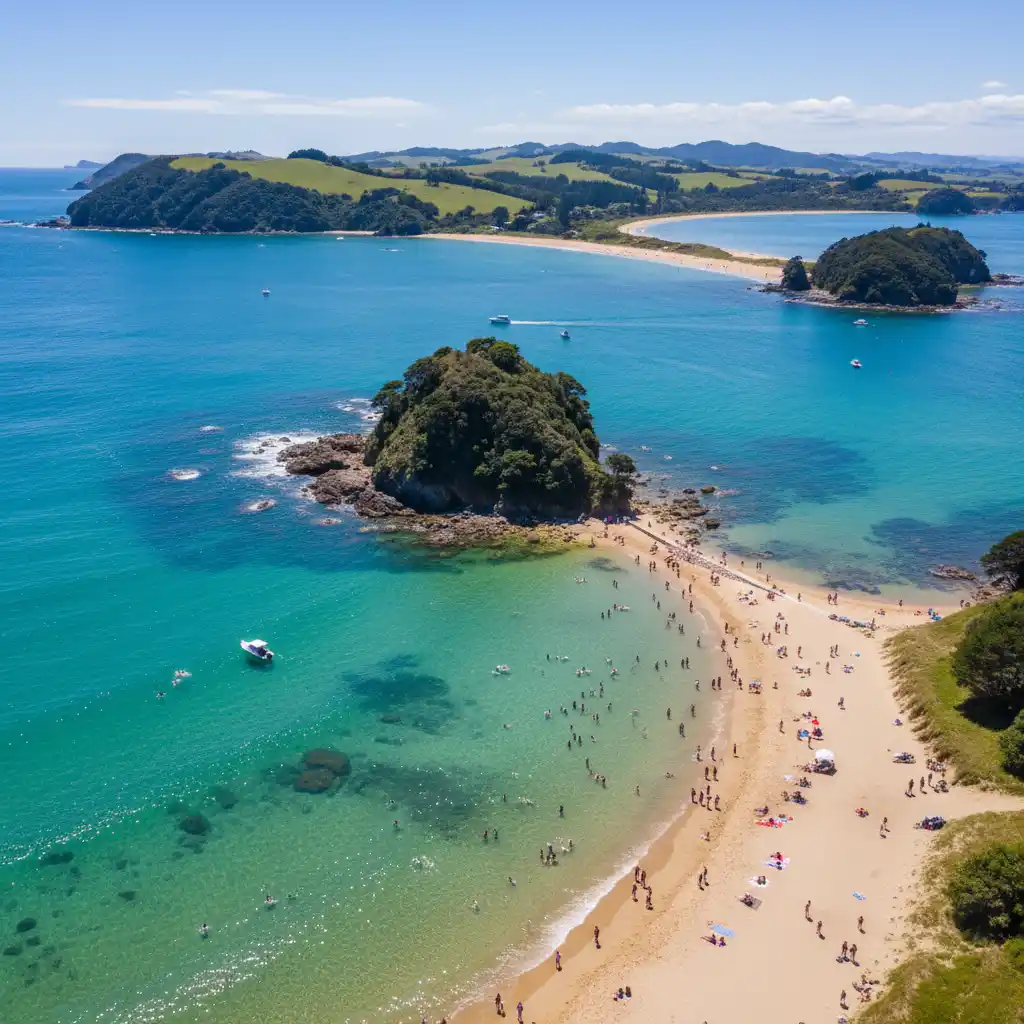
The reserve is serviced by a single access road, Goat Island Road, which winds through farmland before terminating at the beach. The car park, while substantial, fills rapidly. Once the upper and lower car parks are full, rangers will close the road or turn cars away, forcing visitors to wait for hours or abandon their plans. There is no overflow parking on the narrow access road. Arriving early not only secures parking but also allows you to claim a spot on the beach, which disappears quickly as the tide comes in and the crowds descend.
Water Temperature Peaks and Visibility
Understanding the hydrography of the Hauraki Gulf during summer is essential for gear preparation. While the air temperature may be a sweltering 25°C to 30°C, the ocean remains temperate.
What is the Water Temperature at Goat Island in Summer?
From December to February, water temperatures at Goat Island typically range between 20°C and 22°C (68°F – 72°F). While this is “warm” by New Zealand standards, it is still cool enough to induce hypothermia over prolonged periods without protection.
Wetsuit Recommendations:
- Shorty Wetsuit (2mm – 3mm): Adequate for casual swimmers who plan to be in the water for 20-30 minutes.
- Full Steamer (3mm – 5mm): Highly recommended for serious snorkelers or divers planning to spend 45 minutes or more exploring the reef. A full suit also offers protection against stinging hydroids and the sun.
- Rash Top: If you choose not to wear a wetsuit, a thermal rash top is the bare minimum for sun and chafe protection.
Sun Safety and Shade Management
The New Zealand sun is notoriously harsh due to the thinner ozone layer in this region. The UV index in summer frequently reaches “Extreme” levels. At a marine reserve, the risk of sunburn is amplified by the reflection of UV rays off the water and the white sand.
Is There Shade on Goat Island Beach?
There is virtually no natural shade on the main beach area at Goat Island. The pohutukawa trees line the bank behind the beach, but these spots are often taken immediately or are set back far from the water’s edge. The beach itself comprises sand, pebbles, and rocks, fully exposed to the sun.
Sun Safety Protocol:
- Bring Your Own Shade: A sturdy beach umbrella or a pop-up sun tent is mandatory equipment for a full day out.
- Reef-Safe Sunscreen: As you are entering a protected marine ecosystem, you must use reef-safe sunscreen. Chemicals like oxybenzone and octinoxate, found in standard sunscreens, can be toxic to marine larvae and coral. Look for zinc-based or titanium-based physical blockers.
- Hydration: Bring more water than you think you need. Heat exhaustion is a common issue for tourists who spend hours snorkeling without rehydrating.
Booking Tours and Equipment in Advance
For those who prefer not to get wet, or who want a guided educational experience, Goat Island offers world-class commercial operations. However, the “turn up and book” strategy rarely works in summer.
Glass Bottom Boat Tours
The Glass Bottom Boat runs regular trips around the island, providing a window into the reserve without the need for a wetsuit. These tours are incredibly popular with families and elderly visitors. During the Dec-Feb window, these boats often run at full capacity. Booking online at least 3-5 days in advance is highly recommended to secure your preferred time slot.
Clearyaks (Transparent Kayaks)
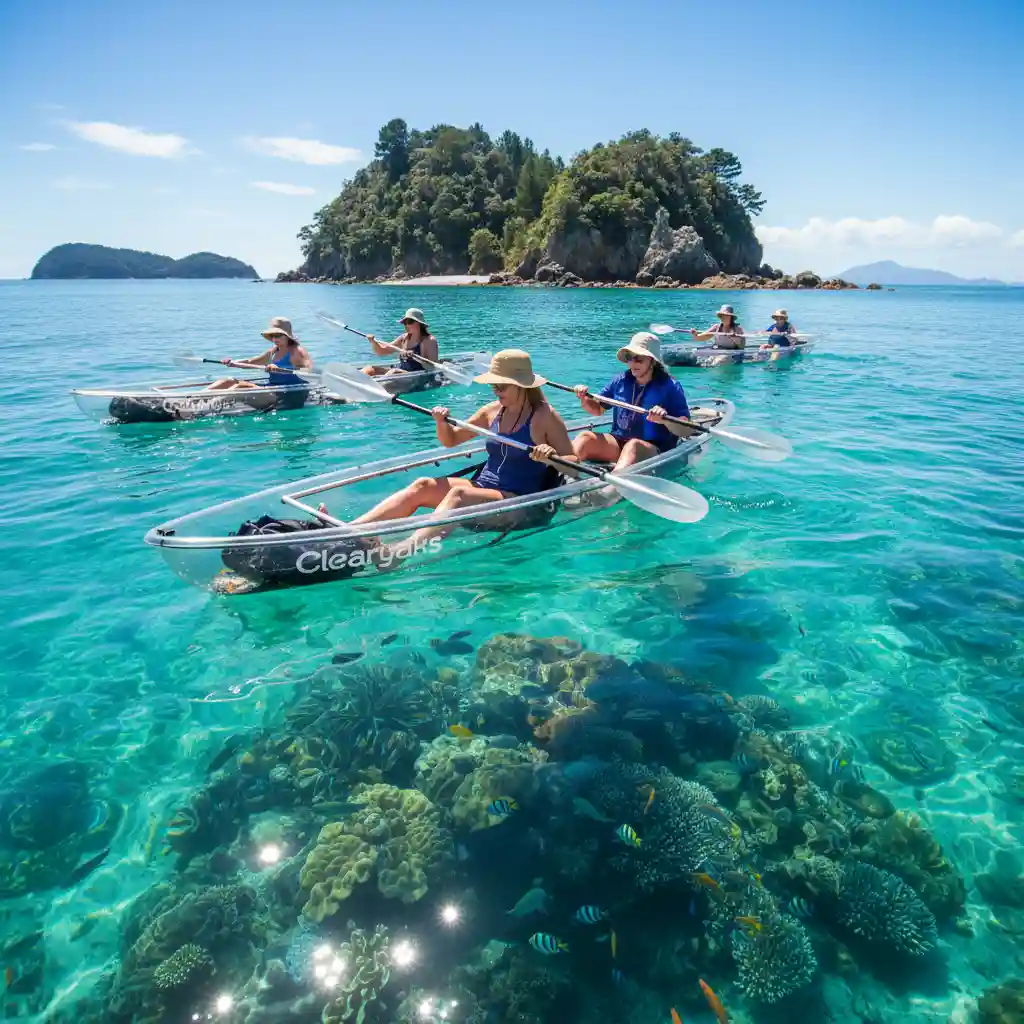
Clearyaks offer a unique middle ground—you are on the water, paddling your own vessel, but the entire kayak is transparent, allowing you to view the reef beneath you. These are wind-dependent. Summer sea breezes can pick up in the afternoon, often leading to cancellations of later slots. Therefore, booking a morning slot (9:00 AM or 10:00 AM) is not only better for parking but also offers the best weather stability.
Gear Rental
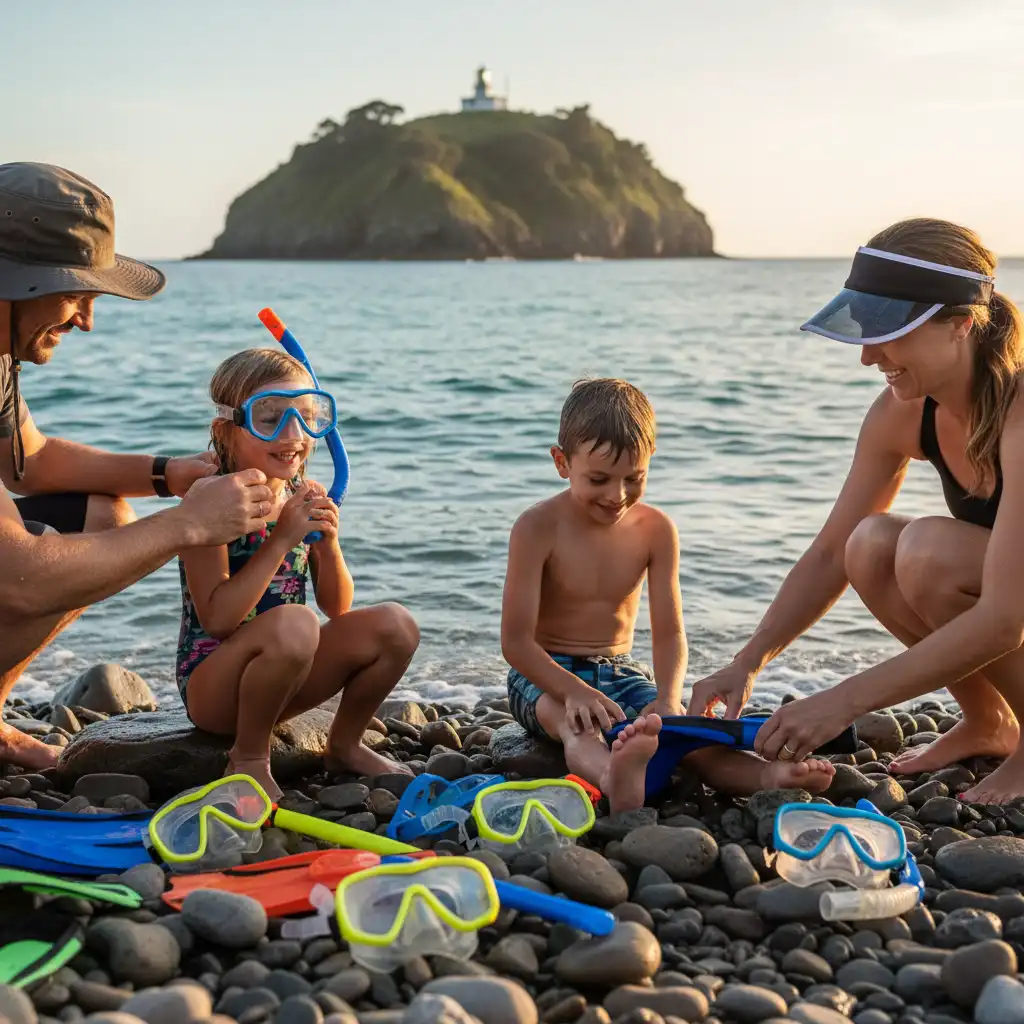
On-site providers like Goat Island Dive & Snorkel (located up the hill in Leigh) and the hire shed near the beach offer mask, snorkel, fin, and wetsuit rentals. In January, the demand can outstrip the supply of popular sizes. Reserving your gear online ensures you aren’t left with ill-fitting fins or a wetsuit that is too loose to keep you warm.
Marine Life Education: What You Will See
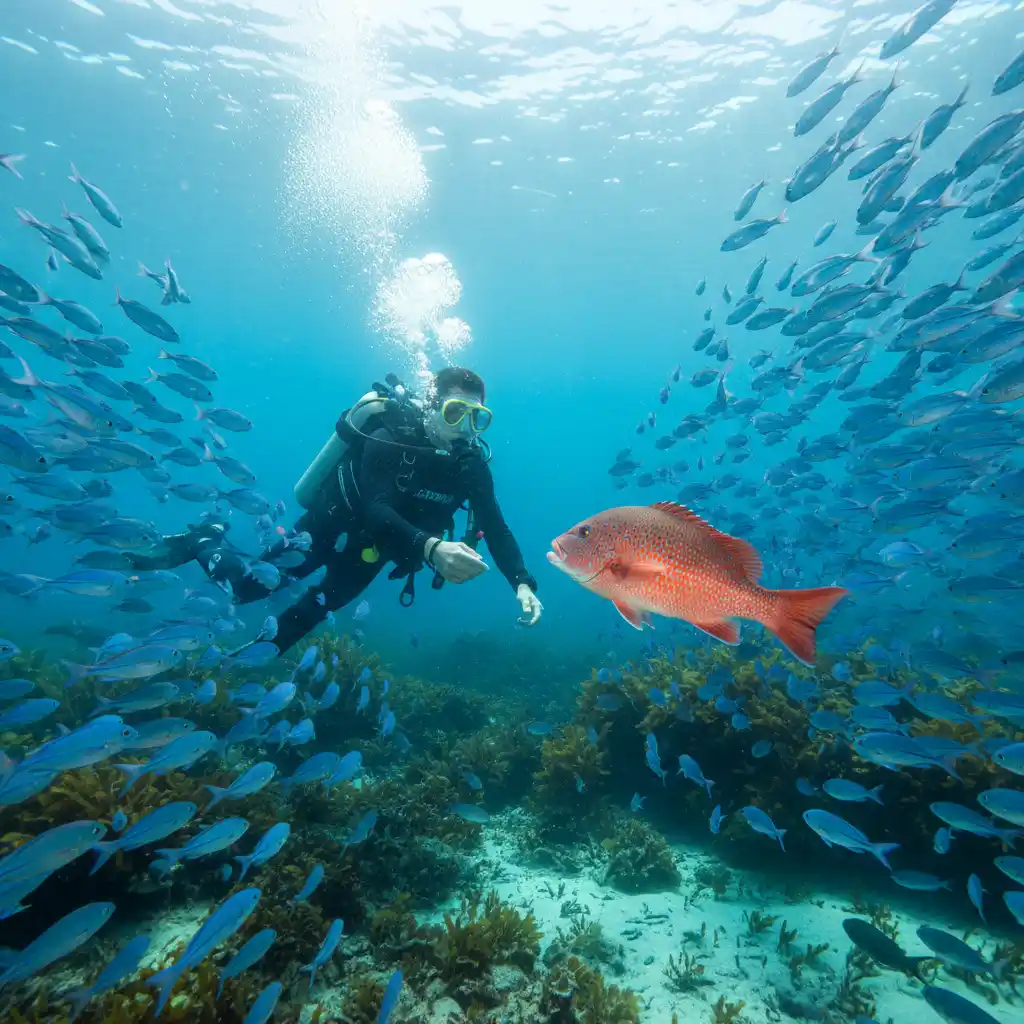
Goat Island is a “no-take” marine reserve, meaning nothing can be fished or disturbed. This protection, established in 1975, has allowed marine species to grow to natural sizes and lose their fear of humans. This presents a unique educational opportunity for visitors.
Key Species to Spot in Summer
- Snapper (Tāmure): The stars of the show. In the reserve, snapper can live for decades and grow to over 80cm in length. They are bold and will often swim right up to snorkelers.
- Blue Maomao: Schools of these vibrant blue fish are common near the rocky reefs. They create a stunning visual contrast against the kelp forests.
- Eagle Rays: Summer brings eagle rays into the shallow sandy bays to feed. Watch for them gliding gracefully along the bottom; give them space and observe from above.
- Crayfish (Kōura): While usually nocturnal and hidden in crevices, the sheer density of crayfish in the reserve means eagle-eyed snorkelers can often spot their antennae protruding from rock ledges in shallower waters.
Essential Reserve Rules and Etiquette
To maintain the pristine nature of this environment, visitors must adhere to strict Department of Conservation (DOC) regulations.
1. Absolute No-Take Policy: You cannot take fish, shellfish, seaweed, rocks, or even empty shells. Everything must remain in the reserve.
2. Do Not Feed the Fish: Feeding fish disrupts their natural diet and behavior. It can make them aggressive and dependent on humans. It is illegal to feed fish in the reserve.
3. Do Not Stand on the Reef: The rocky reef is covered in living organisms. Standing on rocks crushes small invertebrates and damages the delicate kelp forest. Always float or stand only on clear sand.
Beyond the Beach: Leigh and Matakana
Given the early arrival strategy, many visitors finish their snorkeling by early afternoon. This leaves ample time to explore the surrounding region, which is a hub for artisanal food and coastal scenery.
- Leigh Sawmill Cafe: A historic venue perfect for a post-swim pizza and craft beer.
- Matakana Village: Famous for its Saturday Farmers Market, boutique cinemas, and vineyards. It is a 15-minute drive from the reserve.
- Pakiri Beach: If Goat Island is too crowded, the nearby white sands of Pakiri offer a vast expanse for walking and horse riding, though it is not a marine reserve for snorkeling.
Frequently Asked Questions
Can you fish at Goat Island?
No. Goat Island is a strictly protected marine reserve. All fishing, gathering of shellfish, and removal of natural materials (including rocks and shells) is prohibited by law and enforced by the Department of Conservation.
Are there toilets and showers at Goat Island?
Yes, there is a toilet block and changing rooms located near the car park. There are outdoor cold showers available for rinsing off salt water and sand, but no private hot showers.
Is Goat Island suitable for non-swimmers?
Yes. Non-swimmers can enjoy the reserve via the Glass Bottom Boat tour or the Clearyak experiences. The beach is also safe for wading in the shallows, though supervision is always required for children.
Do I need to bring my own snorkeling gear?
Not necessarily. There are rental facilities nearby, such as Goat Island Dive & Snorkel, and a hire shed at the beach during peak times. However, bringing your own gear guarantees fit and availability during the busy summer rush.
Is there food available at Goat Island?
There is usually a small coffee and ice cream cart during peak summer, but there are no full restaurants on the beach. It is best to bring a picnic or drive to nearby Leigh or Matakana for a meal.
How deep is the water at Goat Island?
The depth varies significantly. It starts at 0m at the shore and gently slopes down. Most snorkeling takes place in depths of 2m to 5m. Further out around the island, depths can reach 20m, which is popular for SCUBA divers.