
The best tide for snorkeling Goat Island is high tide, specifically the window ranging from two hours before to two hours after the peak. High tide offers superior underwater visibility, safer entry over the jagged rocks, and calmest conditions. Avoid mid-outgoing tides due to stronger currents, and low tides which often result in murky water and difficult accessibility.
Goat Island, officially known as the Cape Rodney-Okakari Point Marine Reserve, is New Zealand’s oldest and most celebrated marine sanctuary. Located near Leigh, just north of Auckland, it attracts thousands of visitors annually who are eager to swim with massive snapper and schools of blue maomao. However, the quality of your experience is entirely dictated by the ocean’s rhythm. Understanding the hydrodynamics of this specific location is not just a matter of convenience; it is a critical component of marine safety and enjoyment.
What is the Best Tide for Snorkeling Goat Island?
For the vast majority of snorkelers, from beginners to advanced freedivers, the optimal time to enter the water at Goat Island is High Tide. To be precise, the “sweet spot” is the period known as slack high tide.
Slack tide occurs when the tide is turning—either from coming in (flooding) to going out (ebbing), or vice versa. During this brief window, which lasts roughly 45 to 60 minutes, the tidal current is virtually non-existent. At Goat Island, the slack high tide brings an influx of clear, oceanic water that flushes out the bay, pushing away the sediment-heavy water near the shore.
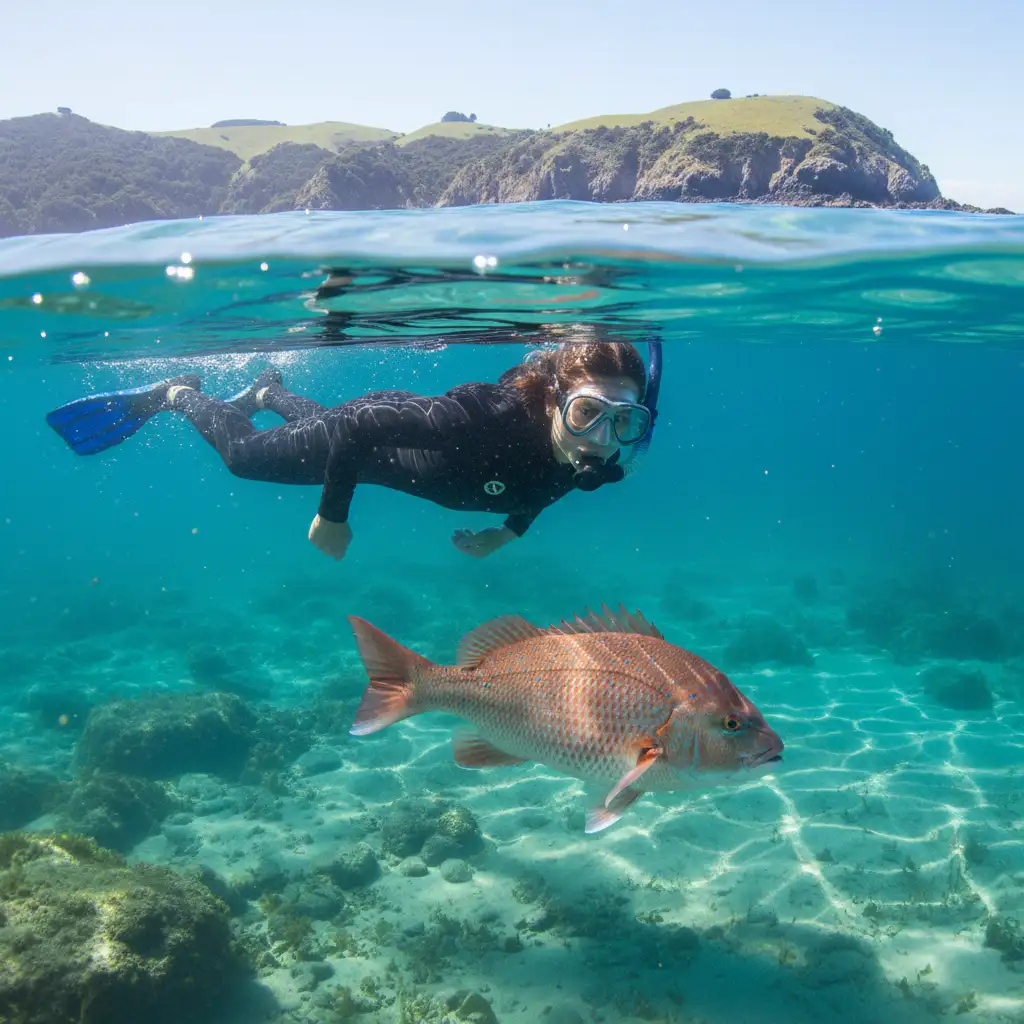
While high tide is the general recommendation, it is important to understand the nuances. If you arrive exactly at the peak of high tide, you have a generous window of time to enjoy the reserve before the current begins to pull outward. Conversely, arriving at dead low tide will present a completely different, and often disappointing, environment.
High Tide vs. Low Tide: The Visibility Factor
Visibility is the holy grail of snorkeling. In New Zealand waters, visibility can change drastically within hours. At Goat Island, the correlation between tide height and water clarity is significant.
Why High Tide Offers Superior Clarity
During a flood tide (incoming tide), clean water from the outer Hauraki Gulf is pushed into the reserve. This water has not yet been agitated against the shoreline. Consequently, the suspension of sand and particulate matter is low. This allows for visibility that can sometimes exceed 10 to 15 meters on a perfect day.
Furthermore, the depth provided by high tide allows you to float well above the kelp forests and rocky reefs. This vertical distance helps prevent snorkelers from accidentally kicking up sediment with their fins, preserving the clarity for everyone else in the water.
The Murkiness of Low Tide
At low tide, the volume of water in the channel between the beach and the island is significantly reduced. The water that remains is often churned up by the wave action against the sandy bottom. This results in a “milky” appearance that can reduce visibility to less than two meters.
Additionally, at low tide, the shallow depth means that even small swells can disturb the bottom sediment. For a snorkeler, this feels like swimming in a fog; you may not see the marine life until it is right in front of your face, missing the spectacular panoramic views of the schooling fish that make the reserve famous.
Safety Critical: The Dangers of the Outgoing Tide
While finding the best tide for snorkeling Goat Island is often about aesthetics, it is also a matter of safety. The topography of Goat Island creates specific hydrodynamic hazards that all visitors must respect.
Understanding the Channel Current
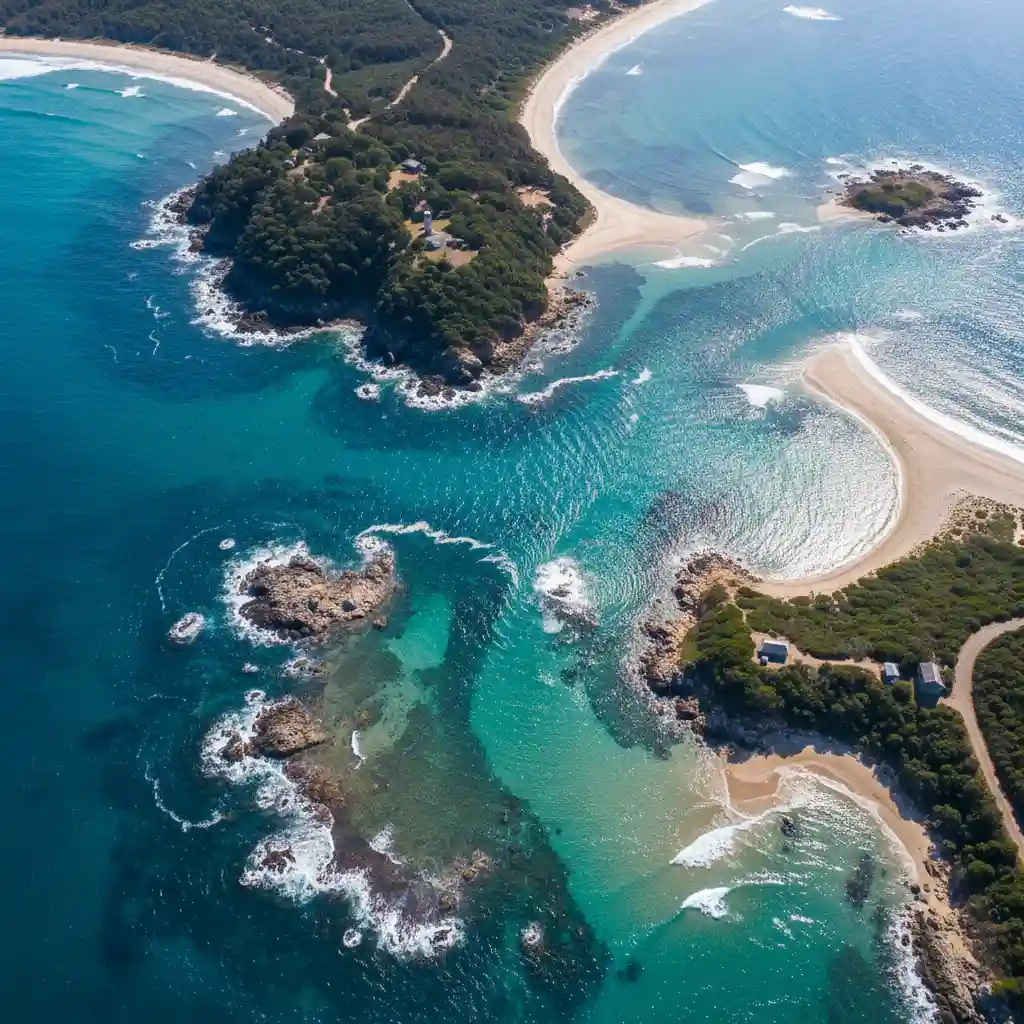
Goat Island is separated from the mainland beach by a narrow channel. During the outgoing (ebbing) tide, a significant volume of water must drain from the bay, squeezing through this channel and around the island. This creates a current that moves away from the beach and out toward the open ocean.
If you are snorkeling in the channel during a mid-outgoing tide (roughly 2 to 4 hours after high tide), the current is at its strongest. Weak swimmers or those without fins can easily find themselves being pulled away from their entry point. While rarely life-threatening for experienced swimmers with fins, it can cause exhaustion and panic for novices.
The “Sweep” Phenomenon
Local rangers often warn of the “sweep.” This is a lateral current that runs along the beach. Even if you do not intend to go deep, an outgoing tide coupled with a specific swell direction can push snorkelers toward the rocks on the western side of the beach. This area is hazardous due to sharp oyster-covered rocks and surging waves. To mitigate this risk, always start your snorkel up-current (usually the eastern end of the beach) and let the drift bring you back, or simply avoid the water during the peak flow of the outgoing tide.
Accessing the Island and Water Entry
The physical act of getting into the water changes dramatically depending on the tidal state. The shoreline at Goat Island is not a soft, sandy beach; it is comprised of pebbles, large boulders, and slippery rock shelves.
High Tide Entry: The Easy Route
At high tide, the water line comes right up to the pebble beach. You can put your fins on at the water’s edge and glide directly over the submerged rocks. This is the most dignified and safe way to enter. You avoid the “Goat Island stumble”—the awkward walk over slippery, algae-covered rocks that causes many minor injuries.
Low Tide Access: The Causeway
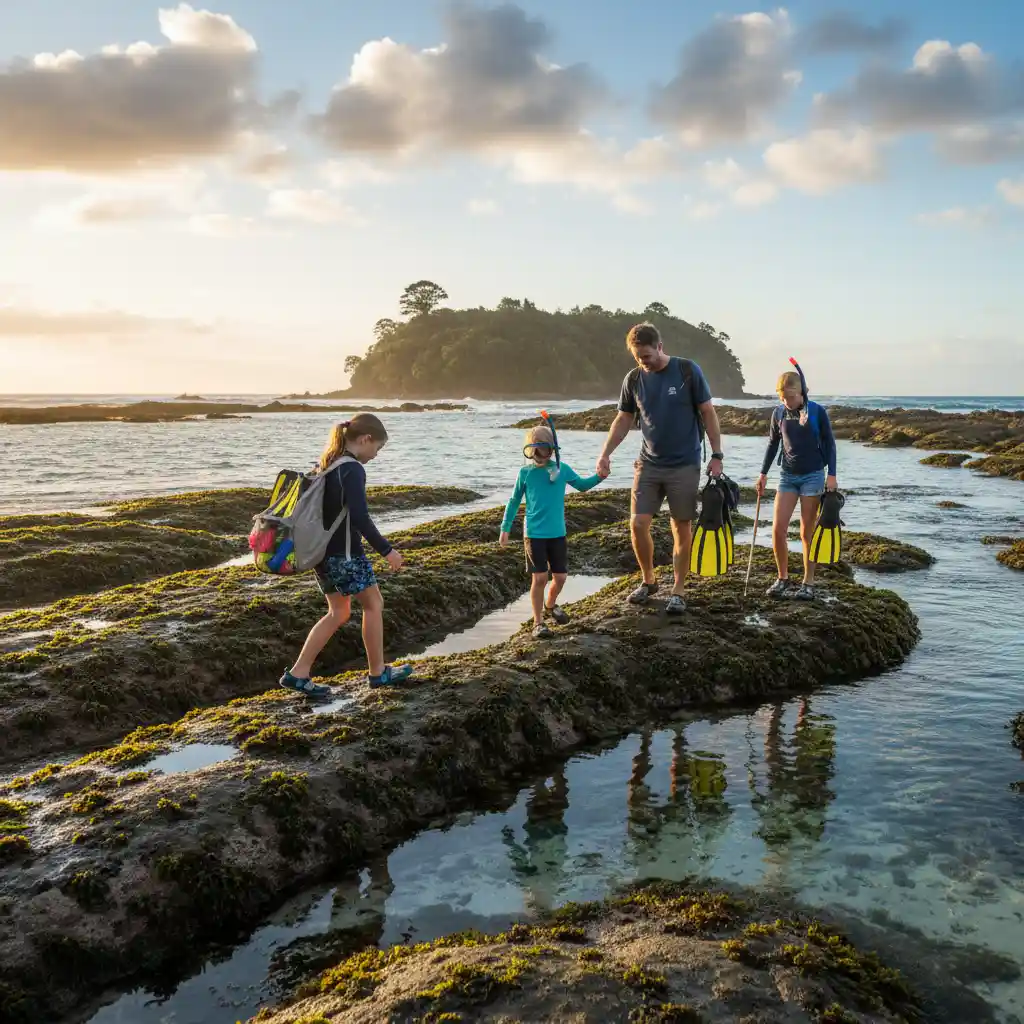
Interestingly, low tide does offer one unique advantage: accessibility to the island itself on foot. At very low tides, a causeway or sandbar is sometimes exposed (or is shallow enough to wade), allowing visitors to walk almost all the way to Goat Island without swimming. This is popular for tide-pooling and education but is counter-productive for snorkeling.
If you attempt to snorkel at low tide, you will likely have to walk 50 to 100 meters over uneven, barnacle-encrusted rocks before the water is deep enough to swim. This increases the risk of slips, falls, and cuts. Once you are in, the water is shallow, meaning your knees or fins are likely to scrape against the reef, damaging the delicate ecosystem and your equipment.
Beyond Tides: Wind and Swell Impact
While you may have identified the best tide for snorkeling Goat Island, the tide tables are only half the equation. New Zealand is an island nation subject to rapidly changing weather patterns. The wind direction and swell height are equally critical factors.
The Ideal Wind Direction
Goat Island faces North/North-East. Therefore, it is exposed to winds coming from those directions.
- Southerly Winds (Offshore): These are ideal. The wind blows from the land out to sea, flattening the waves and creating calm surface conditions.
- Northerly Winds (Onshore): These are problematic. They blow from the ocean onto the beach, creating chop, waves, and stirring up sediment. If the forecast predicts strong Northerlies, even a high tide will not save the visibility.
Swell Height
Swell refers to the size of the waves. For safe and clear snorkeling, you want a swell of less than 1.0 meter (ideally less than 0.5 meters). If the swell is over 1.5 meters, the reserve can become dangerous due to surge against the rocks, and visibility will be near zero due to the turbulence.
Essential Resources for Planning Your Dive
To ensure you hit that perfect window, utilize reliable data sources. Do not guess the tides based on how the beach looks when you arrive.
Top Planning Tools
- MetService Marine: Look for the “Leigh” or “Goat Island” recreational marine forecast. This provides tide times, wind speed, and swell height in one dashboard.
- NIWA Tide Forecaster: This offers scientific-grade tide tables for the specific latitude and longitude of the reserve.
- SwellMap: A favorite among surfers and divers, this provides detailed graphs on swell energy and wind direction.
Pro Tip: Aim to arrive at the parking lot at least 45 minutes before your intended swim time. The Marine Reserve is incredibly popular, especially on summer weekends and public holidays. Finding a parking spot can be the most difficult part of the day if you arrive late, causing you to miss the slack tide window.
Summary Checklist for the Perfect Snorkel
- Target Tide: High Tide (1 hour before to 1 hour after).
- Wind: Southerly or light variable winds.
- Swell: Less than 1 meter.
- Gear: 5mm wetsuit (year-round recommendation for comfort), mask, snorkel, and fins.
By synchronizing your visit with the high tide and favorable weather, you transform a simple swim into a world-class marine encounter. The reserve is a taonga (treasure) of New Zealand; seeing it in its clearest, calmest state is an experience that stays with you forever.
People Also Ask
Is Goat Island swimmable at low tide?
Yes, it is swimmable, but it is not recommended for the best experience. At low tide, you must walk over slippery, sharp rocks to reach deep water. The visibility is generally poorer due to sediment, and the water is shallow, making it difficult to swim without bumping into the reef.
Do I need a wetsuit for Goat Island?
While not mandatory, a wetsuit is highly recommended year-round. Even in summer, water temperatures rarely exceed 22°C (72°F). A wetsuit provides thermal protection, allowing you to stay in the water longer, and offers buoyancy and protection against minor scrapes from rocks or jellyfish.
Are there sharks at Goat Island?
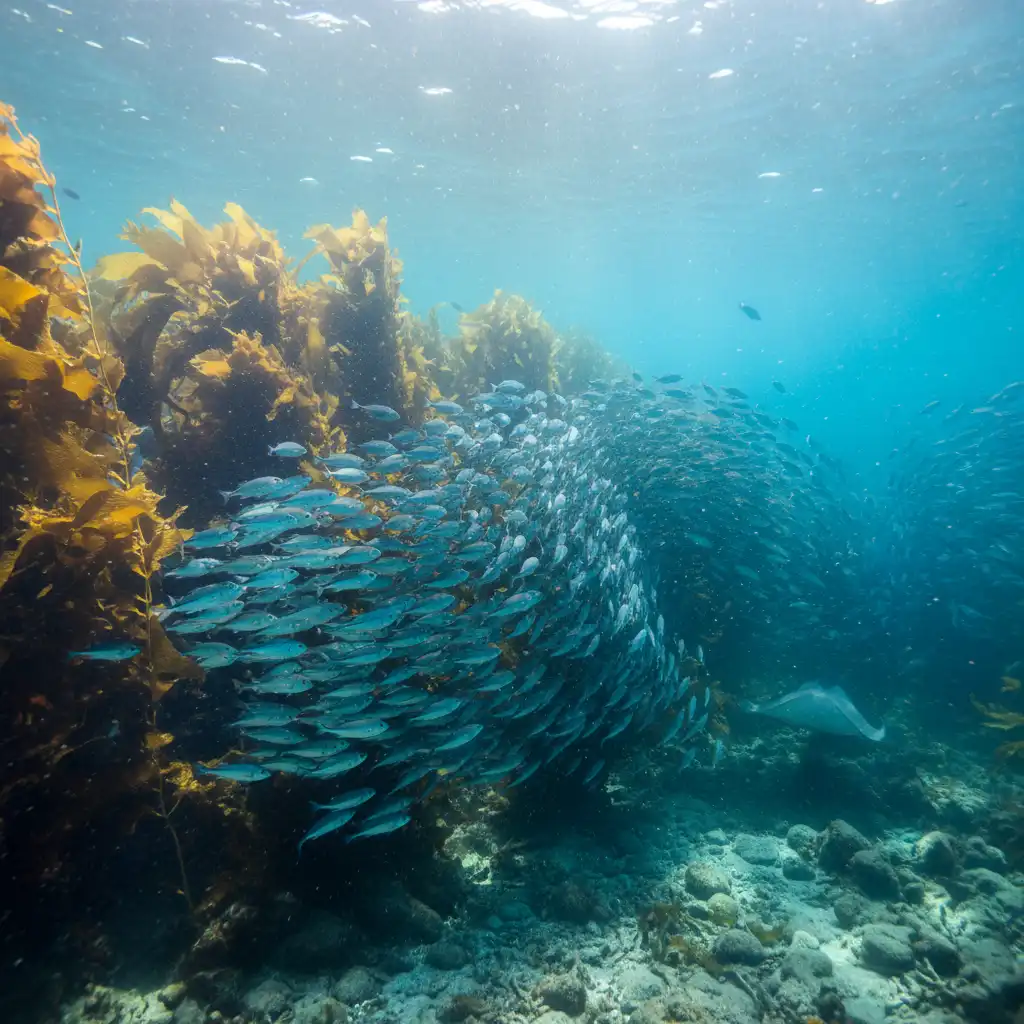
It is possible to see sharks, such as Bronze Whalers or smaller carpet sharks, but they are generally uninterested in snorkelers. The reserve is a healthy ecosystem, so predators are present, but incidents are virtually unheard of. Most visitors see Snapper, Blue Maomao, and Rays.
What is the best time of day to snorkel Goat Island?
The best time of day is dictated by the tide rather than the sun. However, if high tide aligns with the morning (9:00 AM – 11:00 AM), conditions are often best because the winds are typically lighter in the morning before the afternoon sea breeze kicks in.
Can you walk to Goat Island?
You cannot walk onto the island itself as it is a scientific reserve with restricted access to protect the wildlife. However, at low tide, you can walk across the exposed rock shelf/causeway to the base of the island. You must not climb up the island.
Is snorkeling at Goat Island free?
Yes, entry to the Cape Rodney-Okakari Point Marine Reserve (Goat Island) is completely free. However, if you need to rent gear (mask, snorkel, fins, wetsuit), there are rental shops in Leigh and near the beach that charge daily rates.