
Currently, there is no official webcam providing a Goat Island parking live feed. However, during peak summer months (December to February), the lower carpark typically reaches capacity by 9:30 AM, while the upper overflow carpark fills by 10:30 AM. For real-time updates, visitors should check local community Facebook groups or the Department of Conservation (DOC) alerts before departing.
Goat Island Marine Reserve (Cape Rodney-Okakari Point) is New Zealand’s first marine reserve and arguably its most popular snorkeling destination. Because of its immense popularity and limited infrastructure, parking is the single biggest logistical challenge for visitors. If you are searching for “Goat Island parking live” status, you are likely planning a trip during a high-demand window. While a digital live stream doesn’t exist, historical data and local patterns provide a near-accurate prediction of availability.
Is there a way to check Goat Island parking live status?
Many visitors frantically search for a live feed before driving the 80 minutes from Auckland, only to find that no official camera exists. The Department of Conservation (DOC) does not maintain a real-time occupancy counter for the reserve. However, you can gauge the “live” status by applying specific rules of thumb based on weather, season, and time of day.
On any sunny weekend between Christmas and Waitangi Day, you can assume the parking status is “Critical” or “Full” between 10:00 AM and 3:00 PM. Local traffic management often places a “Carpark Full” sign at the intersection of Goat Island Road and Leigh Road when capacity is reached to prevent gridlock on the narrow descent to the beach. If you see this sign, do not attempt to drive down hoping for a lucky spot; rangers strictly enforce no-parking zones on the verges to ensure emergency vehicle access.
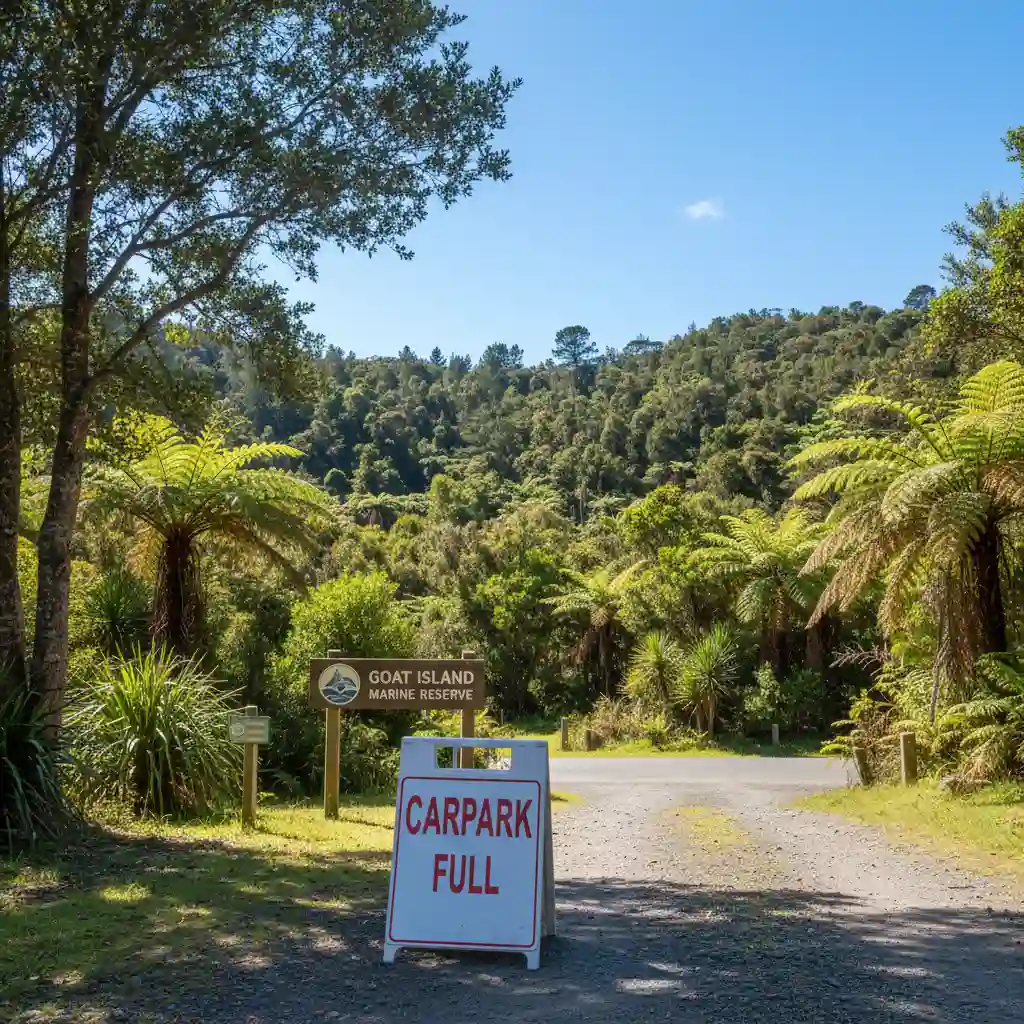
Upper vs Lower Carpark Availability
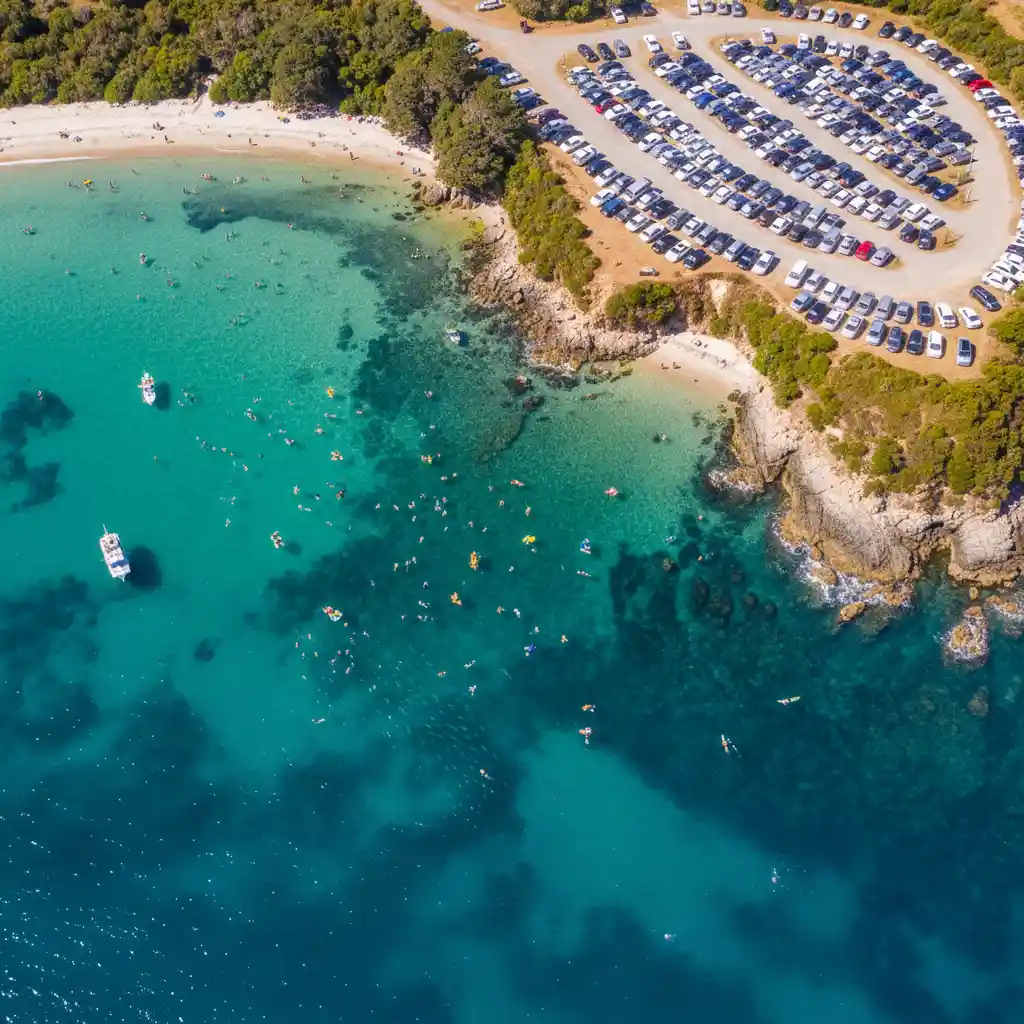
Understanding the layout of the reserve is crucial for securing a spot. There are two distinct parking areas, each with different capacities and turnover rates.
The Lower Carpark
The lower carpark is located directly adjacent to the beach and the Discovery Centre. It is the most coveted location because it requires zero walking with heavy dive gear or picnic supplies. However, it is relatively small. This area is predominantly occupied by early risers (arriving before 8:30 AM) and dive schools with permits. Turnover here is low because families lucky enough to park here tend to stay for the entire day.
The Upper Carpark
The upper carpark serves as the overflow area. It is significantly larger but requires a steep 5-10 minute walk down to the beach. While this sounds manageable, the walk back up after a long day of swimming can be exhausting, particularly for young children or those carrying scuba tanks. The upper carpark usually has availability for about an hour after the lower carpark fills up. If you arrive at 9:45 AM on a Saturday, drive straight to the upper carpark. Do not waste time circling the lower lot; you will likely miss the last remaining spots in the upper lot while you wait.
Peak Hours in Summer (Dec-Feb)
The summer season brings a massive influx of tourists and locals. During the peak window of December through February, the demand for parking exceeds capacity by a significant margin. The congestion is compounded by the fact that Goat Island Road is a no-exit road.
The Danger Zone: 10:30 AM to 2:30 PM
During these hours, the reserve is in a state of gridlock. Cars often queue from the bottom of the hill all the way back to the main road. If you arrive during this window, you are essentially waiting for someone to leave. This is known as “one-out, one-in” parking. The wait times can exceed 45 minutes, and tempers often flare in the heat. To avoid stress, simply do not plan your arrival during this block.
Park and Ride Options from Leigh
When the reserve is at capacity, alternative transport becomes necessary. While there is no formal, government-funded “Park and Ride” infrastructure like you might find in a city center, local private operators and informal strategies fill the gap.
The Goat Island Shuttle
In previous seasons, private operators have run shuttle services from Leigh School or the Leigh Community Hall during peak holiday periods. It is highly recommended to check local listings or the “Leigh Community” Facebook page for current operating times for the 2024/2025 season. Utilizing a shuttle allows you to park stress-free in Leigh village and be dropped off right at the beach entrance.
Walking from Leigh
For the fit and adventurous, walking from Leigh is an option, though it is not for the faint-hearted. The Goat Island Walkway traverses farmland and offers spectacular coastal views. However, it is a one-way walk of approximately 3 kilometers (about 45 minutes to an hour) with little shade. If you choose this option, drop your gear and passengers at the reserve entrance (if traffic allows), drive back to Leigh to park, and then walk or jog back. This is a common “Dad hack” used by locals to secure entry for the family while sacrificing their own comfort.
Early Bird Strategies for Day-Trippers
The most effective strategy for guaranteeing a parking spot is simply beating the crowd. However, “early” means different things to different people. Here is the breakdown for a guaranteed spot.
The 8:00 AM Rule
If you want a prime spot in the lower carpark, aim to be parking your car by 8:00 AM. This gives you time to set up a base on the grass, visit the restrooms, and get into the water before the sediment is kicked up by the hundreds of midday snorkelers. The water clarity is invariably better in the morning.
The Sunset Strategy
Conversely, arriving late is a valid strategy. By 4:00 PM, the day-trippers from Auckland begin their exodus home. Arriving at 4:30 PM usually guarantees a spot in the lower carpark. In summer, the sun doesn’t set until nearly 9:00 PM, giving you a solid four hours of snorkeling time. The marine life is often more active in the late afternoon as the water calms down.

How Tides Affect Parking Demand
Many visitors mistakenly correlate parking availability solely with the time of day, ignoring the tide. However, seasoned snorkelers plan their trips around the tide, which influences parking surges.
High Tide Crowds
Goat Island is accessible at all tides, but it is significantly better at high tide. The water is deeper over the reef, making it easier to swim without scraping your knees on rocks, and visibility is generally higher. Consequently, if High Tide falls between 10:00 AM and 2:00 PM on a weekend, the parking demand will be double the usual volume. Everyone wants to be there for the optimal window.
Low Tide Opportunities
Low tide exposes more of the beach but makes entering the water more difficult as you have to walk over slippery, uneven rocks to reach depth. Because it is less desirable for swimming, parking is slightly easier to find during low tide windows. If you are just going to picnic or explore rock pools, aiming for low tide can save you a parking headache.
What to Do When the Carpark is Full
You drove all the way, and the “Full” sign is out. What now? Panic is unnecessary if you have a backup plan. The Matakana Coast offers several alternatives that provide a similar marine experience without the density of Goat Island.
Mathesons Bay
Located just a short drive away in Leigh, Mathesons Bay is a stunning, sheltered cove. While it is not a marine reserve (meaning you can fish there), it offers excellent swimming and decent snorkeling around the rocks. It has its own carpark which, while popular, rarely sees the catastrophic congestion of Goat Island.
Tawharanui Regional Park
About 25 minutes south, Tawharanui offers a marine reserve experience that rivals Goat Island. The Anchor Bay carpark is massive compared to Goat Island. While it also fills up, the turnover is faster, and there is significantly more overflow parking on the grass. The snorkeling at Anchor Bay is superb, with plenty of crayfish and snapper to be seen in the protected waters.
Pakiri Beach
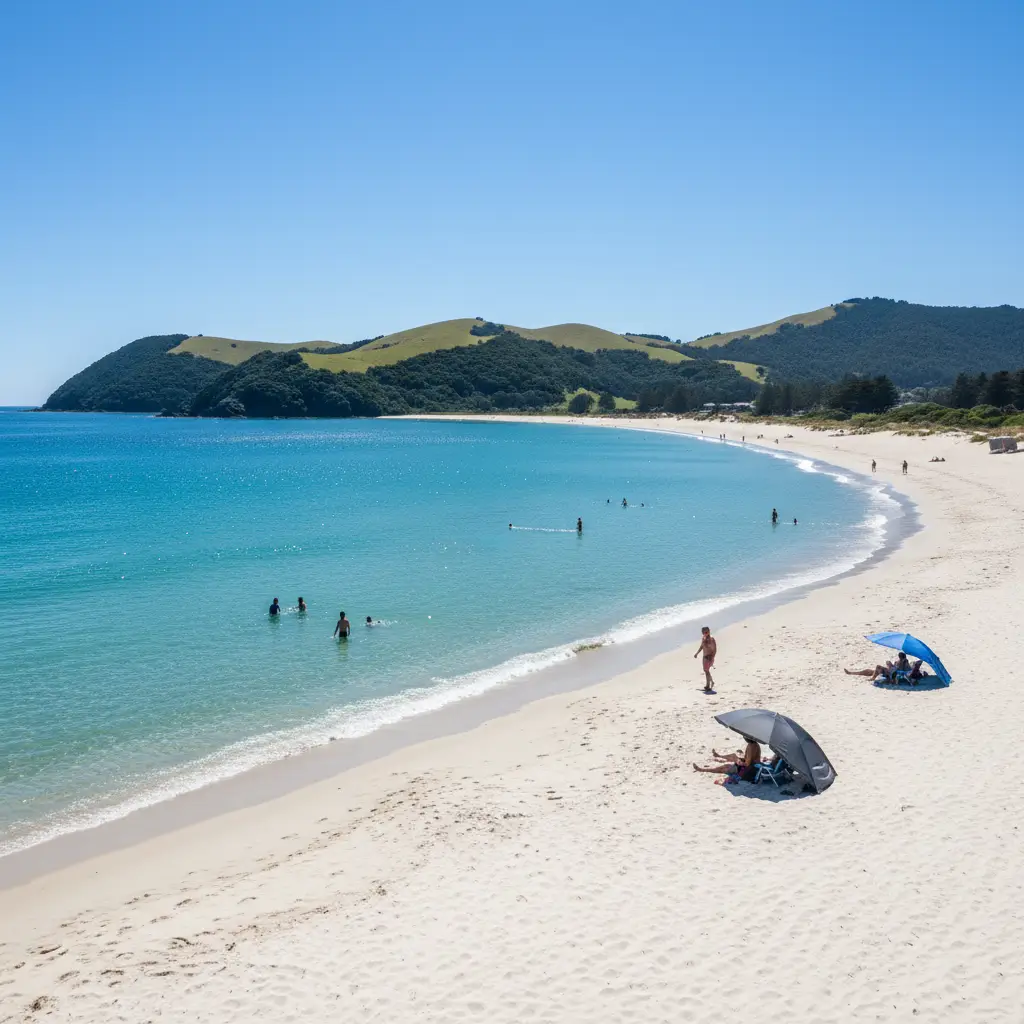
If you abandon the idea of snorkeling and just want a beach day, head north to Pakiri. The endless stretch of white sand means parking is rarely an issue, although it is a surf beach and not suitable for snorkeling.
Facilities and Accessibility
When planning your arrival, consider that amenities are centered around the lower carpark. This area houses the toilet blocks, changing rooms, and cold outdoor showers. If you are parked in the upper carpark, ensure you bring everything you need down with you. There is nothing worse than realizing you left the sunscreen or towels in the car and facing the uphill trek to retrieve them.
Accessibility Parking
There are designated mobility parking spots in the lower carpark. These are strictly monitored. Even when the “Full” sign is out, if you have a valid mobility permit, traffic management may allow you through to check for these specific spots, though it is not guaranteed. It is best to ask the attendant at the road block politely.
Summary Checklist for Parking Success
- Check the Tide: Aim for off-peak tides if you don’t mind a rocky entry.
- Arrive by 9:00 AM: 8:30 AM is safer; 8:00 AM is guaranteed.
- Carpool: Reduce the number of vehicles your group needs.
- Weekdays: Visit Tuesday-Thursday if possible.
- Go Late: Arrive after 4:00 PM for a sunset swim.
By shifting your mindset from expecting a “live feed” to understanding the predictive rhythms of the reserve, you can ensure your trip to Goat Island is memorable for the fish, not the frustration of finding a carpark.
What is the best time to arrive at Goat Island for parking?
The best time to arrive is before 9:00 AM, preferably around 8:30 AM. This usually secures a spot in the lower carpark. Alternatively, arriving after 4:00 PM allows you to take spots vacated by day-trippers.
Is there free parking at Goat Island Marine Reserve?
Yes, parking at Goat Island is free. Both the upper and lower carparks are public facilities managed by the Department of Conservation and do not charge an entry or parking fee.
Can I park on the road if the Goat Island carpark is full?
No, you cannot park on the roadside verges leading down to the reserve. These are tow-away zones kept clear for emergency vehicle access. You will be fined or towed if you park illegally on Goat Island Road.
How far is the walk from the upper carpark to the beach?
The walk from the upper overflow carpark to the beach takes approximately 5 to 10 minutes. It is a downhill walk on a paved path, but the return journey is steep and can be tiring with heavy gear.
Is Goat Island open every day?
Yes, the reserve is open 24/7, 365 days a year. However, the parking fills up rapidly on weekends and public holidays. There are no gates closing the carpark at night, but camping is not permitted.
Are there toilets at the Goat Island upper carpark?
No, the toilet and changing facilities are located exclusively at the lower carpark near the beach entrance. Visitors parking in the upper lot must walk down to access these amenities.