
Underwater photography at Goat Island requires mastering natural light in shallow, temperate waters to capture the vibrant marine life of New Zealand’s first marine reserve. Success depends on shooting during mid-morning for optimal light rays through kelp forests, using strobes to minimize backscatter in nutrient-rich water, and approaching resident Snapper slowly for wide-angle compositions.
Goat Island, officially known as the Cape Rodney-Okakari Point Marine Reserve, is the crown jewel of New Zealand marine tourism and a pilgrimage site for underwater photographers. Unlike the tropical blue waters of the Pacific Islands, the temperate waters here offer a unique, moody aesthetic characterized by swaying kelp forests, massive resident Snapper, and rocky reef structures. However, capturing professional-grade images in this environment presents distinct challenges, from managing particulate matter to navigating strict conservation regulations.
What is the best time of day for light rays at Goat Island?
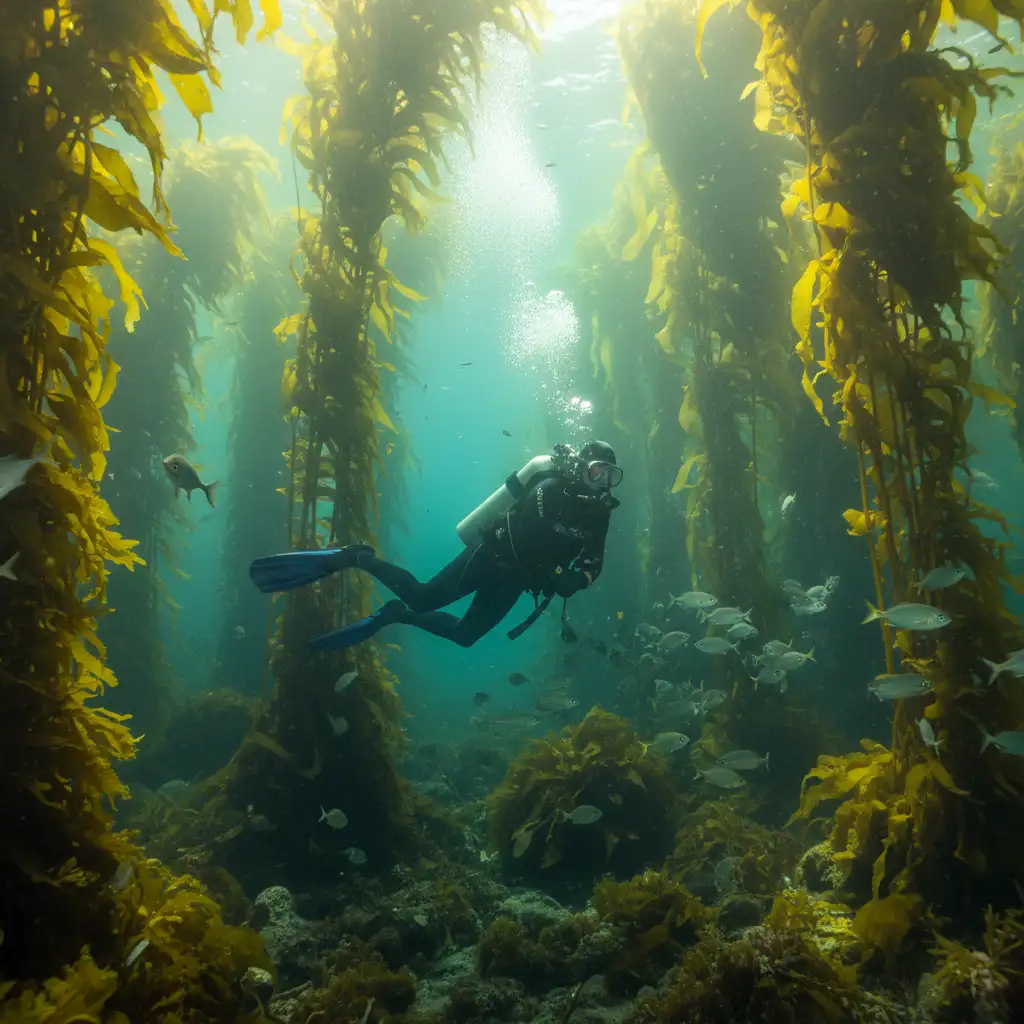
Lighting in underwater photography is not merely about exposure; it is about defining the mood and clarity of the image. At Goat Island, the interaction between the sun’s angle and the dense Ecklonia radiata (kelp) forests creates opportunities for spectacular light rays, often referred to as “God rays.”
The Mid-Morning Window
The optimal window for underwater photography at Goat Island is typically between 10:00 AM and 12:00 PM. During this timeframe, the sun is high enough to penetrate the water column effectively but still at a slight angle to create distinct shafts of light dancing through the kelp fronds.
Shooting at high noon (12:00 PM – 1:00 PM) often results in flat lighting where shadows are eliminated, reducing the dramatic texture of the reef. Conversely, shooting too early (before 9:00 AM) or too late (after 3:00 PM) in the reserve often means the sun is blocked by the high cliffs of Goat Island itself or the mainland, plunging the underwater world into shadow prematurely.
Managing Snell’s Window
For wide-angle photographers aiming for split-shots (over-under) or shooting upwards, the mid-morning light allows you to capture “Snell’s Window”—the cone of light visible on the surface. In New Zealand’s temperate waters, which can appear green due to phytoplankton, shooting upward into the sun helps mask the water color and creates high-contrast silhouettes of the marine life.
How to fix backscatter in NZ waters?
One of the most significant challenges when engaging in underwater photography at Goat Island is backscatter. New Zealand waters are incredibly nutrient-rich. While this sustains the massive populations of fish and crayfish, it also means the water is often filled with particulate matter, plankton, and sediment.
Strobe Positioning Techniques
To eliminate backscatter, you must understand the physics of reflection. If your strobes (flashes) are placed directly next to your lens pointing forward, the light will hit the particles in front of the lens and reflect straight back into the sensor, creating white “snow” in your image.
The Solution: Move your strobes as far out to the sides as your arms allow. Angle the strobe heads slightly outward, away from the subject. You want to light the subject with the edge of the beam, not the center. This technique prevents the light from illuminating the water column directly between the lens and the subject, leaving the particles in the dark while the subject remains lit.
Get Close, Then Get Closer
The most effective way to reduce backscatter is to reduce the amount of water between you and the subject. This is known as the “water column.” For wide-angle photography at Goat Island, you should ideally be within one meter of your subject. Using a fisheye lens or a wet wide-angle lens allows you to focus at extremely close ranges, effectively removing the hazy, particle-filled water from the equation.
How to approach Snapper for wide-angle shots?
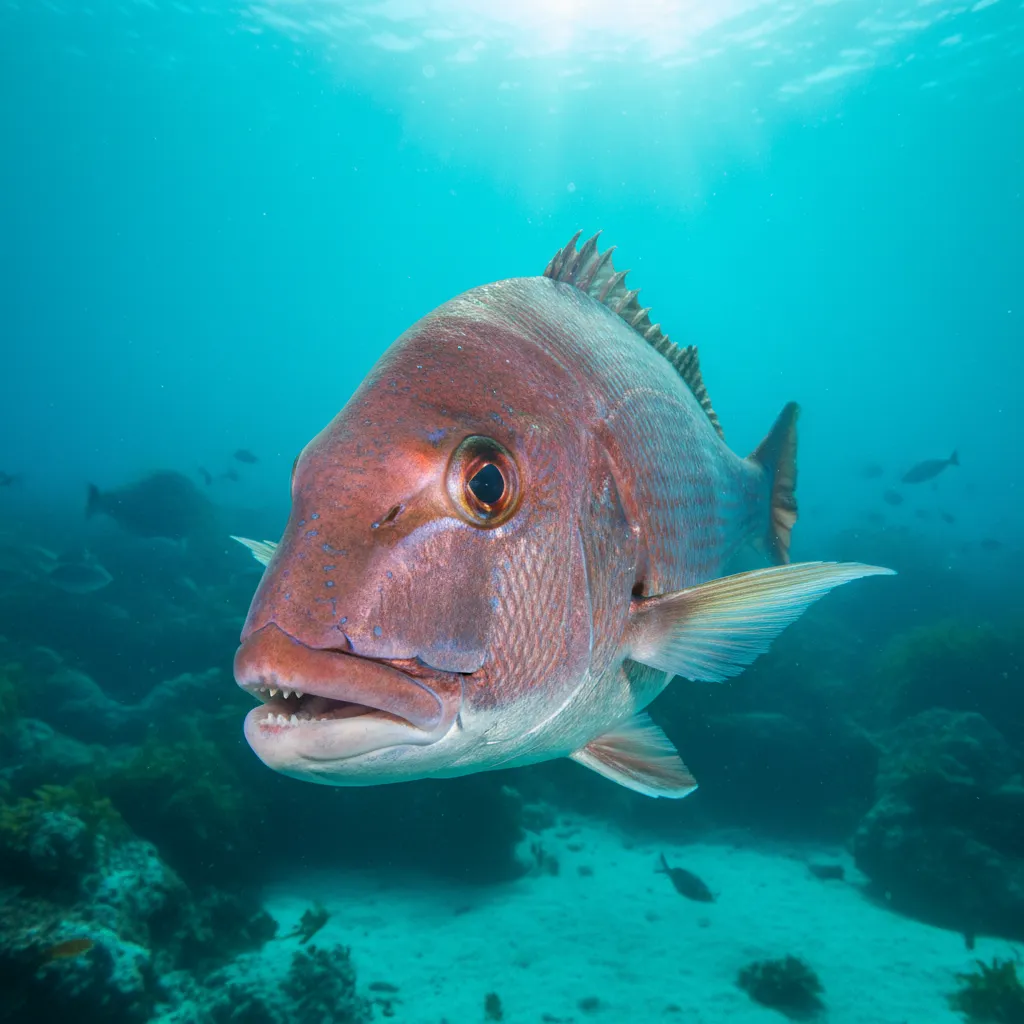
The resident Snapper (Pagrus auratus) at Goat Island are the stars of the reserve. Unlike Snapper in non-protected areas, these fish are bold, curious, and often reach sizes exceeding 80cm. However, their curiosity can be a double-edged sword for photographers.
Passive Interaction Strategy
The biggest mistake photographers make is chasing the fish. Even though they are protected, Snapper are instinctive animals. If you swim aggressively toward them, they will turn their tails to you, resulting in unappealing “tail shots.”
Instead, adopt a passive stance. Hover near the seabed (being careful not to touch the reef) and compose your frame. The Snapper at Goat Island are accustomed to humans and associate them with disturbance of the seabed (which uncovers food). If you remain relatively still, the large adults will often swim directly up to your dome port to investigate their reflection. This allows for incredible forced-perspective shots where the fish looks larger than life.
Settings for Snapper Photography
These fish are constantly moving. To freeze the action and ensure sharp scales:
- Shutter Speed: Maintain a minimum of 1/125th or 1/160th of a second. If using strobes, ensure you do not exceed your camera’s sync speed (usually 1/200th or 1/250th).
- Aperture: Use f/8 to f/11. Because you are shooting very close to the subject, your depth of field will be shallow. A smaller aperture ensures the nose and the eyes of the fish are both in focus.
- Focus Mode: Use Continuous Autofocus (AI-Servo or AF-C) with a single point or small cluster expanded point, targeting the fish’s eye.
Gear Recommendations for NZ Waters
Underwater photography at Goat Island demands equipment that can handle cooler temperatures and specific optical challenges.
Thermal Protection and Buoyancy
While not camera gear, your exposure suit is critical. Shivering photographers cannot hold cameras steady. In summer, the water ranges from 20-22°C, requiring a 5mm or 7mm wetsuit. In winter, it drops to 15°C. A comfortable diver has better air consumption and buoyancy control, which is vital for hovering over the fragile reef without damaging it or stirring up sediment that ruins photos.
Dome Ports vs. Flat Ports
For the landscapes and large fish at Goat Island, a dome port is essential. Flat ports magnify images by approximately 25%, which reduces your field of view and forces you to back away from the subject—increasing the water column and reducing clarity. A high-quality glass or acrylic dome port restores the lens’s field of view, allowing you to get close to the Snapper while capturing the surrounding environment.
Advanced Composition: Kelp Forests and Macro
While the Snapper are the main attraction, the macro life and seascapes offer incredible diversity for the patient photographer.
Shooting the Kelp Forest
The kelp forests create a cathedral-like effect. When shooting these landscapes, look for gaps in the canopy where light penetrates. Include a diver in the background to provide a sense of scale; without a reference point, kelp can look like an abstract mess. Use a slow shutter speed (drag shutter) around 1/30th to 1/60th if you want to capture the motion of the swaying kelp, but be sure to stabilize your camera housing.
Macro Opportunities
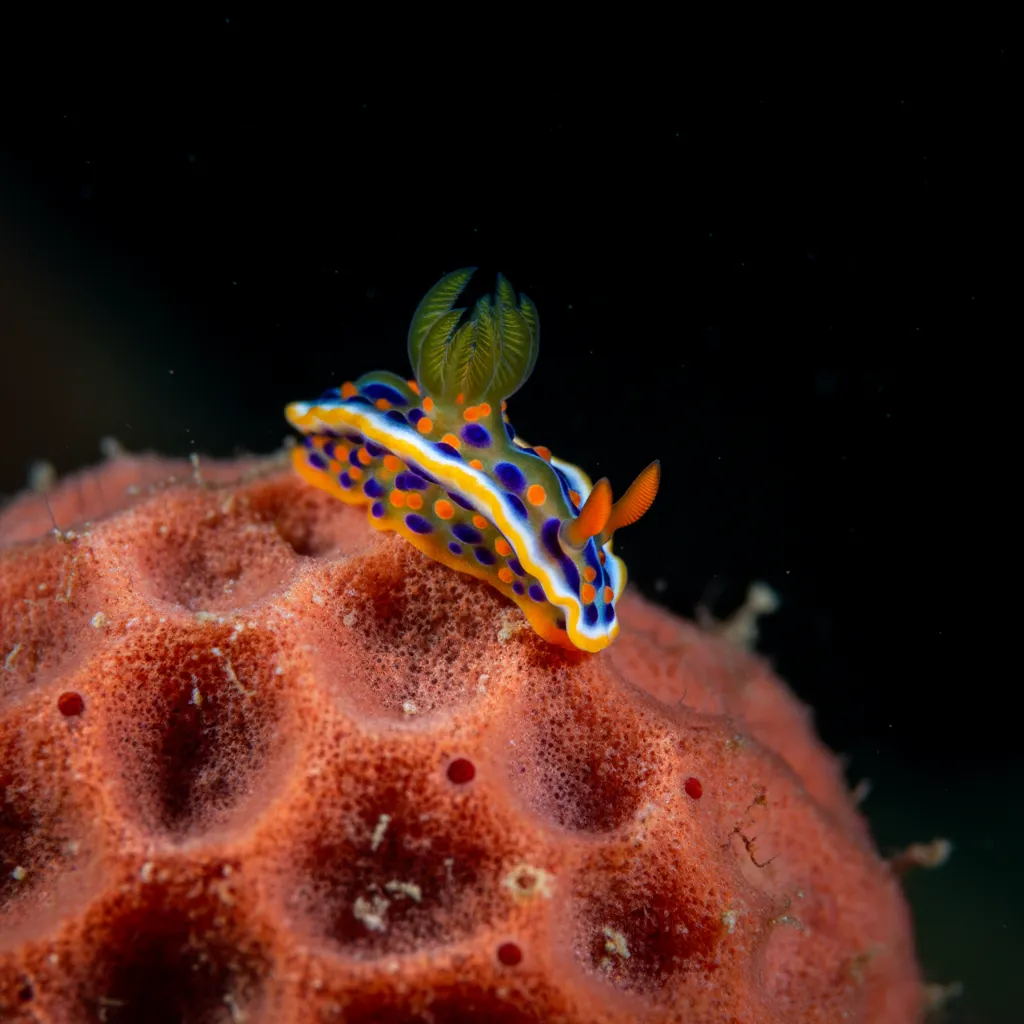
Look closely at the sponge gardens on the rocky walls. Goat Island is home to vibrant nudibranchs (sea slugs), triplefins, and blennies. For macro photography here, a focus light is mandatory. The rocky crevices can be dark, and your camera will struggle to lock focus without an assisting beam. Remember to respect the “No Touch” rule of the marine reserve—do not manipulate marine life to get a better angle.
What are the drone rules over the reserve?
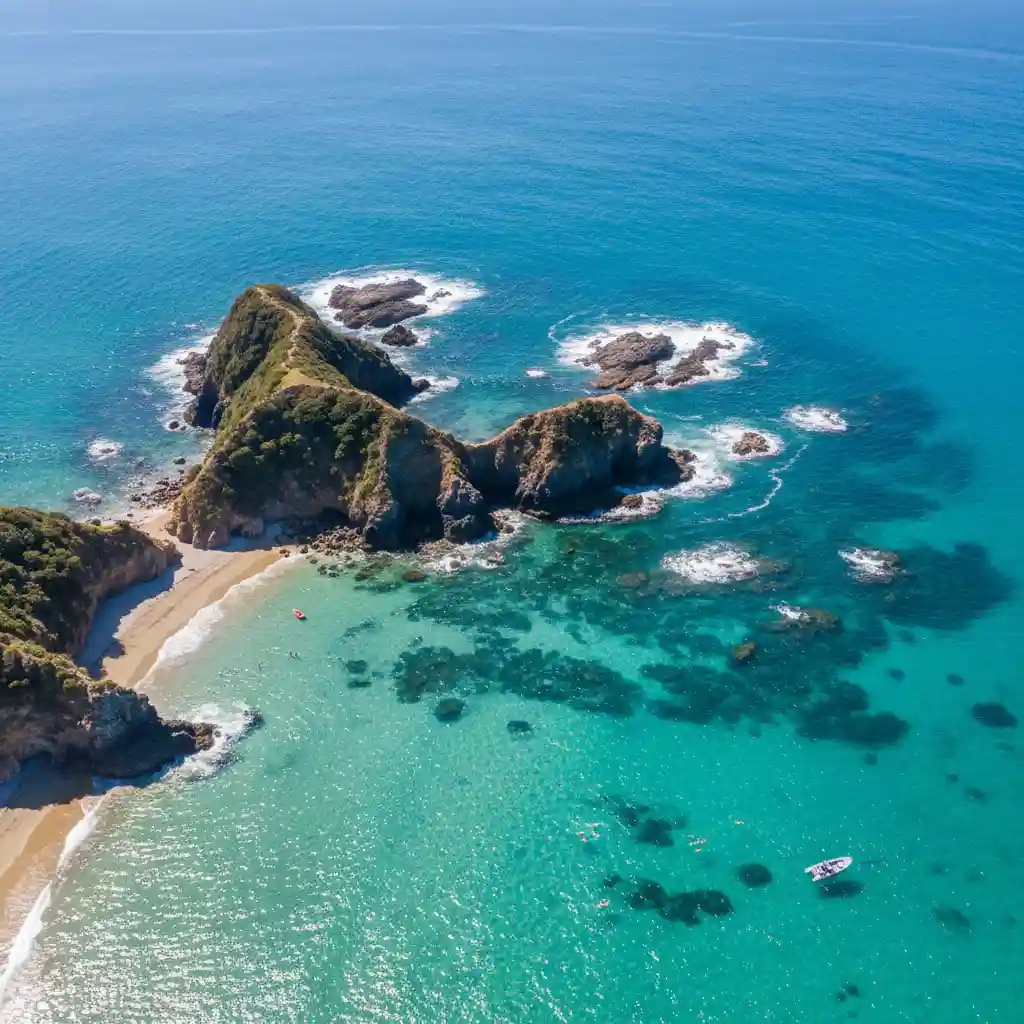
Many photographers wish to capture the aerial perspective of Goat Island, showing the transition from white sand to rocky reef. However, because Goat Island is a Department of Conservation (DOC) Marine Reserve, strict regulations apply to drone usage.
DOC Regulations and Permits
Generally, flying drones over marine reserves in New Zealand for commercial purposes requires a concession from the Department of Conservation. For recreational users, you must adhere to Civil Aviation Authority (CAA) rules, but you must also be aware of wildlife disturbance laws.
Key Restrictions:
- Wildlife Disturbance: It is an offense to disturb marine mammals (dolphins, orcas, seals) or birds. If you spot birds nesting on the island or marine mammals in the water, you must land immediately or maintain a significant distance.
- Goat Island Itself: The island (Motu Hāwere) is a nature reserve. Landing a drone on the island is strictly prohibited.
- Privacy: The beach is often crowded with tourists. You must not fly over people without their consent.
- Line of Sight: You must keep the drone within your visual line of sight at all times.
Note: Rules can change. Always check the current DOC and AirShare maps before launching.
Post-Processing NZ Water Colors
Images straight out of the camera at Goat Island will likely have a heavy green/cyan cast. This is the nature of the phytoplankton-rich water. Correcting this requires specific steps in Lightroom or Photoshop.
White Balance Correction: Do not simply use the “Auto” white balance. Use the eyedropper tool on a neutral grey or white area of the image (like a diver’s tank or the belly of a fish). You will likely need to push the Tint slider significantly toward Magenta to counteract the green water.
Dehaze and Clarity: Use the Dehaze slider sparingly to cut through the sediment scattering, but be careful not to oversaturate the blues. Masking the subject and applying clarity only to the fish or reef structure helps separate it from the water background.
People Also Ask
Do I need a strobe for snorkeling photography at Goat Island?
While not strictly necessary for surface photography, a strobe or video light is highly recommended if you dive below 2 meters. Water absorbs red light rapidly; without artificial light, your photos will look washed out and blue/green. For snorkelers, staying shallow (0-2m) allows natural sunlight to provide sufficient color.
What is the best camera for beginners at Goat Island?
For beginners, the Olympus TG-6 or TG-7 series is widely considered the best entry-level camera. It has a dedicated “Underwater Mode” that automatically adjusts white balance for depth, and its microscope mode is excellent for the small critters found in the reserve’s rock pools.
Can I fly a drone at Goat Island without a permit?
Recreational drone flights are generally permitted provided you follow CAA Part 101 rules and do not disturb wildlife or fly over people. However, commercial photography requires a DOC concession. Always check for temporary bans or signage at the reserve entrance.
How deep is the diving at Goat Island?
The reserve is relatively shallow, making it perfect for photography. Most dives are conducted between 5 and 12 meters. Deeper sections reach 18-20 meters further out, but the best light and marine life density for photography are found in the 5-10 meter range.
Is winter a good time for underwater photography at Goat Island?
Yes, winter (June-August) often offers the best visibility. The water is colder (around 15°C), which kills off much of the plankton bloom that causes cloudiness in summer. If you have a good wetsuit or drysuit, winter provides the clearest water for wide-angle shots.
How do I stop my lens from fogging up?
Fogging occurs when the air inside the housing is warmer than the cold NZ water. To fix this, assemble your camera housing in a cool, dry place. Insert moisture-absorbing silica gel packs inside the housing. Avoid opening the housing in the humid air near the beach.