To learn to dive in Warkworth and Leigh, prospective divers typically enroll in a PADI Open Water Diver course offered by accredited local operators. These comprehensive courses combine convenient online eLearning with confined water skill sessions and four open water certification dives, usually conducted at the world-renowned Goat Island Marine Reserve or Matheson Bay.
Embarking on an underwater adventure along New Zealand’s Matakana Coast offers an experience unlike any other. Warkworth and Leigh are not merely scenic townships north of Auckland; they are the gateways to some of the country’s most accessible and vibrant marine ecosystems. Whether you are a complete novice looking to breathe underwater for the first time or an adventurer seeking PADI certification, this region provides the perfect classroom.
Why Learn to Dive in Warkworth and Leigh?
Choosing the right location for your PADI Open Water Diver course is critical for your comfort and confidence. Warkworth and Leigh offer a distinct advantage over urban dive centers: immediate access to high-quality shore diving sites. While many city-based courses require long drives to reach the ocean, learning to dive in Leigh means you are often just minutes away from the water.
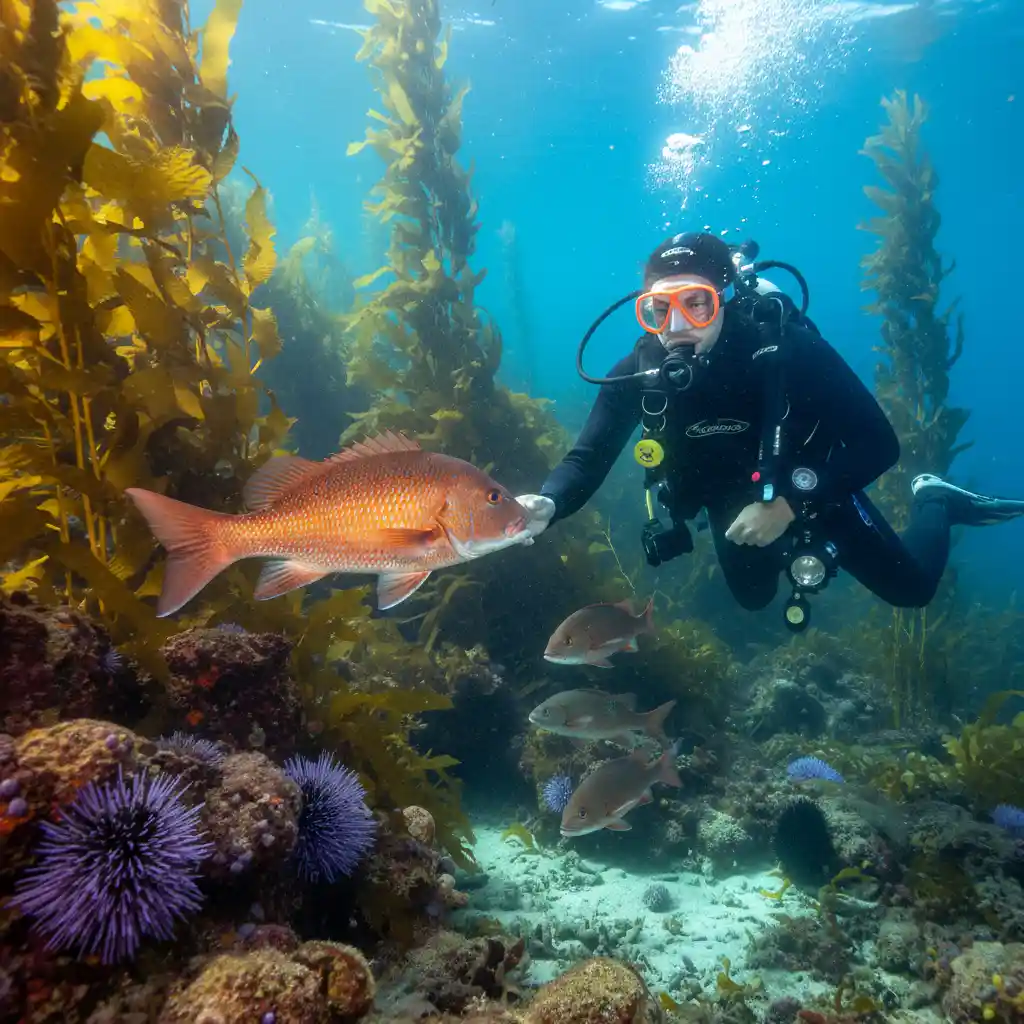
The region is synonymous with New Zealand marine conservation. The proximity to the Cape Rodney-Okakari Point Marine Reserve (commonly known as Goat Island) ensures that your first experiences underwater are teeming with life. This immediate positive reinforcement—seeing large snapper, crayfish, and schools of fish on your very first dives—creates a lifelong passion for the sport.
What makes the Goat Island Marine Reserve ideal for beginners?
The Goat Island Marine Reserve was established in 1975 as New Zealand’s first marine reserve. Because fishing has been prohibited here for nearly half a century, the marine life exhibits behaviors rarely seen elsewhere. Fish are not afraid of divers; instead, they are curious. For a student diver, this environment reduces anxiety and increases engagement.
Key Benefits of Training in a Reserve:
- Abundant Marine Life: You will likely see massive Snapper, Blue Maomao, Silver Drummers, and Eagle Rays during your training dives.
- Calm Conditions: The reserve and nearby Matheson Bay offer sheltered conditions, protecting students from strong swells and currents common on the wildest coasts.
- Shore Accessibility: Most training dives are shore-based, eliminating the added complexity of boat diving for your initial certification. This allows for a more relaxed entry and exit, giving you time to adjust your buoyancy and equipment in waist-deep water.
How is the PADI Open Water Course structured locally?
When you sign up to learn to dive in Warkworth or Leigh, the course follows the global PADI standard but is tailored to the local environment. The certification consists of three main phases.
Phase 1: Knowledge Development
Modern dive training utilizes PADI eLearning. You will complete the theoretical portion of the course—covering physics, physiology, and equipment—online at your own pace before arriving at the dive center. This “inverted classroom” model ensures that your time with the instructor is focused on practical application and water work rather than sitting in a lecture room.
Phase 2: Confined Water Dives
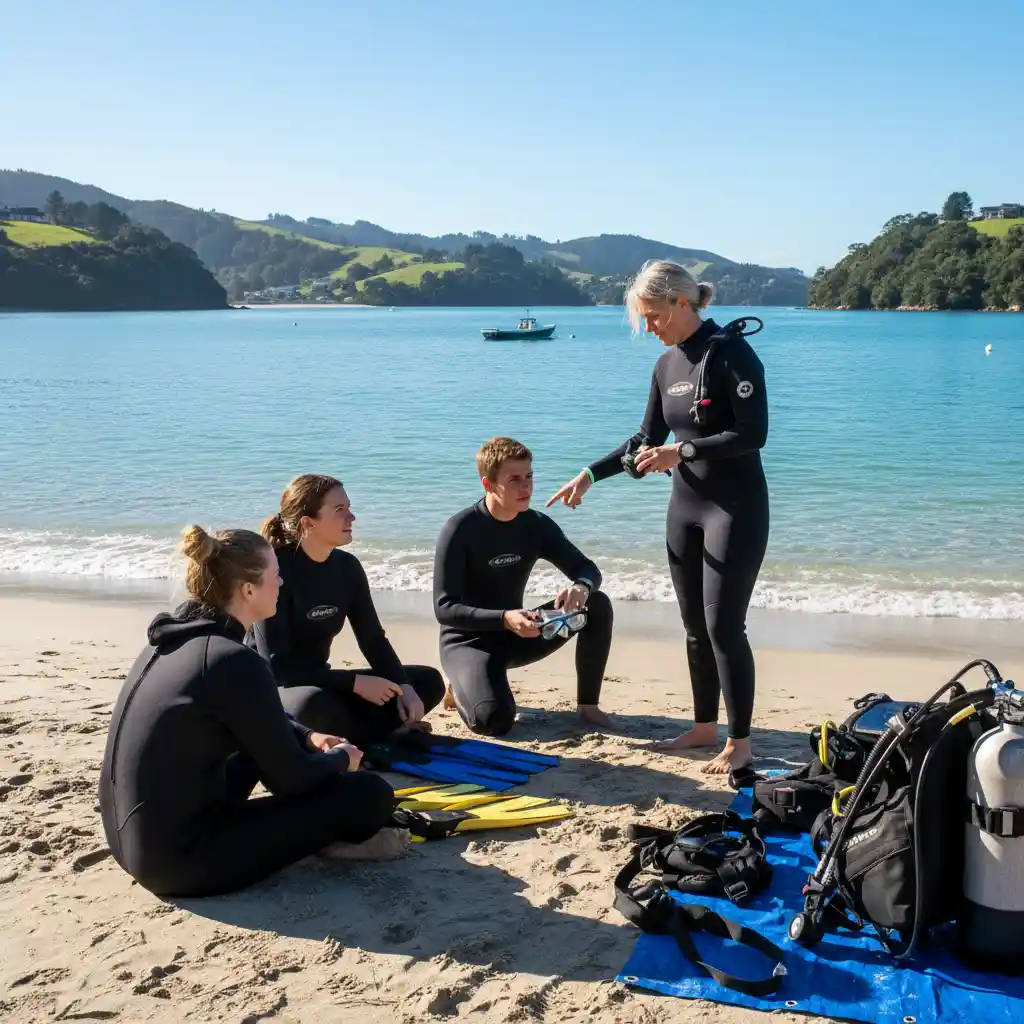
Before hitting the open ocean, you must master basic skills. Local operators often utilize heated pools in the Warkworth area or the shallow, calm waters of Matheson Bay which act as a natural pool. Here, you will practice clearing your mask, recovering your regulator, and buoyancy control until these actions become second nature.
Phase 3: Open Water Dives
This is the highlight of the course. You will complete four open water dives over two days. During these dives, you demonstrate the skills you learned in confined water while exploring the underwater world. In Leigh, these dives are almost exclusively conducted at Goat Island or Matheson Bay, depending on wind direction and swell.
Where are the best training sites in Leigh?
The geography of the Whangateau Harbour and the Cape Rodney coastline provides versatile options for instructors.
Matheson Bay
Matheson Bay is the unsung hero of dive training in the region. It is a sheltered bay with a sandy bottom and reef margins, making it arguably the best training ground in the North Island. It is less crowded than Goat Island and is protected from most swell directions. The gradual depth increase allows students to progress safely from 1 meter to 10 meters depth without intimidation.
Goat Island (Cape Rodney-Okakari Point)
While Goat Island is the premier destination, it is weather-dependent. If the swell is coming from the north, it can be tricky for beginners. However, on calm days, completing your final certification dives here is a bucket-list experience. The “Shag Rock” area provides a fantastic navigation route for student divers.
Local Dive Shop Reviews and Operators
Choosing the right operator is crucial for safety and enjoyment. In the Warkworth and Leigh area, the primary operator is Goat Island Dive & Snorkel.
Goat Island Dive & Snorkel:
Located conveniently on the road to the reserve, this 5-star PADI Dive Centre is the hub of diving in the area. They offer a full range of services including air fills, gear hire, and PADI courses ranging from Open Water to Divemaster.
Reviews and Reputation:
Locals and tourists alike praise the centre for its focus on safety and small group sizes. Unlike large commercial operations that might take 8-10 students per instructor, courses here are often capped at smaller ratios (often 4:1 or 6:1 with divemaster assistance). This ensures personalized attention, which is vital when learning to manage life-support equipment.
New Zealand Diving:
While based slightly further south in Warkworth/Matakana, New Zealand Diving also services the area and runs charters. They are well-regarded for technical diving and spearfishing courses, but for the standard “Learn to Dive” experience at the reserve, Goat Island Dive & Snorkel is the geographically closest specialist.
How much does it cost to learn to dive in Leigh?
Cost is a significant factor for many prospective divers. When comparing prices, it is essential to check if the price includes the PADI eLearning fee, certification card, and full gear rental.
Typical Pricing Structure (NZD):
- Full Open Water Course: $600 – $800. This usually includes the eLearning pass (valued around $200+), 2-3 days of instruction, and gear hire.
- Private Courses: $1000 – $1500. For those wanting 1-on-1 tuition or flexible scheduling.
- Try Dive (Discover Scuba): $200 – $300. A half-day experience for those not ready to commit to the full 3-4 day course.
Course Duration:
The practical component typically takes 2 to 3 full days. Most students complete the theory at home over a week, then spend a weekend in Leigh completing the water work. A typical schedule involves pool/confined water on Saturday morning, followed by open water dive 1 and 2 in the afternoon, and open water dives 3 and 4 on Sunday.
What equipment is needed for New Zealand waters?
Diving in New Zealand is different from diving in the tropics. The water temperature in Warkworth and Leigh ranges from 15°C (winter) to 22°C (summer). This thermal environment dictates the equipment you will use.
Exposure Protection
You will learn to dive in a 7mm wetsuit, often a two-piece steamer with a hooded vest. This is significantly thicker than the 3mm “shorty” wetsuits used in Fiji or Thailand. Learning to manage the buoyancy characteristics of a thick wetsuit is a valuable skill that makes you a better diver.
Standard Gear
The course fee generally includes the rental of:
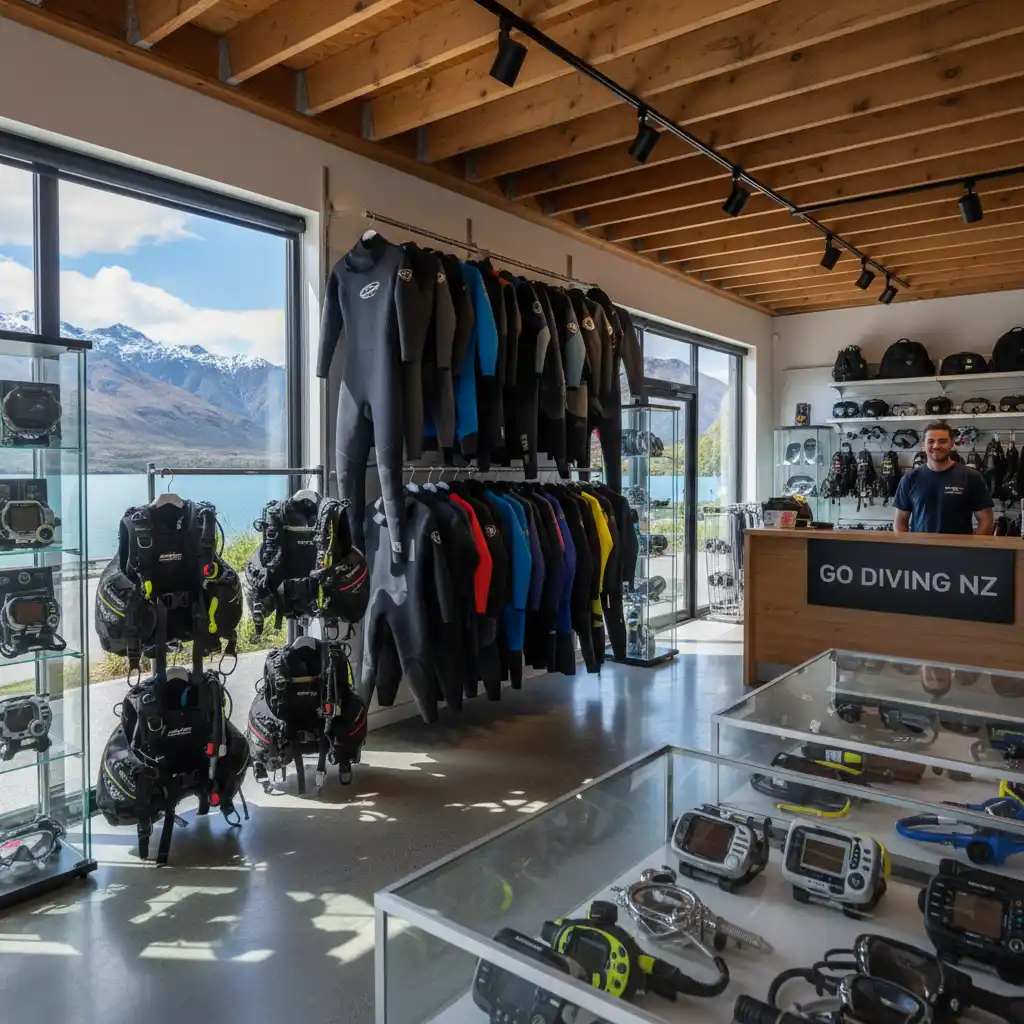
- BCD (Buoyancy Control Device): The jacket that holds your tank and controls your floatation.
- Regulator: The device that delivers air from the tank.
- Tanks and Weights: Steel tanks are common in NZ due to their negative buoyancy, helping to offset the floatation of the thick wetsuit.
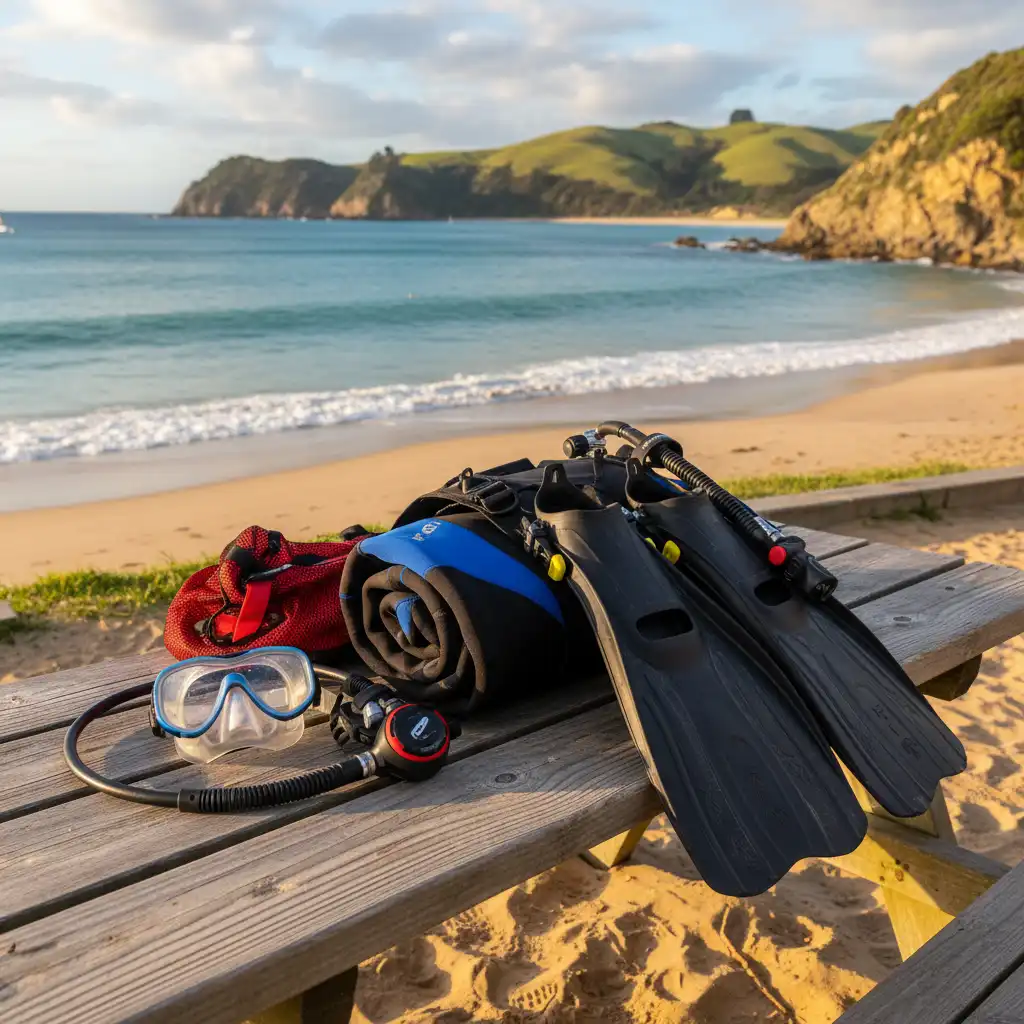
Pro Tip: While rental gear is provided, most dive shops recommend purchasing your own mask, snorkel, and fins (soft gear) for the course. Owning a mask that fits your face perfectly prevents leaks and makes the learning process much more enjoyable.
Can I continue my education in Leigh?
Once you are certified as an Open Water Diver, the learning doesn’t stop. The local environment around Warkworth and Leigh is excellent for advanced training.
PADI Advanced Open Water
This course involves five adventure dives. In Leigh, this often includes a Deep Dive (up to 30m) at sites further out like Outer Island, a Navigation Dive, and a Naturalist Dive to identify the unique species in the reserve. Night diving at Goat Island is particularly spectacular, with bioluminescence and nocturnal predators like conger eels and crayfish becoming active.
Rescue Diver and Divemaster
Because the local conditions can vary, training to the level of Rescue Diver in New Zealand produces highly competent divers. If you can manage a rescue in the temperate waters and surge of the Pacific Ocean, you are well-prepared for diving anywhere in the world.
People Also Ask
How long does it take to get PADI certified in NZ?
It typically takes 3 to 4 days to get PADI certified in New Zealand. This includes completing the online theory (eLearning) at your own pace, followed by 2 to 3 days of practical in-water training (confined water skills and 4 open water dives).
Can you scuba dive at Goat Island without certification?
No, you cannot dive independently without certification. However, you can book a “Discover Scuba Dive” (Try Dive) with a local instructor. This allows uncertified individuals to dive under direct professional supervision to a maximum depth of 12 meters.
What is the best time of year to dive in Leigh?
The best time to dive in Leigh is late summer and autumn (February to May). During these months, the water is warmest (around 20-22°C) and visibility is often at its peak, sometimes exceeding 15-20 meters.
Is it safe to dive in Warkworth and Leigh?
Yes, it is very safe when diving with reputable operators. The training sites like Matheson Bay and Goat Island are sheltered. However, divers should always check weather reports for swell and wind conditions, as visibility and safety can be compromised during storms.
How much is a dive course in New Zealand?
A standard PADI Open Water dive course in New Zealand generally costs between $600 and $800 NZD. This price usually includes tuition, rental equipment, and certification fees, though personal items like masks and fins may be extra.
Are there sharks at Goat Island Marine Reserve?
While sharks are present in the wider Hauraki Gulf, they are rarely seen by divers at Goat Island. You may occasionally spot small, harmless carpet sharks or rig sharks, but large predatory sharks are not a common sight in the shallow training areas.