
Fishing near Goat Island Marine Reserve requires strict adherence to boundaries, as the reserve itself is a complete no-take zone. Legal fishing opportunities abound just outside the perimeter, specifically at Leigh Wharf, Ti Point, and Pakiri Beach. Anglers must use GPS or visual landmarks to ensure they remain outside the protected 800-meter offshore limit to avoid prosecution.
The Cape Rodney-Okakari Point Marine Reserve, commonly known as Goat Island, is New Zealand’s first marine reserve and a sanctuary for marine life. For anglers, this area presents a unique challenge: the waters immediately surrounding the reserve are teeming with spillover fish, but the boundaries are strictly enforced. Understanding exactly where the “no-take” zone ends and where the productive fishing grounds begin is essential for a successful and legal day out on the water.
Defining the Boundaries: The No-Take Zone
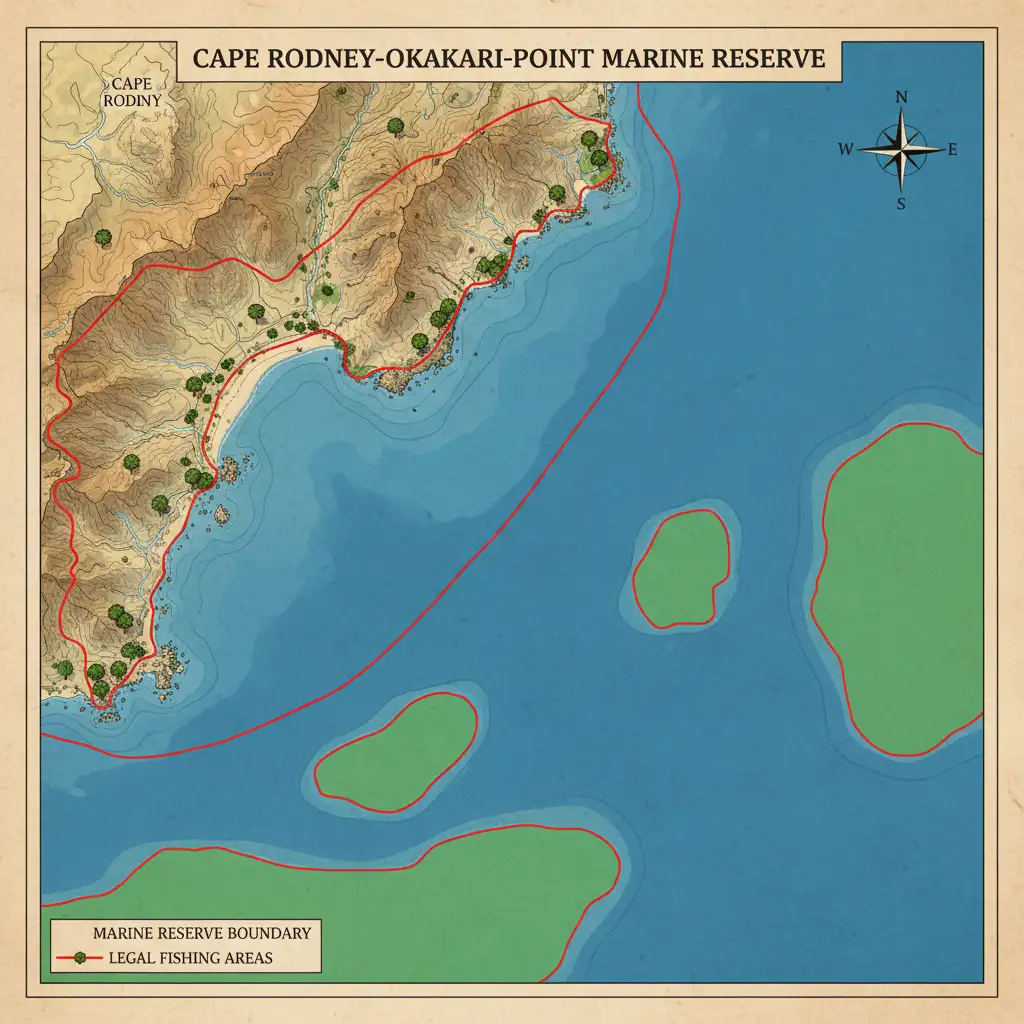
Before casting a line anywhere in the vicinity of Leigh or Warkworth, it is critical to understand the exclusion zone. The Cape Rodney-Okakari Point Marine Reserve is strictly “no-take.” This means you cannot fish, gather shellfish, crayfish, or disturb any marine life within the designated area. The Department of Conservation (DOC) actively monitors this area, and penalties for breaching these rules can include confiscation of gear, boats, and fines up to $10,000 or imprisonment.
Where does the reserve start and end?
The reserve spans the coastline from Cape Rodney to Okakari Point. It extends 800 meters (approximately half a mile) offshore from the mean high-water mark. When you are on the water, visual triangulation can be difficult, so relying on GPS plotters is highly recommended for boaties.
On land, the boundaries are marked by large triangular white markers with yellow tops situated on the cliffs at both Cape Rodney and Okakari Point. If you are fishing from a boat, you must be outside the straight line connecting the outer limits of the reserve. If you are shore fishing, you must be physically outside these headlands.
Can you carry fishing gear through the reserve?
Yes, you are permitted to have fishing gear on your boat while transiting through the marine reserve, provided the gear is stowed and not in use. However, you must not stop to fish, and if you have fish on board caught elsewhere, it is advisable to have a clear track on your GPS to prove you were transiting and not fishing within the protected zone.
Top Legal Fishing Spots Nearby
Because the marine reserve has been established for decades, the “spillover effect” is real. Large Snapper and Kingfish frequent the reserve and often travel to the peripheral areas to feed. Here are the primary locations where you can legally target these fish.
1. Leigh Wharf
Located just around the corner from the reserve, Leigh Wharf is perhaps the most popular land-based fishing spot in the area. It sits within Leigh Harbour, which is outside the reserve boundaries. This spot is excellent for families and casual anglers.
- Target Species: Parore, Kahawai, Trevally, and John Dory. Snapper are present but often undersized in the harbour.
- Best Time: An incoming tide usually pushes baitfish into the harbour, followed by predators.
- Warning: It is a working wharf. Be respectful of commercial fishing vessels and local boat traffic.
2. Ti Point
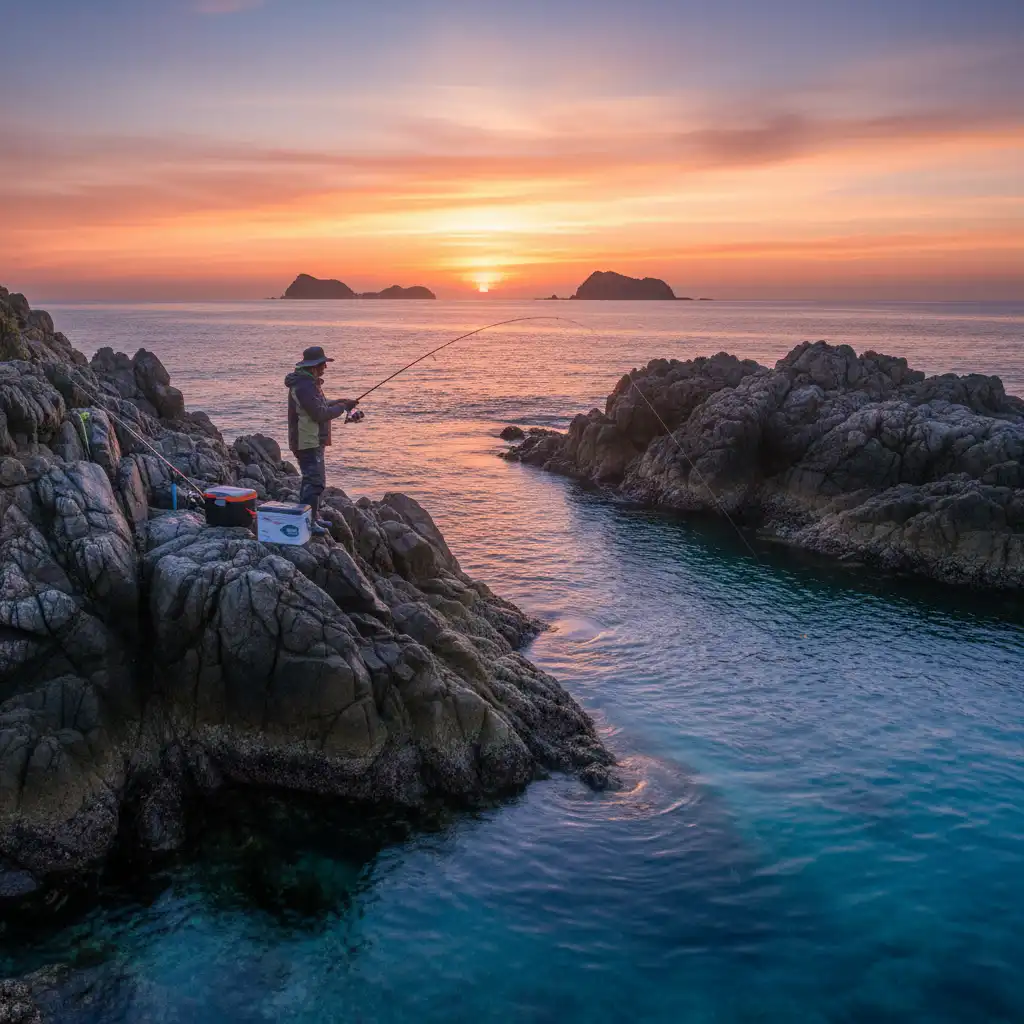
Ti Point creates the southern headland of the Whangateau Harbour and faces out toward the open ocean. It is a rugged spot popular with rock fishermen. The current here can be strong, but it brings plenty of nutrients that attract larger predatory fish.
- Target Species: Large Snapper, Kingfish, and Kahawai.
- Access: There is a walkway from the end of Ti Point Road. It requires a bit of a hike, so pack light but efficient gear.
- Technique: Straylining large baits into the wash is the most effective method here.
3. Pakiri Beach
To the north of the marine reserve lies Pakiri Beach, a stunning stretch of white sand known for excellent surfcasting. Being an exposed ocean beach, it holds different species compared to the rocky structure of Leigh.
- Target Species: Snapper, Gurnard, Kahawai, and occasionally Trevally.
- Conditions: Look for gutters and holes in the surf where fish shelter from the turbulence. Long casts are often necessary here.
Surfcasting and Wharf Fishing Guide
Fishing the periphery of a marine reserve requires specific techniques. The fish here are often larger and more cautious than in over-fished areas. Whether you are on the wharf or the rocks, refining your approach will yield better results.
Mastering the Terrain
The coastline surrounding Goat Island (outside the reserve) is predominantly rocky foul ground with kelp forests. This is prime habitat for Snapper, but it is also a graveyard for tackle. If you are fishing Ti Point or the rocks near Matheson Bay, use a “break-away” sinker setup or a strayline rig with minimal weight. This allows your bait to waft down naturally without snagging instantly on the kelp.
Bait Selection for the Region
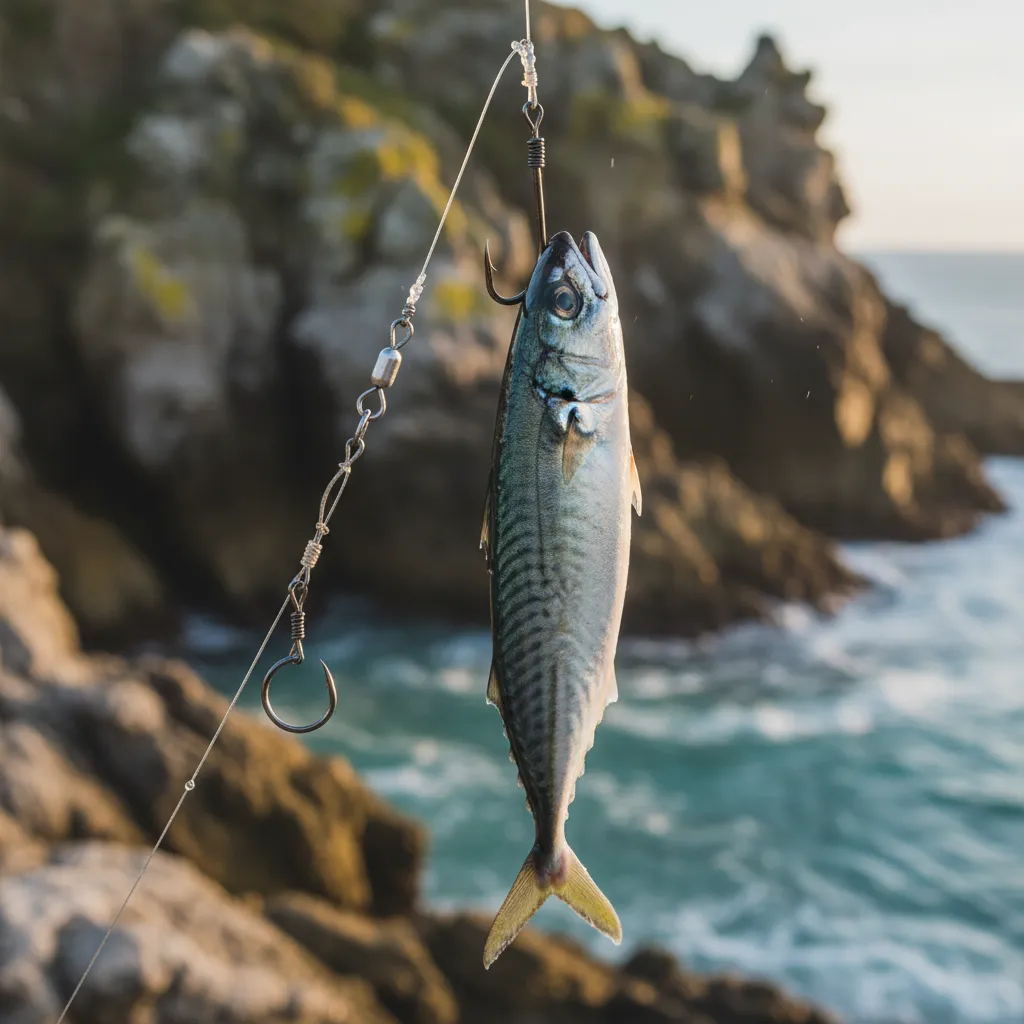
Because the marine reserve protects natural food sources, the fish in the surrounding areas are used to high-quality prey. Pilchards and Squid are standard, but fresh Jack Mackerel or Piper (often caught at Leigh Wharf) make superior baits for larger Snapper and Kingfish. If you are targeting Kingfish off the rocks at Ti Point, a live Kahawai under a balloon is the gold standard.
Safety on the Rocks
The rock ledges around Leigh and Ti Point can be treacherous. The swell can rise unexpectedly. Always wear a life jacket (PFD) when rock fishing. Wear spiked boots or shoes with excellent grip to navigate the slippery intertidal zone. Never turn your back on the ocean, especially when landing a fish.
Boat Fishing Perimeter Strategies
For boaties, the strategy involves drifting the 40-meter to 50-meter contour lines just outside the 800-meter boundary. This depth range often holds schools of Snapper moving in and out of the reserve.
The Drift Technique
Set up a drift that takes you parallel to the reserve boundary rather than toward it. This ensures you don’t accidentally drift into the no-take zone while fighting a fish or re-baiting. Use a drogue (sea anchor) to slow your drift, allowing you to present soft baits or slow jigs effectively.
Targeting Kingfish
The structure around Cape Rodney (outside the reserve marker) is famous for Kingfish. Jigging with mechanical jigs over pinnacles or trolling live baits are proven methods. However, keep a sharp eye on your chart plotter. It is very easy to get carried away chasing a bust-up and cross the line.
Species Limits and Seasonal Rules
Even though you are fishing outside the reserve, you are still subject to the Ministry for Primary Industries (MPI) regulations for the Auckland and Kermadec Fishery Management Area (FMA 1). These rules are strictly enforced, and Fishery Officers frequent the Leigh and Omaha boat ramps.
Snapper Regulations
Snapper is the primary target for most anglers in this region.
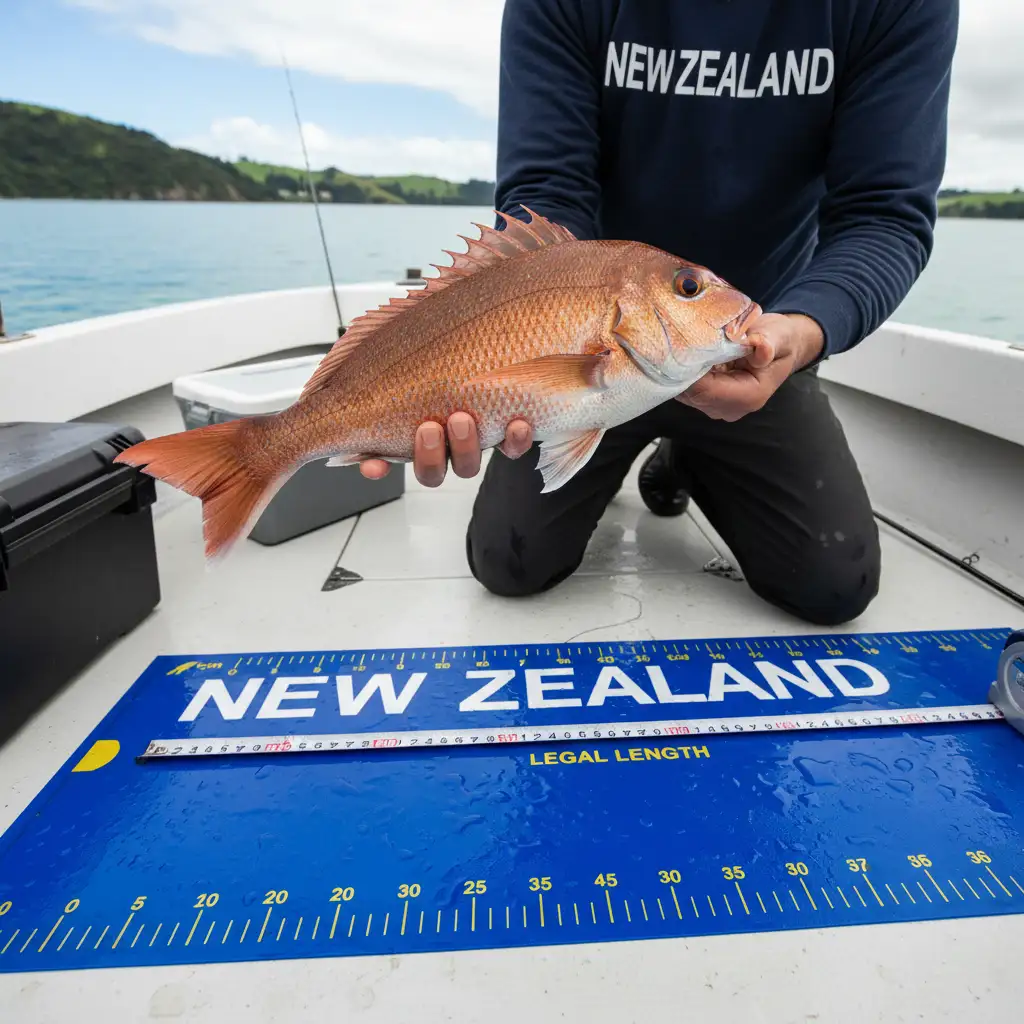
- Daily Bag Limit: 7 Snapper per person per day.
- Minimum Size: 30cm.
Kingfish Regulations
Kingfish are abundant on the reserve periphery but must be treated with respect to ensure the fishery remains healthy.
- Daily Bag Limit: 3 Kingfish per person per day.
- Minimum Size: 75cm.
Crayfish (Rock Lobster)
While you absolutely cannot take Crayfish from the reserve, the surrounding coast is a popular potting and diving area. Be aware of the “telson clipping” rule for recreational crayfish to distinguish them from commercial catch, and strictly adhere to size limits and the ban on taking females in berry (carrying eggs).
Seasonal Closures
Always check the NZ Fishing Rules app before heading out. Occasionally, temporary closures or rahui (customary prohibitions) may be placed on areas surrounding the reserve to allow shellfish beds (like Scallops or Pipi) to recover.
People Also Ask
Can you fish at Leigh Wharf?
Yes, fishing is permitted at Leigh Wharf. It is located inside Leigh Harbour, which is outside the boundaries of the Goat Island Marine Reserve. It is a popular spot for catching Kahawai, Trevally, and Jack Mackerel.
Where does the Goat Island marine reserve end?
The reserve extends from Cape Rodney to Okakari Point and reaches 800 meters offshore. The boundaries are marked by large white triangles on the cliffs. You must be outside the straight line connecting the outer limits of these headlands to fish legally.
What happens if you fish in a marine reserve in NZ?
Fishing in a marine reserve is a serious offense under the Marine Reserves Act 1971. Penalties can include the seizure of your fishing gear, vessel, and vehicle, as well as fines up to $10,000 or up to three months in prison.
What is the best bait for fishing near Leigh?
Fresh bait is superior in this area. Pilchards and Squid are standard, but fresh Jack Mackerel (often caught at the wharf) or Piper work best for larger Snapper. For Kingfish, live Kahawai is the most effective bait.
Is spearfishing allowed near Goat Island?
Spearfishing is strictly prohibited inside the marine reserve. However, it is allowed and very popular along the coastline outside the reserve boundaries, particularly around Ti Point and Matheson Bay.
Can you take crayfish near the marine reserve?
You may take crayfish outside the reserve boundaries, subject to standard MPI regulations (size limits, bag limits, and no females with eggs). Taking crayfish from within the reserve is strictly illegal.