
The best kayak fishing spots in Leigh are centred around the coastline adjacent to the Cape Rodney-Okakari Point Marine Reserve, specifically launching from Matheson Bay. Anglers target shallow water snapper along the kelp lines and rocky foul towards Daniels Reef, ensuring they remain strictly outside the clearly marked marine reserve boundaries to avoid heavy fines.
Leigh, situated on New Zealand’s stunning Hauraki Gulf coast, is a legendary destination for marine enthusiasts. While famous for the Goat Island Marine Reserve, the waters immediately surrounding this sanctuary offer some of the most productive kayak fishing in the country. The combination of accessible launch sites, diverse underwater topography, and the spillover effect from the reserve makes it a prime location for targeting trophy snapper and kingfish.
Launching from Matheson Bay: The Gateway
For kayak anglers, the logistics of the launch are just as critical as the fishing itself. Matheson Bay is widely regarded as the premier launch site for accessing the Leigh coastline. Unlike the exposed boat ramp at Leigh Harbour, which can be busy with commercial traffic and larger trailer boats, Matheson Bay offers a sheltered, sandy beach launch that is ideal for plastic hulls.
The bay is naturally protected by Matheson Bay Island (Kohuroa), which acts as a breakwater against the prevailing easterly swells. This allows for a dry launch in most conditions, a luxury that kayak anglers value highly to keep electronic gear dry before the first cast. Parking is generally available on the grass reserve right next to the beach, meaning you don’t have to drag a heavy, fully-rigged kayak over long distances.
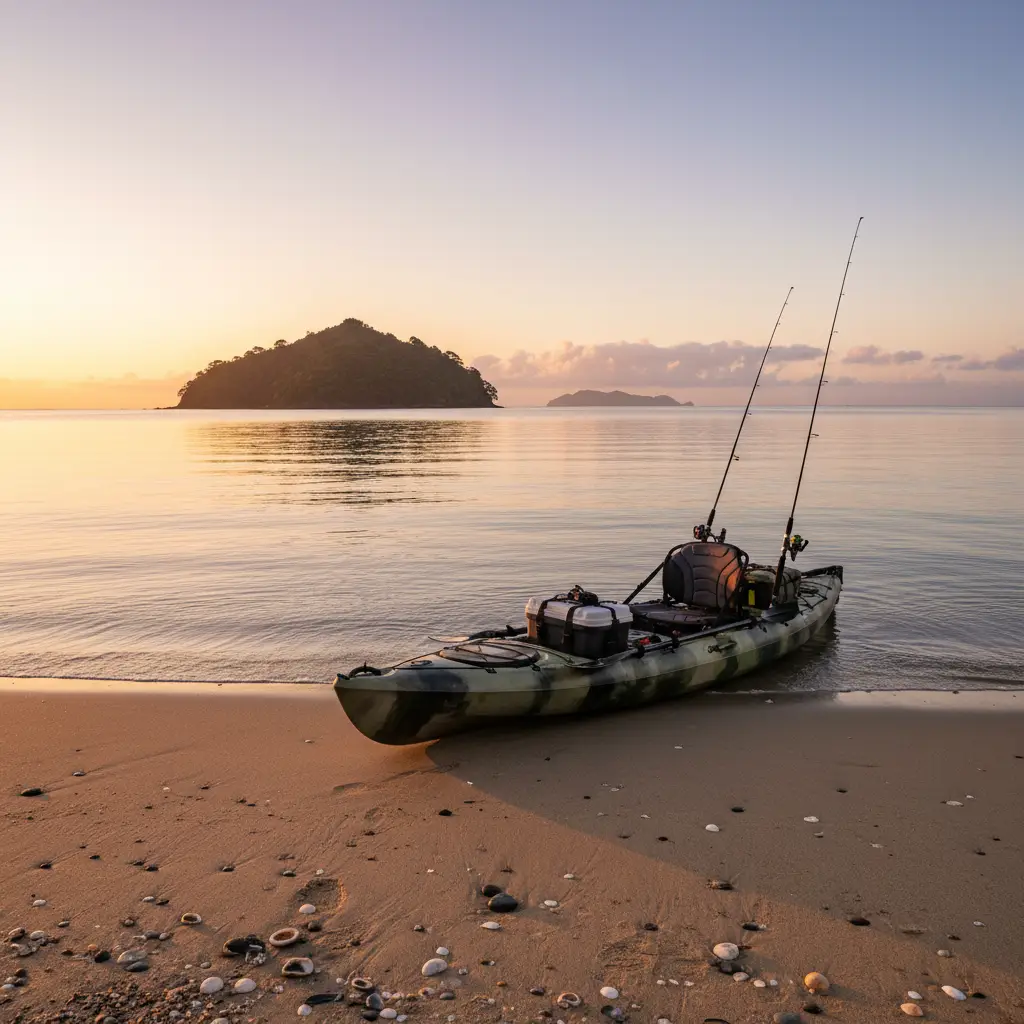
Once you paddle out past the shelter of the island, you have two primary options. Heading north takes you towards the boundary of the Marine Reserve and Goat Island. Heading south takes you towards Daniels Reef and the cliffs leading to Pakiri. Both directions offer exceptional foul ground, but the northern route is often favoured for its proximity to the reserve spillover.
Navigating the Goat Island Marine Reserve Boundary
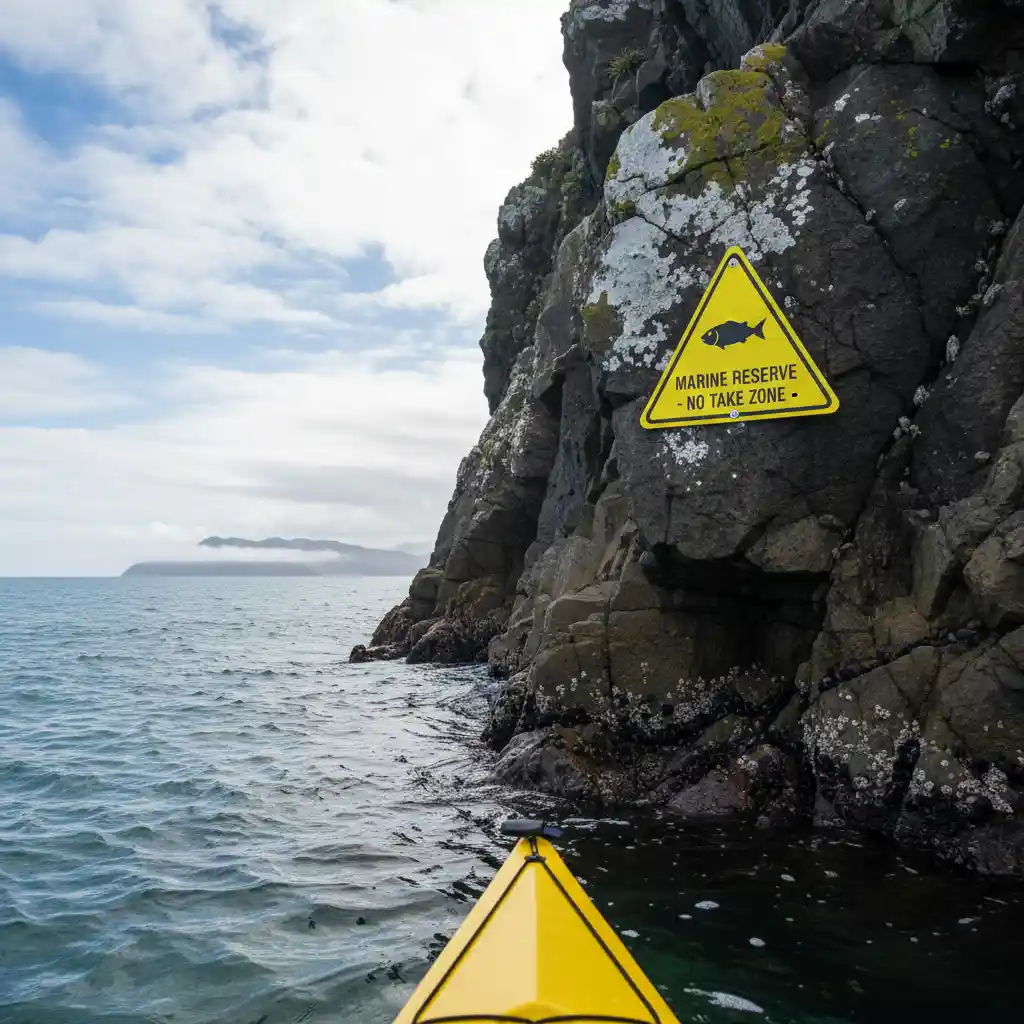
Fishing near the Cape Rodney-Okakari Point Marine Reserve (commonly known as Goat Island) requires strict adherence to boundaries. It is illegal to take any marine life from within the reserve, and Department of Conservation (DOC) rangers patrol this area frequently. Ignorance of the boundary is not a valid defence.
How do I identify the reserve boundary?
The marine reserve extends from Cape Rodney to Okakari Point. For a kayak angler launching from Matheson Bay and heading north, the critical boundary is the southern limit near the Leigh Laboratory. You must look for the large triangular yellow markers on the cliffs. By aligning the two markers on the shore, you create a transit line that indicates the boundary. If you are fishing, you must ensure you are clearly outside this line.
GPS technology has made this easier, and modern fish finders often have marine charts pre-loaded. However, relying solely on electronics is risky. Visual confirmation using the shore markers is the gold standard. A good rule of thumb for kayak anglers is to maintain a conservative buffer zone. Fishing right on the line can be stressful and risky if the wind or current pushes you inside while you are hooked up to a fish.
Tactics for Shallow Water Snapper
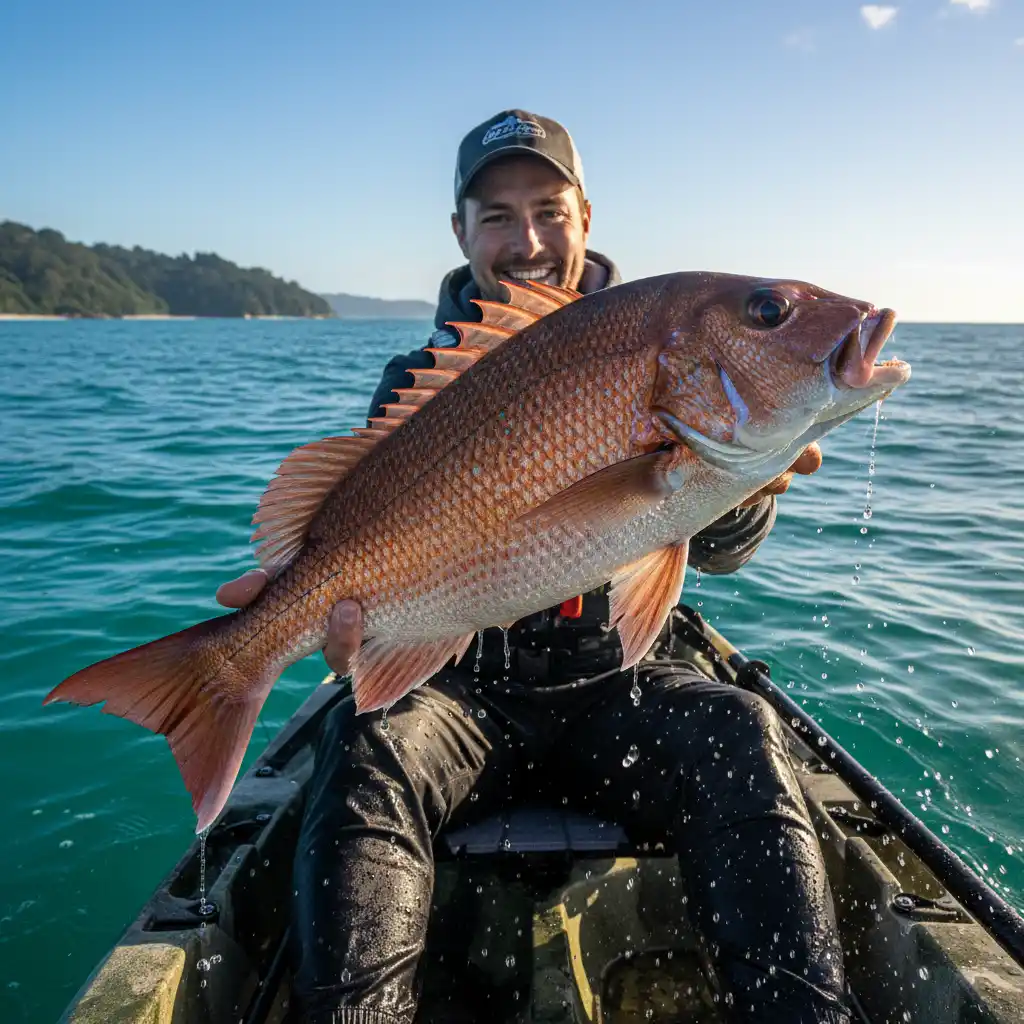
Leigh is famous for its shallow water snapper fishery. Unlike the deeper channels of the Hauraki Gulf where noise is less of a factor, the fish here are often hunting in water less than 10 metres deep. In this environment, stealth is your greatest weapon, making kayaks the ultimate vessel for this style of fishing.
Why is soft-baiting effective here?
Soft-baiting is the dominant technique for kayak fishing in Leigh. The rocky terrain and kelp forests make stray-lining with bait prone to snagging, whereas a lightly weighted soft bait can be worked over the top of the weeds. Use light jig heads—typically 1/4oz to 1/2oz—to allow the lure to flutter down naturally. Natural colours like “New Penny” or “Bruised Banana” tend to work well in the clear waters around Leigh.
Cast ahead of your drift. By casting forward, you ensure the kayak passes over the ground after your lure has already been worked through it. If you paddle over a shallow spot first, the shadow of the kayak and the hull noise will spook the resident snapper before you even make a cast. Target the wash zones against the rocks and the guts between kelp beds. These are the ambush points where big snapper lie in wait for crabs and baitfish.
Anchoring Tips and Drift Fishing in Kelp
The seabed off Leigh is rugged, comprised of basalt reef and dense Ecklonia radiata kelp forests. This provides amazing habitat for fish but presents a significant challenge for kayak positioning. Anchoring in this terrain can be dangerous if not done correctly; a stuck anchor in a swell can capsize a kayak in seconds.
How to anchor safely in foul ground
If you choose to anchor to burley up a spot, you must use a “breakaway” setup. This involves zip-tying the chain to the head of the anchor and running the chain down the shank, securing it with a shear pin (cable tie) at the top. If the anchor becomes wedged in rocks, a strong pull will snap the cable tie, allowing the anchor to be pulled out backwards.
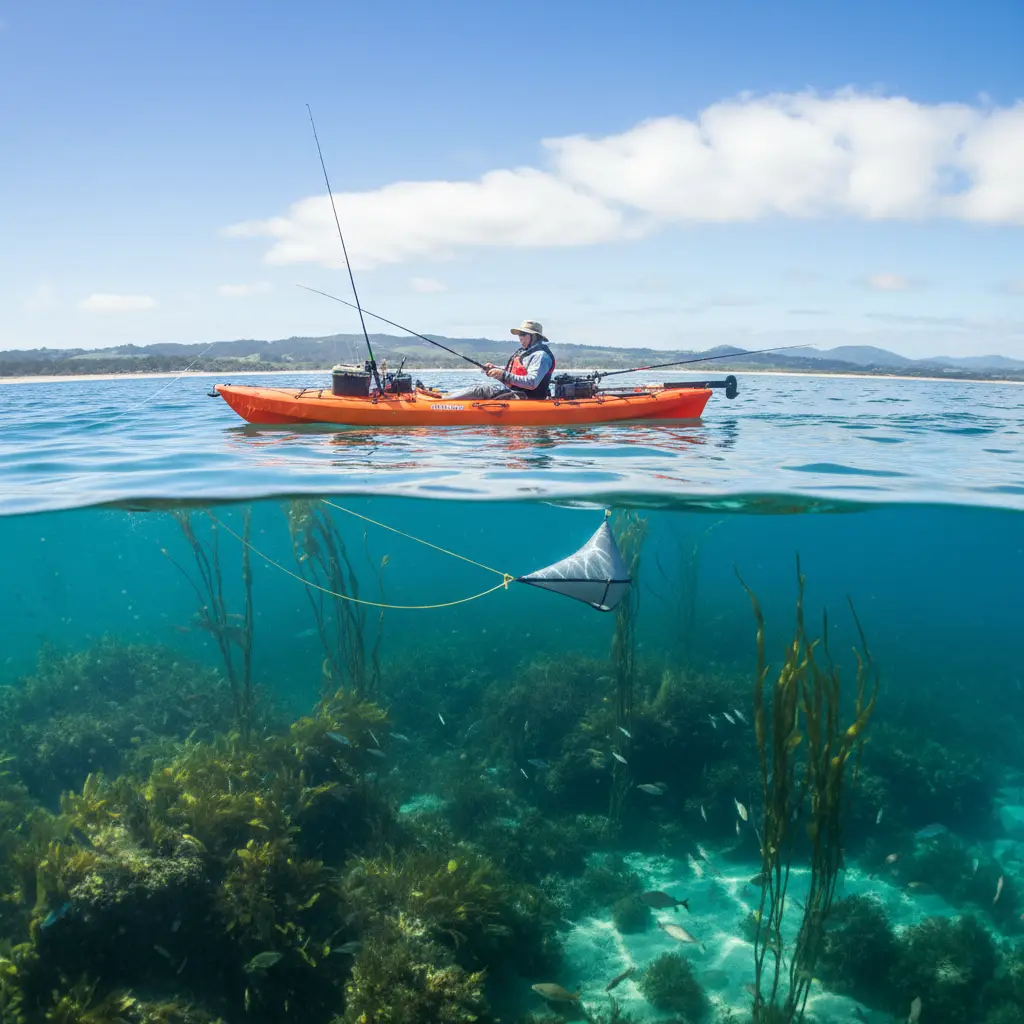
However, drift fishing with a drogue (sea anchor) is often the safer and more productive method in Leigh. A drogue slows your drift speed, allowing you to thoroughly cover the kelp lines without the risk of being tethered to the bottom. Position your drogue off the stern or bow depending on the wind direction to keep your casting angle optimal.
Essential Safety Gear for the Leigh Coast
The coast around Leigh is exposed to the open ocean. While Matheson Bay is sheltered, once you round the point, you are subject to ocean swells and wind. Safety is paramount.
What specific gear is required?
- VHF Radio: Cell phone coverage can be patchy near the cliffs. A waterproof handheld VHF radio clipped to your PFD is non-negotiable. Monitor channel 16.
- Personal Flotation Device (PFD): Always wear a properly fitted PFD. Inflatable PFDs are comfortable but ensure they are serviced. Foam PFDs offer immediate buoyancy and protection against rocks if you are washed ashore.
- High-Visibility Flag: The Leigh coast sees boat traffic ranging from small dinghies to commercial fishing vessels. A kayak sits low in the water and can disappear in a 1-metre swell. A tall flag increases your visibility profile significantly.
- Leashes: Leash everything. Your paddle and your rods should be tethered. If you capsize in the swell, you don’t want to lose your means of propulsion.
Seasonal Fishing Strategies for Leigh
Understanding the seasonal movements of fish in the Leigh area will drastically improve your catch rate. The fishery changes character throughout the year.
Spring and Summer
Spring sees the snapper moving into the shallows to spawn. This is often the best time for big fish in very shallow water (2-5 metres). Kingfish also begin to appear, patrolling the marker buoys and headlands. Live baiting with jack mackerel caught near the launch site can be deadly for kingfish during these warmer months.
Autumn and Winter
As the water cools, the fish tend to move slightly deeper, but the kelp lines remain productive year-round. Winter fishing in Leigh can be spectacular for condition. The “winter wandering” snapper are often kelp-darkened and heavy. In winter, you may need to slow your retrieve down and use scent additives on your soft baits, as the fish’s metabolism slows.
Frequently Asked Questions
Is it safe to kayak fish alone in Leigh?
While many experienced anglers do fish alone, the Leigh coast is exposed and conditions can change rapidly. It is highly recommended to fish with a buddy, especially if you are venturing far from Matheson Bay or around exposed headlands.
What is the best wind direction for fishing Matheson Bay?
Matheson Bay is most sheltered from Westerly and South-Westerly winds. Strong Easterlies or North-Easterlies blow directly onshore, creating swell and making launching and fishing difficult and dangerous.
Can I catch Kingfish from a kayak in Leigh?
Yes, Kingfish are frequently caught in Leigh, particularly around the headlands and near the reserve boundaries. Live baiting or mechanical jigging in slightly deeper water (15-20m) are effective methods.
Do I need a permit to fish near the marine reserve?
You do not need a permit to fish outside the reserve, but you must adhere to the amateur fishing regulations regarding size and bag limits set by the Ministry for Primary Industries (MPI). Fishing inside the reserve is strictly prohibited.
What is the best tide for fishing Leigh?
Generally, the change of light (dawn/dusk) combined with an incoming tide produces the best results. The current flow helps distribute scent and stirs up food along the reef structures.
Are there sharks in the waters around Leigh?
Bronze Whaler sharks are common in the area, particularly in summer. They often target fish being reeled in. If you encounter sharks, it is best to move spots to avoid losing your catch and gear.