
Yes, sharks are present at Goat Island Marine Reserve, although encounters with aggressive species are extremely rare. The most commonly sighted sharks are Bronze Whalers, which occasionally visit during warmer months but typically show little interest in swimmers. Visitors frequently spot harmless Eagle Rays, often mistaken for sharks, gliding through the kelp forests.
For thousands of visitors flocking to the Cape Rodney-Okakari Point Marine Reserve (commonly known as Goat Island) every year, the pristine waters offer a window into New Zealand’s vibrant marine biodiversity. However, the abundance of fish life naturally raises a question for many nervous swimmers: are there sharks at Goat Island? The answer lies in understanding the ecosystem of New Zealand’s first marine reserve. While it is a wild environment where predators exist, the reality of shark behavior here is far less dramatic than the movies suggest.
Common Shark Species Encountered at Goat Island
The marine reserve is a thriving ecosystem, and top predators are a sign of a healthy environment. While you are far more likely to be bumped by a hungry Snapper than a shark, several cartilaginous species inhabit or pass through these waters.
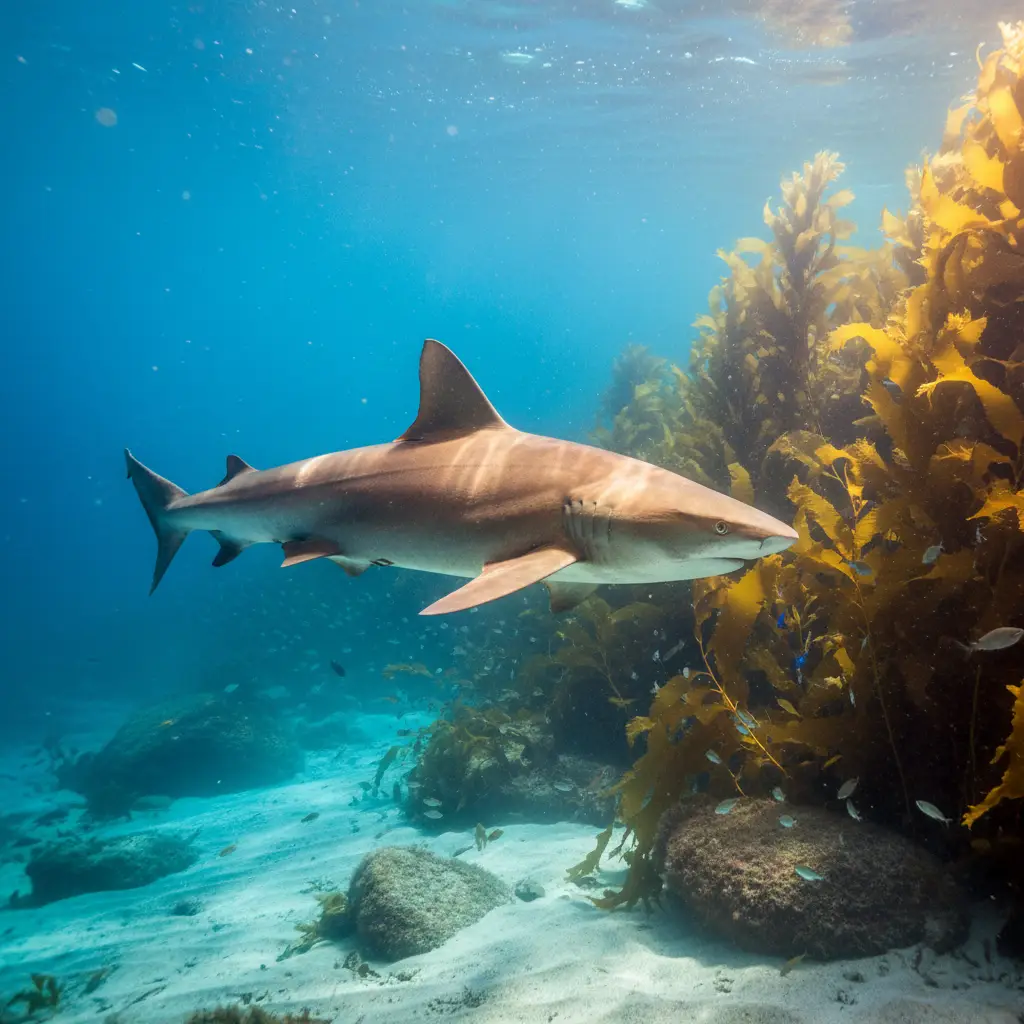
The Bronze Whaler (Carcharhinus brachyurus)
The Bronze Whaler, or “Bronzie,” is the shark species most commonly associated with the New Zealand coastline during summer. These sharks are pelagic but often come into shallow bays to feed on schooling fish.
- Appearance: They have a distinctive bronze-grey coloration on their backs and can grow up to 3 meters in length.
- Behavior: generally not aggressive toward humans unless provoked or in the presence of food (spearfishing catch). Since fishing is strictly prohibited at Goat Island, the risk of food-based aggression is significantly lower than in open waters.
- Sighting Frequency: Occasional. They are transient visitors rather than permanent residents of the shallow reef.
The Broadnose Sevengill Shark (Notorynchus cepedianus)
Often referred to as the “cow shark,” the Sevengill is a more prehistoric-looking species that favors deeper channels and kelp beds.
- Appearance: recognizable by their single dorsal fin set far back on the body and seven gill slits (most sharks have five).
- Behavior: They are inquisitive and opportunistic feeders. While they have a more formidable reputation than Bronze Whalers, sightings by snorkelers at Goat Island are rare as they tend to stay in deeper water or move at night.
Eagle Rays and Stingrays
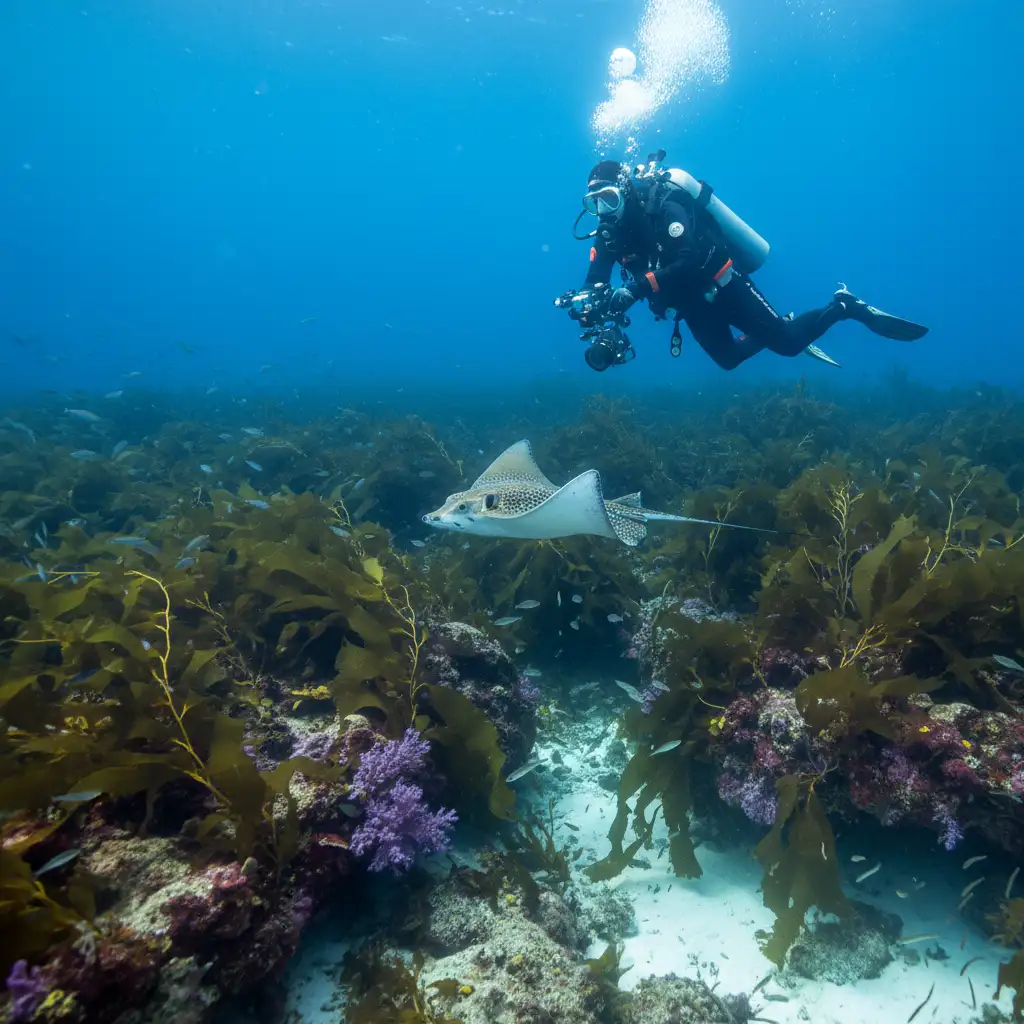
While not sharks, rays are their close cousins (elasmobranchs) and are frequently the cause of “shark” alarms raised by inexperienced swimmers. Short-tail stingrays and Eagle rays are abundant in the reserve.
- Eagle Rays: These graceful creatures are easily identified by their pointed wings and long tails. They feed on shellfish in the sand and are completely harmless to snorkelers who observe them respectfully.
Are They Dangerous? (Risk Assessment)
Understanding the distinction between presence and danger is critical for anyone entering the ocean. The risk of a shark attack at Goat Island is statistically infinitesimal.
The “No-Take” Safety Factor
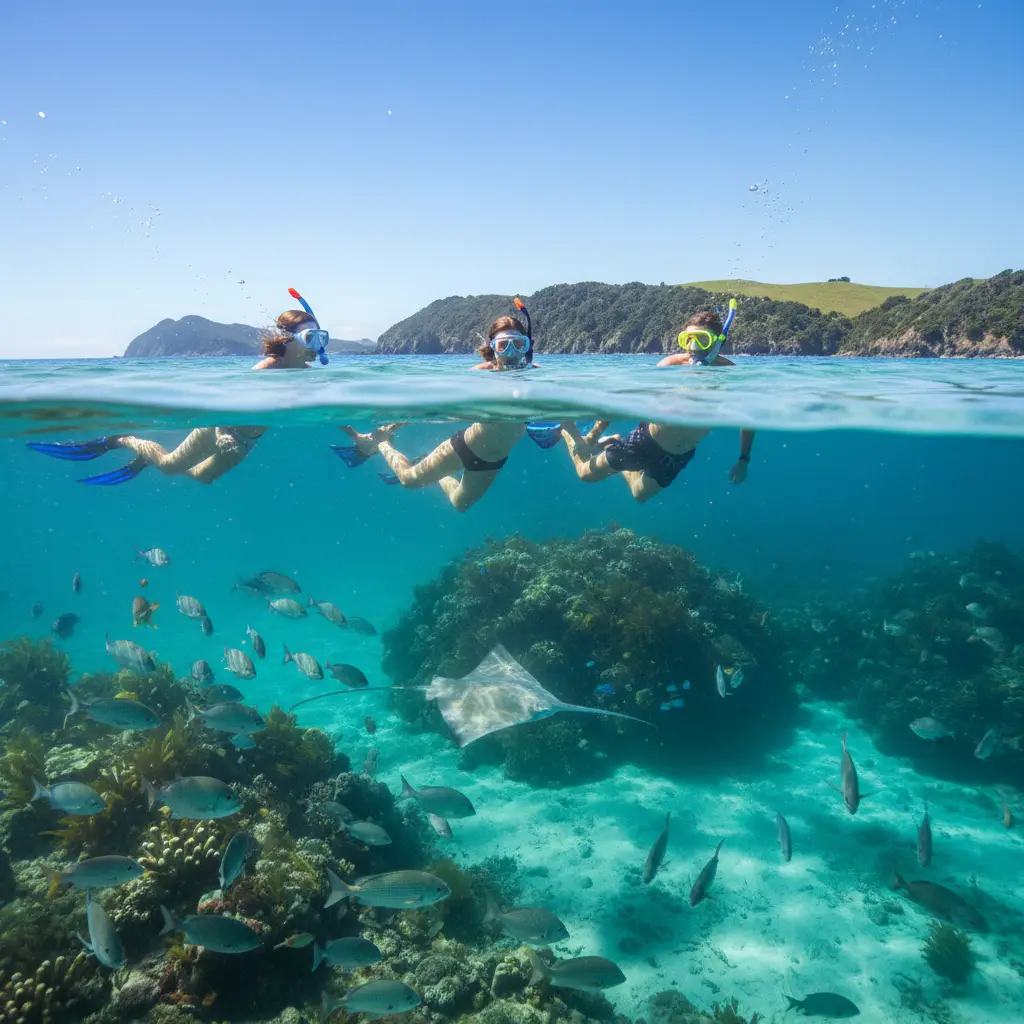
Goat Island is a “no-take” marine reserve. This status plays a massive role in swimmer safety. In areas where fishing and spearfishing occur, sharks associate humans with struggling fish, blood, and bait. This conditioning can lead to aggressive behavior.
At Goat Island, this association does not exist. The sharks that pass through are hunting natural prey—schools of kahawai, parore, or snapper—and generally view humans as large, clumsy, non-food objects. There is no blood in the water to trigger a feeding frenzy, making the environment significantly safer than non-protected coastal zones.
Statistics vs. Perception
There has never been a fatal shark attack recorded at the Cape Rodney-Okakari Point Marine Reserve. Incidents involving marine life are almost exclusively related to kina spines (sea urchins) or minor nips from over-eager snapper expecting food from tourists (note: feeding fish is illegal).
Seasonal Movements: When Are Sightings Most Likely?
Shark activity in the Hauraki Gulf and surrounding waters follows distinct seasonal patterns. Knowing these can help manage anxiety for tentative swimmers.
Summer (December – March)
This is the peak season for shark sightings, coinciding with the warmest water temperatures. Bronze Whalers move closer to shore during these months to breed and feed on the abundant schooling fish. If you are going to see a shark at Goat Island, it will likely be during a warm, calm day in February or March.
Winter (June – August)
Water temperatures drop significantly, and many pelagic species move to deeper, warmer offshore waters. Sightings of large sharks in the shallows become virtually non-existent during this time, although hardy divers braving the cold might still encounter resident stingrays.
What to Do If You See a Shark
Seeing a shark in the wild is a privilege, but it requires a calm response to ensure safety. Panic is the enemy; composure is your best defense.
1. Do Not Panic
Sharks are attracted to erratic splashing and distress signals, which mimic the vibrations of wounded prey. Thrashing the water in an attempt to flee is the worst possible reaction. Stay calm.
2. Maintain Eye Contact
Sharks are ambush predators. They prefer to approach from behind or below. By facing the shark and maintaining eye contact, you signal that you are aware of its presence. Pivot your body as the shark moves to keep it in your field of vision.
3. Move Slowly and Deliberately
Begin to swim smoothly back toward the shore or your boat. Keep your movements rhythmic and controlled. If you are snorkeling in a group (which is highly recommended), bunch together. A shark is far less likely to approach a large, consolidated mass of people than a solitary individual.
4. Stay Vertical
If a shark gets too close or appears curious, orient your body vertically in the water. This makes you appear larger and less like a seal or fish.
The Marine Reserve Effect: Why Biodiversity Matters
To understand why sharks might be present, one must appreciate the success of the Cape Rodney-Okakari Point Marine Reserve. Established in 1975, it was New Zealand’s first no-take marine reserve. The protection has allowed the kelp forests to regenerate (thanks to snapper eating the urchins) and fish populations to explode.
Sharks are apex predators; their presence is a biological indicator of a thriving ecosystem. Without them, the balance of the marine food web would collapse. When you visit Goat Island, you are entering a wild, functioning biotope. The presence of predators should be viewed as a testament to successful conservation efforts, not merely a threat to human recreation.
Tips for Safe Snorkeling and Diving
Maximizing safety at Goat Island goes beyond shark awareness. Follow these guidelines to ensure a safe experience in the reserve.
Visibility is Key
Avoid swimming at dawn or dusk, or when the water is murky. Sharks use these low-visibility conditions to hunt, relying on their other senses. Clear water allows you to see your surroundings and reduces the chance of a surprise encounter.
Avoid the Channel Current
The channel between the mainland and Goat Island can have strong currents. While this doesn’t attract sharks specifically, struggling against a current can exhaust a swimmer, making them vulnerable. Always wear fins and check the tide tables.
Do Not Feed the Fish
Feeding fish is illegal in the reserve, but some visitors ignore this. Feeding changes marine animal behavior, making them aggressive and expectant. It attracts smaller fish, which in turn can attract larger predators. Keep the ecosystem natural.
People Also Ask
Has anyone been attacked by a shark at Goat Island?
No, there have been no recorded fatal shark attacks at Goat Island Marine Reserve. The area is heavily monitored and frequented by thousands of swimmers, making it one of the safest marine environments in New Zealand despite the presence of marine life.
What time of year are sharks most common at Goat Island?
Sharks, particularly Bronze Whalers, are most commonly sighted during the summer months (December to March) when the water is warmest and schooling fish are abundant near the shore.
Are Bronze Whaler sharks dangerous to snorkelers?
Bronze Whalers are generally not considered dangerous to snorkelers unless provoked or food is present. They are fish-eaters and typically ignore humans. However, they are large predators and should be treated with respect and caution.
Can you swim at Goat Island in winter?
Yes, you can swim in winter, though the water temperature drops significantly (around 13-15°C). You will need a thick wetsuit (5mm or 7mm). The benefit of winter swimming is often better visibility and fewer crowds.
What is the most dangerous creature at Goat Island?
Statistically, the most common injuries come from stepping on Kina (sea urchins) or getting cut on sharp rocks. Strong currents in the channel also pose a greater risk to swimmer safety than sharks.
Do sharks come into shallow water at Goat Island?
Occasionally, yes. Bronze Whalers and Eagle Rays can venture into shallow water to feed or rest. However, they usually keep their distance from the busy beach areas where most snorkelers congregate.