The Goat Island visibility report winter vs summer comparison reveals a distinct trade-off: Winter (May–Oct) offers superior clarity, often exceeding 15 meters due to offshore winds and low plankton. Conversely, Summer (Nov–Apr) brings warmer water but reduced visibility (5–8 meters) caused by algal blooms and onshore sediment disturbance.
Goat Island Visibility Report: Winter vs Summer Overview
For marine enthusiasts visiting the Cape Rodney-Okakari Point Marine Reserve (commonly known as Goat Island), understanding the seasonal hydrodynamics is crucial for planning a successful expedition. The choice between visiting in winter or summer is not merely a matter of air temperature; it fundamentally dictates the type of underwater environment you will encounter.
The Goat Island visibility report winter vs summer analysis highlights a classic marine paradox. The most comfortable time to be in the water physically is often the least visually rewarding time to look through it. While the reserve is teeming with life year-round, the optical quality of the water column fluctuates based on wind direction, biological activity, and sediment suspension.
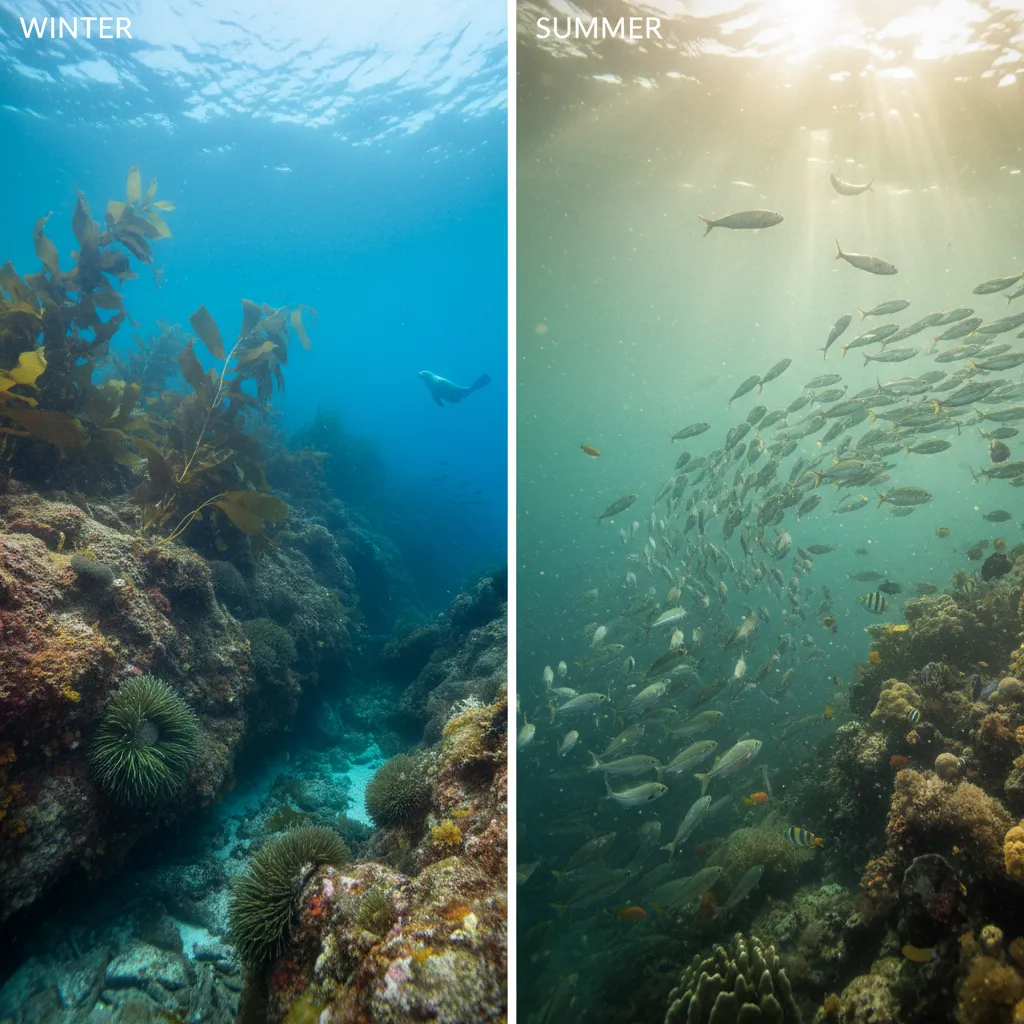
Why Is Visibility Better in Winter?
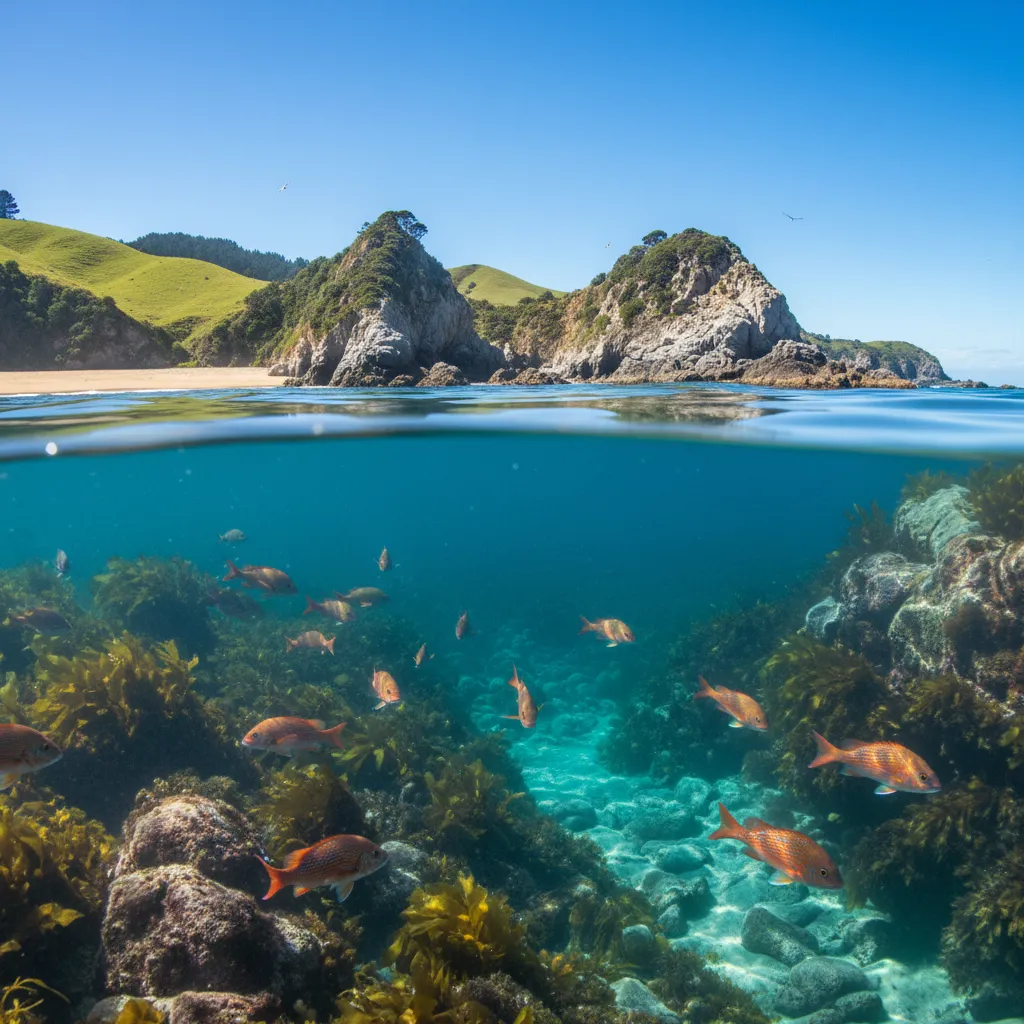
It is a common misconception among novice snorkelers that summer sunshine equates to clear water. In the context of the Hauraki Gulf and the north-eastern coast of New Zealand, the opposite is scientifically true. Winter, specifically from late May through September, consistently provides the highest visibility indices, often ranging between 15 to 25 meters horizontally.
The Impact of Wind Direction
The primary driver of clarity at Goat Island is the prevailing wind direction. The reserve faces north/north-east.
- Winter Winds (South/South-West): During the colder months, New Zealand experiences prevailing south-westerly airflows. Because Goat Island is sheltered by the coastline from these directions, the wind blows offshore. This flattens the sea state, preventing waves from crashing against the shoreline and churning up the sandy substrate. The result is calm, sediment-free water.
- Summer Winds (North/North-East): Summer weather patterns often bring sea breezes and cyclonic swells from the Pacific. These onshore winds push waves directly into the reserve, suspending particulate matter and sand in the water column, drastically reducing visibility.
Reduced Biological Particulates
Beyond the mechanical action of waves, the biological composition of the water changes. In colder temperatures, metabolic rates of marine microorganisms slow down. There is significantly less suspended organic matter in the water column during July and August compared to February. This lack of “biological noise” allows light to penetrate deeper and travel further horizontally, creating the crystalline “blue water” experience prized by underwater photographers.
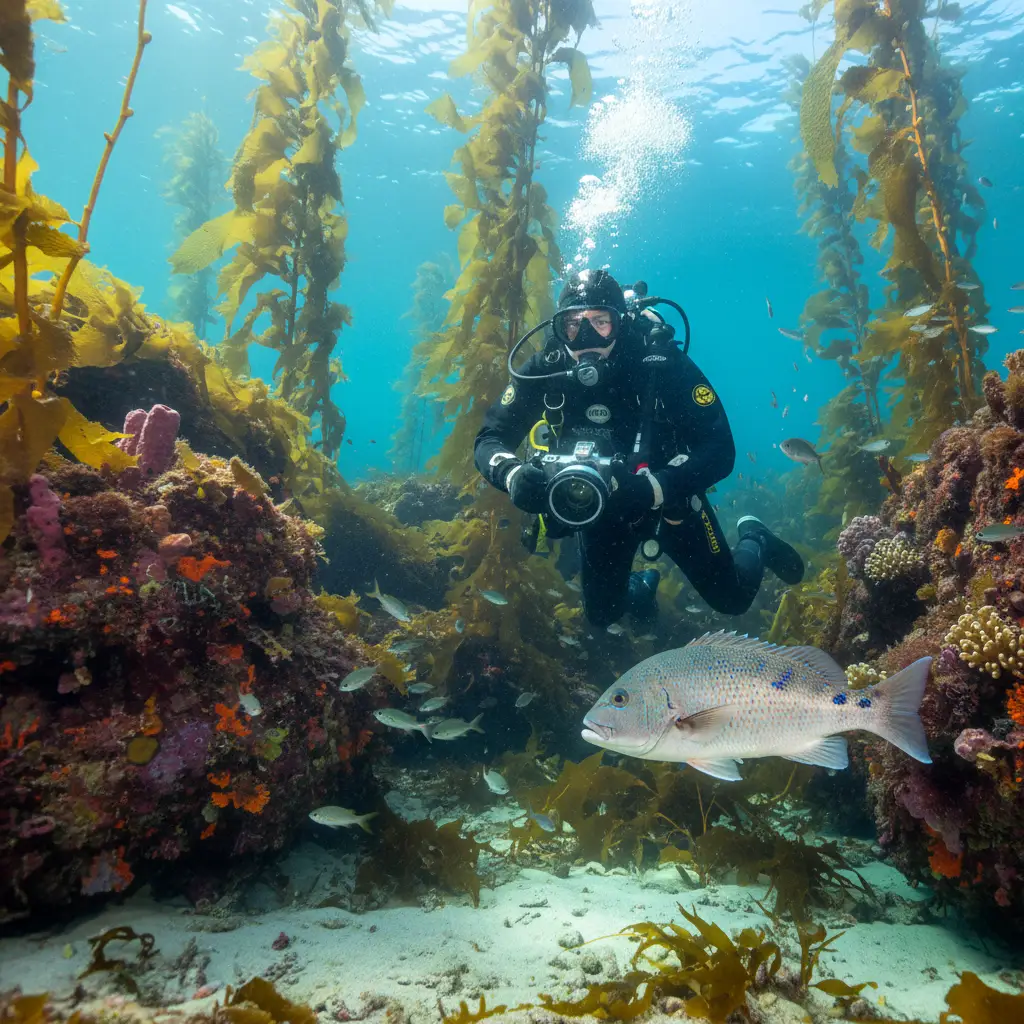
Summer Plankton Blooms & Turbidity
While summer offers the allure of warm beach days, the underwater environment undergoes a process known as eutrophication and blooming. As the sunlight hours increase and water temperatures rise, the conditions become optimal for phytoplankton and zooplankton reproduction.
The Spring and Summer Bloom
Starting in late spring (October/November), the ocean experiences a surge in microscopic life. While this is excellent for the ecosystem—providing food for baitfish, which in turn feed the larger predators—it acts as a visual barrier for divers. This phenomenon, often referred to as “nutrient-rich soup,” can reduce visibility to less than 5 meters.
The water may take on a green or hazy hue. For macro photography, this can result in “backscatter,” where the strobe light reflects off the particles in front of the lens, ruining the image. However, it is important to note that this turbidity is a sign of a healthy, living ocean. The soup is alive with larval fish, crab zoea, and other microscopic wonders that form the base of the food chain.
Temperature Trade-offs: Wetsuit Thickness Guide
To enjoy the superior visibility of winter, one must be prepared for the thermal reality of the Hauraki Gulf. Hypothermia is a genuine risk for unprepared snorkelers, even in temperate New Zealand waters. Conversely, overheating in a thick suit during a mid-summer surface swim can be equally dangerous.
Seasonal Water Temperatures
- Winter Minimum (August): 13°C – 15°C (55°F – 59°F)
- Summer Maximum (February): 21°C – 23°C (70°F – 73°F)
Recommended Exposure Protection
Choosing the right gear is essential for extending your bottom time. If you are shivering, you are consuming oxygen at a higher rate and not enjoying the reserve.
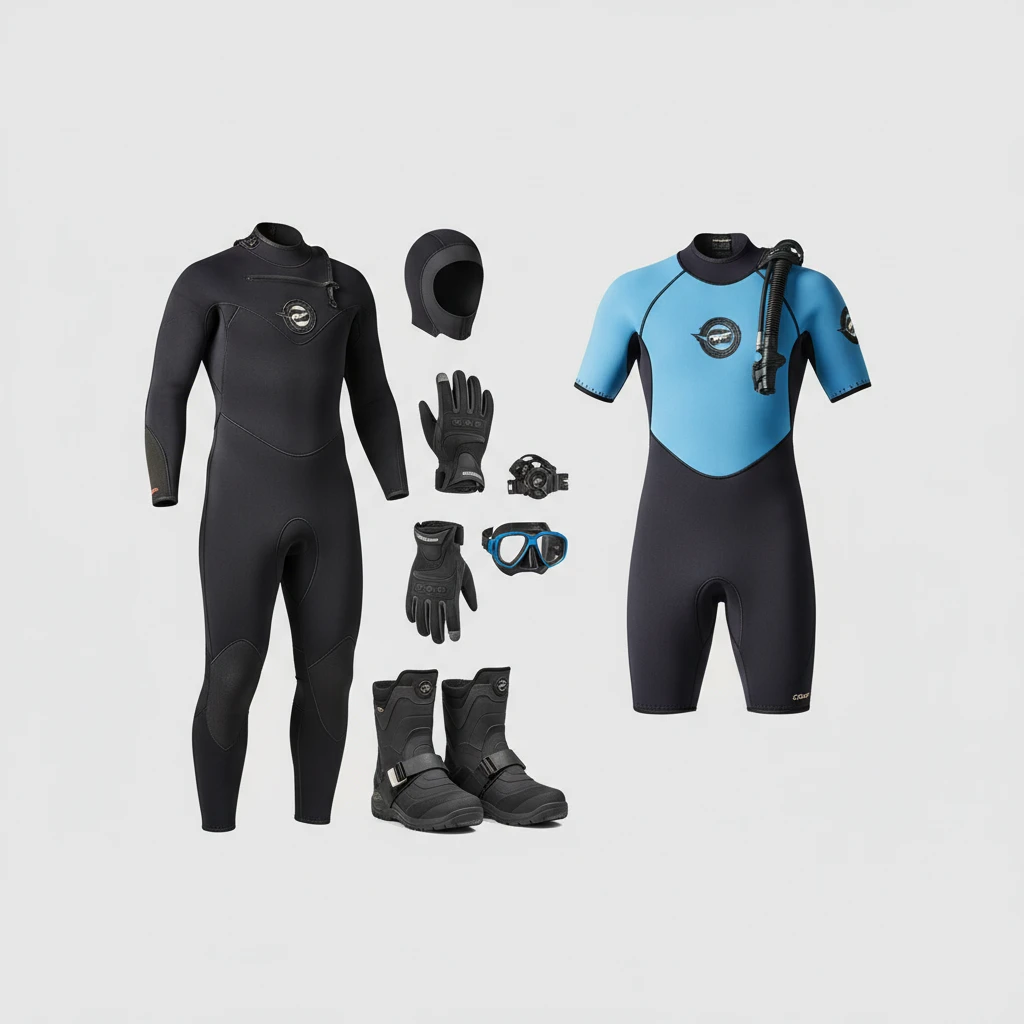
Winter Gear Strategy (For Visibility Hunters)
To dive or snorkel comfortably when the visibility is at its peak (15°C water), you need a semi-dry approach:
- Wetsuit: A 7mm wetsuit is the standard. An open-cell freediving suit is even warmer as it eliminates water circulation against the skin.
- Accessories: A hood is non-negotiable, as significant heat is lost through the head. 3mm or 5mm gloves and booties are also required.
- Drysuit: For scuba divers doing repetitive dives, a drysuit with light undergarments is the ultimate solution for winter visibility diving.
Summer Gear Strategy (For Recreational Swimmers)
When the water hits 22°C, the freedom of movement increases:
- Wetsuit: A 3mm full steamer or even a “shorty” is usually sufficient for snorkeling. Scuba divers may still prefer a 5mm suit for deep dives where the thermocline (a layer of colder water) sits around 10-15 meters deep.
- Rash Guards: Even if the water feels warm enough for swimwear, a rash guard is recommended for protection against UV rays and stinging plankton (sea lice), which are more prevalent in summer.
Best Months for Stingray Photography
Visibility is only one metric of a good dive; the subject matter is the other. The behavior of marine life at Goat Island changes drastically with the seasons, influencing when photographers should plan their visits.
Summer: The Season of Rays
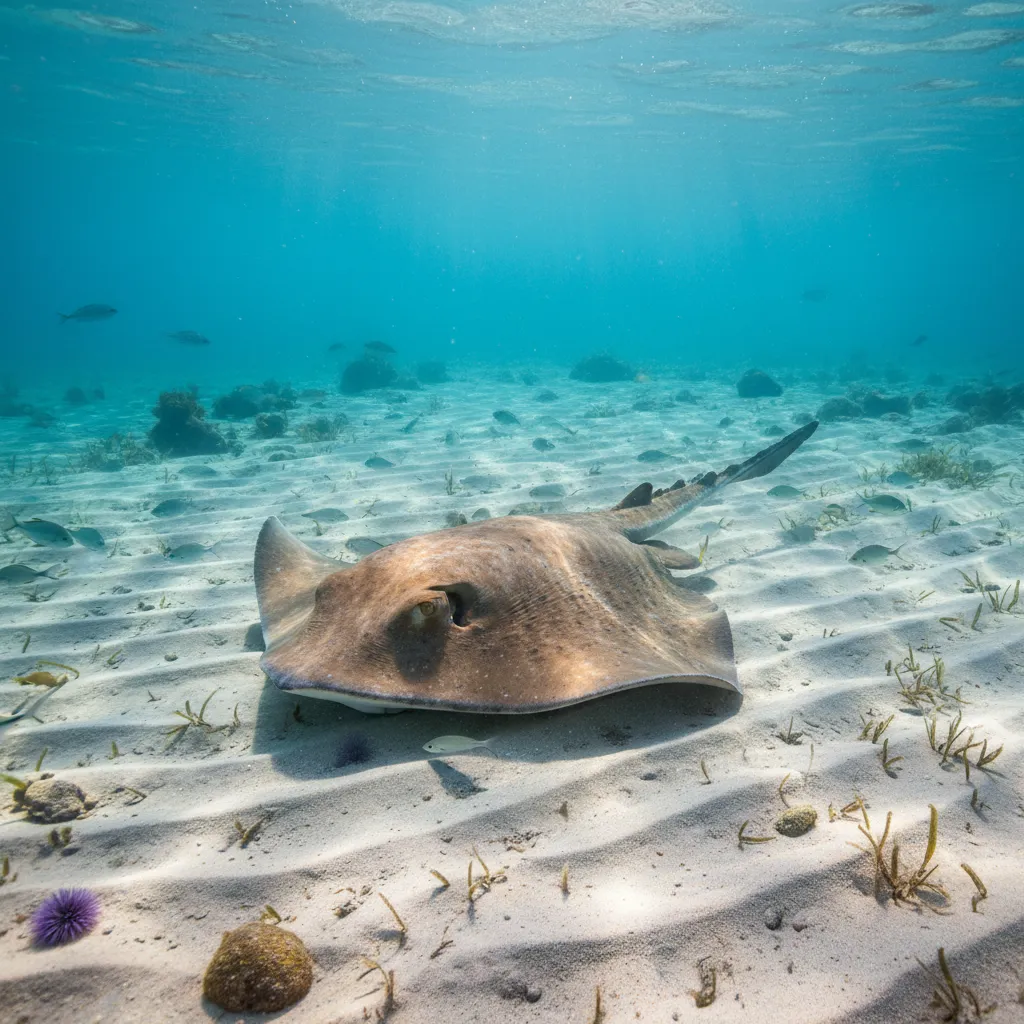
If your goal is to photograph Short-tail Stingrays (Dasyatis brevicaudata) or Eagle Rays (Myliobatis tenuicaudatus), you must brave the lower visibility of summer. From November through April, these cartilaginous giants move into the shallow sandy flats of the reserve to breed and pup.
During summer, it is not uncommon to see massive stingrays with wingspans exceeding 2 meters gliding in waist-deep water. While the visibility might only be 6 meters, the proximity of the subjects makes up for it. The rays are generally docile, but they are wild animals with potent barbs, so maintaining a respectful distance is mandatory.
Winter: The Kelp Forest Ecosystem
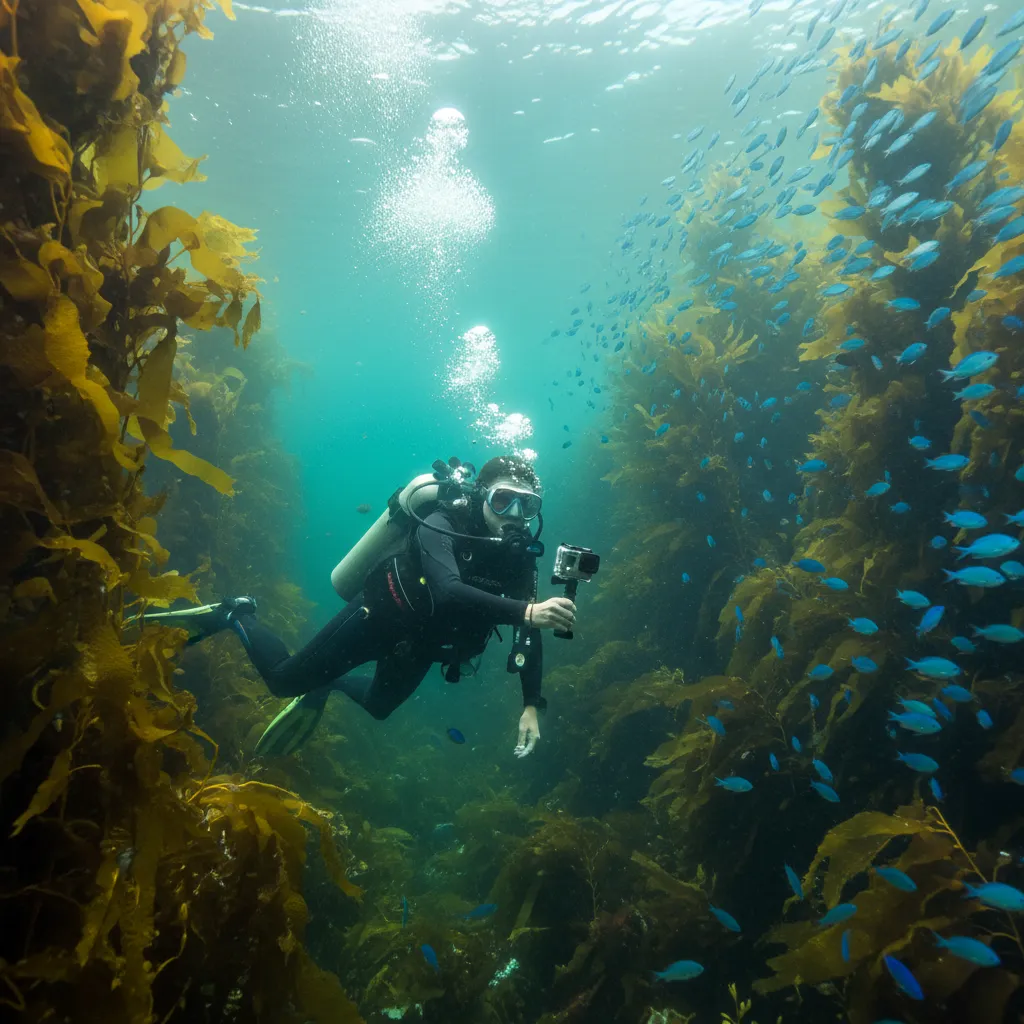
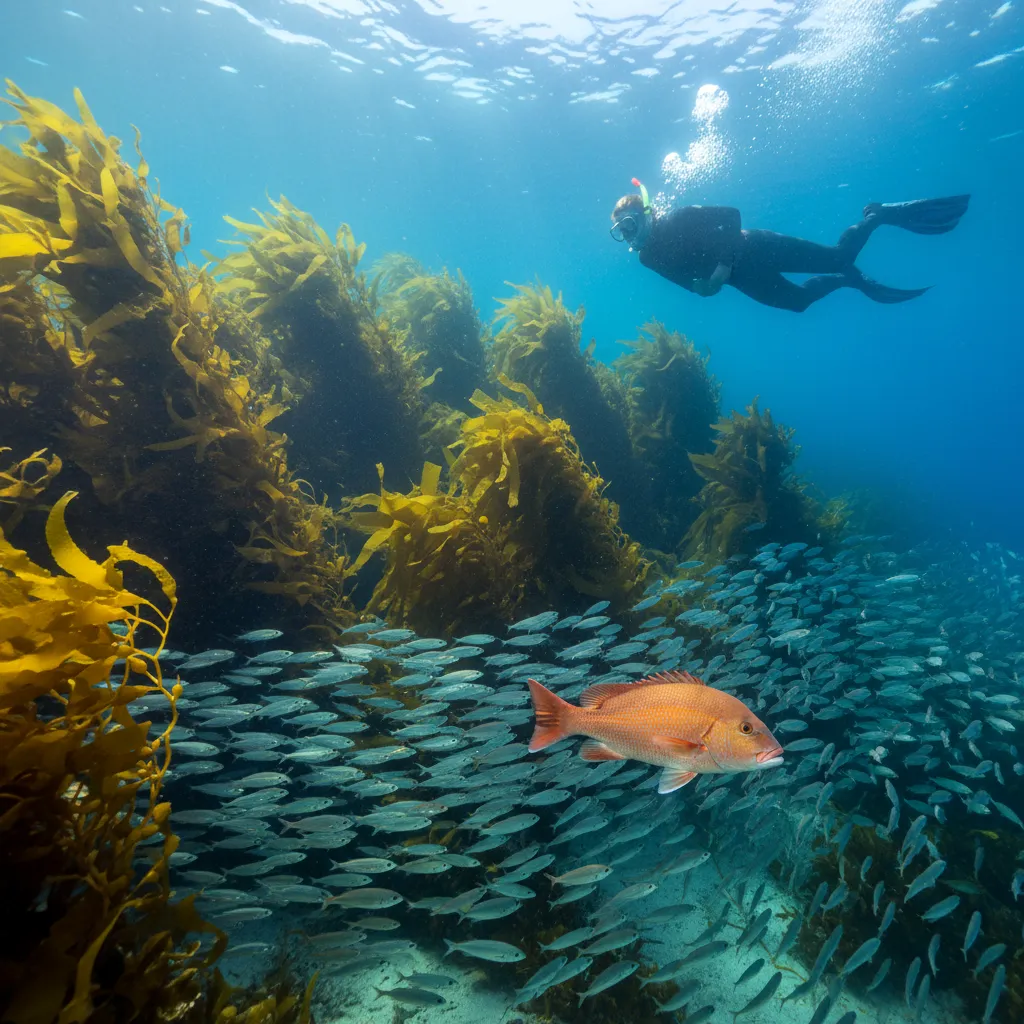
Winter clarity is best for capturing wide-angle scenic shots of the habitat. The Kelp forests (Ecklonia radiata) are lush, and the clearer water allows for capturing the interplay of light through the fronds. Large schools of Blue Maomao and Snapper (Tāmure) are resident year-round, but in winter, you can photograph them against a deep blue background rather than a green haze.
How to Forecast Visibility Before You Go
Nothing is worse than driving to Leigh only to find the conditions undiveable. To ensure your Goat Island visibility report is accurate before you leave home, utilize the following data points.
1. The Swell and Wind Forecast
Check marine forecasts (such as MetService or Swellmap) for the “Leigh” area.
Go: Winds from the SW, S, or SE. Swell below 0.8 meters.
No-Go: Strong winds from N or NE. Swell above 1.0 meter (this will churn the sand).
2. The Leigh Marine Laboratory Live Cam
The University of Auckland operates a research station nearby. While they do not always have a public underwater live feed, checking their localized weather data is the most accurate source for immediate conditions. Additionally, local dive shops in Warkworth or Matakana often post daily updates on social media.
3. Tide Timing
Regardless of the season, always aim for High Tide.
- Incoming Tide: Brings in fresh, clear oceanic water from the deeper Hauraki Gulf.
- Outgoing Tide: Pulls sediment and particulate matter off the rocks and beach, significantly reducing visibility.
- Slack High Tide: The 30-minute window right at the peak of the tide offers the calmest water and best clarity.
Frequently Asked Questions
What is the best month to snorkel at Goat Island for clear water?
The absolute best months for clarity are June, July, and August. During these winter months, the prevailing offshore winds flatten the sea, and the lack of plankton blooms can result in visibility exceeding 20 meters, provided there has been no recent heavy rainfall.
Do I need a wetsuit for Goat Island in summer?
Yes, it is highly recommended. While the water can reach 22°C (72°F), you lose body heat 25 times faster in water than in air. A 3mm wetsuit provides thermal protection, buoyancy, and protection against the sun and stinging sea lice. Without one, most swimmers get cold after 20 minutes.
Are there sharks at Goat Island?
Yes, but they are generally harmless species. You may encounter Bronze Whaler sharks or Sevengill sharks, particularly in summer. They are usually indifferent to snorkelers. The reserve is their natural habitat, and sightings are considered a privilege, not a threat.
Why is the water green at Goat Island in summer?
The green tint is caused by phytoplankton blooms. Sunlight and warmer water temperatures trigger the rapid reproduction of microscopic algae. While this reduces visibility, it is the foundation of the marine food web and attracts high densities of fish life.
Can I rent snorkeling gear at Goat Island?
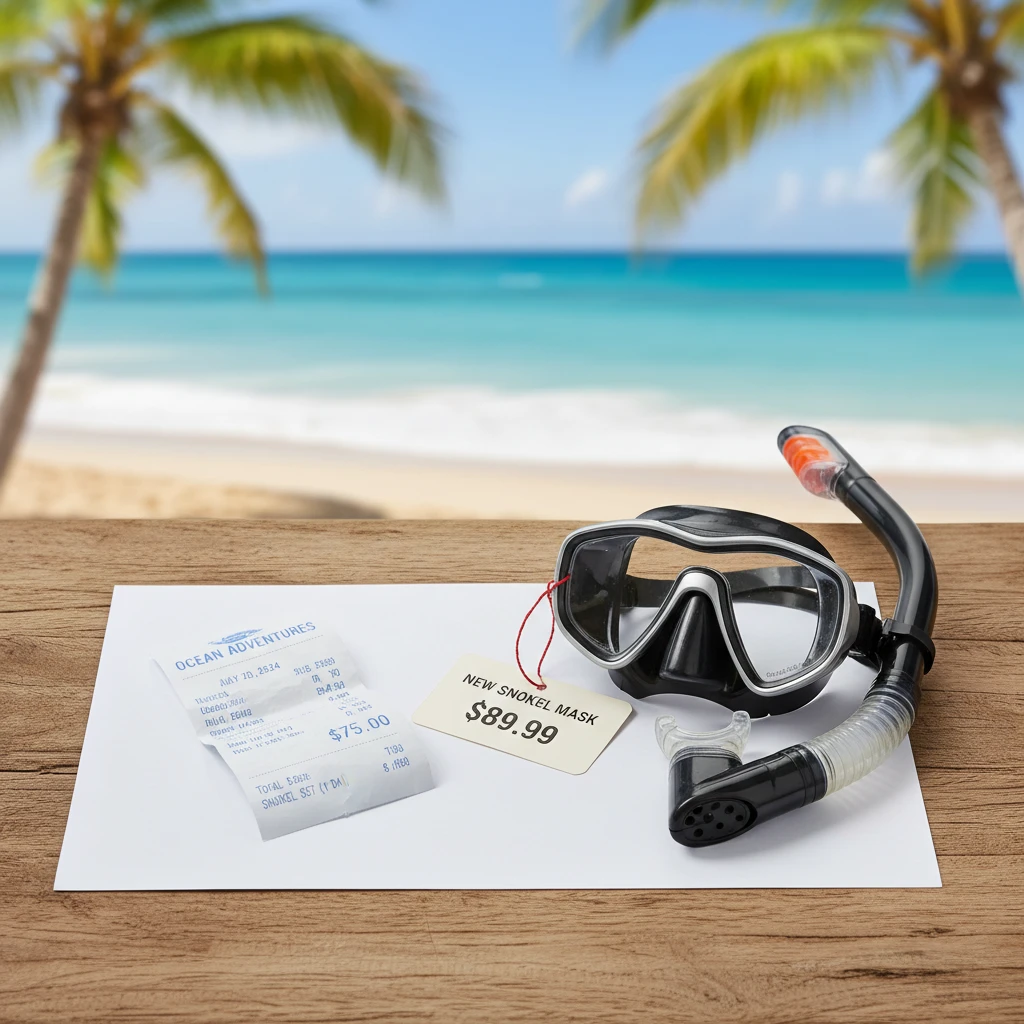
Yes, there are commercial operators located near the reserve (such as Goat Island Dive & Snorkel) that hire out high-quality wetsuits, masks, snorkels, and fins. It is advisable to book these in advance during the peak summer season (December–February).
Is Goat Island safe for beginners?
Generally, yes. The beach entry is shallow and protected, making it ideal for beginners. However, swimmers should always stay within their depth limits, dive with a buddy, and be aware of currents that can develop further out near the island itself.