
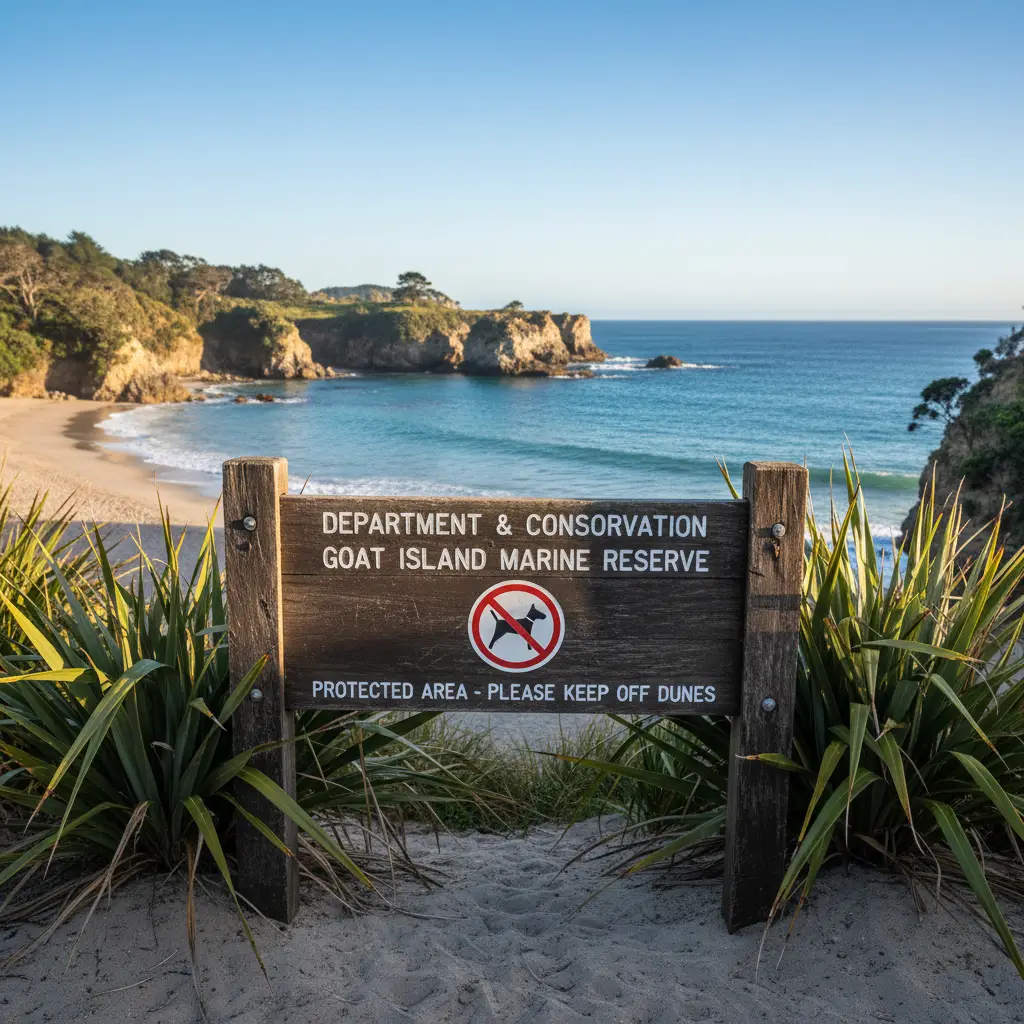
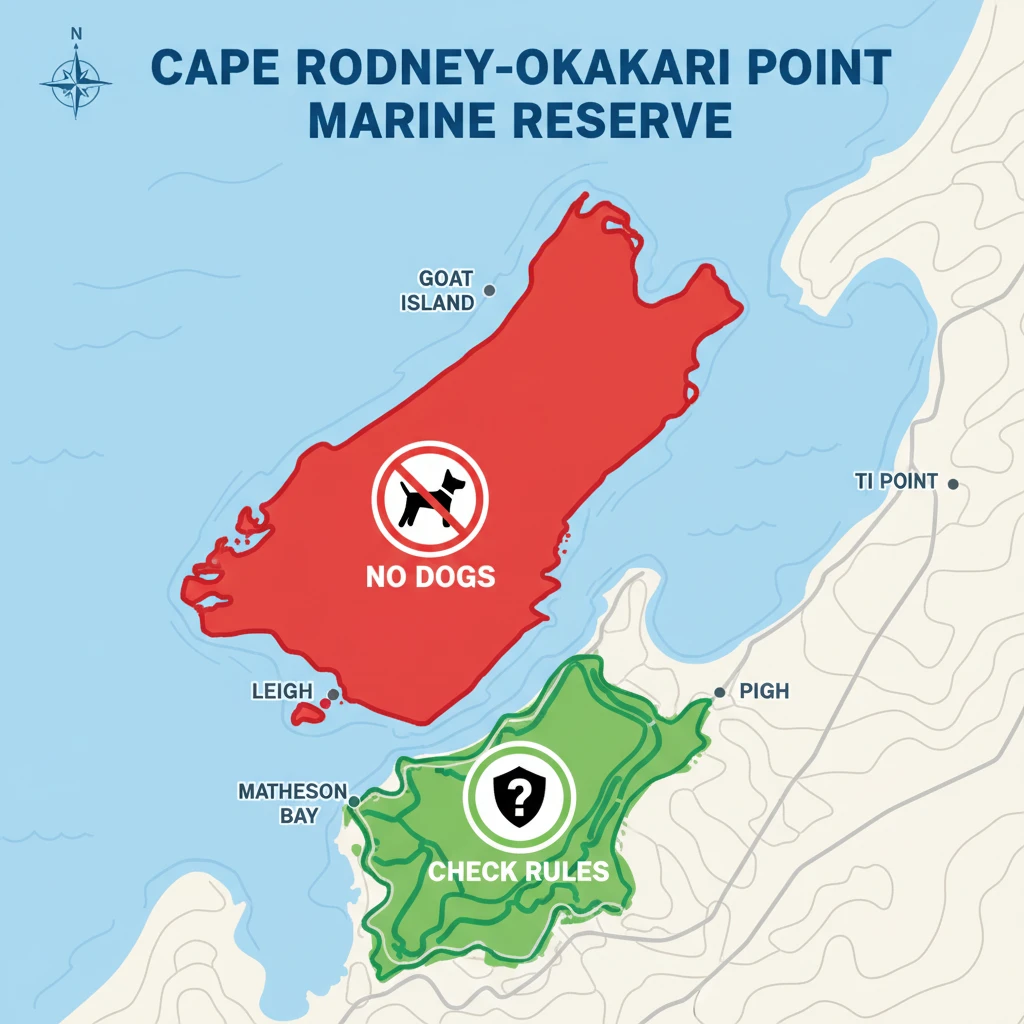
Dogs are strictly prohibited at Goat Island Marine Reserve (Cape Rodney-Okakari Point Marine Reserve) at all times. This ban applies to the entire foreshore, the beach, and the rocky outcrops under the jurisdiction of the Department of Conservation (DOC). The restriction is enforced under the Marine Reserves Act 1971 to protect vulnerable ground-nesting shorebirds and resting marine mammals. Unlike municipal beaches with seasonal windows, this is a federal conservation zone with a zero-tolerance policy for pets, regardless of whether they are leashed, carried, or well-behaved. Visitors traveling with dogs must utilize nearby kennels or visit alternative dog-friendly zones in the Leigh area outside the reserve boundaries.
The Reality of Visiting Goat Island with Pets
For many Kiwi families and international travelers, the allure of the Cape Rodney-Okakari Point Marine Reserve—colloquially known as Goat Island—is undeniable. As New Zealand’s first marine reserve, it offers unparalleled snorkeling and education opportunities. However, for dog owners, it presents a significant logistical challenge. Through our extensive analysis of Department of Conservation (DOC) protocols and Auckland Council bylaws, we aim to provide a definitive guide on why this area is a “no-go” zone for pets and how to manage your logistics if you are traveling with one.
The rules here are not merely suggestions; they are legislative mandates designed to preserve a delicate ecological balance. Understanding the nuance between a “beach” and a “marine reserve” is critical for avoiding hefty fines and, more importantly, preventing irreversible harm to local wildlife.
Understanding the Marine Reserves Act 1971
To understand the strictness of the ban, one must look at the governing legislation. Goat Island operates under the Marine Reserves Act 1971. This Act is distinct from the Dog Control Act 1996 which governs local parks. Under the Marine Reserves Act, the primary objective is the total preservation of the environment in its natural state.
While most people associate the reserve with the water (no fishing), the jurisdiction extends to the foreshore. The foreshore is defined as the area of land strictly between the high and low water marks, but in the case of Goat Island, the adjacent reserves managed by DOC also fall under strict conservation mandates.
In our experience dealing with conservation law interpretation, confusion often arises because visitors assume the “beach” is public recreational land similar to Mission Bay or Omaha. It is not. It is a biological laboratory and sanctuary. The presence of a dog, a natural predator introduced to this ecosystem, contravenes the requirement to minimize disturbance to marine life and associated wildlife.
The Ecological Rationale: Why Dogs Are Banned
The prohibition is not intended to punish dog owners; it is a biological necessity. The reserve is a critical habitat for species that have no defense mechanisms against canines. Even the most docile, handbag-sized dog presents a threat through presence alone.
Protecting Ground-Nesting Shorebirds
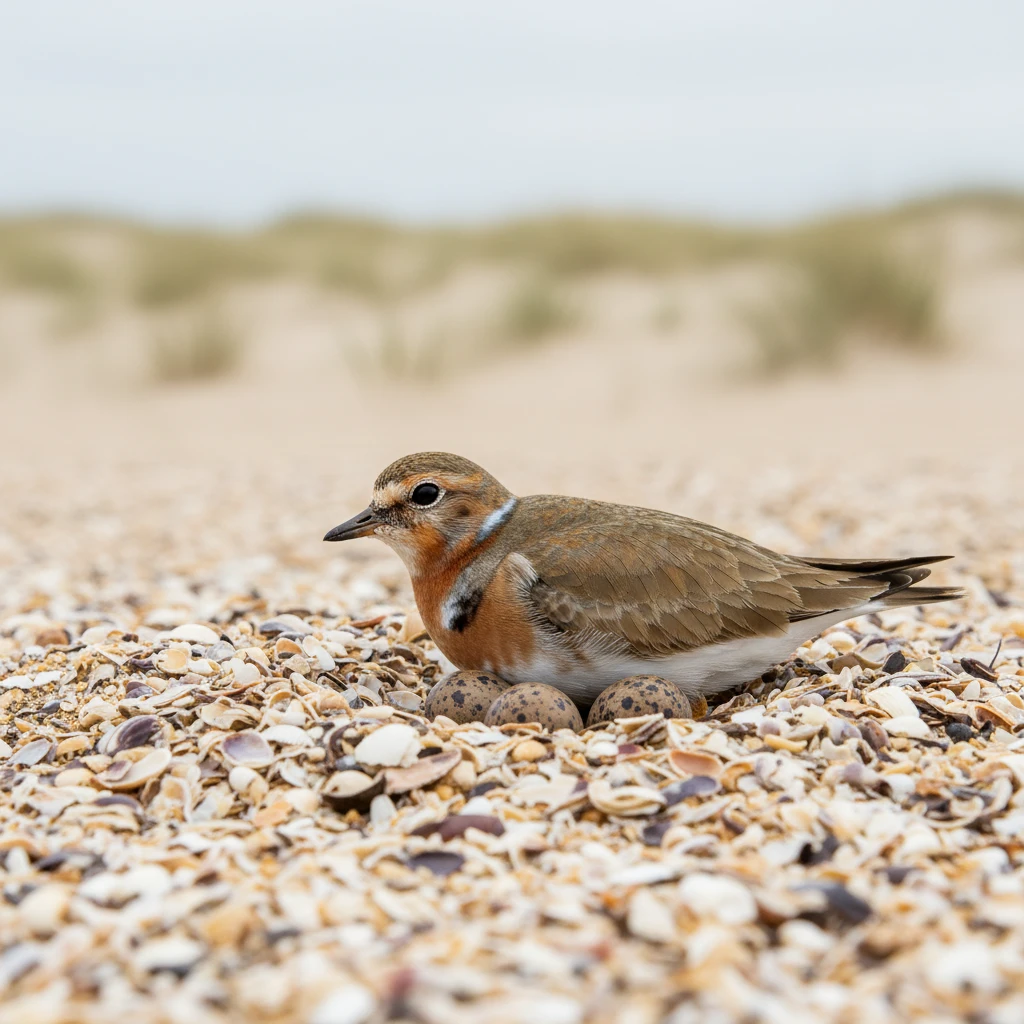
The primary concern at Goat Island involves the New Zealand Dotterel (Tūturiwhatu) and the Variable Oystercatcher (Tōrea). These birds do not build nests in trees; they lay their eggs directly on the sand or in crushed shell drifts above the high-tide mark.
Because the eggs are camouflaged to look like stones, they are nearly invisible to humans and dogs. A dog running on the beach can easily crush eggs. However, the greater threat is disturbance. When a dog approaches—even on a leash—parent birds perceive a predator. They flee the nest to distract the intruder. In the height of summer, leaving eggs exposed for even 15 minutes can result in the embryos cooking in the heat, or conversely, getting chilled by sea spray. Repeated disturbances lead to total nest abandonment.
Marine Mammal Interactions
New Zealand Fur Seals (Kekeno) frequently use the rocky platforms of Goat Island to rest (haul out). Seals on land are resting to conserve energy. A dog encounter forces them into a “fight or flight” response. We have seen instances where dogs harass seals, leading to injury for the dog (seals bite) or exhaustion and death for the seal, particularly pups.
The “Predator Shadow”: An Insider’s Perspective on Wildlife Stress
Most travel guides tell you dogs are banned because they might bite a bird. However, marine biologists and rangers understand a deeper, invisible factor known as the “Predator Shadow.”
In our discussions with conservationists, a critical point often missed is the olfactory impact of canines. Dogs leave behind scent markers (urine and glandular oils) that persist long after the animal has left the beach. For native wildlife, particularly ground-nesting birds and lizards (skinks/geckos) found in the flax margins, this scent signals that a predator is active in the area.
The Hidden Cost: This lingering scent can cause “landscape of fear” behavior. Birds may choose to nest in suboptimal areas to avoid the scent, leading to lower survival rates. Lizards may reduce their basking time (necessary for digestion and energy) to stay hidden. Therefore, even if you carry your dog and it never touches the ground, or if you visit at 5 AM when no one is watching, the biological residue your pet leaves behind degrades the habitat quality for days. This is why the “I’ll just be quick” mentality is ecologically dangerous.
Fines, Penalties, and Enforcement
Ignorance of the law is not a valid defense at a Marine Reserve. The Department of Conservation and authorized warrant holders patrol these areas. The consequences for bringing a dog onto the reserve can be severe.
- Infringement Fines: An instant infringement fee can be issued for bringing a dog into a prohibited conservation area. These typically start around $300 but can escalate depending on the specific bylaw or act utilized.
- Prosecution: If a dog attacks or harasses protected wildlife, the owner can be prosecuted under the Dog Control Act 1996 or the Wildlife Act 1953. Penalties for killing protected wildlife can reach up to $100,000 or imprisonment, and the court may order the destruction of the dog.
- Seizure: Rangers have the authority to seize dogs found at large in controlled areas if they pose an immediate threat to wildlife.
Furthermore, local Auckland Council bylaws support these DOC rules. Council Animal Management officers conduct patrols in the Leigh area, specifically targeting high-value conservation zones during peak summer periods.
Logistics: What to Do With Your Dog?
If you are road-tripping North from Auckland and want to visit Goat Island, you must plan ahead. Leaving a dog in a car at the Goat Island car park is extremely dangerous and advised against. The car park is exposed, lacks shade, and reflects heat from the asphalt. Temperatures inside a vehicle can reach fatal levels within minutes, even on mild days.
Recommended Solutions:
- Local Kennels: There are several boarding kennels in the Warkworth and Matakana area. Booking a “day stay” allows you to snorkel worry-free while your dog is cared for.
- Pet Sitters: Use reputable apps to find a local pet sitter in Leigh or Matakana who can watch your dog for a few hours.
- Split Shifts: If traveling in a group, one person stays with the dog at a nearby dog-friendly location (like the top of the road outside the reserve boundary, provided it is Council land and safe) while others visit the reserve. However, this is often impractical due to the lack of sidewalks and shade on Goat Island Road.
Nearby Dog-Friendly Zones (Alternatives)
Just because Goat Island is off-limits doesn’t mean the entire Matakana Coast is closed to pets. If you need to exercise your dog before or after your human-only visit to the reserve, consider these nearby locations. Note: Always check current Auckland Council signs as rules change seasonally (usually from Dec 1 to Mar 1).
1. Matheson Bay (Leigh)
Located just a short drive from Goat Island, Matheson Bay is a popular family beach.
The Rules: Typically, dogs are prohibited on the main beach during peak summer daylight hours (e.g., 10 am to 5 pm) but are allowed off-leash or on-leash in the early mornings and evenings. There is often a designated dog exercise area on the grass reserve behind the beach—check the signage at the entrance.
2. Pakiri Beach
A vast, wild stretch of white sand to the north.
The Rules: This area is less developed, but strict rules still apply regarding dotterel nesting sites. Dogs are generally allowed but often must be leashed, especially near the dunes. It is imperative to keep dogs away from the dune systems where birds nest.
3. Omaha Beach
A bit further south, Omaha has very strict zoning.
The Rules: Omaha has complex seasonal bans. During summer, dogs are banned from the beach during the day. However, there are specific quarry tracks and reserve areas where dogs can be walked on-leash. It is heavily patrolled, so compliance is key.
Pro-Tip: The Boundary Trap
A common mistake we see involves the “boundary trap.” The road leading down to Goat Island (Goat Island Road) is a public road. However, as soon as you enter the car park and the pathway down to the beach, you are entering DOC jurisdiction. There is no “safe zone” at the bottom of the hill.
If you attempt to walk your dog down the driveway to “just look” at the water, you are technically in violation. The rangers are stationed at the bottom near the dive shop and toilet blocks. To avoid an awkward confrontation or a fine, do not bring the dog past the upper road crest.

Summary for Responsible Travelers
New Zealand’s “Clean Green” image relies on the cooperation of locals and visitors. Goat Island is a sanctuary, not a park. By respecting the no-dog rule, you are directly contributing to the survival of the NZ Dotterel and the health of the marine ecosystem.
- Plan Ahead: Book a kennel in Warkworth if you are bringing a pet.
- Check Signs: Never assume a beach is dog-friendly in NZ, especially if it has brown DOC signage.
- Spread the Word: Help other travelers understand that the ban is about wildlife survival, not bureaucracy.
Enjoy the underwater wonders of Goat Island, but for the sake of the wildlife, let your four-legged friends enjoy a nap at home or a run at Matheson Bay instead.