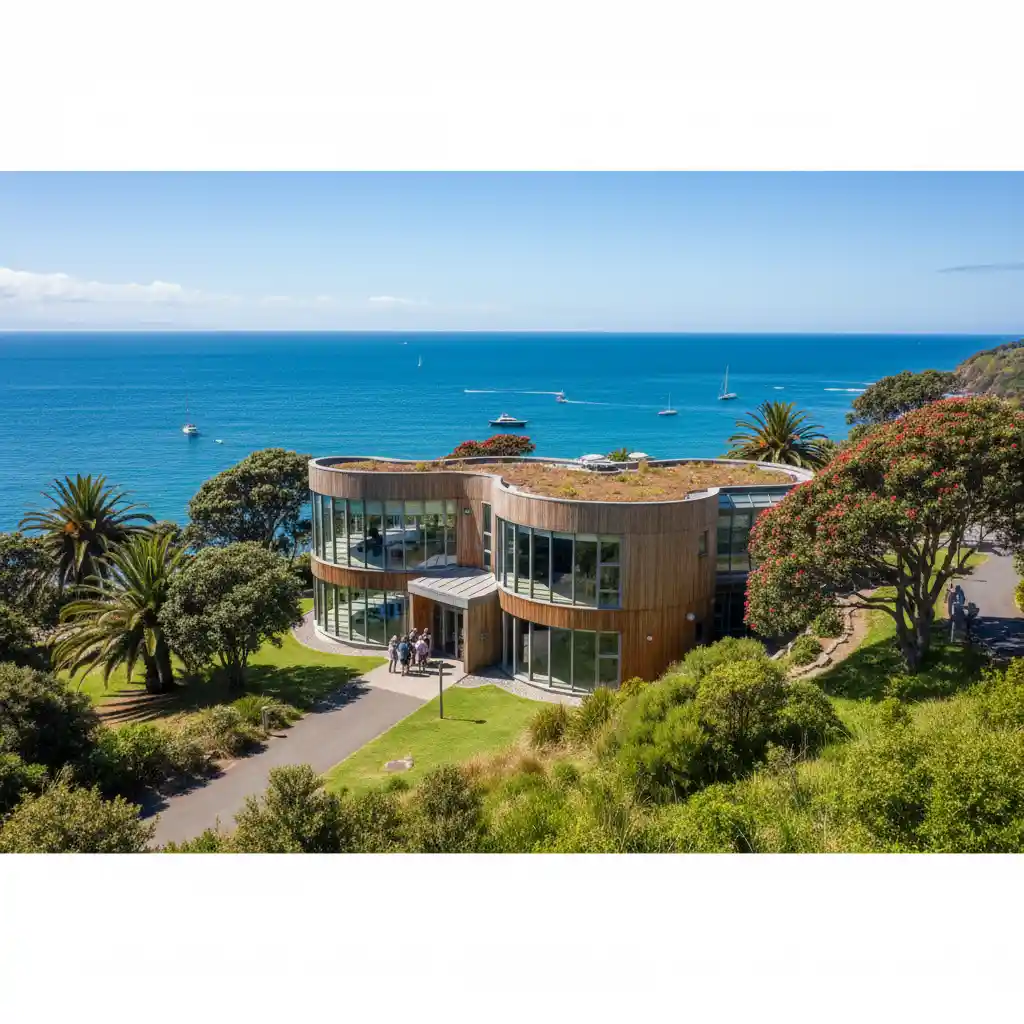
What is the Marine Discovery Centre at Goat Island?
The Goat Island Marine Discovery Centre is a premier educational facility located at the Cape Rodney-Okakari Point Marine Reserve in Leigh, New Zealand. Operated by the University of Auckland, it offers interactive exhibits, live touch tanks, and scientific displays to educate visitors on marine biodiversity, conservation science, and the ecological significance of New Zealand’s first marine reserve.
Situated on the rugged coastline of North Auckland, the Marine Discovery Centre Goat Island serves as the gateway to understanding the underwater world of New Zealand. While thousands flock to the beach to snorkel with massive snapper and crayfish, the Discovery Centre provides the critical context needed to appreciate why this ecosystem is thriving. It bridges the gap between academic marine science and public understanding, making it an essential stop for tourists, school groups, and nature enthusiasts.
What Can You See Inside the Discovery Centre?
The facility is designed to immerse visitors in the marine environment without getting wet. It uses a combination of live specimens, digital technology, and historical artifacts to tell the story of the Hauraki Gulf and the wider marine environment.
The Rocky Shore Touch Tank
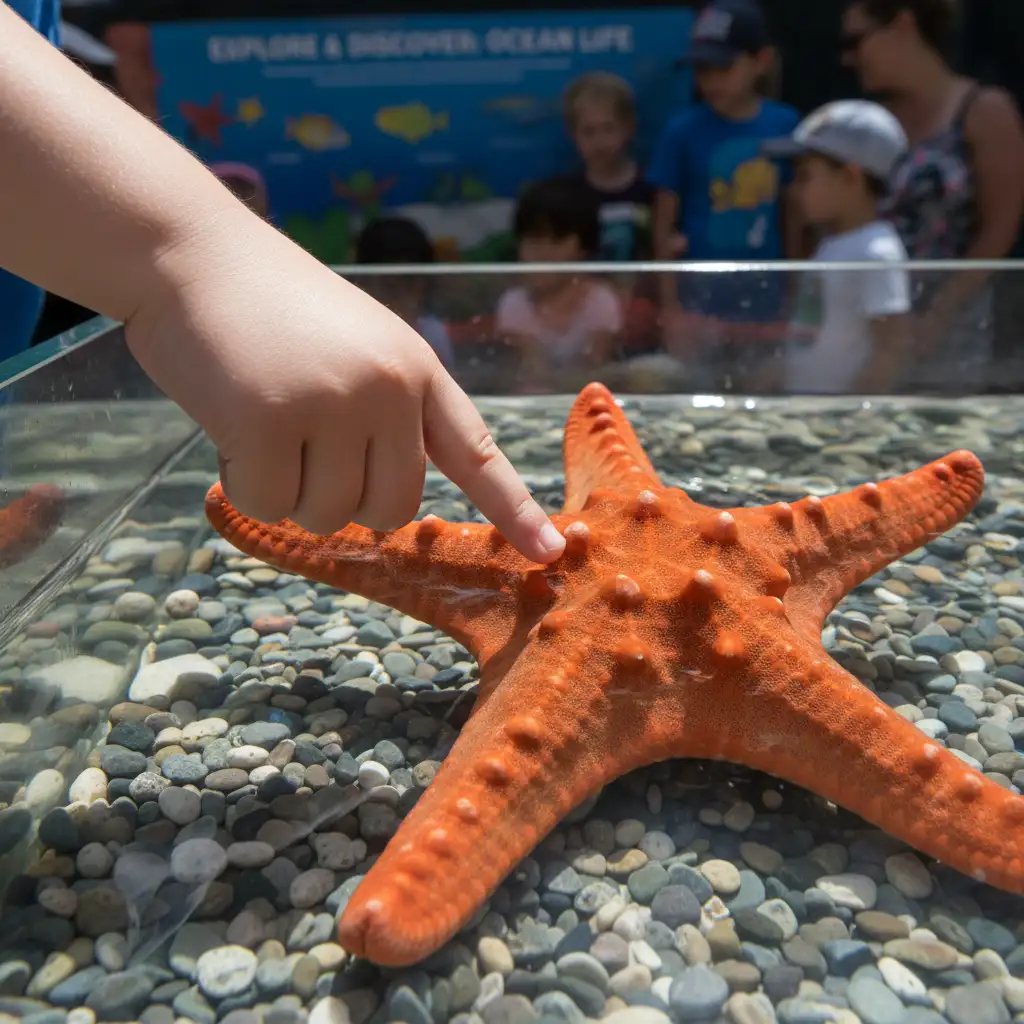
One of the most popular features of the Marine Discovery Centre Goat Island is the rocky shore touch tank. This exhibit recreates the intertidal zone found just a few hundred meters away at the beach. It allows visitors to get up close and personal with resilient marine life that inhabits the space between high and low tides.
Under the guidance of knowledgeable educators, visitors can gently interact with species such as sea stars, kina (sea urchins), sea cucumbers, and various crab species. This tactile experience is crucial for building empathy for marine life, particularly for younger visitors who may never have seen these creatures in the wild. The tank mimics the natural flow of water and oxygenation required to keep these animals healthy, serving as a living example of the delicate balance required in marine ecosystems.
The Microscope Wall and Sound Tunnel
Marine science often deals with the invisible—the microscopic plankton and larvae that form the base of the ocean food web. The Centre features a specialized microscope area where visitors can view live plankton samples collected from the reserve. Seeing the tiny crustaceans and algae that fuel the massive snapper in the reserve provides a complete picture of the food chain.
Additionally, the “Sound Tunnel” offers an auditory experience of the ocean. Most people assume the underwater world is silent, but it is actually a cacophony of clicking shrimp, grunting fish, and moving water. This exhibit highlights the sensory environment of marine animals and discusses the impact of anthropogenic noise pollution on marine life.
How Does the Centre Support Marine Education?
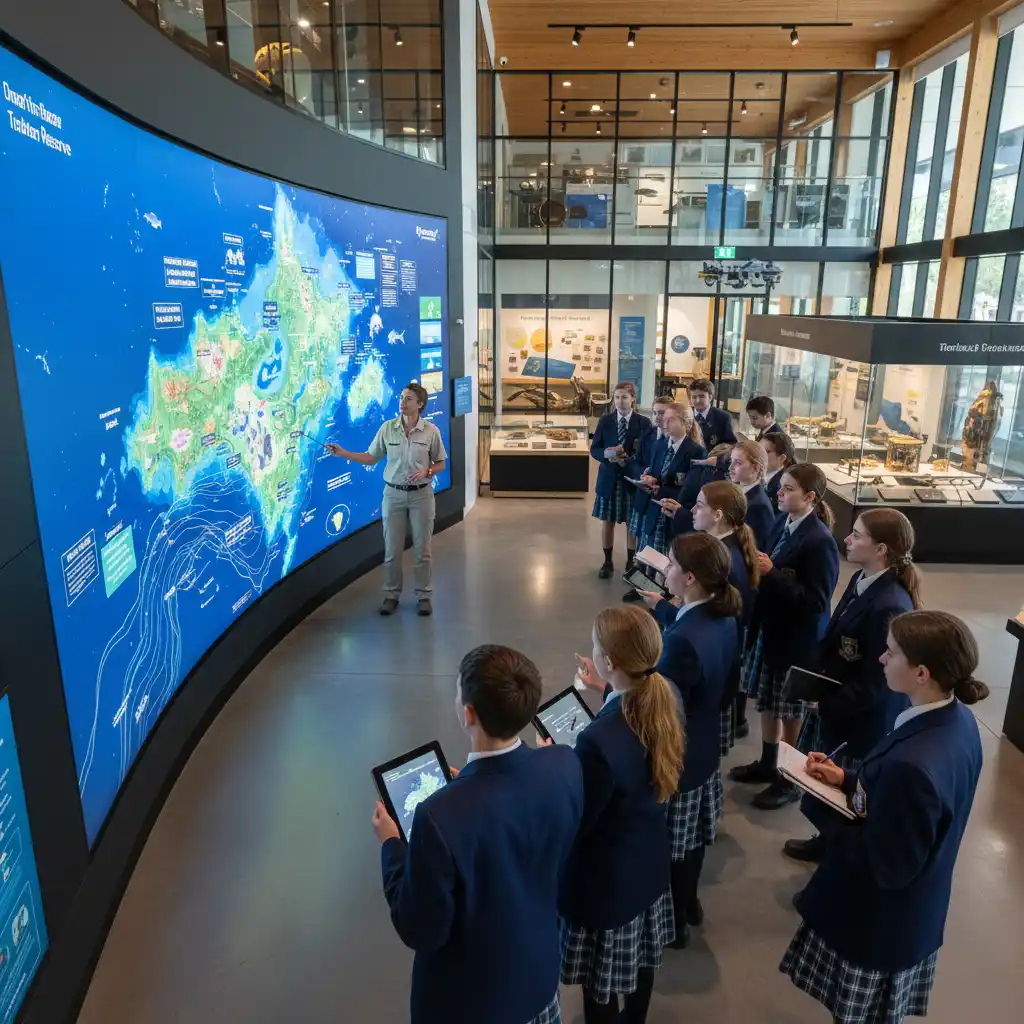
The Marine Discovery Centre Goat Island is not just a tourist attraction; it is a functioning arm of the University of Auckland’s Institute of Marine Science. Its primary mandate is education, offering structured programs that align with the New Zealand Curriculum.
School Visits and Academic Research
Thousands of students visit the centre annually. The programs are tailored to different age groups, ranging from primary school nature studies to NCEA-level biology and geography.
- Primary Years: Focus on identification, rocky shore exploration, and basic conservation concepts.
- Secondary Years: Focus on data collection, transect surveys, biodiversity monitoring, and the socio-economic impacts of marine reserves.
The centre provides a unique “wet and dry” classroom environment. Students often spend half the day in the lab analyzing specimens and the other half in the water (snorkeling) or on the rock shelves conducting surveys. This hands-on approach cements theoretical knowledge and inspires the next generation of marine biologists.
Holiday Programs and Public Talks
During school holidays, the centre often runs specific programs for families. These may include guided rock pool walks, dissection demonstrations, or talks by resident scientists working at the adjacent Leigh Marine Laboratory. These events provide the public with access to cutting-edge research regarding climate change, invasive species (such as Caulerpa), and snapper population dynamics.
Why is the Goat Island Marine Reserve Important?
To understand the importance of the Discovery Centre, one must understand the significance of the location itself. The Cape Rodney-Okakari Point Marine Reserve, established in 1975, was New Zealand’s first no-take marine reserve.
The Science of No-Take Zones
The centre plays a pivotal role in explaining the “Reserve Effect.” Over decades of protection, the marine life within the reserve has returned to a natural state. Predators like snapper and crayfish have grown large and abundant. This has led to a phenomenon known as a “trophic cascade.”
In unprotected areas, overfishing of snapper leads to an explosion of kina (sea urchins), which then graze down the kelp forests, creating “kina barrens.” Inside the reserve, large snapper eat the kina, allowing the kelp forests to flourish. This kelp provides habitat for hundreds of other species. The Discovery Centre visualizes this data, showing visitors the stark contrast between the vibrant ecosystem inside the reserve boundaries and the depleted areas outside.
The Legacy of Bill Ballantine
The centre also honors the work of Dr. Bill Ballantine, the “father of marine reserves” in New Zealand. Exhibits detail the struggle to establish the reserve and the scientific battles fought to prove that total protection was necessary for ecosystem recovery. This historical context is vital for visitors to understand that conservation requires persistence and scientific evidence.

Visitor Information: Planning Your Trip
Visiting the Marine Discovery Centre Goat Island requires some planning, as it is located about an hour and a half north of Auckland city.
Where is the Marine Discovery Centre located?
The Centre is located at the top of the hill overlooking the Goat Island beach, adjacent to the Leigh Marine Laboratory. The physical address is 160 Goat Island Road, Leigh. It offers panoramic views of the reserve and Little Barrier Island (Hauturu).
Opening Hours:
The centre is generally open daily from 10:00 AM to 4:00 PM, though hours can vary on public holidays or during the winter season. It is highly recommended to check their official website or Facebook page before driving up.
Admission Prices
As a non-profit educational facility, the admission fees go directly back into maintaining the exhibits and caring for the animals.
- Adults: Typically ranges between $9 – $12 NZD.
- Children: Discounted rates are available, usually around $5 – $8 NZD.
- Families: Family passes are available and offer the best value.
Accessibility
The Discovery Centre is wheelchair accessible, with ramps and wide pathways throughout the exhibit hall. There are accessible toilets on-site. However, visitors should note that the path down to the actual beach from the main car park is steep, though the Centre itself at the top of the hill is easily accessible by car.
Conclusion
A visit to the Marine Discovery Centre Goat Island transforms a simple beach trip into a profound educational experience. By witnessing the science behind the scenery, visitors gain a deeper respect for New Zealand’s marine taonga (treasures). Whether you are a parent looking to inspire your children, a teacher planning a curriculum trip, or a tourist wanting to understand what lies beneath the waves, the Discovery Centre offers invaluable insights into the blue backyard of Aotearoa.
People Also Ask
Do you need to book to visit the Goat Island Marine Discovery Centre?
Individual families and small groups generally do not need to book in advance and can purchase tickets at the door. However, large school groups or tour groups must book in advance to ensure staff availability for guided programs.
How long does it take to go through the Marine Discovery Centre?
Most visitors spend between 45 minutes to 1 hour exploring the exhibits. If you are participating in a guided talk or engaging deeply with the interactive displays and touch tanks, you may wish to allow for 90 minutes.
Can you snorkel at the Marine Discovery Centre?
You cannot snorkel inside the Centre itself as it is a dry facility. However, the Centre is located directly above Goat Island Beach, which is New Zealand’s premier snorkeling location. Visitors often combine a visit to the Centre with snorkeling at the beach.
Is there parking at the Marine Discovery Centre?
Yes, there is a dedicated car park for the Discovery Centre located at the top of the hill. This is separate from the lower beach car park, which can get very full during summer. The Centre’s parking is strictly for visitors to the facility.
What is the best time of year to visit Goat Island?
The Discovery Centre is open year-round and is a great indoor activity during winter. For snorkeling at the reserve, the water is warmest from January to April. Visibility is often best in late summer and autumn.
Is the Marine Discovery Centre suitable for toddlers?
Yes, the Centre is family-friendly. Toddlers enjoy the visual displays and the touch tank (under supervision). The facility is safe and enclosed, making it a stress-free environment for parents with young children.