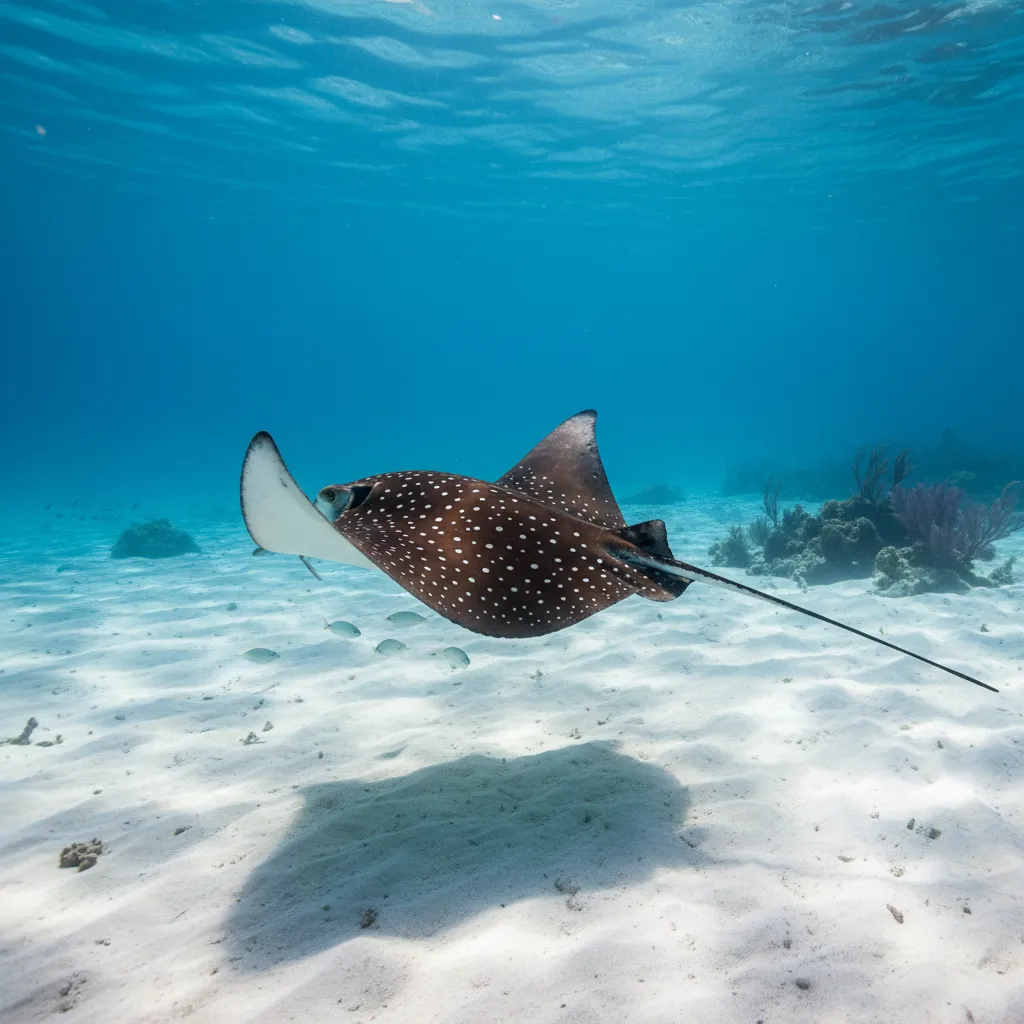
Visitors asking what fish are in Goat Island can expect to encounter massive resident Snapper (Tamure), vast schools of Blue Maomao, and bold Spiny Rock Lobsters (Crayfish). The reserve’s protected shallow reefs also host Eagle Rays, Parore, Red Moki, and Goatfish, while the sandy flats and kelp forests support a diverse, fearless ecosystem unique to New Zealand’s oldest marine reserve.
The Giants of the Reserve: Identifying the Big Snapper
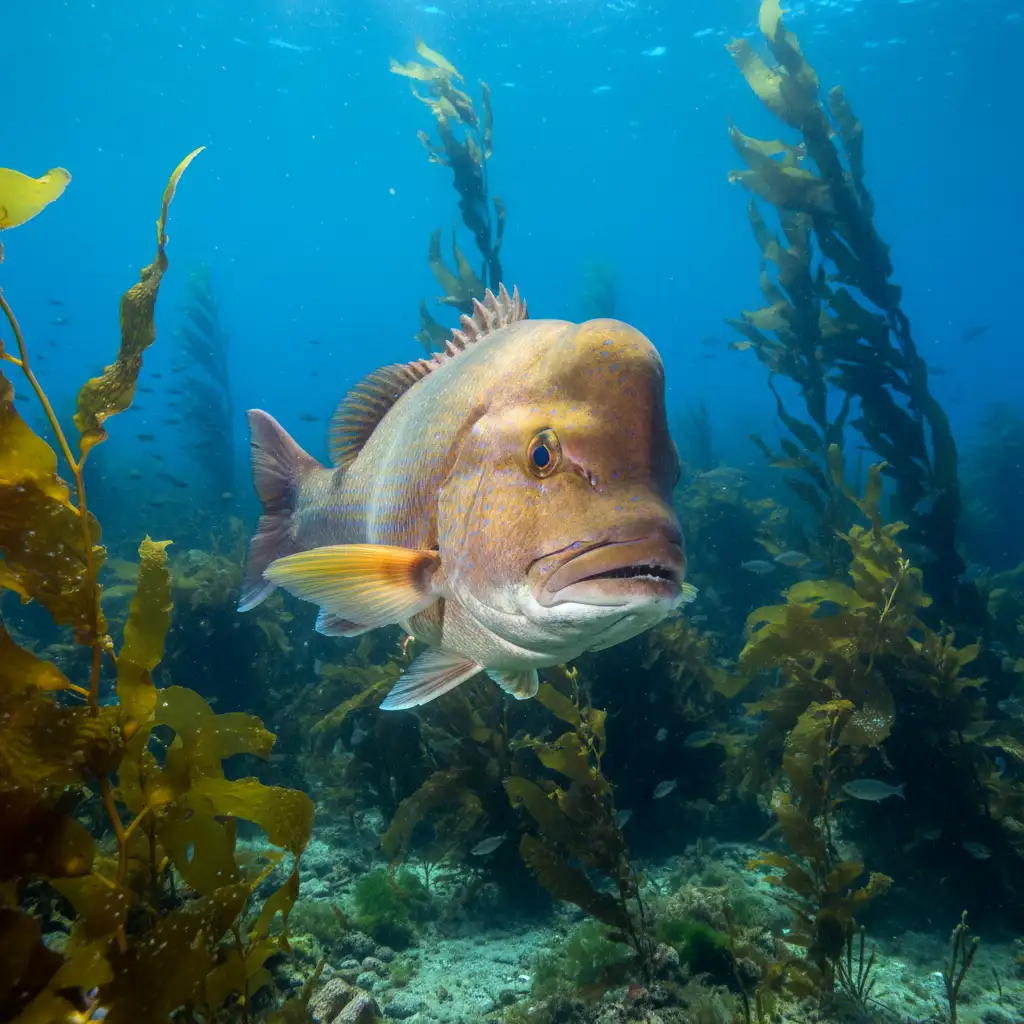
When discussing what fish are in Goat Island, the conversation invariably begins with the New Zealand Snapper (Pagrus auratus). However, the Snapper found within the Cape Rodney-Okakari Point Marine Reserve are unlike those found almost anywhere else in the country. Because the reserve has been a “no-take” zone since 1975, these fish have reached their full biological potential in both size and age, often living for over 60 years.
Physical Characteristics of Resident Snapper:
To identify the resident giants, look for a golden-pink upper body fading to a silvery-white underside. While juvenile snapper are dotted with iridescent blue spots, the massive adults at Goat Island often appear more rugged. They frequently possess a large, bony hump on the forehead and a heavy, thick-set jaw. These fish can weigh upwards of 10kg (22lbs) and measure over 80cm in length. Unlike shy fish outside the reserve, these Snapper will swim directly up to snorkelers and divers, often checking masks for reflections.
Behavioral Notes:
The “reserve effect” has altered their behavior. They are the apex predators of this reef system. You will often see them cruising slowly through the kelp forests or hovering just beneath the surface near the beach, waiting for the disturbance caused by swimmers which stirs up food from the sandy bottom.
Schooling Spectacles: Blue Maomao and Parore
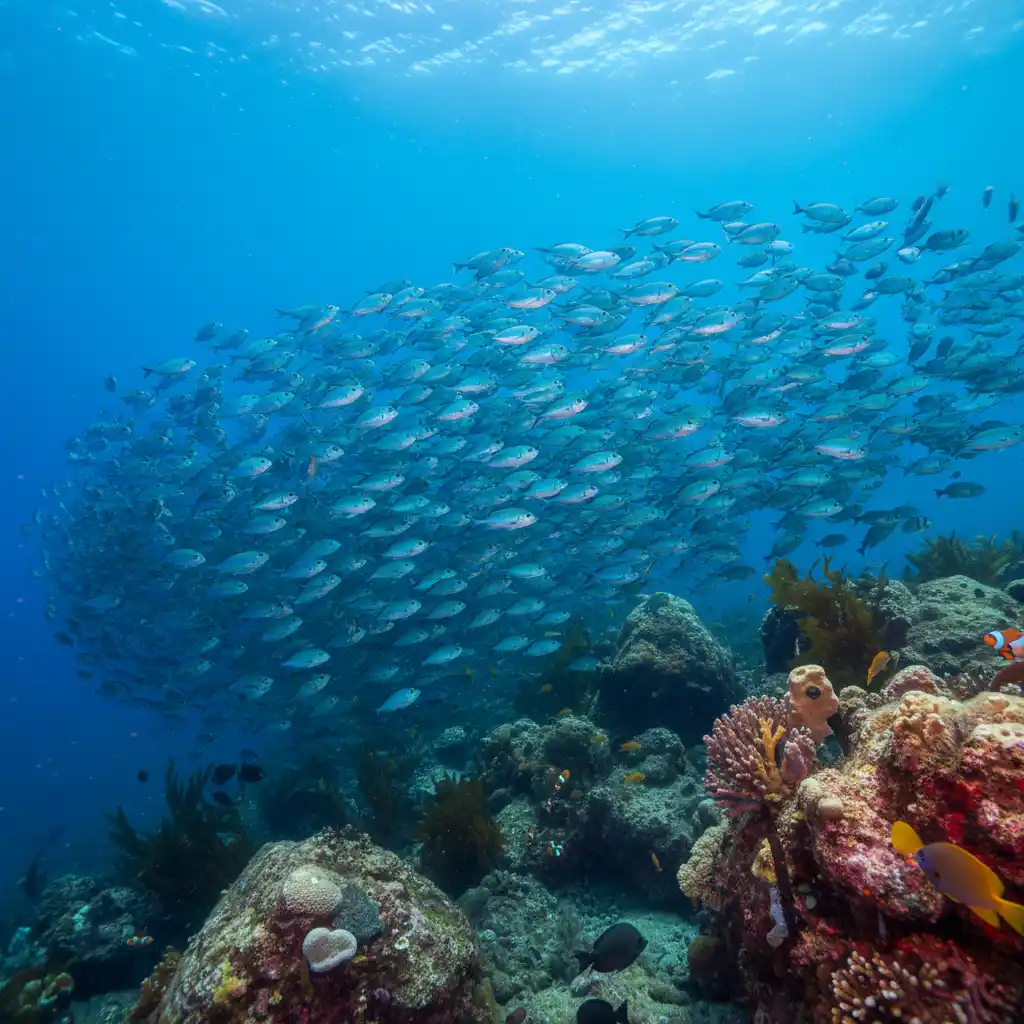
Beyond the solitary giants, the water column at Goat Island is frequently dominated by dense, shimmering schools of fish. Understanding the difference between these schooling species is key to accurate identification.
Blue Maomao (Scorpis violacea)
If you see a cloud of vibrant, electric blue in the water, you are looking at Blue Maomao. These are perhaps the most beautiful fish in the reserve. They are plankton feeders and are typically found in mid-water, hovering above the rocky reefs.
- Identification: An unmistakable bright blue color that covers the entire body. They have a streamlined, oval shape and a forked tail.
- Habitat: They prefer areas with current where plankton is delivered to them, often congregating around Shag Rock or the outer edges of the channel.
Parore (Girella tricuspidata)
Often mixed in with Maomao or swimming in their own schools near the surface are the Parore. These are predominantly herbivores and are crucial for grazing down algae on the reef.
- Identification: Parore are grey-brown with approximately 10 distinctive dark vertical stripes running down their sides. They have a small mouth and a more rounded body compared to the Maomao.
- Observation Tip: Watch them feeding on the rocks; they often flash their silvery sides as they turn to graze on sea lettuce and other algae.
Bottom Dwellers: Spotting Crayfish and Rays
For those willing to dive down or look carefully into the cracks and crevices of the reef, Goat Island offers a glimpse into how New Zealand’s seafloor looked prior to commercial fishing. The abundance of crustacean life and rays here is staggering.
The Spiny Rock Lobster (Crayfish)
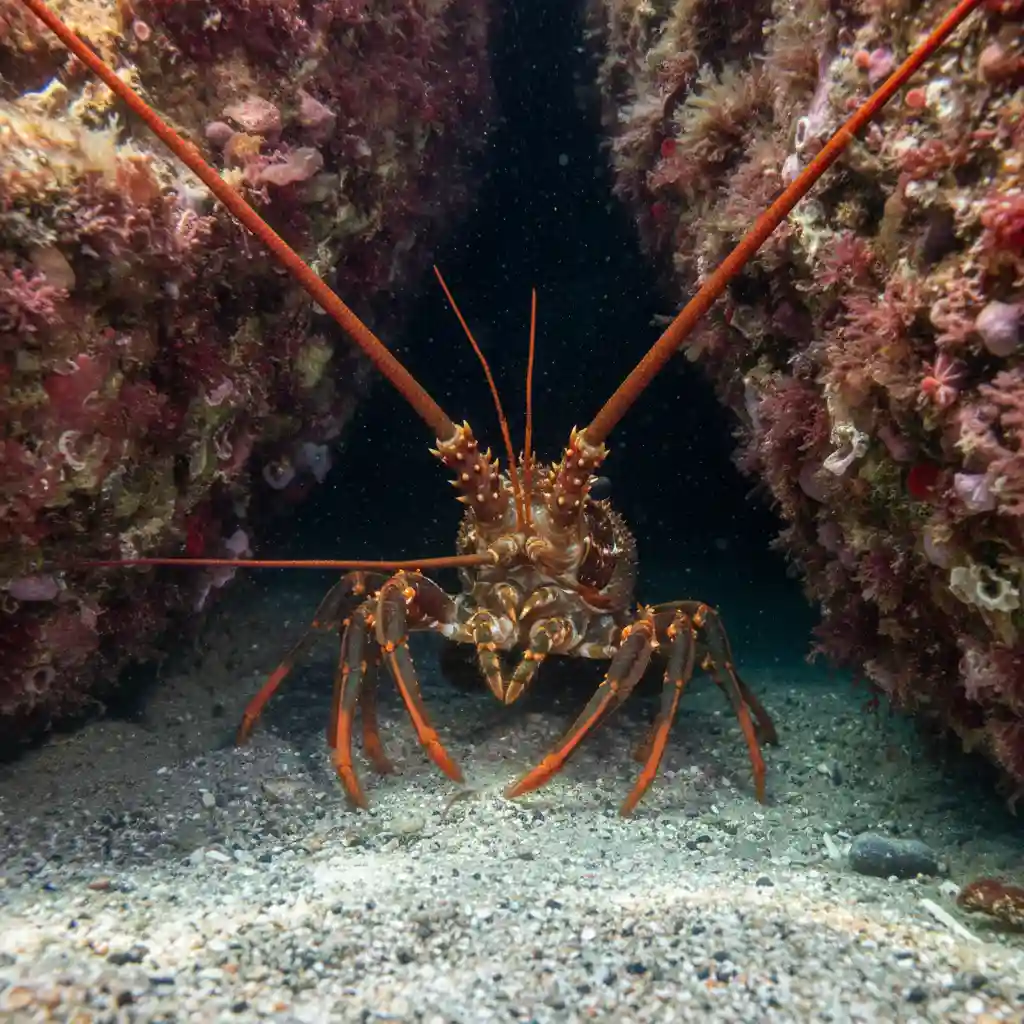
In most parts of New Zealand, seeing a crayfish requires a deep dive and a torch. At Goat Island, the Spiny Rock Lobster (Jasus edwardsii) is remarkably bold. Without the threat of predation by humans, they often venture out of their dens during the day.
How to Spot Them: Look for their long, red antennae protruding from under ledges and cracks in the rocks. Unlike the Northern Hemisphere lobster, these do not have large crushing pincers. Instead, they rely on their spiny carapace for defense. It is not uncommon to see massive individuals weighing several kilograms walking openly across the reef floor in as little as 2 meters of water.
Eagle Rays and Stingrays
The sandy flats between the reefs are the domain of the rays. Two main species frequent the reserve:
- Eagle Rays (Myliobatis tenuicaudatus): These are active swimmers. They have a distinct diamond shape, pointed wings, and a head that protrudes noticeably from the body. Their skin is dark olive-green with distinct light blue or yellow spots. You will often see them “flying” through the water or digging in the sand for shellfish with their snouts.
- Short-tailed Stingrays (Dasyatis brevicaudata): These are much larger, rounder, and darker (often black or dark grey). They tend to glide slowly over the bottom or rest motionless, partially buried in the sand. They can reach massive proportions, spanning over 2 meters in width.
The “Cleaner” Fish and Reef Residents
While the big animals steal the show, the biodiversity of the reserve is best appreciated by observing the smaller, colorful reef dwellers. These fish occupy specific niches within the kelp forest ecosystem.
Red Moki (Cheilodactylus spectabilis)
The Red Moki is a striking fish that is territorial and often found resting on the bottom. They have distinct reddish-brown vertical bands across a white body and large, rubbery lips. They are long-lived and tend to stay in the same small area of the reef for years.
Goatfish (Upeneichthys lineatus)
Appropriately named for the location, Goatfish are bottom feeders easily identified by the two “barbels” (whisker-like sensory organs) hanging from their chins. They use these barbels to probe the sand for small invertebrates. They are often beautifully colored, shifting between pink, red, and blue hues depending on their mood and activity.
Hiwihiwi (Chironemus marmoratus)
Also known as the Kelpfish, the Hiwihiwi is a master of camouflage. They have a mottled brown and white pattern that blends perfectly with the rocky substrate. They have a unique shape with a long dorsal fin and are often seen resting on the rocks, propped up by their pectoral fins.
Rare Species to Look For
For the observant snorkeler or diver, Goat Island occasionally yields sightings of rarer or seasonal visitors. Because the reserve acts as a sanctuary, it attracts pelagic wanderers and subtropical species during the warmer months (February to April).
Kingfish (Seriola lalandi)
These are the torpedoes of the ocean. Kingfish are sleek, powerful predators with a green back, white belly, and a yellow stripe running along the side. They often cruise through the reserve in packs, hunting baitfish. If you see the schools of Blue Maomao suddenly scatter and bolt for cover, a Kingfish is likely nearby.
John Dory (Zeus faber)
An odd-looking fish, the John Dory is extremely thin (laterally compressed) with a large distinct “eye-spot” on its side. Legend says this spot is the thumbprint of St. Peter. They are stealth predators that drift slowly toward prey before extending a massive telescopic jaw to engulf them.
Conservation and Interaction Rules
Identifying what fish are in Goat Island is exciting, but interacting with them requires strict adherence to conservation protocols. As New Zealand’s first marine reserve, the ecosystem is delicate.
Do Not Feed the Fish:
Historically, visitors were allowed to feed the fish, but this practice is now discouraged and, in many contexts, prohibited. Feeding alters the natural behavior of the fish, makes them aggressive, and introduces unnatural diets that can harm their health. The fish at Goat Island are naturally curious; you do not need food to attract them.
Look, Don’t Touch:
All marine life in the reserve is protected. This means you cannot take anything—not even a shell or a rock. While the fish may come close, avoid touching them. Touching removes the protective slime coating on their skin, making them susceptible to infections and parasites. Furthermore, while the Snapper are friendly, they have powerful jaws capable of crushing shellfish, and accidental bites can occur if hands are waved near their faces.
People Also Ask
Are there sharks in Goat Island Marine Reserve?
Yes, sharks are present, but they are generally harmless species. The most common sightings are Carpet Sharks (Draughtsboard Sharks) which sleep on the bottom during the day, and small School Sharks. Bronze Whaler sharks are occasionally seen in the summer months but typically keep their distance from swimmers.
What is the best time of year to see fish at Goat Island?
The best time to see the highest diversity of fish is late summer to early autumn (February to April). The water is warmest (around 20-22°C), visibility is generally best, and seasonal visitors like Kingfish and Stingrays are most abundant.
Why are the Snapper so big at Goat Island?
The Snapper are large because Goat Island is a “no-take” marine reserve established in 1975. Without fishing pressure, the fish live to their full natural lifespan (up to 60 years) and grow to their maximum size, unthreatened by human predation.
Can I fish off the rocks at Goat Island?
No. All fishing is strictly prohibited within the Cape Rodney-Okakari Point Marine Reserve. This includes line fishing, spearfishing, netting, and gathering shellfish or crayfish. Heavy fines apply for any breach of these rules.
Is it safe to snorkel at Goat Island for beginners?
Yes, it is generally safe for beginners, provided you stay within the sheltered bay and check weather conditions first. The water is often calm, but currents can be strong further out near the island. It is recommended to rent a wetsuit for buoyancy and warmth.
What do Blue Maomao eat?
Blue Maomao are planktivores. They feed on zooplankton (tiny animals drifting in the water column). This is why they are often found in areas with a slight current, which brings a steady stream of food to them.