
The Goat Island Walkway is a scenic, 2-kilometer return coastal track located within the Cape Rodney-Okakari Point Marine Reserve near Leigh, New Zealand. Offering panoramic views of the Hauraki Gulf without requiring visitors to get wet, this manageable trail winds through regenerating coastal forest to a lookout point, making it the premier land-based activity for experiencing New Zealand’s first marine reserve.
While the Cape Rodney-Okakari Point Marine Reserve is globally renowned for its snorkeling and diving, the terrestrial experience offers equal wonder for those who prefer to stay dry. The Goat Island Walkway serves as a vital corridor for nature enthusiasts, bridging the gap between marine observation and coastal trekking. Whether you are a non-swimmer, a family with young children, or a hiking enthusiast seeking elevated vistas of the Pacific Ocean, this track provides an accessible gateway to Northland’s stunning geography.
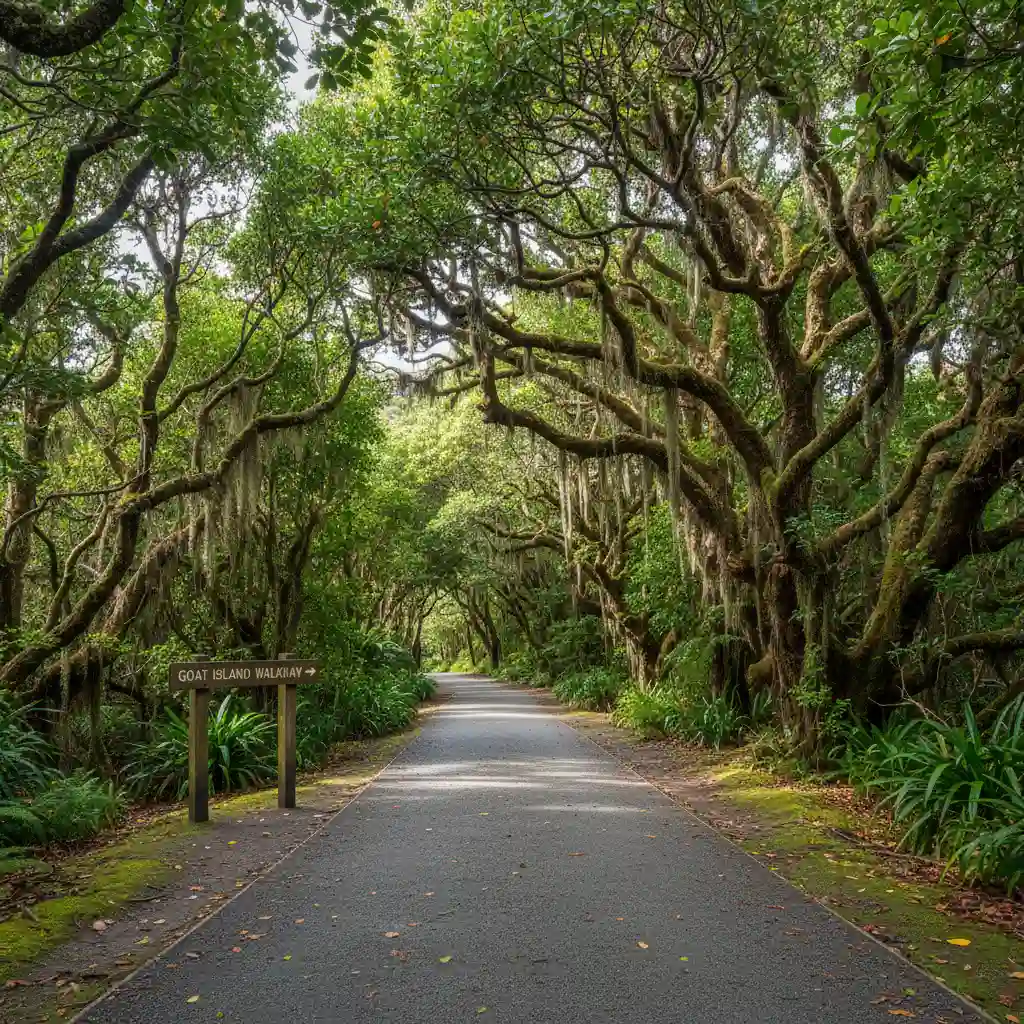
What to Expect on the Goat Island Walkway
The Goat Island Walkway, locally referred to as the “Goat Island Track,” offers a distinct perspective of the region that is often missed by visitors who remain solely on the beach. As a designated walkway within the Department of Conservation (DOC) estate, it is maintained to a high standard, ensuring safety and accessibility for a wide demographic of visitors.
The experience is characterized by a transition from the bustling energy of the marine reserve car park into the serene, acoustic richness of the native bush. Unlike the shoreline, which can be crowded during peak summer months, the walkway often provides a solitary escape where the primary sounds are the rustling of flax and the call of native birds. Expect a journey that combines physical activity with educational opportunities regarding New Zealand’s unique coastal ecosystems.
Detailed Route Guide: From Car Park to Lookout
Understanding the route prior to arrival helps in planning your time and energy levels. The track is linear (out-and-back), meaning you will return via the same path you ascended.
The Trailhead
The journey begins at the western end of the main car park at the Goat Island Marine Reserve. Signage is clearly marked, often indicating the “Walkway” or “Lookout.” The initial section involves a steady ascent away from the beach. This immediate elevation gain is necessary to reach the ridgeline that affords the spectacular views for which the track is famous.
The Forest Ascent
As you climb, the track meanders through a dense corridor of regenerating coastal forest. This section is crucial for shielding walkers from the prevailing coastal winds and the intense summer sun. The path is generally wide and surfaced with compacted gravel or soil, designed to shed water and prevent erosion. Roots and uneven ground are present but minimal compared to backcountry tramping tracks.
The Ridgeline
Once the initial climb plateaus, the track follows the ridgeline of the coastal cliffs. Here, the vegetation opens up periodically, offering teasing glimpses of the ocean below. The air is noticeably fresher, carrying the salt spray from the Tasman Sea and Pacific Ocean convergence. This section is relatively flat, allowing walkers to catch their breath before the final approach to the viewing platform.
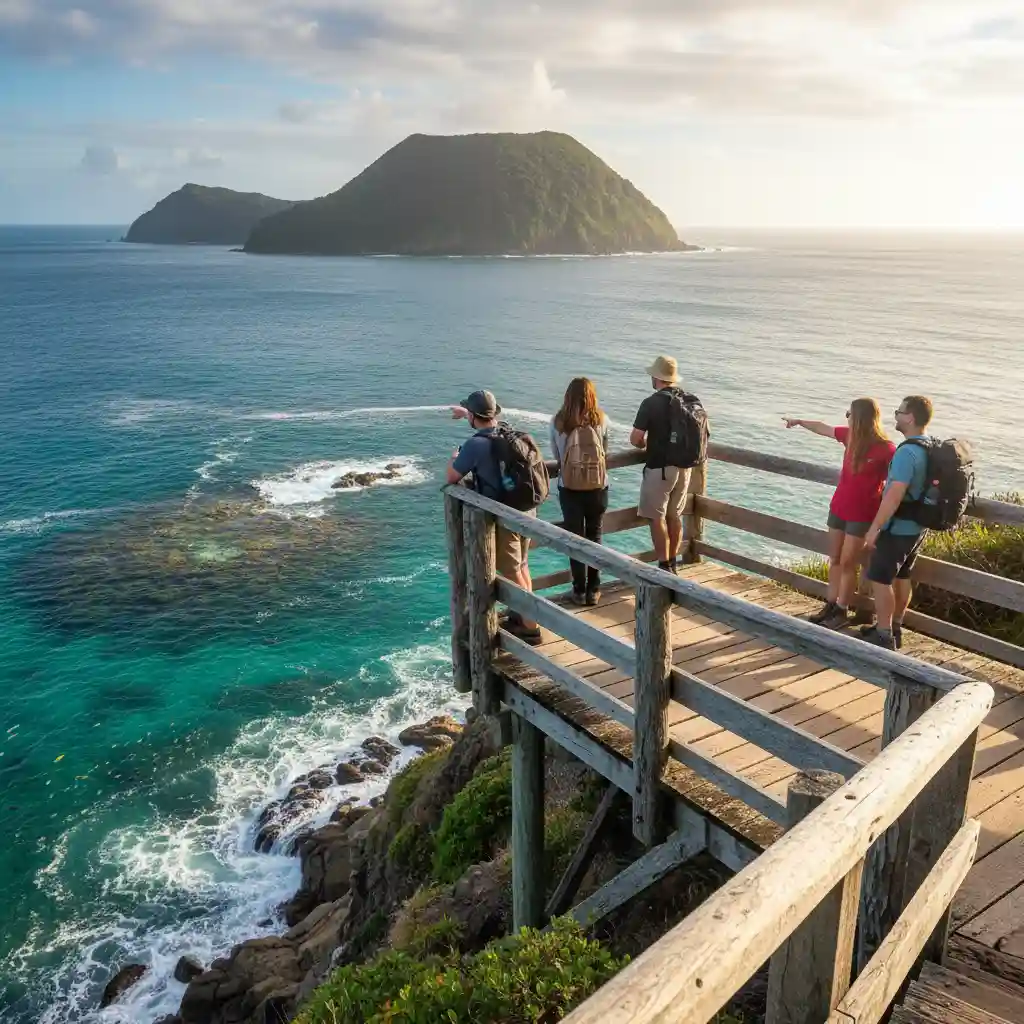
Views from the Lookout: A Visual Feast
The climax of the Goat Island Walkway is undoubtedly the lookout point. Situated high above the water, this vantage point offers a geography lesson in real-time.
Goat Island (Te Hāwere-a-Maki)
Directly below lies Te Hāwere-a-Maki, the island that gives the reserve its English name. From this elevation, you can see the entire island structure, observing how it acts as a natural breakwater protecting the beach. On clear days, the water visibility is so high that you can often spot dark patches of reef and lighter sandy channels where stingrays and snapper congregate, even from hundreds of meters away.
The Outer Islands
Looking further toward the horizon, the view encompasses Little Barrier Island (Hauturu) and Great Barrier Island (Aotea). These landmasses are critical sanctuaries for New Zealand wildlife. The silhouette of Little Barrier, an extinct volcanic cone, is particularly striking against the skyline. To the north, the coastline stretches toward Pakiri Beach, showcasing the rugged cliffs and white sands typical of the North Auckland region.
Difficulty, Duration, and Accessibility
For non-swimmers and casual walkers, knowing the physical demands of the track is essential for a safe experience.
How long does the Goat Island Walkway take?
The return trip typically takes between 45 minutes to 1 hour for the average walker. This includes time to stop at the lookout, take photographs, and enjoy the scenery. Fast walkers may complete it in 30 minutes, while those interested in botany or birdwatching could easily spend 90 minutes exploring the nuances of the track.
Is the track difficult?
The track is graded as Easy to Moderate. The “moderate” rating is primarily due to the initial steep section leading out of the car park. While it requires some cardiovascular effort, it is not technical climbing. There are no steps or ladders, but the gradient can be challenging for those with very low fitness levels or knee issues.
Accessibility Notes
Unfortunately, due to the gradient and gravel surface, the Goat Island Walkway is not suitable for wheelchairs. Parents with strollers may find the track difficult unless they are using an off-road “buggy” style stroller and are prepared for a steep push uphill. Sturdy walking shoes are recommended, although sneakers are perfectly adequate in dry conditions.
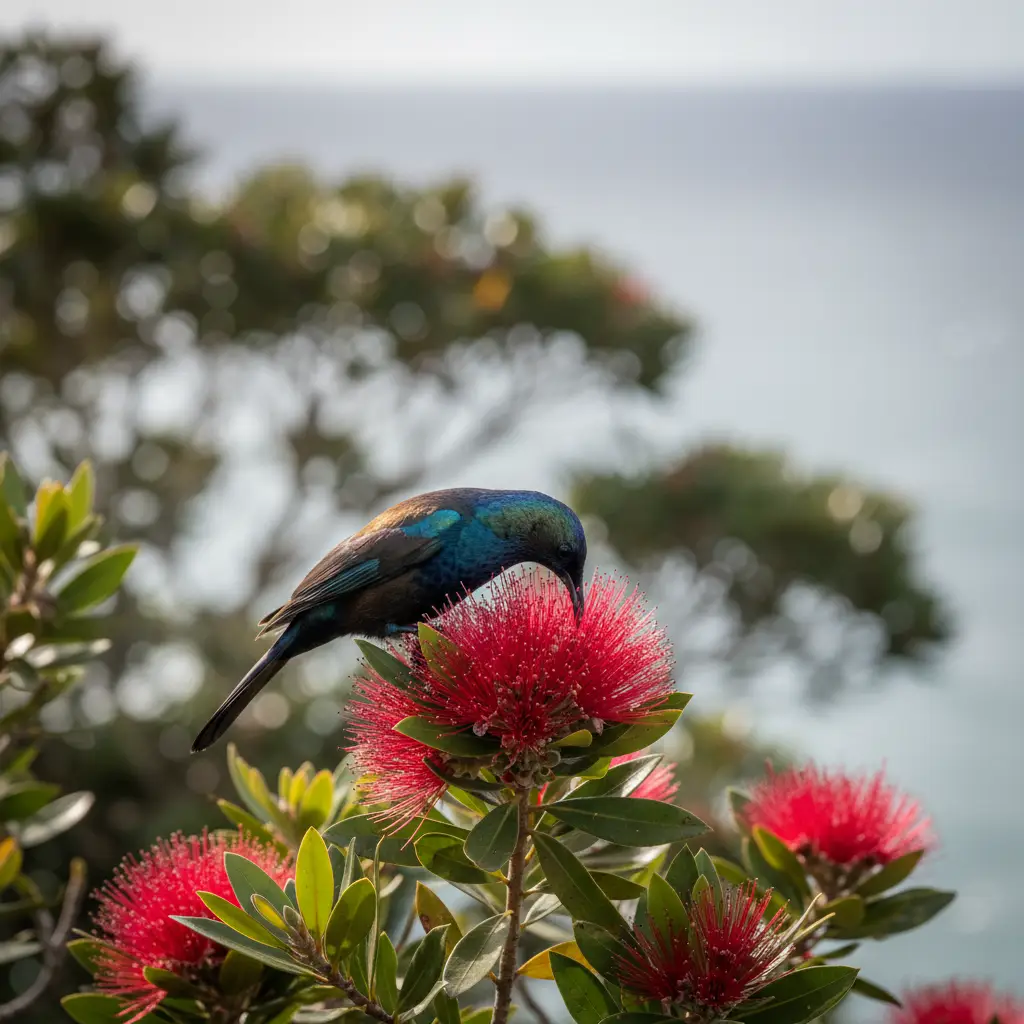
Flora and Fauna: Discovering Coastal Biodiversity
The Goat Island Walkway is not just a path to a view; it is a transect through a recovering ecological zone. Since the establishment of the marine reserve in 1975 and subsequent pest control efforts on land, the biodiversity here has flourished.
Coastal Forest Giants
The dominant feature of the landscape is the Pohutukawa (Metrosideros excelsa). Known as the New Zealand Christmas tree, these giants cling to the cliffs with tenacious root systems. In December and January, they explode with crimson flowers, dusting the track with red stamens. You will also encounter Karo, Nikau palms, and dense thickets of Harakeke (flax), which frame the ocean views perfectly.
Birdlife
For the attentive walker, the birdlife is prolific. The lack of mammalian predators allows native birds to thrive near the coast.
- Tui: Recognizable by their white throat tuft and complex, melodic song.
- Fantail (Piwakawaka): These small, energetic birds often follow walkers, catching insects disturbed by footsteps.
- Kererū (NZ Wood Pigeon): Look for these large birds swooping through the canopy; the sound of their wings is distinctive and loud.
Why Visit a Marine Reserve if You Don’t Swim?
A common misconception is that marine reserves are only for divers. However, the Goat Island Walkway proves that the concept of “marine protection” extends beyond the water’s edge.
The “Halo Effect”
The protection of the marine environment influences the land. Seabirds that feed in the reserve nest in the surrounding cliffs. By walking the track, you are witnessing the terrestrial half of this ecosystem. The nutrients from the sea are brought onto land by birds, feeding the forest you walk through.
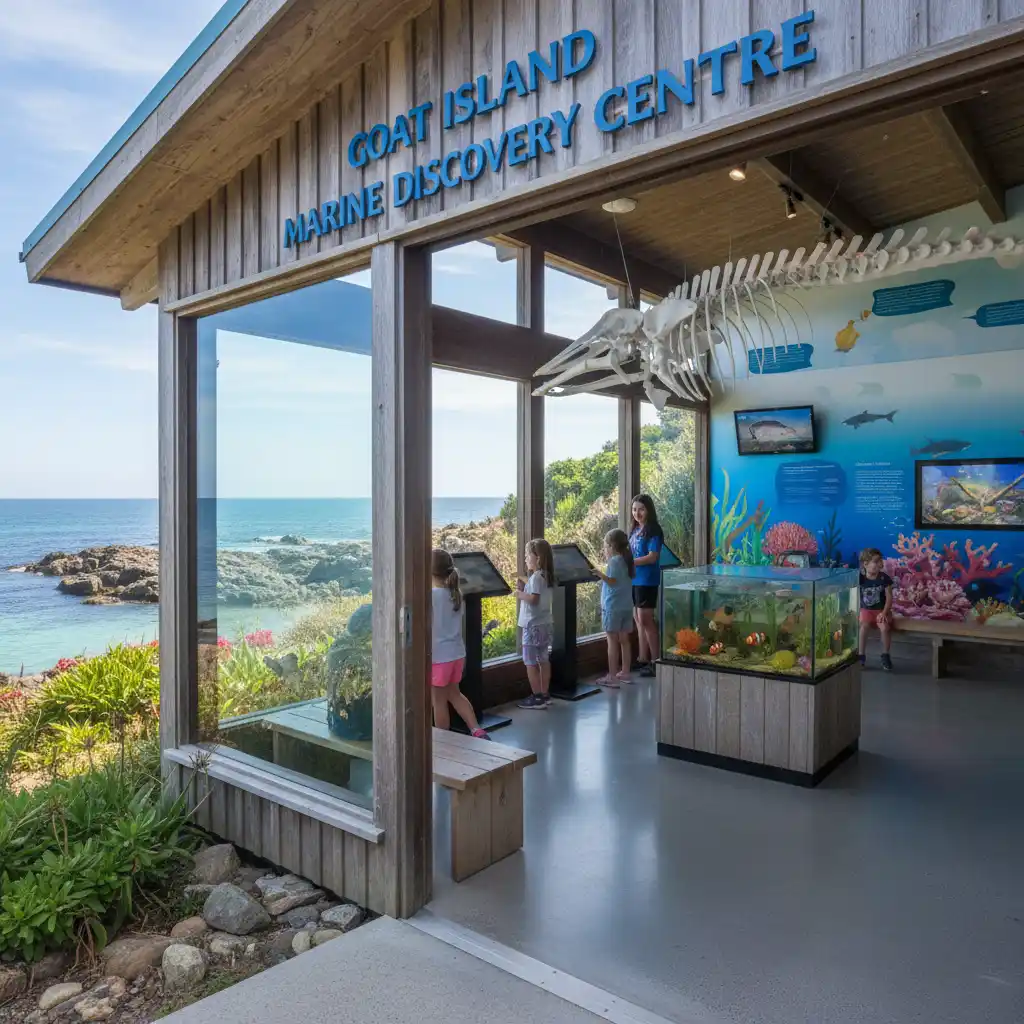
Marine Discovery Centre
For non-swimmers who want to see what lies beneath without getting wet, the nearby Goat Island Marine Discovery Centre (run by the University of Auckland) is an essential stop. Located just up the road from the walkway entrance, it features tanks and educational displays that explain the science of the reserve. Combining the Walkway with a visit to the Discovery Centre creates a comprehensive “dry” itinerary.
Planning Your Visit: Logistics and Tips
To ensure the best possible experience on the Goat Island Walkway, consider these logistical factors.
Parking and Arrival
Parking at Goat Island is notoriously difficult during the peak summer season (December to February) and on public holidays. The car park fills up by 9:00 AM.
Pro Tip: Arrive before 8:30 AM or visit in the late afternoon (after 4:00 PM) when the day-trippers have left. The light during the “golden hour” before sunset also makes the view from the lookout spectacular.
Facilities
There are public toilets and changing rooms located at the main car park near the beach. There are no facilities on the walkway itself. Ensure you use the restroom and fill water bottles before starting the ascent.
What to Bring
- Water: There is no drinking water on the track.
- Sun Protection: While parts of the track are shaded, the lookout is exposed. New Zealand UV radiation is intense.
- Binoculars: Highly recommended for spotting birds on Little Barrier Island or marine life in the water below.
- Windbreaker: The ridge can be exposed to strong coastal winds even on sunny days.
Frequently Asked Questions
Is the Goat Island Walkway suitable for dogs?
No, dogs are not permitted on the Goat Island Walkway or on the beach at the marine reserve. This is strictly enforced to protect local wildlife, including penguins and shorebirds that nest in the area.
Do I need to pay to use the Goat Island Walkway?
No, the walkway is free to access. It is part of the public conservation estate managed by the Department of Conservation (DOC). Parking is also free, though spaces are limited.
Can I see fish from the walkway?
Yes, on calm days with clear water conditions, it is possible to see schools of fish from the lookout point. The elevation allows you to see through the surface glare, revealing the dark shapes of reefs and fish shoals.
Is the track open in winter?
Yes, the Goat Island Walkway is open year-round. Winter can be a beautiful time to visit as the crowds are smaller, though the track may be muddier after heavy rainfall.
How far is Goat Island from Auckland CBD?
Goat Island is approximately an 80-minute drive (about 80km) north of Auckland City, depending on traffic. It is a popular day trip destination.
Are there food options near the walkway?
There are no cafes on the walkway itself. However, Leigh village is a short drive away and offers cafes and a fish and chip shop. In summer, a coffee cart or ice cream truck is often stationed in the main car park.