
A comprehensive Goat Island dive map encompasses three primary zones within the Cape Rodney-Okakari Point Marine Reserve: the beginner-friendly ABC Bay with shallow sandy bottoms, the marine-life-rich Shag Rock located approximately 150 meters offshore, and the advanced North Reef featuring deeper kelp forests. Understanding these distinct topographies is essential for navigating the channel currents safely.
Navigating the Cape Rodney-Okakari Point Marine Reserve
Goat Island, officially known as the Cape Rodney-Okakari Point Marine Reserve, is New Zealand’s first marine reserve and arguably its most famous accessible dive site. Located near Leigh, just north of Auckland, it serves as a sanctuary where marine life has flourished undisturbed since 1975. For divers, understanding the layout of the seabed is critical not just for finding fish, but for managing safety in an area known for variable currents.
When visualizing a Goat Island dive map, divers should mentally divide the area into zones based on depth and difficulty. The reserve protects 547 hectares of shore and sea, but the recreational diving activity is concentrated around the island itself (Te Hāwere-a-Maki) and the channel separating it from the mainland. The topography varies drastically from shallow, sun-drenched sand flats to rocky reefs covered in kelp forests and sponge gardens.
Professional divers and local instructors utilize a mental map that prioritizes tidal movement. The channel acts as a funnel for water moving in and out of the harbour, creating currents that can be challenging for the unprepared. By mapping out your dive plan according to the specific sites detailed below, you ensure a safe excursion that maximizes your time with the resident snapper and crayfish.
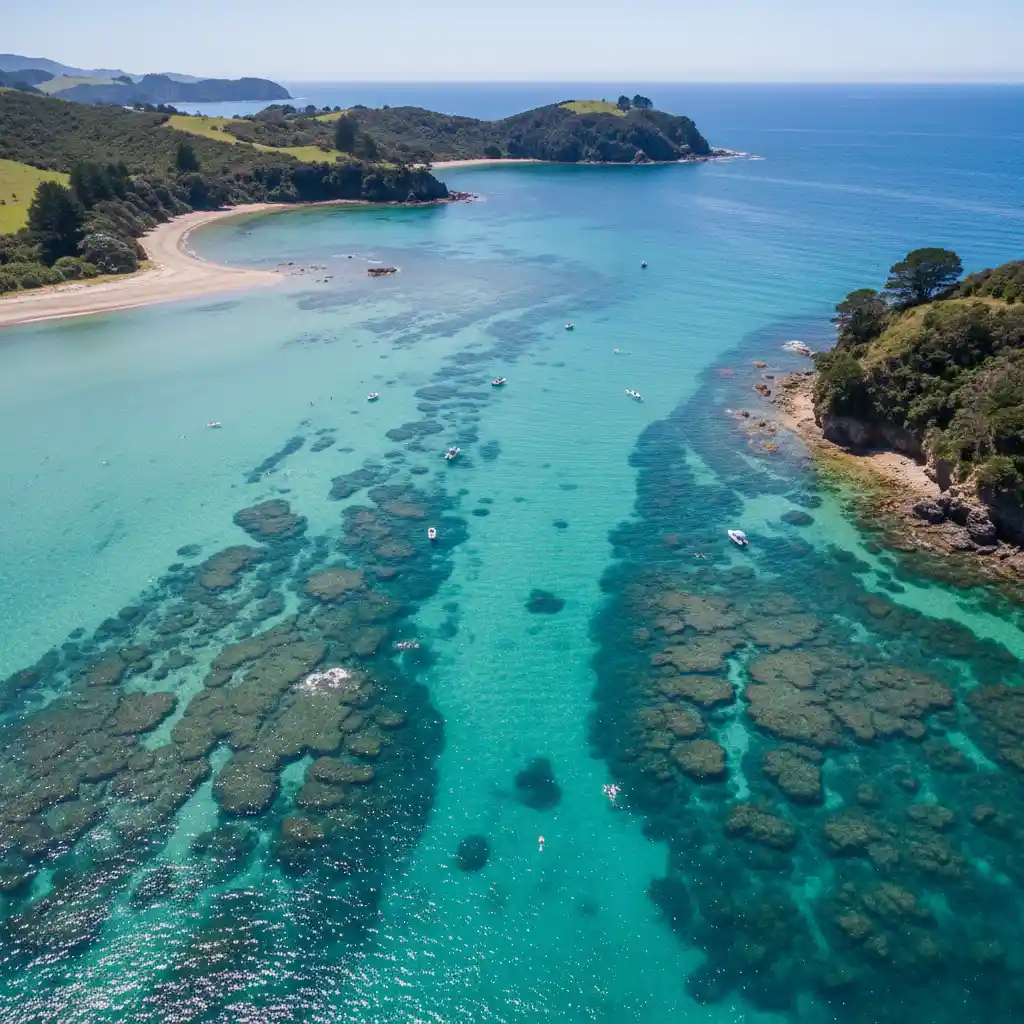
ABC Bay: The Entry Point for Beginners
Where is ABC Bay located on the dive map?
ABC Bay is situated to the right of the main beach entry point (looking out to sea), tucked away from the main channel’s current. It is the most protected area of the reserve, making it the default training ground for Open Water courses and