
The Goat Island Coastal Walk is a scenic 3-kilometer return trail located within New Zealand’s Cape Rodney-Okakari Point Marine Reserve. Offering panoramic ocean views, this intermediate-grade track takes approximately 1.5 to 2 hours to complete. Hikers navigate coastal forest and farmland, providing excellent vantage points for spotting stingrays and marine life in the crystal-clear waters below.
Nestled just north of Auckland near the township of Leigh, the Goat Island Coastal Walk offers one of the most accessible and visually stunning terrestrial experiences in the region. While the marine reserve is globally renowned for its underwater snorkeling and diving, the cliff-top walkway provides a complementary perspective that is equally rewarding. This guide details everything required to navigate the track, from spotting elusive eagle rays from the heights to connecting with the adjacent regional farm park.
What is the Difficulty and Duration of the Goat Island Coastal Walk?
Understanding the physical requirements of the Goat Island Coastal Walk is essential for planning your visit, especially if you are traveling with children or carrying snorkeling gear for a post-hike swim.
Track Statistics and Grading
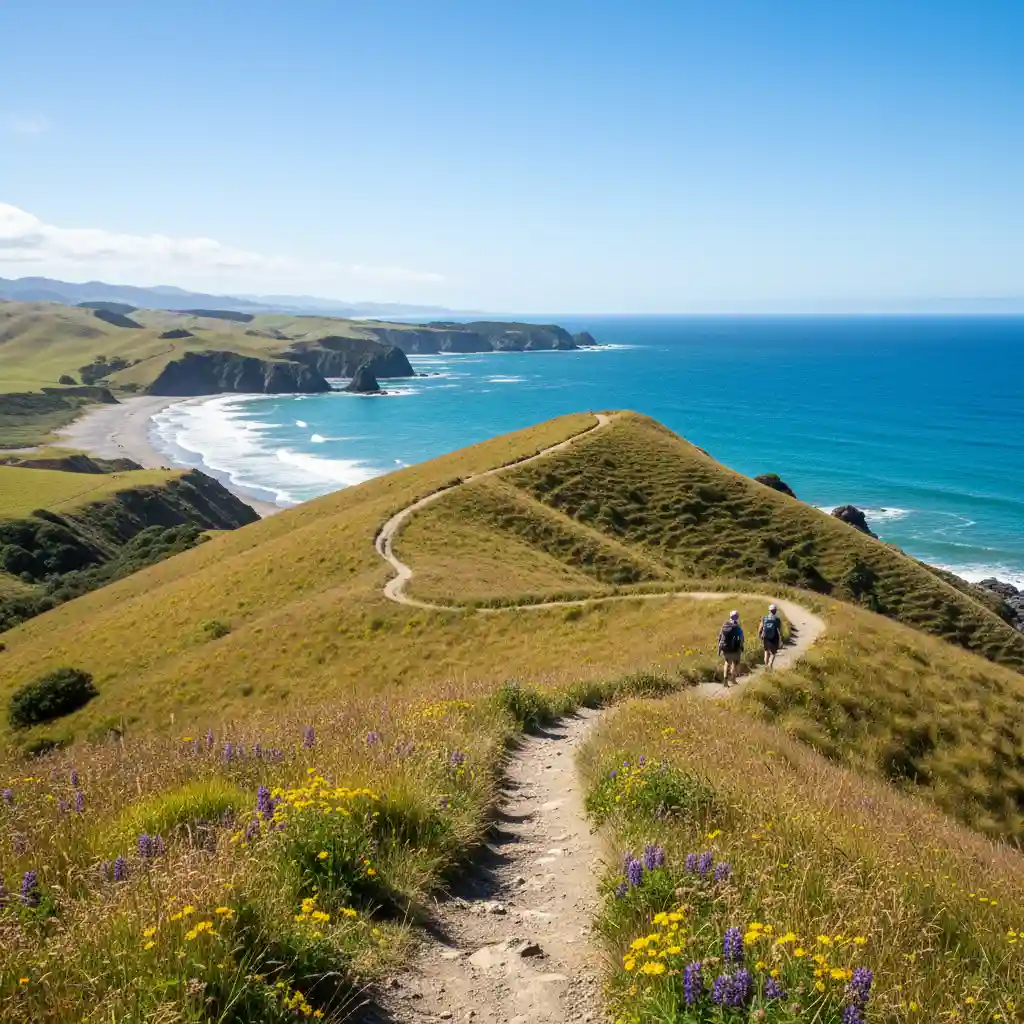
The Department of Conservation (DOC) and local authorities classify this track as Intermediate (Grade 3). While the path is well-formed, it is not a flat boardwalk stroll. The terrain involves a combination of grass tracks, packed dirt, and some steep gradients that require a moderate level of fitness.
- Distance: Approximately 3 kilometers (return trip).
- Time Required: Allow 1.5 to 2 hours for a return journey at a leisurely pace, including stops for photography and wildlife spotting.
- Elevation Change: The track ascends from sea level at the marine reserve car park to the cliff tops, involving several steep uphill sections that can be slippery after rainfall.
The Route Experience
The walk begins at the western end of the Goat Island Marine Reserve car park. Initially, you will face a steep ascent through a section of regenerating coastal forest. This “heart-starter” section is the most physically demanding part of the walk but is relatively short. Once you breach the canopy, the track opens up into rolling farmland and ridgelines.
From the ridge, the terrain undulates gently before descending towards the Leigh coastal cliffs. It is important to note that the track is exposed to the elements. On a windy day, the ridge can be blustery, and in the height of summer, the lack of shade on the open farm sections necessitates sun protection.
Where Are the Best Viewpoints for Spotting Rays and Sharks?
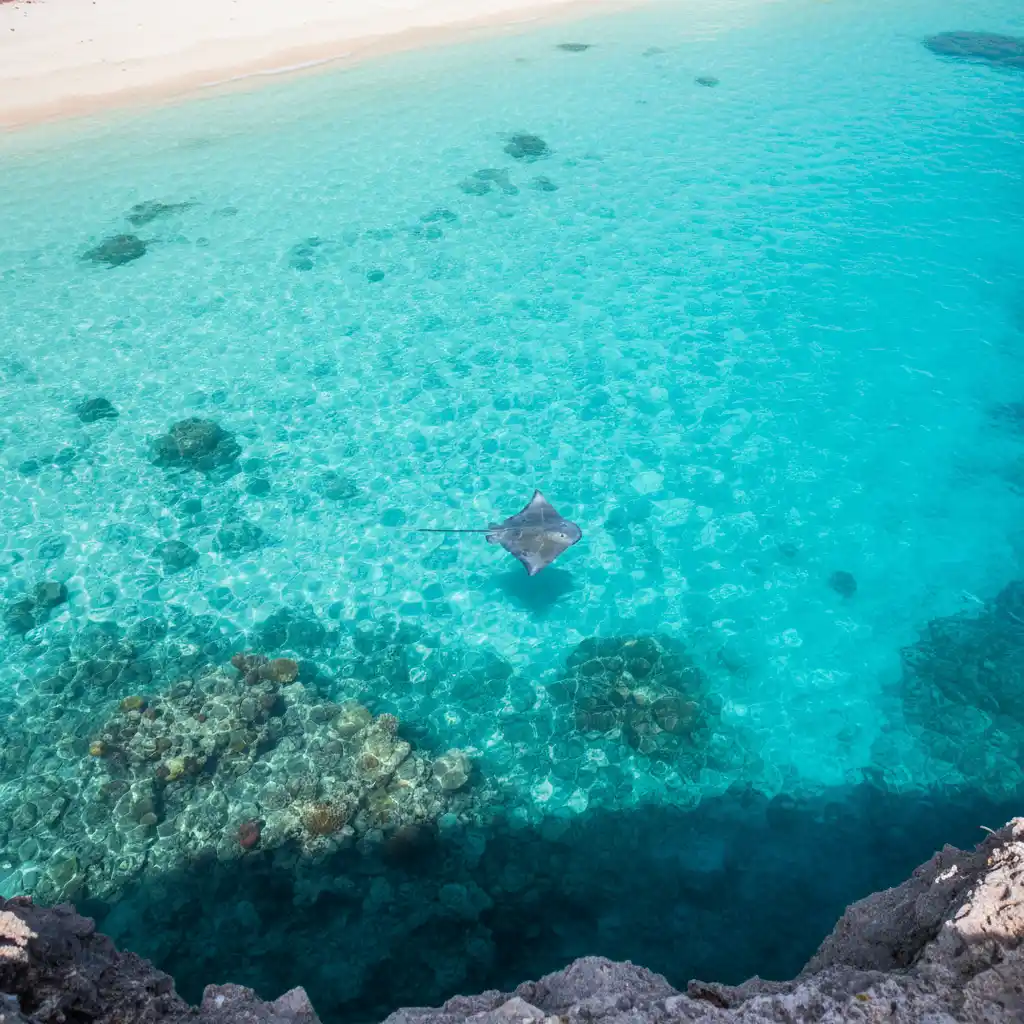
One of the unique selling points of the Goat Island Coastal Walk is the ability to conduct a “dry dive.” Because the water in the Cape Rodney-Okakari Point Marine Reserve is protected and typically crystal clear, the elevated vantage points along the walkway offer exceptional opportunities to spot large marine life without getting wet.
The Cliff-Top Lookout
Approximately 20 minutes into the walk, you will reach a dedicated lookout point situated high above the rocky shoreline. This is the premier location for spotting marine megafauna. The elevation removes much of the surface glare, allowing you to see deep into the water column.
What to look for:
- Eagle Rays: These are distinguished by their pointed wings and diamond shape. They are often seen cruising in groups (fevers) over the sandy channels between the reefs.
- Short-tailed Stingrays: Massive and round, these rays often rest on the sandy bottom or glide slowly near the kelp forests. They can span over two meters in width.
- Bronze Whaler Sharks: During the summer months, it is not uncommon to see the distinct silhouette of bronze whaler sharks patrolling the coastline. They are generally uninterested in humans but are fascinating to observe from a safe height.
Photography Tips for Marine Spotting
To capture these creatures from the walkway, a polarizing filter for your camera lens is indispensable. This filter cuts through the surface reflection of the ocean, revealing the animals and the reef structure below. Binoculars are also highly recommended for hikers who want to observe the behavior of schooling fish, such as kahawai and trevally, which often create boiling surface disturbances when feeding.
What Flora and Fauna Can You Expect Along the Track?
While the marine life steals the headlines, the terrestrial biodiversity along the Goat Island Coastal Walk is significant. The track traverses two distinct ecosystems: regenerating coastal broadleaf forest and open coastal pasture.
Native Vegetation
The initial ascent takes hikers through a canopy dominated by Pōhutukawa. Known as the New Zealand Christmas tree, these giants burst into brilliant crimson blooms around December and January, framing the blue ocean in spectacular red flowers. Beneath the Pōhutukawa, you will find dense thickets of flax (harakeke) and cabbage trees (tī kōuka), which are vital for stabilizing the steep coastal soil.
Birdlife
The interface between the bush and the sea creates a rich habitat for avian life. Keep an ear out for the following:
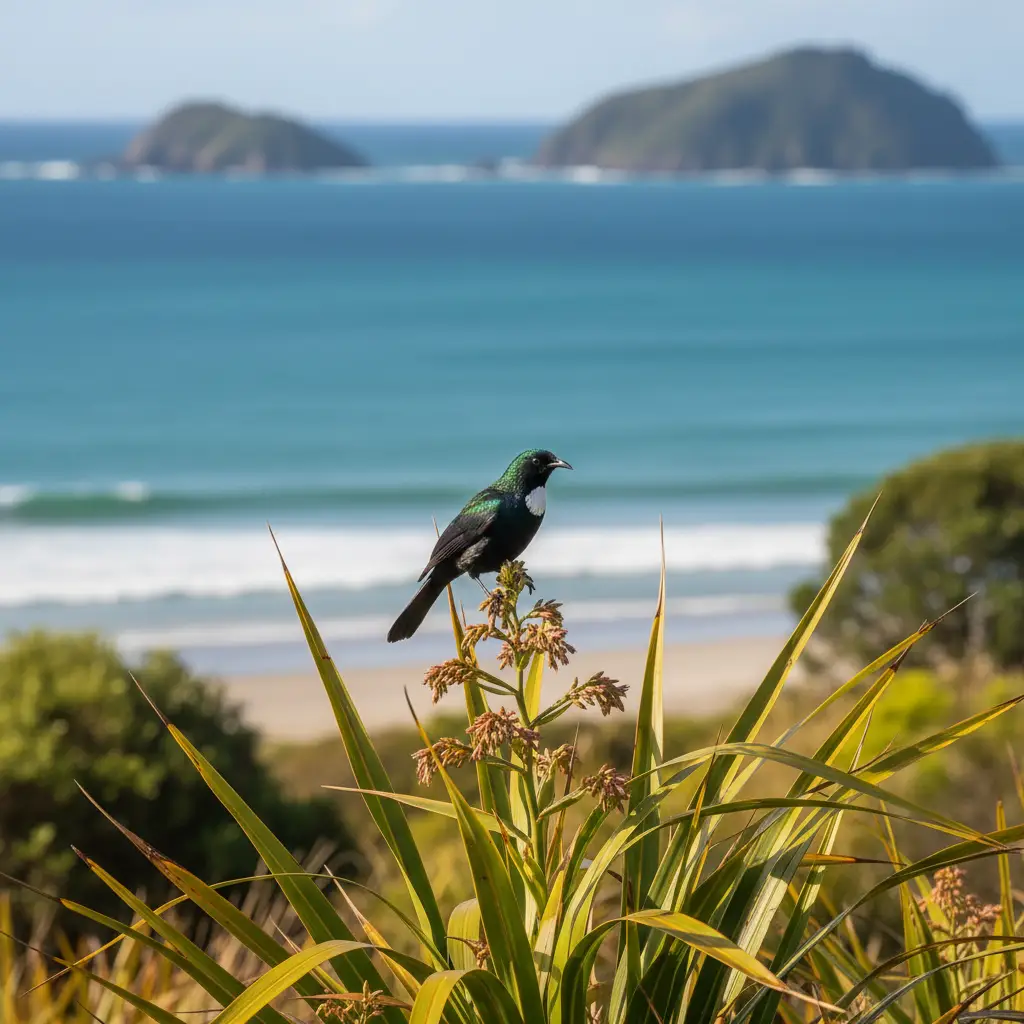
- Tūī and Bellbirds (Korimako): These nectar-feeders are abundant in the flax and Pōhutukawa trees. Their complex, melodic calls are the soundtrack of the walk.
- Kererū (NZ Wood Pigeon): You may hear the heavy “whoosh” of wings before you see these large birds. They play a crucial role in seed dispersal for the coastal forest.
- Seabirds: On the seaward side, look for Pied Shags drying their wings on the rocks, and Australasian Gannets diving like arrows into the ocean to hunt fish.
How Does the Track Connect to the Farm Park?
The Goat Island Coastal Walk is not an isolated trail; it is integrated into the wider Leigh Recreation Reserve. This connection allows hikers to extend their walk or vary their return route.
Traversing the Farmland
As the track levels out at the top of the ridge, you enter the farm park section. This area is a working farm environment, so it is common to encounter grazing sheep and cattle. The juxtaposition of rural New Zealand farming scenes with the backdrop of the Hauraki Gulf islands (Little Barrier and Great Barrier) creates a unique landscape aesthetic.
Etiquette in the Farm Park:
- Gates: Always leave gates as you find them. If a gate is closed, close it behind you. If it is open, leave it open.
- Stock: Do not disturb the animals. Keep a respectful distance, especially during lambing season (spring), when ewes can be protective.
- Dogs: Dogs are generally prohibited on the Goat Island Coastal Walk and within the marine reserve boundaries to protect local wildlife, including penguins and dotterels.
Route Extensions
For those seeking a longer excursion, the track continues towards the township of Leigh. You can walk all the way to Leigh Harbour, grab a coffee or fish and chips, and then return. This extension adds approximately 3 kilometers (return) to the journey, making for a substantial half-day hike.
Preparation and Safety Tips for the Walk
To ensure a safe and enjoyable experience on the Goat Island Coastal Walk, proper preparation is key. The coastal environment can change rapidly, and the track conditions vary with the weather.
Essential Gear
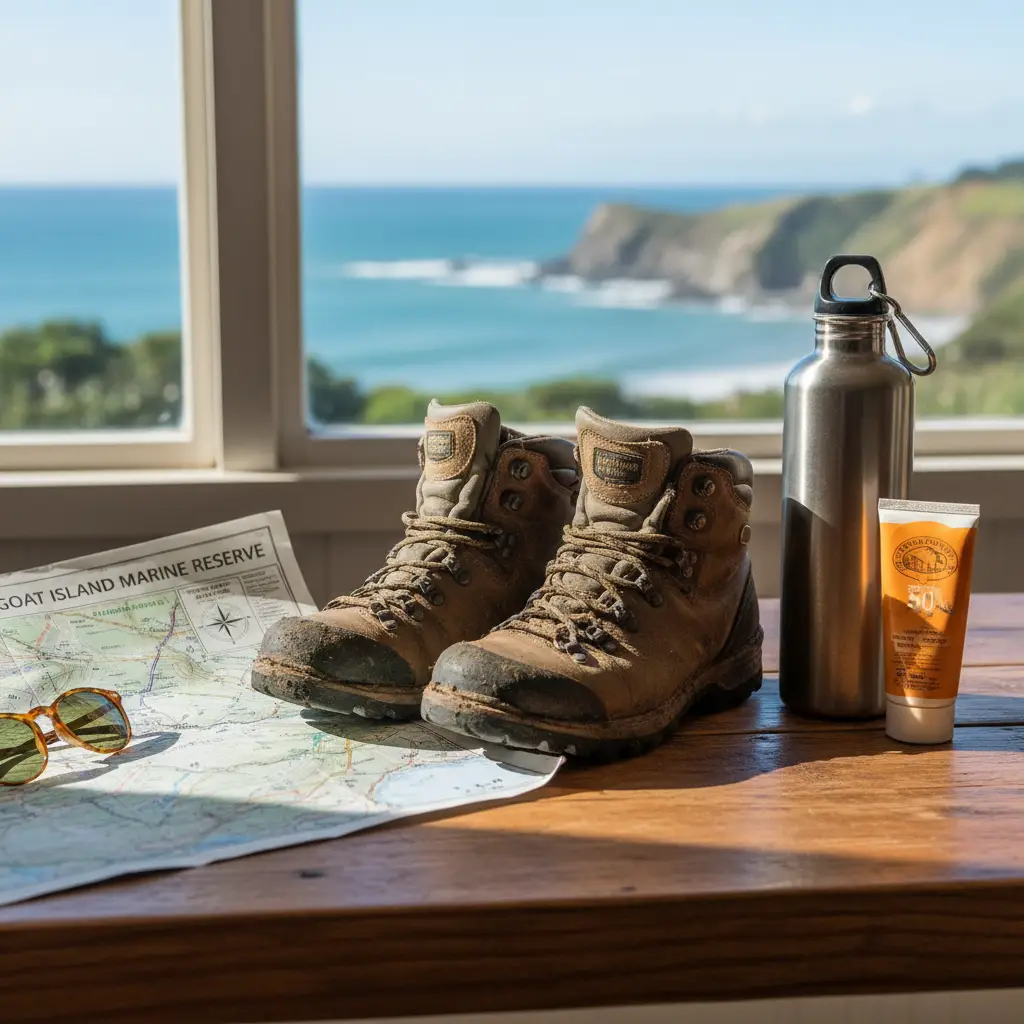
- Footwear: Sturdy walking shoes or hiking boots are recommended. The clay sections of the track can become incredibly slick when wet, making jandals (flip-flops) dangerous.
- Sun Protection: The ozone layer in New Zealand is thin. High SPF sunscreen, a wide-brimmed hat, and sunglasses are mandatory, even on cloudy days.
- Water and Hydration: There are no water fountains along the track. Bring at least 1 liter of water per person, more in summer.
Safety Considerations
Cliff Edges: The track runs near significant drop-offs. While the path is wide enough for safety, parents must keep a close eye on children. Do not venture off the marked track to get a “better photo” near the edge, as the cliff soil can be unstable.
Tides: While the walkway itself is high above the water, if you plan to explore the rocky shoreline at either end, be aware of the tide times. Access to certain beach areas can be cut off at high tide.
Getting There and Parking
Goat Island (Te Hāwere-a-Maki) is located near Leigh, approximately 80 minutes north of Auckland City by car.
Driving Directions
From Auckland, take State Highway 1 north to Warkworth. Follow the signs to Matakana, and then continue towards Leigh. Look for the brown tourist signs indicating “Goat Island Marine Reserve.” The road terminates at the marine reserve car park.
Parking Logistics
The car park is located at the base of the hill near the beach. During peak summer season (December to February) and public holidays, this car park fills up by 10:00 AM. It is advisable to arrive early to secure a spot. If the main car park is full, there is an overflow car park further up the hill, which actually places you closer to the start of the coastal walkway, shaving off the initial ascent.
People Also Ask
How long is the Goat Island coastal walk?
The Goat Island Coastal Walk is approximately 3 kilometers return. It typically takes hikers between 1.5 to 2 hours to complete the round trip, depending on walking pace and how often you stop to admire the views and spot marine wildlife.
Are dogs allowed on the Goat Island walk?
No, dogs are not allowed on the Goat Island Coastal Walk or on the beach within the Okakari Point Marine Reserve. This restriction is strictly enforced to protect native birdlife, including kiwi and penguins, as well as the farm animals in the adjacent park.
Is the Goat Island track suitable for children?
Yes, the track is generally suitable for children who are comfortable walking for an hour or more. However, parents should be aware of steep drop-offs near the cliff edges and some steep uphill sections. It is not suitable for strollers or buggies due to the uneven terrain and steps.
Can you see sharks from the Goat Island walkway?
Yes, it is possible to see sharks from the walkway. During calm days, hikers often spot Bronze Whaler sharks and various species of rays (Eagle rays and Stingrays) cruising in the shallow waters below the cliffs, thanks to the high vantage point and clear water.
Do I need to book to walk the Goat Island track?
No booking is required for the Goat Island Coastal Walk. It is a public track managed by the Department of Conservation and the local council. Access is free, but the car park can get very busy during peak summer times.
What is the best time of year to visit Goat Island?
The best time to visit is during the shoulder seasons (November, March, April) to avoid the peak summer crowds while still enjoying good weather. For wildlife spotting, calm days with low wind are best as they provide the clearest water visibility from the cliffs.