
Spotting crayfish in an NZ marine reserve offers a unique opportunity to observe Spiny Rock Lobsters in their natural state, free from fishing pressure. In these protected sanctuaries, crayfish grow significantly larger, display bolder behaviors, and can often be found in shallow depths, making them accessible to both snorkelers and divers.
New Zealand’s underwater world is renowned globally for its biodiversity, but few encounters rival the thrill of coming face-to-face with a massive Spiny Rock Lobster, locally known as crayfish or “cray.” While recreational fishing for these crustaceans is a popular pastime, the experience of observing them within a designated crayfish NZ marine reserve is entirely different. Here, the animals are not food; they are ancient sentinels of the reef, often displaying a level of confidence and size that has vanished from unprotected waters.
For marine tourists, underwater photographers, and nature enthusiasts, understanding where to look and how to identify these creatures is the key to a successful dive or snorkel trip. This guide explores the behaviors, habitats, and specific locations where you can witness the majesty of New Zealand’s protected crayfish populations.
The Marine Reserve Advantage: Why Size Matters
When you enter a marine reserve in New Zealand, such as the famous Goat Island (Cape Rodney-Okakari Point) or the Poor Knights Islands, you are stepping into a time capsule. These areas represent what the ocean looked like prior to intensive commercial and recreational fishing. The primary target keyword for eco-tourists here is “abundance.”
The Impact of Protection on Size
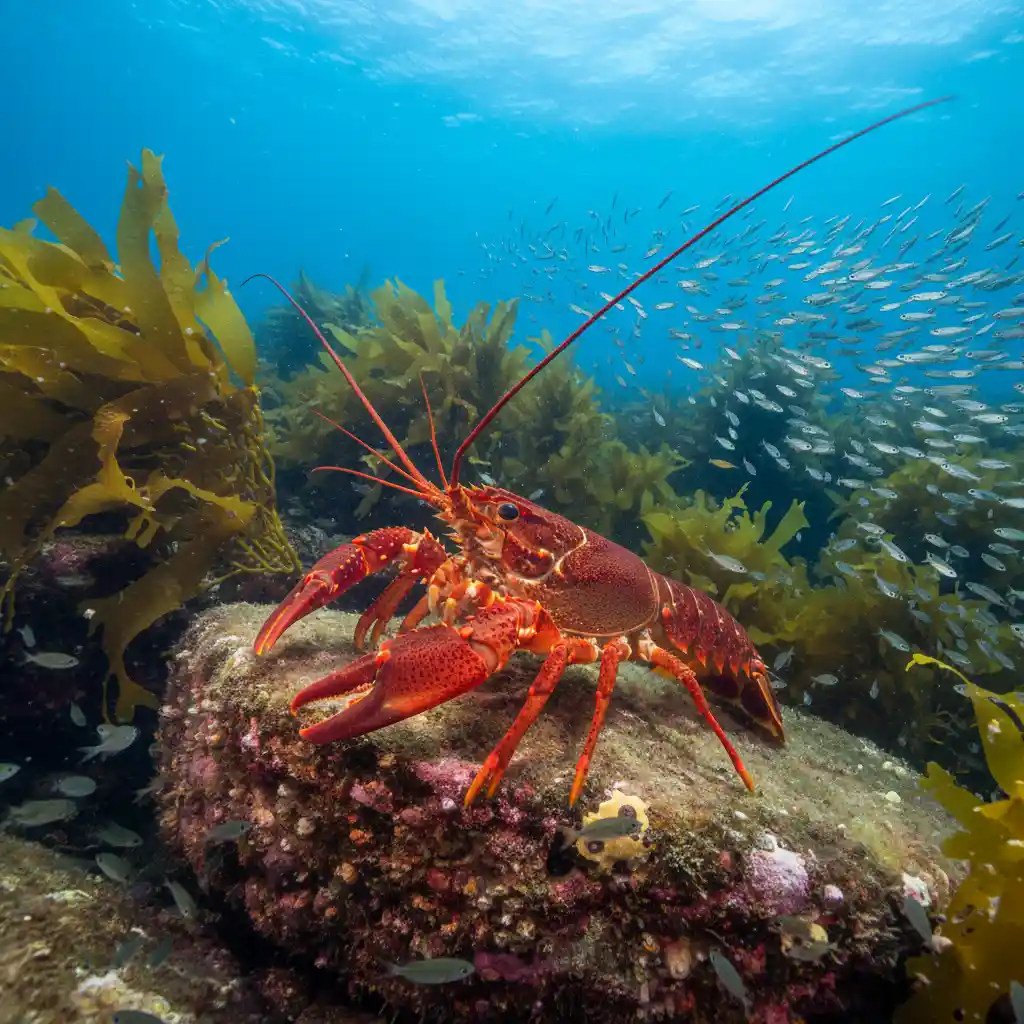
In unprotected waters, crayfish are typically harvested as soon as they reach legal size (roughly 54mm tail width for males). Consequently, seeing a crayfish over 1-2kg in the wild is increasingly rare outside of reserves. However, inside a crayfish NZ marine reserve, these animals can live out their full natural lifespans, which can exceed 50 years.
The biological impact of this protection is staggering. Research indicates that the biomass of snapper and crayfish in reserves is exponentially higher than in surrounding areas. You are not just looking for crayfish; you are looking for giants. It is not uncommon to spot specimens weighing between 4kg and 8kg in long-established reserves. These large males, often referred to as “bulls,” play a crucial role in the ecosystem by predating on kina (sea urchins), preventing the formation of kina barrens and maintaining healthy kelp forests.
Packhorse vs. Red Crayfish: Identification Guide
New Zealand waters are home to two main species of rock lobster that divers are likely to encounter. Distinguishing between them is a rewarding skill for any marine enthusiast.
The Red Crayfish (Jasus edwardsii)
The Red Crayfish, or Spiny Rock Lobster, is the most common species found throughout New Zealand, from the subtropical north to the chilly waters of Stewart Island.
- Appearance: As the name suggests, they are typically dark red, maroon, or purple with an orange underside. Their carapace is heavily armored with sharp spines.
- Habitat: They prefer rocky reef structures with plenty of cracks for hiding.
- Behavior: Generally more communal, often found huddling together in groups within a single crevice, pointing their antennae outward for defense.
The Packhorse Crayfish (Sagmariasus verreauxi)
The Packhorse is the behemoth of the crustacean world. They are much larger than the Reds and are technically the largest species of rock lobster in the world.
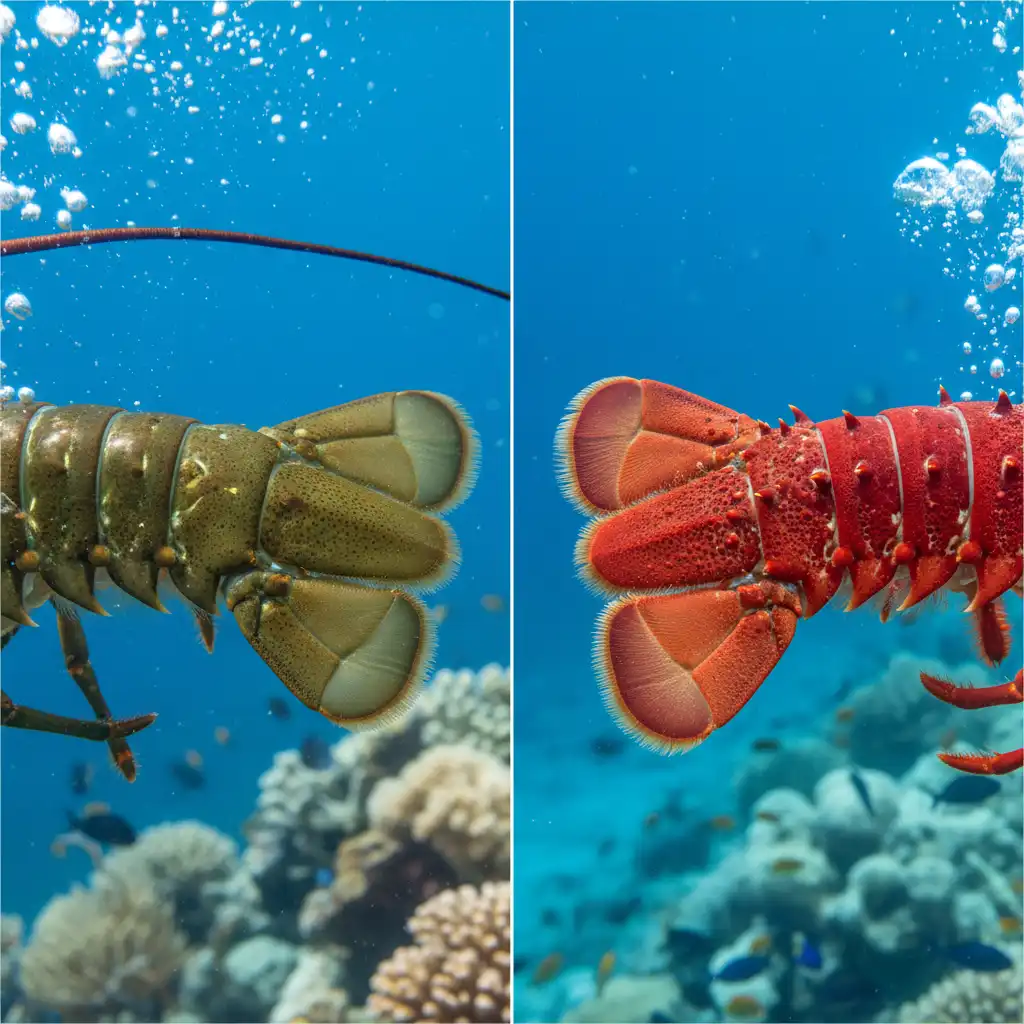
- Appearance: Distinctly different from the Red, the Packhorse is olive-green to yellow in color. They have a broader carapace and a much smoother tail segment. Their antennae are exceptionally long and thick.
- Size: These giants can reach weights of up to 15kg and lengths of 60cm (carapace length), excluding antennae.
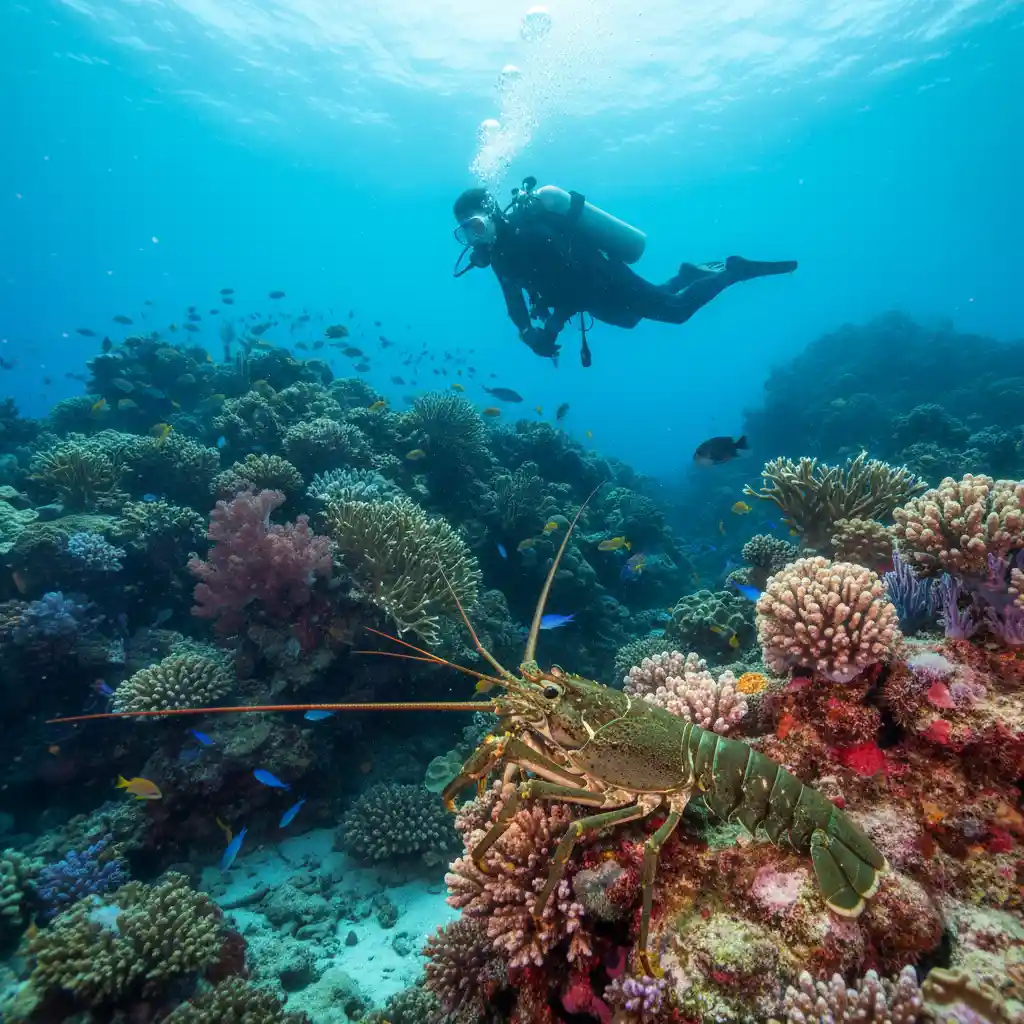
- Range: They are predominantly found in the warmer northern waters of New Zealand, making reserves like the Poor Knights Islands and Cape Reinga prime spotting locations.
Where to Look: Cracks, Crevices, and Kelp
Spotting a crayfish requires a keen eye and an understanding of their defensive instincts. While reserve crayfish are bolder, they are still prey animals that rely on shelter.
Mastering the “Feelers” Spot
The most tell-tale sign of a crayfish is the antennae. Crayfish are generally nocturnal foragers, meaning they spend the daylight hours tucked into rocky shelters. When scanning a reef:
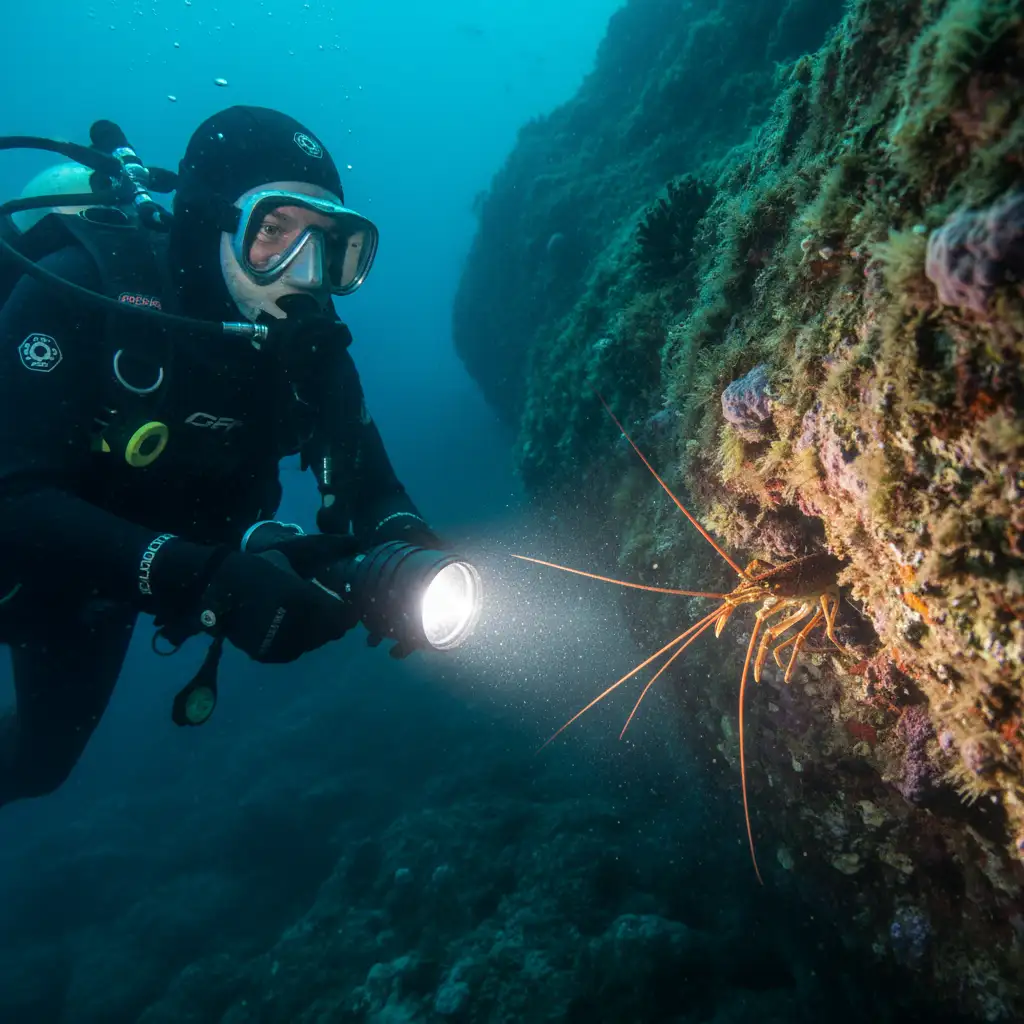
- Look for the ‘V’: Scan the dark shadows of horizontal and vertical cracks. You are looking for the V-shape of two long antennae protruding from the darkness.
- Check the Overhangs: Large boulders creating overhangs near the sand line are prime real estate for large males.
- Look Low: While they can be found at various depths, the interface where the rocky reef meets the sandy bottom is often the most productive area to scan.
The Kelp Forest Camouflage
In shallow reserves, crayfish will often venture out into the kelp forests (Ecklonia radiata) even during the day. The mottled light in shallow water provides excellent camouflage. Here, you aren’t looking for a cave; you are looking for movement. The swaying of kelp can mask the movement of a crayfish, so look for the rigid, rhythmic movement of antennae that opposes the surge of the ocean.
Understanding Molting Season and Behavior
To truly understand what you are seeing, you must understand the molting cycle. As crustaceans, crayfish possess a hard exoskeleton that does not grow. To increase in size, they must shed this shell—a process known as molting.
Molting Season Behaviors
Molting usually occurs once a year for adults (more often for juveniles). For Red Crayfish, males typically molt between April and June, while females molt earlier. During this period, their behavior changes drastically:
- Vulnerability: Immediately after molting, the new shell is soft and paper-like. The crayfish is incredibly vulnerable to predators like octopus, sharks, and large fish.
- Deep Hiding: During the soft-shell phase, crayfish will retreat deeper into the most inaccessible crevices. They will not venture out to forage.
- Aggression: Prior to molting, crayfish may display increased aggression as they vie for the safest “bunkers” to endure their vulnerable phase.
If you spot a crayfish that looks exceptionally bright and clean, with no marine growth (barnacles or algae) on its shell, it has likely recently molted and hardened. Conversely, a “dirty” shell indicates the animal is nearing its next molt.
Top NZ Marine Reserves for Crayfish Spotting
New Zealand has over 40 marine reserves, but some are legendary for their crayfish populations. If your goal is to see these creatures, plan your trip around these locations.
1. Cape Rodney-Okakari Point (Goat Island)
Located north of Auckland, this was New Zealand’s first marine reserve (established in 1975). Because of the long-term protection, the crayfish here are not only huge but incredibly accustomed to divers. In shallow waters (3-5 meters), you can often see them walking across the open reef, a behavior rarely seen elsewhere.
2. Poor Knights Islands
A top-10 dive site globally, the Poor Knights offer a subtropical environment. This is the best place to spot the massive Packhorse Crayfish. The volcanic architecture of the islands provides deep archways and caves that these giants love.
3. Tawharanui Marine Reserve
Just south of Goat Island, Tawharanui offers excellent snorkeling access to crayfish. The rocky reefs extend from the shore, allowing snorkelers to spot crayfish in water as shallow as 2 meters.
4. Taputeranga (Wellington)
For those in the capital, the rugged south coast offers a thriving reserve. The cooler waters here support dense populations of Red Crayfish, often found in the complex rock formations near the Island Bay Snorkel Trail.
Ethical Observation Guidelines
Visiting a crayfish NZ marine reserve carries a responsibility to minimize impact. The “look but don’t touch” rule is legally enforced, but it is also biologically important.
- Do Not Touch: Even gentle handling can strip the protective mucous layer from the crayfish’s shell, leaving them susceptible to infection. Furthermore, grabbing them by the antennae can cause these sensory organs to snap off, effectively blinding the animal to its environment.
- Watch Your Fins: When hovering to look into a crack, be mindful of your fins. Kicking the reef damages delicate invertebrate life and can silting up the area, ruining visibility for others.
- Light Etiquette: If using a dive torch, avoid shining high-intensity beams directly into their eyes for prolonged periods. Use the edge of the beam to illuminate them.
By adhering to these guidelines, you ensure that the crayfish remain stress-free and continue to exhibit the bold, natural behaviors that make spotting them in New Zealand marine reserves such a magical experience.
People Also Ask
Can you catch crayfish in a marine reserve in NZ?
No, it is strictly illegal to take or harm any marine life, including crayfish, within a designated marine reserve in New Zealand. These areas are “no-take” zones established for conservation and scientific study. Penalties for poaching in reserves are severe, including heavy fines and confiscation of gear and vessels.
What is the difference between a lobster and a crayfish in NZ?
In New Zealand, the terms are often used interchangeably, but the species found here are technically “Spiny Rock Lobsters.” Unlike American or European lobsters, NZ crayfish do not have large front pincers (claws). They rely on their spiny carapace and long antennae for defense.
When is the best time of day to see crayfish?
While crayfish are nocturnal foragers, they can be seen during the day in marine reserves. The best viewing is often at dawn or dusk (crepuscular periods) when they are most active. However, in protected reserves like Goat Island, they are often visible throughout the day resting in crevices or walking on the reef.
Do crayfish bite divers?
Crayfish do not bite in the traditional sense as they do not have large crushing claws. However, they are spiny and strong. If harassed, they can pinch with their legs or thrash their tail, and their sharp spines can puncture skin or wetsuits. In a passive observation scenario, they pose no threat.
How big do NZ crayfish get?
The common Red Crayfish can reach weights of 4-5kg, though this is rare outside reserves. The Packhorse Crayfish is much larger, capable of reaching 15kg and over 60cm in body length, making it the largest rock lobster species in the world.
Why are Packhorse crayfish called that?
The name “Packhorse” is believed to refer to their immense size and strength, as well as their behavior of moving steadily across the ocean floor. Their scientific name is Sagmariasus verreauxi, and they are distinct for their green coloration and massive size compared to the common red variety.