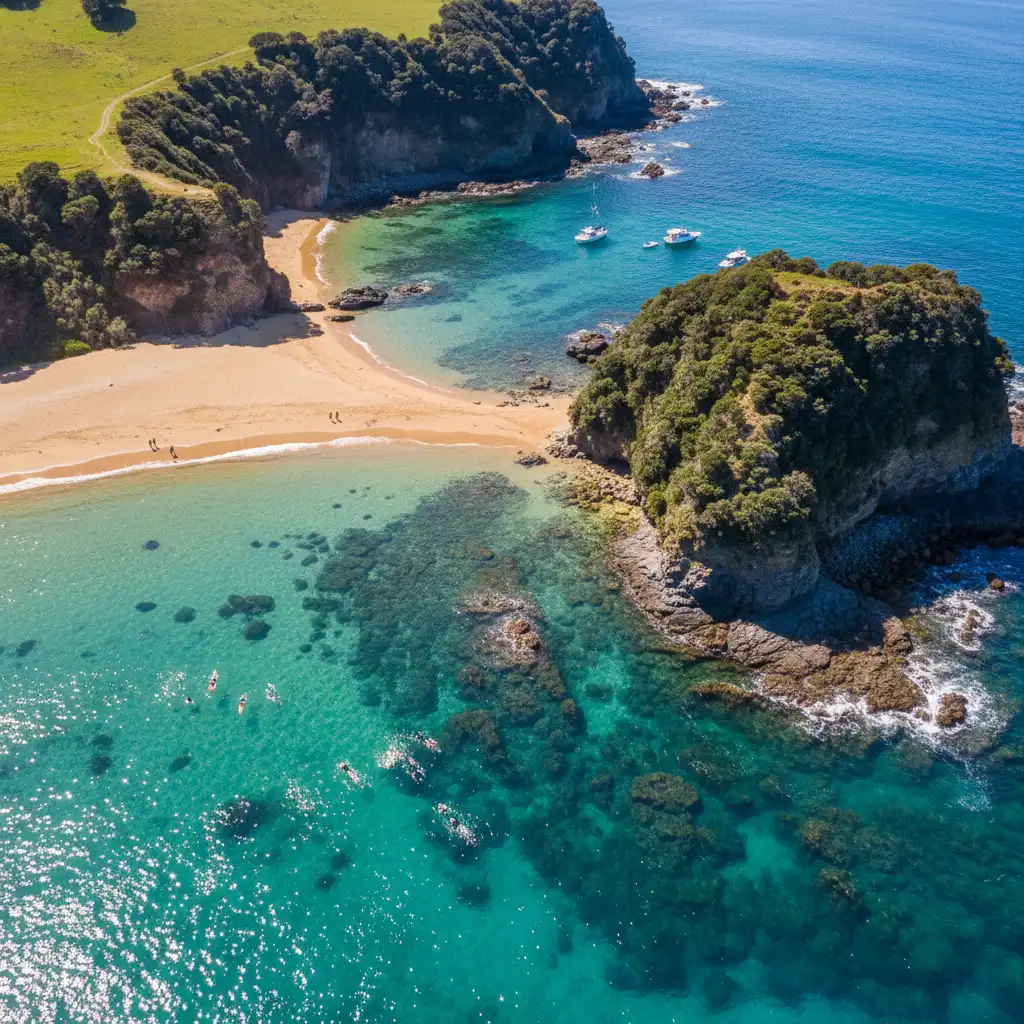
Goat Island Marine Reserve, officially known as Cape Rodney-Okakari Point Marine Reserve, is New Zealand’s first fully protected marine sanctuary. Located near Leigh, this strict no-take zone hosts a thriving ecosystem where visitors can snorkel, dive, or kayak among massive snapper and crayfish in their natural, undisturbed habitat.
Introduction to Cape Rodney-Okakari Point (Goat Island)
Goat Island Marine Reserve is not merely a tourist destination; it is a living testament to the power of conservation. Established in 1975, it holds the distinction of being New Zealand’s first marine reserve. Before its protection, the area suffered from overfishing, leaving the seabed barren—a phenomenon known as “kina barrens,” where sea urchins (kina) stripped the kelp forests because their natural predators, the snapper and crayfish, had been depleted.
Today, the reserve is a vibrant, bustling metropolis of marine life. It covers 518 hectares of coastal sea between Cape Rodney and Okakari Point. While the reserve is commonly referred to as “Goat Island,” this name actually belongs to Te Hāwere-a-Maki, the small island that sits just 100 meters off the beach. The island itself is a spiritual and historical landmark for the local iwi, Ngāti Manuhiri, and serves as a natural breakwater that protects the bay, creating the calm conditions that make this spot perfect for marine education and tourism.
The transformation of this area is scientifically significant. It has become the baseline for marine research in New Zealand, demonstrating what our coastal ecosystems look like when left undisturbed. For visitors, it offers a rare opportunity to interact with wild marine life that has no fear of humans, providing an immersive experience that rivals tropical reef encounters.
The Marine Ecosystem: What You Will See
The biodiversity within the reserve is the primary draw for the hundreds of thousands of visitors who flock here annually. Because fishing has been prohibited for nearly five decades, the animals have grown to their natural sizes and behave differently than they do in unprotected waters.
The Return of the Giants
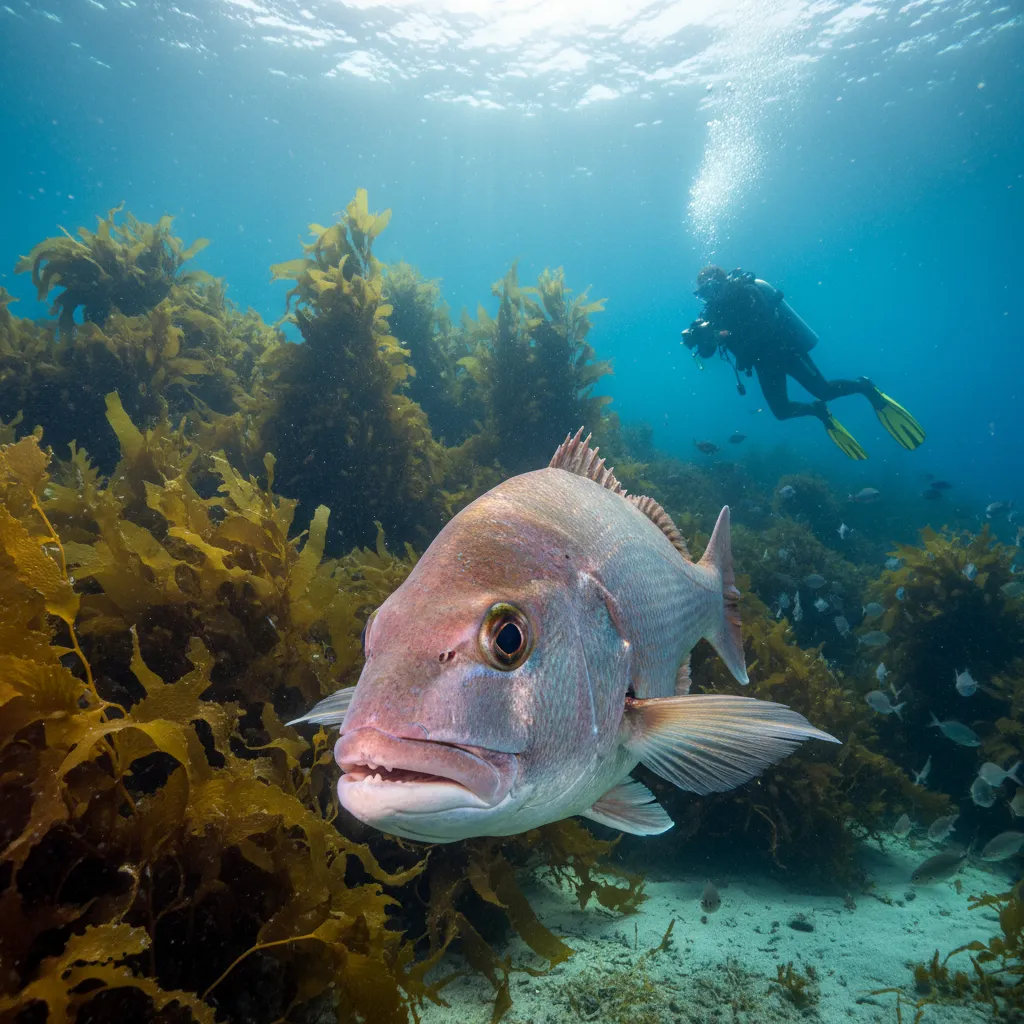
The most famous residents are the Australasian Snapper (Tāmure). Outside the reserve, snapper are skittish and elusive. Inside the reserve, they are bold, curious, and often reach sizes exceeding 80cm in length. These “old growth” snapper are crucial for the ecosystem as they are the primary predators of kina. By keeping the kina population in check, the snapper allow the kelp forests to regenerate, which in turn provides a nursery for hundreds of other species.
Beyond the Snapper
While the snapper steal the show, the reserve is home to a complex food web. Divers and snorkelers frequently encounter:
- Blue Maomao: Schools of these electric-blue fish often surround swimmers near the rocky outcrops.
- Crayfish (Kōura): Once nearly extinct in the area, massive rock lobsters now inhabit the crevices and ledges.
- Eagle Rays and Stingrays: Often found gliding over the sandy flats in the shallows during summer.
- Parore and Red Moki: Herbivorous fish often seen grazing on the rocks.
Current Marine Conditions & Best Times to Visit
Understanding the ocean conditions is vital for a safe and enjoyable experience at Goat Island. The reserve is open to the ocean swells, and visibility can change rapidly depending on wind direction and tides.
How to Check Visibility
The best conditions for snorkeling usually occur when the wind is blowing from the South or Southwest, as the land shelters the bay. Northerly or Easterly winds blow directly onshore, which can create chop and reduce underwater visibility by churning up sediment. Before driving to Leigh, it is highly recommended to check live webcams or marine weather forecasts specifically for the “Leigh Coast.”
Seasonal Variations
Summer (December – March): This is the peak season. The water is warmest (reaching 20-22°C), and marine life is most active. However, the beach can be extremely crowded. Parking is often at capacity by 10:00 AM.
Winter (June – August): The water is cold (dropping to 13-15°C), requiring a thick wetsuit (7mm). However, winter often brings the clearest water, sometimes exceeding 15-20 meters of visibility, making it a favorite time for serious divers and underwater photographers.
Activities: Snorkeling, Diving, and Tours
Snorkeling the Shallows
Snorkeling is the most popular activity at Goat Island. You do not need to be an Olympic swimmer to enjoy the reserve, as much of the marine life congregates in water less than 3 meters deep. The channel between the beach and the island is the main thoroughfare. Beginners should stay close to the shore, while advanced snorkelers can venture closer to the island (observing safety regarding currents).
Scuba Diving
For those who want to explore deeper, the reserve offers excellent shore diving. The seabed drops off gently, eventually reaching depths of 18-20 meters further out. Divers can explore the “Sponge Garden,” a deeper reef system populated by colorful sponges, sea squirts, and deeper-dwelling fish species.
The Glass Bottom Boat & Kayaking
If you prefer to stay dry, the Glass Bottom Boat tour is an educational alternative. It runs regularly from the beach (weather permitting) and provides a commentary on the history and marine life of the area. Kayaking is also permitted and popular; clear-bottom kayaks can be rented from local vendors, offering a unique perspective of the reef below without getting wet.

Education Hub: The Marine Discovery Centre
Located on the hill overlooking the reserve is the Goat Island Marine Discovery Centre, operated by the University of Auckland. This facility is a critical component of the area’s educational offering. It serves as an interactive museum where visitors can learn about the marine science research conducted at the adjacent Leigh Marine Laboratory.
The Discovery Centre features:
- Touch Tanks: Interactive displays allowing children to touch hardy marine creatures like starfish and urchins under supervision.
- Microscope Stations: View plankton and microscopic marine life up close.
- Educational Displays: Detailed information on the history of the reserve, the lifecycle of the snapper, and the importance of marine conservation globally.
This is an essential stop, particularly for school groups or families, to understand why the reserve exists before seeing it firsthand.
Safety, Conservation Rules, and Etiquette
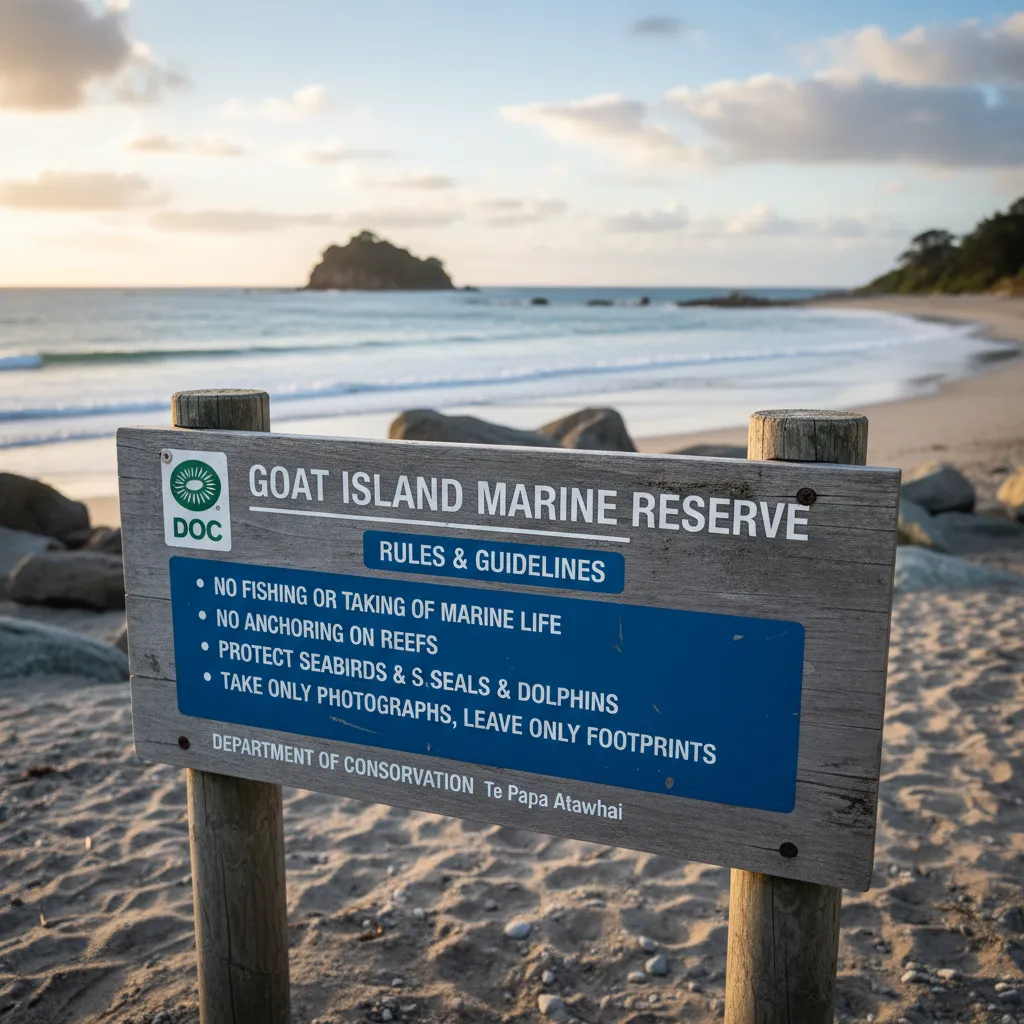
Because Goat Island is a protected sanctuary, strict rules apply. Department of Conservation (DOC) rangers patrol the area frequently, and fines for non-compliance are significant.
What Does “No Take” Mean?
The “No Take” rule is absolute. This means:
- No Fishing: You cannot fish from the shore, from a boat, or by any other method within the reserve boundaries.
- No Gathering: You cannot take crayfish, shellfish, seaweed, shells, or even rocks and sand.
- No Feeding: While it was once common to feed the fish peas or bread, this is now strictly discouraged and often prohibited. Feeding fish alters their natural behavior, makes them aggressive, and can cause health issues for the animals.
Water Safety
The channel between the mainland and Goat Island can develop strong currents as the tide changes. It is easy to be swept out if you are not a strong swimmer. Always check the sea conditions upon arrival. If in doubt, stay in the shallow bays known as “Stingray Bay” or the main beach shallows. Wearing a wetsuit is highly recommended, not just for warmth, but for buoyancy.
Planning Your Visit: Logistics and Amenities
Getting There: Goat Island is approximately an 80-minute drive north of Auckland City. The route takes you through Warkworth and Matakana. The final stretch of road is winding and scenic.
Parking: There are two main car parks. The lower car park is close to the beach but fills up immediately in summer. The upper car park requires a 5-10 minute walk down to the water. Arrive before 9:30 AM or after 3:00 PM during peak season to secure a spot.
Amenities:
- Toilets and Changing Rooms: Available at the main entrance.
- Food and Drink: There are no shops on the beach itself to prevent litter. The nearest cafes and dairies are in Leigh (a 5-minute drive) or at the top of the hill near the Discovery Centre. Pack a picnic, but ensure you take all rubbish with you.
- Gear Rental: Snorkel gear and wetsuits can be hired from businesses located on the road leading into the reserve.
Frequently Asked Questions
Is entry to Goat Island Marine Reserve free?
Yes, access to the beach and the marine reserve is completely free for the public. However, there is an admission fee if you wish to visit the Marine Discovery Centre on the hill, and costs apply for gear hire or glass-bottom boat tours.
Can you walk onto Goat Island itself?
While you can walk along the rocks at low tide, access to the interior of the island (Te Hāwere-a-Maki) is restricted to protect the seabird populations and native vegetation. Visitors should stay on the designated coastal areas and respect the cultural significance of the island.
Do I need a wetsuit to snorkel at Goat Island?
While not mandatory, a wetsuit is highly recommended year-round. Even in summer, the water temperature rarely exceeds 22°C, and you will get cold after 20 minutes in the water. Wetsuits also provide essential buoyancy and protection from stinging hydroids or jellyfish.
Are there sharks at Goat Island Marine Reserve?
Yes, like all healthy marine ecosystems, sharks are present. You may spot small Carpet Sharks or Bronze Whalers. They are generally uninterested in swimmers. Sightings are a sign of a healthy ocean, but standard water safety practices should always be followed.
Can I bring my dog to Goat Island?
No. Dogs are not permitted in the reserve or on the beach. This rule is strictly enforced to protect local wildlife, including penguins and shorebirds that nest in the area.
What is the best time of day to visit?
For the best underwater visibility and calmest conditions, early morning is usually best, before the afternoon sea breezes pick up. Arriving early (before 9:00 AM) also ensures you get a parking spot during the busy summer months.