The history of Cape Rodney-Okakari Point Marine Reserve is defined by its status as New Zealand’s first no-take marine reserve, established in 1975. Located near Leigh, this pioneering conservation area transformed a depleted ecosystem into a thriving kelp forest by strictly prohibiting fishing, allowing snapper and crayfish populations to recover and serving as a global model for marine protection.
The Birth of a Global Precedent: Establishment in 1975
The establishment of the Cape Rodney-Okakari Point Marine Reserve was not merely a local administrative decision; it was a watershed moment in the global history of marine conservation. Prior to the mid-1970s, the concept of a “no-take” marine reserve—an area of the sea where all extraction of marine life is strictly prohibited—was virtually unheard of in New Zealand and rare internationally. The prevailing sentiment of the era viewed the ocean as an inexhaustible resource, a frontier where human extraction had no lasting consequence.
The journey began in 1965, sparked by scientists at the University of Auckland’s Marine Laboratory, which had been established at Leigh in 1962. Researchers, including the influential Dr. Bill Ballantine, noticed a disturbing trend: the coastline was being stripped of its biodiversity. What was intended to be a site for studying natural marine life was becoming a study in depletion. The seabed was dominated by “urchin barrens”—areas where kina (sea urchins) had grazed down the kelp forests because their natural predators, large snapper and crayfish, had been fished out.
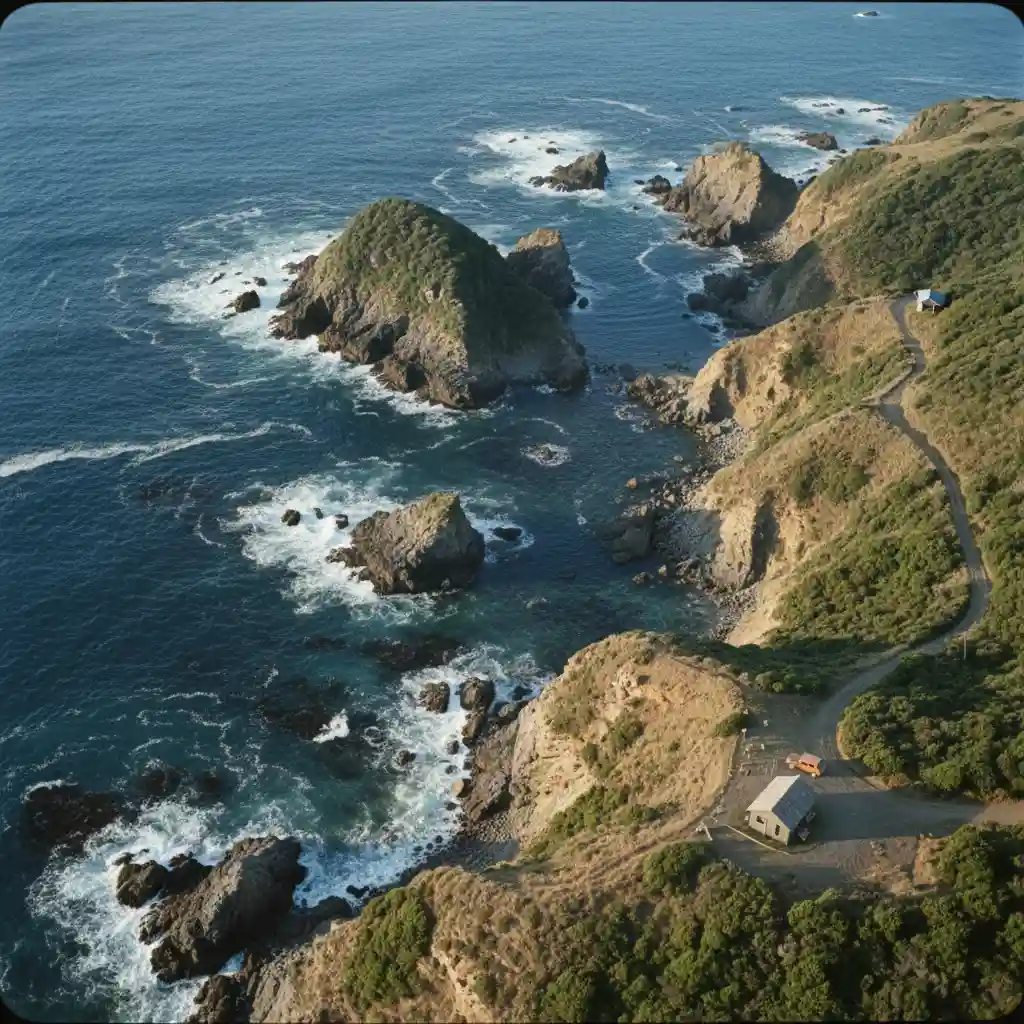
The proposal for the reserve faced immense opposition. Commercial fishermen feared the loss of livelihood, while recreational anglers viewed the restriction as an infringement on their birthright to fish the sea. It took ten years of relentless campaigning, public meetings, and scientific advocacy to convince the government and the public. Finally, in 1975, the Marine Reserves Act was passed, and Cape Rodney-Okakari Point was officially gazetted. This legal framework set the stage for a radical experiment: what happens when you leave nature completely alone?
The Visionary Behind the Reserve: Dr. Bill Ballantine
To discuss the history of Cape Rodney-Okakari Point without mentioning Dr. Bill Ballantine would be to ignore the architect of the blueprint. Dr. Ballantine, a British-born marine biologist, arrived in New Zealand with a fresh perspective and an uncompromising dedication to science. He is widely regarded as the “father” of marine reserves in New Zealand.
Dr. Ballantine’s philosophy was grounded in the idea of a “control” area. He argued that without a baseline of untouched ocean, scientists could not accurately measure the impact of human activity. If every inch of the coast is fished, how do we know what a natural population looks like? He championed the reserve not just as a sanctuary for fish, but as a scientific necessity.
His legacy is evident in the reserve’s success. Ballantine spent decades monitoring the area, documenting the slow but steady return of the ecosystem. He famously advocated for the “10% target”—the idea that 10% of New Zealand’s coastline should be fully protected. While the Cape Rodney-Okakari Point reserve covers only 547 hectares, its influence is disproportionate to its size. It proved Ballantine’s hypothesis correct: when pressure is removed, life returns with astonishing resilience.
From Barrens to Abundance: Decades of Recovery
The recovery of the ecosystem within the reserve is perhaps the most documented marine success story in New Zealand. In the early years following the 1975 establishment, changes were subtle. Biological systems do not reset overnight. However, by the late 1980s and 1990s, the transformation was undeniable.
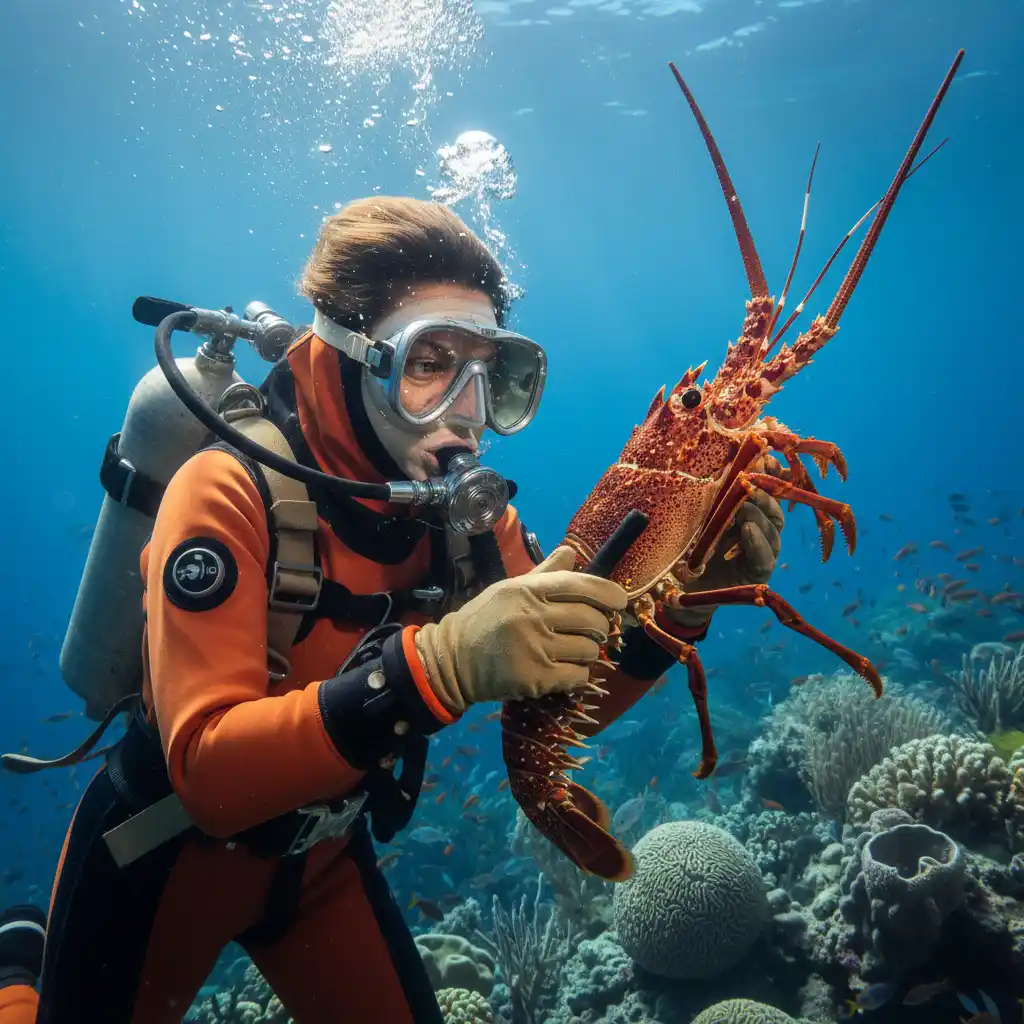
The most visible indicator of this recovery is the Australasian snapper (Pagrus auratus). Outside the reserve, snapper are often caught as soon as they reach legal size. Inside the reserve, they are allowed to grow old. This is critical because a large, old female snapper produces exponentially more eggs than a small, barely legal one. Research has shown that the snapper within the reserve are not only more numerous—up to 40 times the density of surrounding areas—but also significantly larger and bolder.
Rock lobster (crayfish) populations followed a similar trajectory. Once scarce and elusive, crayfish in the reserve began to repopulate the rocky reefs, venturing out of their crevices with a confidence unseen in fished areas. This resurgence of predators triggered a profound ecological shift known as a trophic cascade.
What is the Trophic Cascade Effect?
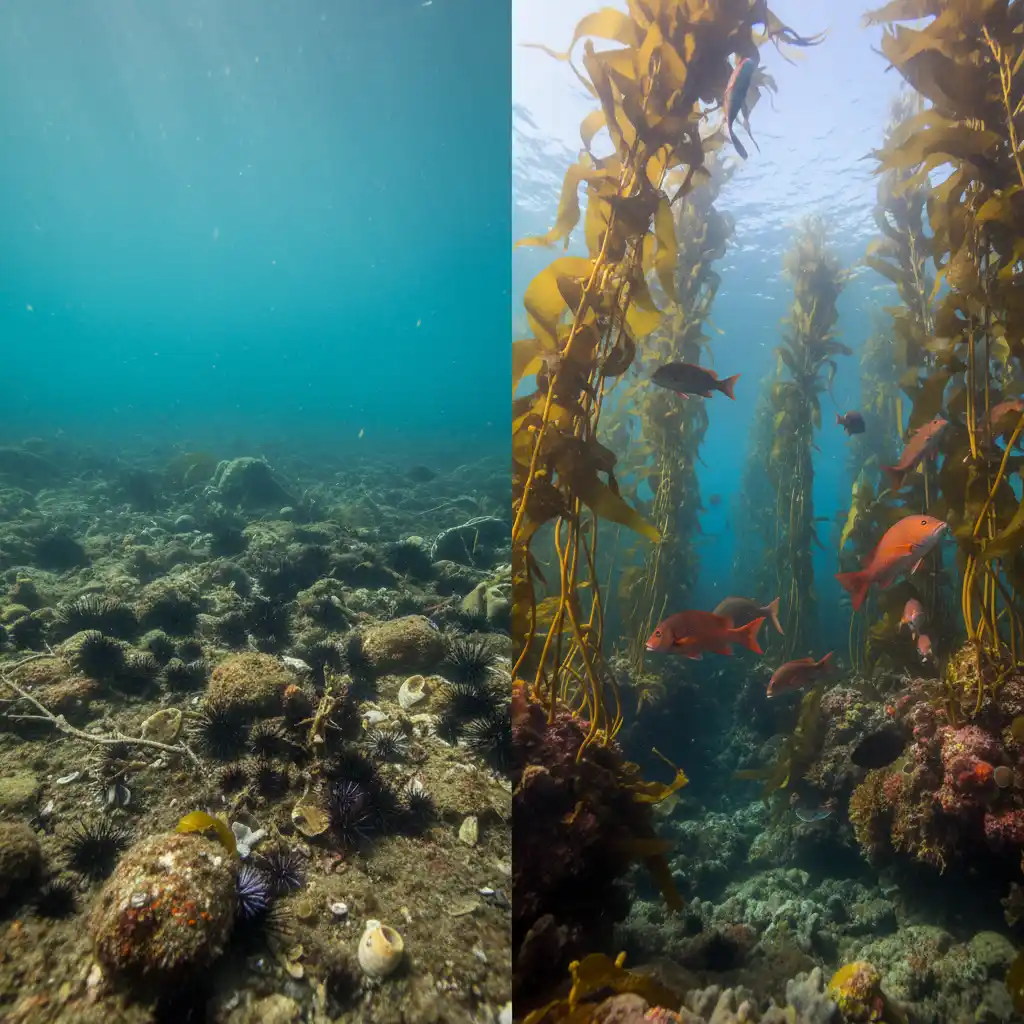
The history of the reserve is a textbook example of a trophic cascade—a powerful indirect interaction that can control entire ecosystems. In the pre-reserve era, the overfishing of snapper and crayfish removed the primary predators of kina (sea urchins). Unchecked, the kina population exploded, grazing down the kelp forests until only bare rock remained. This is known as an urchin barren.
As the reserve matured and the predators returned, they began to consume the kina. With the urchin population controlled, the kelp forests regenerated. Today, the underwater landscape of Goat Island is a lush, swaying forest of seaweed. This kelp provides habitat for hundreds of other species, creating a nursery for juvenile fish and boosting the overall biodiversity of the region. The return of the kelp forest is the true victory of the reserve’s history, demonstrating that nature can heal itself if given the space to do so.
Cultural Heritage: Māori History and Significance
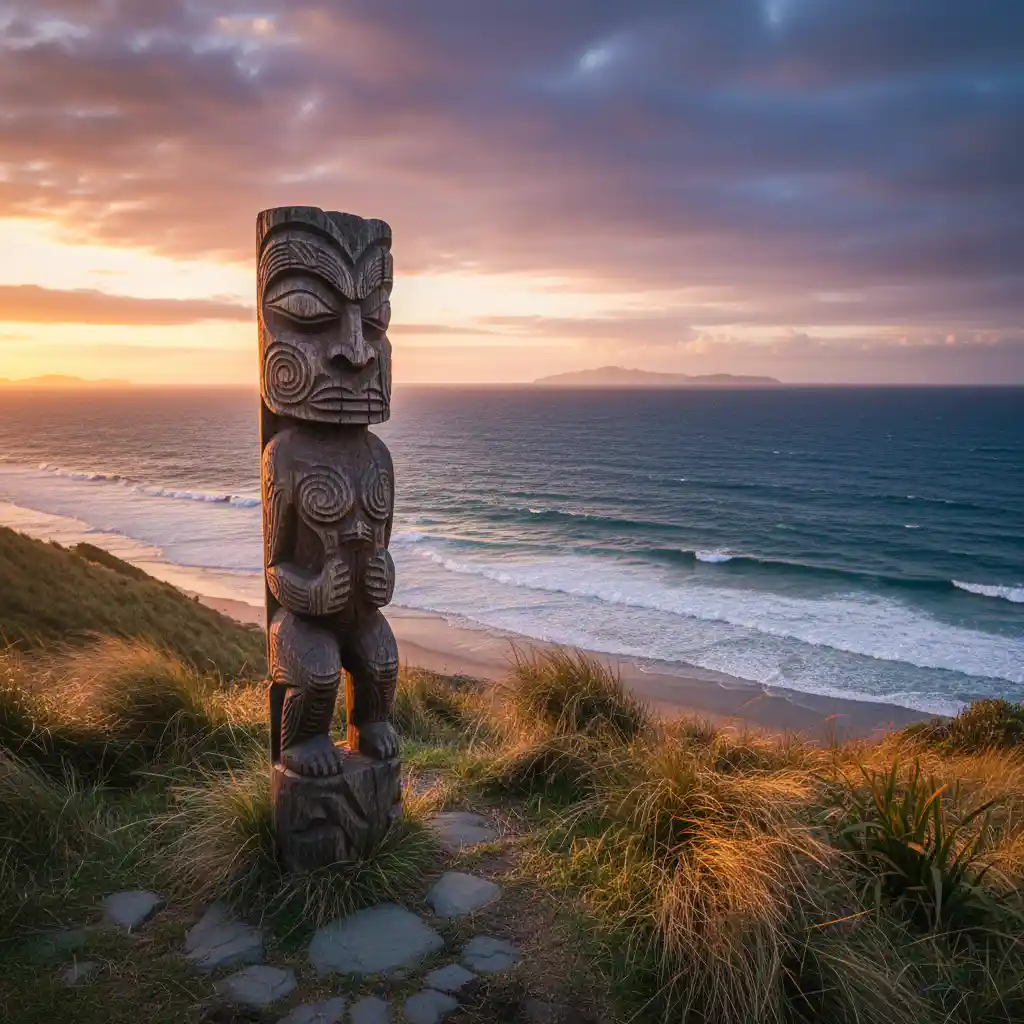
While the scientific history of the reserve dates back to 1975, the human history of the area extends back hundreds of years. The area is of immense spiritual and historical significance to the local iwi, Ngāti Manuhiri. To the Māori, the island commonly known as Goat Island is Motu Hāwere.
Motu Hāwere and the surrounding waters have long been valued not just as a food basket (pātaka kai) but as a place of mana (spiritual power). The name “Goat Island” is a colonial moniker, likely derived from goats being released on the island by early European sailors to provide food for shipwrecked crews. However, the traditional name, Motu Hāwere, connects the land to the ancestors.
Historically, this coastline was a landing point for the waka (canoe) Moe Kakano. The connection between the people and the sea is governed by the principles of kaitiakitanga (guardianship). Interestingly, the concept of a marine reserve aligns closely with the traditional Māori practice of rāhui. A rāhui is a temporary prohibition on a resource to allow it to recover or to honor a significant event. While the marine reserve is a permanent statute rather than a temporary rāhui, the underlying ethos of protection and respect for the natural world is a shared value.
In recent years, there has been a concerted effort to better integrate these cultural narratives into the visitor experience. Recognizing the mana whenua (territorial rights) of Ngāti Manuhiri acknowledges that the history of Cape Rodney-Okakari Point did not begin with the Marine Reserves Act, but with the first navigators who recognized the richness of these waters.
The Reserve Today: Tourism and Science
Today, the history of Cape Rodney-Okakari Point is still being written, but the narrative has shifted from recovery to management. The reserve attracts hundreds of thousands of visitors annually. It has become a victim of its own success; the sheer number of snorkelers and divers can put pressure on the very ecosystem the reserve was designed to protect.
Scientific research continues to be a cornerstone of the reserve’s existence. The University of Auckland’s Leigh Marine Laboratory remains a world-class facility, producing research that informs marine policy globally. The “spillover effect”—where fish breed inside the reserve and then move outside its boundaries, replenishing local fishing grounds—has been documented here, providing a compelling economic argument for marine conservation.
The reserve stands as a living museum, a window into the past showing us what the New Zealand coastline looked like before industrial fishing. It serves as a benchmark, a classroom, and a sanctuary. The history of Cape Rodney-Okakari Point is a testament to the foresight of those who fought for its establishment and a reminder of the fragility and resilience of our blue backyard.
What was the first marine reserve in New Zealand?
The Cape Rodney-Okakari Point Marine Reserve, established in 1975, was the first marine reserve in New Zealand. It is located near Leigh, north of Auckland, and was created to protect the marine ecosystem for scientific study.
Why is Goat Island Marine Reserve famous?
It is famous for being a successful example of a no-take marine reserve where marine life, particularly snapper and crayfish, has recovered to abundance. It allows visitors to swim amongst large fish in their natural habitat, making it a top snorkeling destination.
Who was Dr. Bill Ballantine?
Dr. Bill Ballantine was a pioneering marine biologist based at the Leigh Marine Laboratory. He was the driving force behind the creation of the Cape Rodney-Okakari Point Marine Reserve and a global advocate for the establishment of no-take marine reserves.
What is the Maori name for Goat Island?
The Maori name for Goat Island is Motu Hāwere. It holds significant spiritual and historical importance for the local iwi, Ngāti Manuhiri, and is associated with the landing of the waka Moe Kakano.
How big is the Cape Rodney-Okakari Point Marine Reserve?
The reserve covers an area of approximately 547 hectares (1,350 acres) of sea and extends 800 meters (about half a mile) offshore from the high-water mark along the coastline.
Can you fish at Cape Rodney-Okakari Point?
No, all fishing and gathering of shellfish or marine life is strictly prohibited. It is a “no-take” reserve, meaning nothing can be removed, including seaweed, shells, and rocks.