
A Goat Island school trip offers students a unique educational experience at New Zealand’s first marine reserve, Cape Rodney-Okakari Point. Successful visits require advance coordination with the Marine Discovery Centre for curriculum-based learning, strict adherence to Education Outside The Classroom (EOTC) water safety ratios, and careful logistical planning for bus parking and group management within the reserve.
Organizing a field trip to the Cape Rodney-Okakari Point Marine Reserve—commonly known as Goat Island—is a rite of passage for many New Zealand students. Situated near Leigh, just north of Auckland, this protected sanctuary offers an unparalleled window into marine biodiversity. However, managing large groups in a sensitive ecological zone requires meticulous planning. This guide provides a comprehensive strategy for educators and tour organizers to execute a flawless, safe, and educational Goat Island school trip.
Why Choose a Goat Island School Trip?
Goat Island is not merely a recreational spot; it is a living laboratory. Established in 1975, it became New Zealand’s first marine reserve, setting a global precedent for marine conservation. For educators, the reserve serves as a tangible case study for the NCEA Biology, Geography, and Science curriculums.
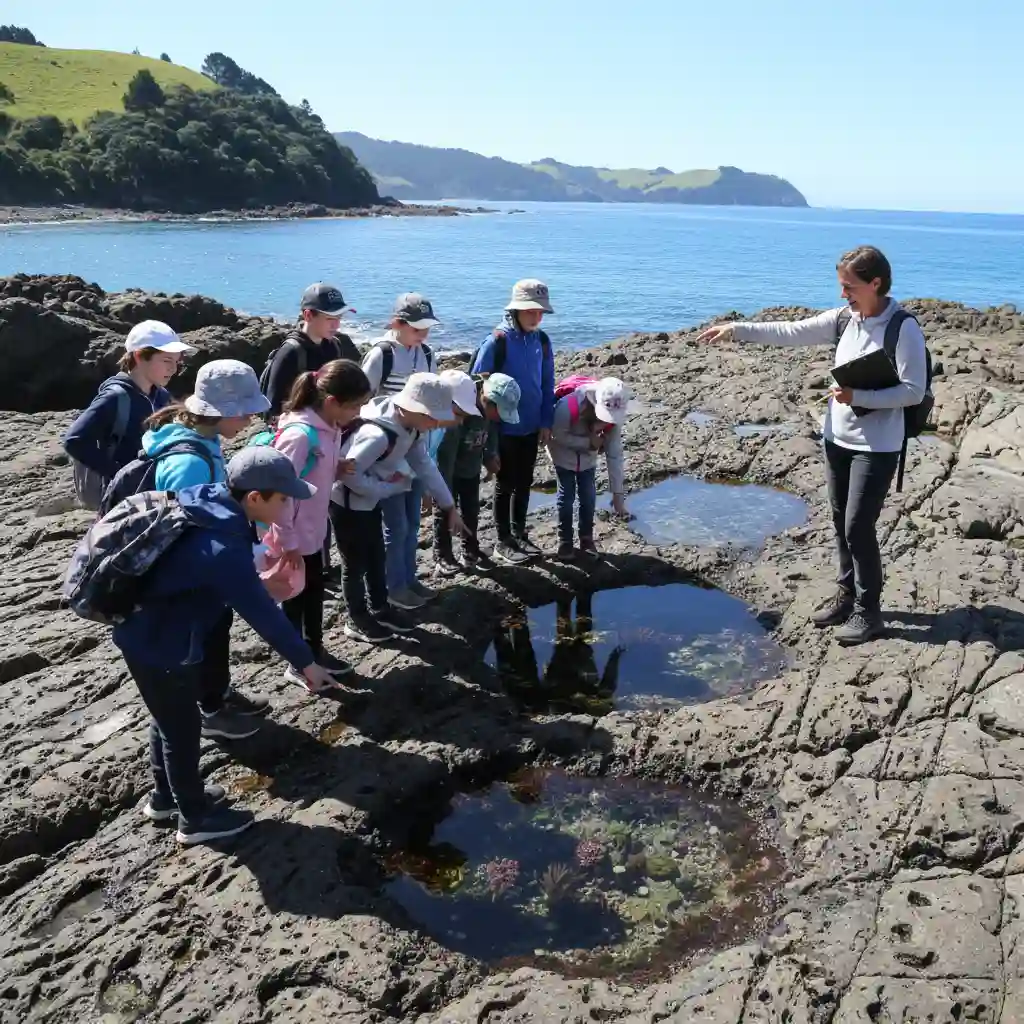
Students can observe the “spillover effect” of marine protection, where the abundance of species like Snapper (Tāmure) and Crayfish (Kōura) demonstrates the efficacy of no-take zones. The intertidal rocky shores provide a hands-on environment for studying zonation patterns, adaptation, and food webs. Unlike a textbook, the reserve allows students to witness the complex interactions between kelp forests, urchin barrens, and predatory fish in real-time.
Planning Your Visit: Booking Requirements for Large Groups
While the beach and reserve are public land managed by the Department of Conservation (DOC), bringing a large commercial or educational group requires adherence to specific protocols to ensure the environment is respected and overcrowding is minimized.
Do we need a permit?
Generally, schools do not need a concession permit for self-guided educational visits if they are not conducting commercial activities. However, if you are hiring external commercial operators (such as snorkel instructors or dive masters) who do not already hold a concession for the reserve, they must obtain one. It is courteous and recommended to notify the local DOC office if you are bringing a very large cohort (e.g., over 50 students) to ensure there are no clashes with other major events or maintenance.
Coordinating with Commercial Operators
If your itinerary includes the Glass Bottom Boat or snorkel gear hire, booking months in advance is critical. These operators have strict capacity limits:
- Glass Bottom Boat: Can typically accommodate 40-50 passengers per trip. Large schools will need to rotate groups.
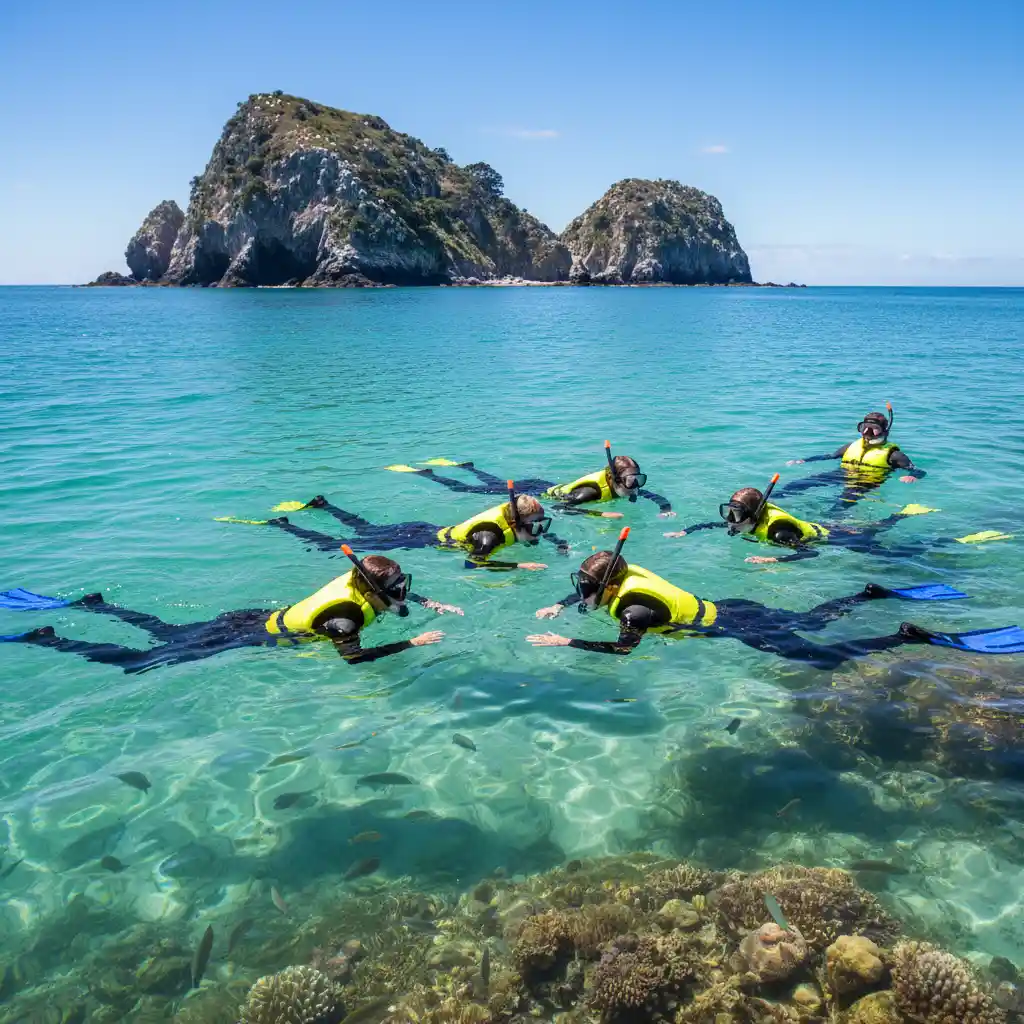
- Gear Hire: Ensure you have collected sizing information from students regarding wetsuits and fins prior to arrival to streamline the process.
Educational Resources at the Discovery Centre
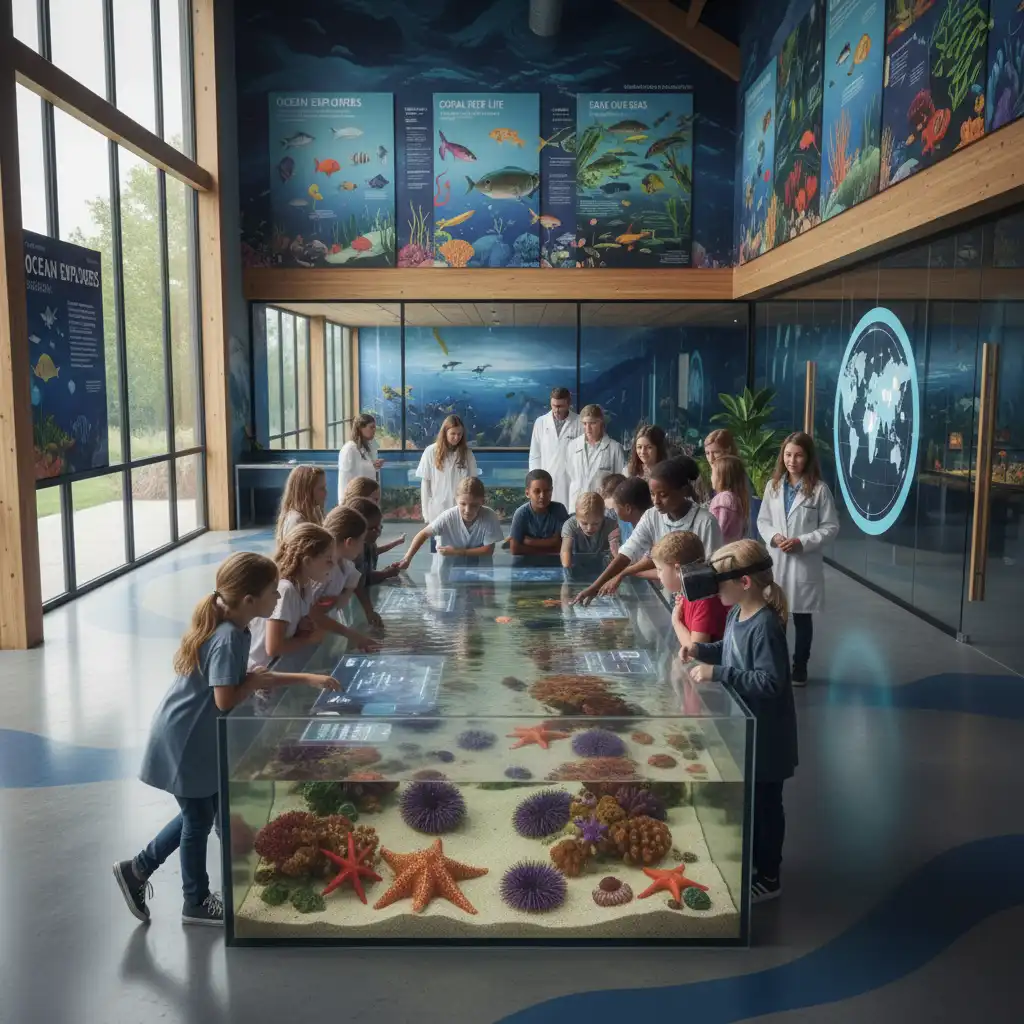
The Goat Island Marine Discovery Centre, operated by the University of Auckland’s Leigh Marine Laboratory, is the intellectual hub of any school visit. It bridges the gap between recreation and academic learning.
Structured Educational Programs
The Discovery Centre offers tailored programs designed to align with the New Zealand Curriculum. These are not passive tours; they are interactive sessions led by marine educators. Topics often cover:
- Marine Biodiversity: Identification of local species and their habitats.
- Conservation Science: The history of the reserve and the science behind marine protection.
- Adaptation and Physiology: How marine organisms survive in dynamic environments.
Booking the Centre
Unlike the beach, the Discovery Centre is a paid facility with limited capacity. You must book school visits directly through their education coordinator. Sessions usually run for 45 minutes to an hour. For large schools, a rotation system is necessary: while Group A is in the Centre, Group B explores the rocky shore, and Group C participates in a coastal walk.
Logistics: Bus Parking and Arrival Procedures
One of the most challenging aspects of a Goat Island school trip is the physical logistics of arrival. The reserve is located at the bottom of a steep, winding road, and parking space is at a premium, especially during the warmer terms (Term 1 and Term 4).
The Drop-Off Zone
Buses are generally not permitted to park in the lower car park for the duration of the day if it is busy. The standard procedure involves:
- Arrival: The bus proceeds to the lower car park drop-off zone. Students and gear are unloaded promptly.
- Parking: The bus driver must often return to the top of the hill to park in the overflow area or designated bus zones, returning only for pick-up.
- Communication: Ensure teachers have direct mobile contact with the bus driver, as cell reception can be spotty in certain pockets of the reserve (though generally improved in recent years).
Traffic Management Plans
During peak season, the road can become gridlocked. Plan your arrival for early morning (before 9:30 AM) to secure a smooth drop-off. If you are visiting the Discovery Centre first, note that it is located slightly up the hill from the beach car park, so coordinate your drop-off point accordingly to avoid walking students along the narrow road.
Supervisor Ratios and Water Safety
Safety is paramount. The waters at Goat Island are generally calm, but currents can change, and the rocky terrain presents slip hazards. Schools must adhere to strict Education Outside The Classroom (EOTC) guidelines.
Recommended Ratios
While specific ratios depend on the age of the students and the risk profile of the group, standard guidelines for marine activities in New Zealand suggest:
- Water Activities (Snorkeling/Swimming): A ratio of 1:4 (one adult for every four students) is highly recommended for primary and intermediate students. For high school students, 1:8 may be acceptable depending on swimming ability.
- Land-Based Activities (Rocky Shore/Walks): A ratio of 1:8 or 1:10 is standard.
Important: These adults must be active supervisors. An adult reading a book on the beach does not count toward the water safety ratio. Supervisors in the water should be confident swimmers and equipped with wetsuits.
Identifying Hazards
Before the trip, conduct a pre-visit site check or consult recent reports. Common hazards include:
- Slippery Rocks: The intertidal zone is extremely slippery. Sturdy footwear is non-negotiable for rock hopping.
- Sea Urchins (Kina): Stepping on Kina is a common injury. Water shoes or booties are essential.
- Currents: The channel between the mainland and the island can have strong currents. Define strict boundaries for swimming—usually staying within the bay and avoiding the channel.
Facilities and Amenities
Understanding the on-site infrastructure helps manage student expectations and hygiene.
Toilets and Changing Rooms
There is a toilet block and changing facility located near the main car park. However, with large groups, queues can form quickly. Schedule “changing times” into your itinerary to prevent delays departing. There are cold outdoor showers for rinsing off salt water and sand.
Waste Management
Goat Island is a pristine environment. It operates on a strict “Pack In, Pack Out” policy. There are limited rubbish bins. Schools must bring their own heavy-duty rubbish bags and take all lunch waste back to school with them. This is also a valuable teaching moment regarding conservation and responsibility.
Food and Water
There is no tuck shop or cafeteria on the beach. Students must bring packed lunches and plenty of water. The nearest food supplies are in Leigh, which is not walking distance for a school group.
Risk Management and Weather Contingencies
A robust Risk Analysis and Management System (RAMS) form is a requirement for school approval. Beyond the standard slips, trips, and falls, consider the weather.
Weather Dependencies
Goat Island is exposed to northerly and easterly winds. If the swell is high, snorkeling becomes dangerous and visibility drops to near zero, negating the educational value of the water activity.
- The “Go/No-Go” Call: Establish a deadline (e.g., 24 hours prior) to make the final call based on the marine forecast.
- Plan B: If the water is unsafe, have a backup plan. The Discovery Centre is indoors and unaffected by rain. The coastal walk offers views regardless of sea state. Alternatively, visiting the nearby tawharanui Regional Park might offer more sheltered land-based activities.
People Also Ask
What is the best time of year for a Goat Island school trip?
Late summer (February to March) offers the warmest water temperatures and generally stable weather. However, this is also the busiest time. Term 4 (November/December) is also popular, though the water can still be brisk. Winter trips are viable for land-based study at the Discovery Centre but less suitable for snorkeling.
Is there a cost for schools to visit Goat Island?
Access to the Marine Reserve beach and walking tracks is free. However, the Marine Discovery Centre charges an entry fee per student (usually between $5-$10 depending on group size). Commercial operators like the Glass Bottom Boat also have per-head costs.
Can we touch the marine life at Goat Island?
In the reserve itself, the rule is “look but don’t touch” to protect the mucous layer on fish and prevent damage to the ecosystem. However, the Discovery Centre has a dedicated touch tank where students can interact with marine life under supervision.
How long does the coastal walk take for students?
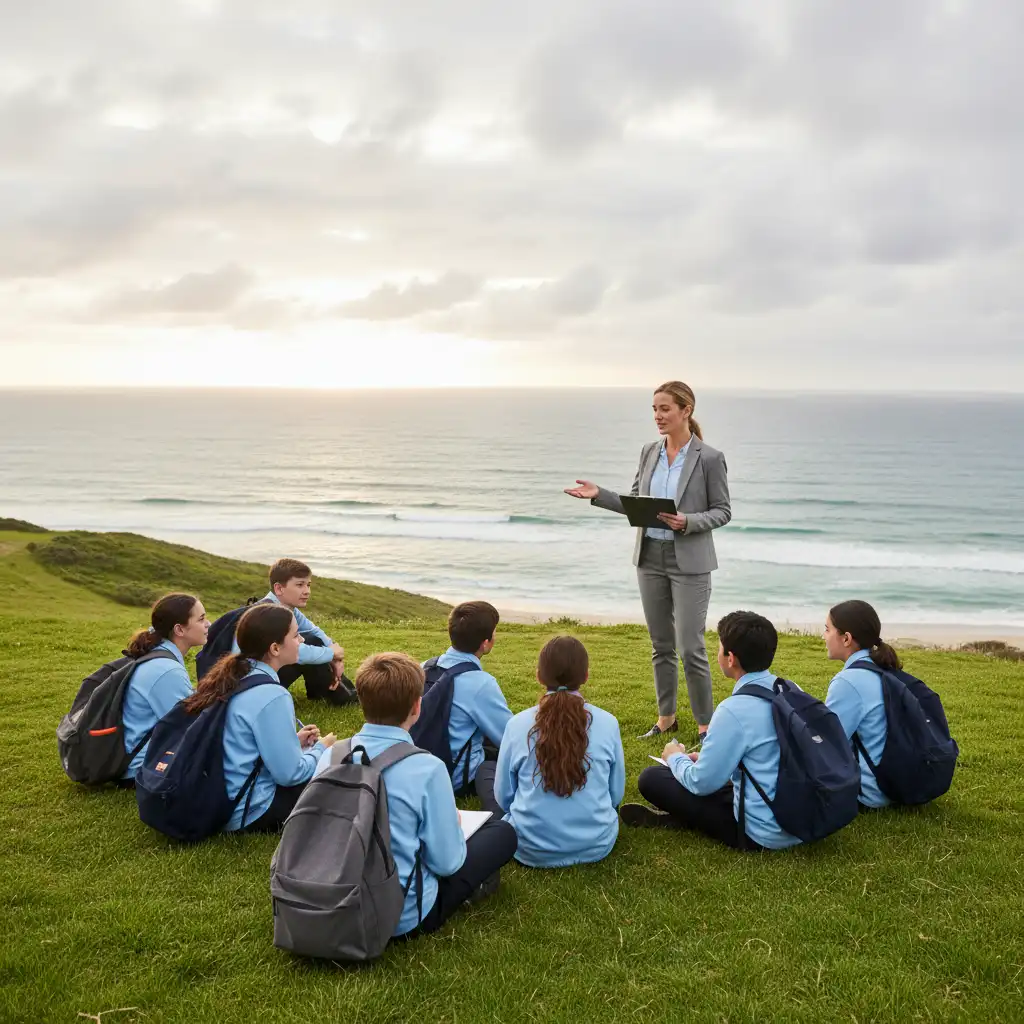
The Goat Island Walkway is approximately 3km return. For a school group moving at a moderate pace with stops for educational discussion, allow 1.5 to 2 hours. It involves some steep sections, so assess the fitness level of your group.
Are there lifeguards at Goat Island?
Goat Island is not a patrolled surf beach. There are no dedicated lifeguards stationed there permanently. This makes adherence to your school’s own water safety ratios and supervisor competency absolutely critical.
What should students bring for the trip?
Students should bring swimwear, a towel, a warm change of clothes, a sunhat, sunscreen, a packed lunch (litter-free), a water bottle, and sturdy shoes for walking on rocks. If snorkeling, a wetsuit is highly recommended even in summer to prevent cold fatigue.