
Fishing at Leigh Wharf is permitted for recreational anglers, but strict adherence to ‘working wharf’ regulations is mandatory. You must yield to all commercial vessels, keep clear of loading zones, and never leave fishing gear unattended. Anglers are guests in this commercial workspace; failure to respect right-of-way rules can result in eviction or closure of access.
Leigh Wharf, located just an hour north of Auckland near Matakana, is one of New Zealand’s most iconic land-based fishing locations. Known for its deep water access and proximity to the open ocean, it offers shore-based anglers a rare chance to target pelagic species like Kingfish and table favorites like John Dory without needing a boat. However, because it serves as a critical hub for the local commercial fishing fleet, understanding the specific Leigh Wharf fishing rules is essential for anyone planning to wet a line here.
Is Fishing Allowed on Leigh Wharf?
The short answer is yes, fishing is generally allowed on Leigh Wharf, but it is conditional. Unlike a dedicated recreational pier, Leigh Wharf is a piece of industrial infrastructure. It exists primarily to service the commercial fishing fleet and local tourism operators (such as those running trips to Goat Island or Little Barrier Island).
Access for recreational anglers is a privilege, not a right. In the past, the wharf has faced temporary closures due to maintenance, structural repairs, or safety concerns arising from overcrowding and poor behavior. Before planning your trip, it is vital to check current local council advisories or local fishing forums to ensure the wharf is fully open to the public.
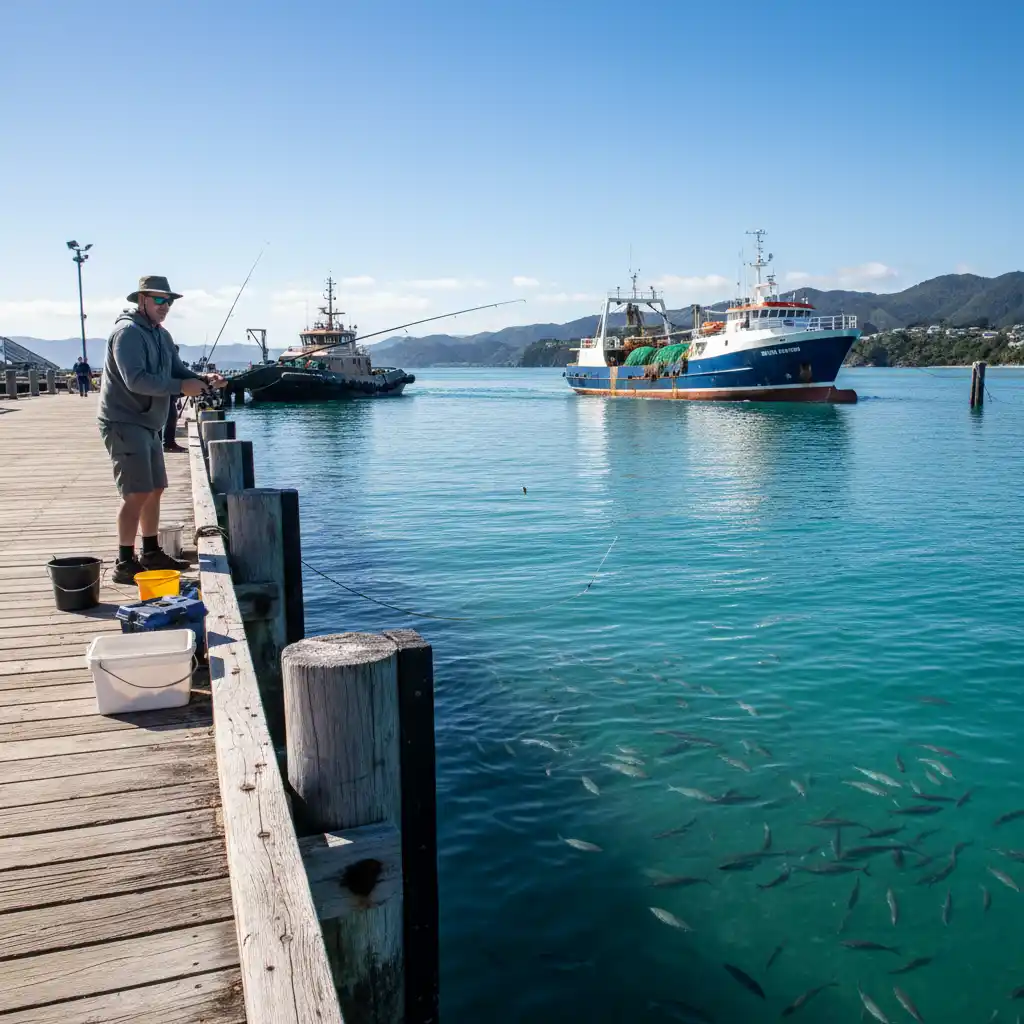
When the wharf is open, the primary rule is non-interference. If a truck needs to load ice, or a trawler is coming in to unload its catch, recreational anglers must immediately clear the area. This dynamic environment makes Leigh Wharf unique; you are fishing in the middle of a working industry, which adds excitement but requires a high level of situational awareness.
Etiquette: The Golden Rules of a Working Wharf
To ensure that fishing access remains available for future generations, every angler must follow a strict code of conduct. The relationship between recreational fishers and commercial operators can be fragile. Complaints from commercial operators regarding obstructed access are the fastest way to get fishing banned at this location.
1. Commercial Vessels Have Absolute Right of Way
When you see a commercial vessel approaching, do not wait for them to signal you. You should immediately reel in your lines, remove your chilly bins and bait boards from the edge, and step back to the center or rear of the wharf. These boats are heavy, difficult to maneuver, and on a tight schedule. Obstructing a berth is a serious safety violation.
2. Keep the Deck Clear
Leigh Wharf is often busy with forklifts, trucks, and foot traffic. Never spread your gear across the walkway. Keep your tackle bags, rods, and catch confined to a small footprint. If you are using a long-handled net or gaff, ensure it isn’t a tripping hazard for workers carrying heavy loads.
3. Clean Up Your Mess
This rule applies to all fishing spots, but it is critical here. Bait residue, fish blood, and scales can make the timber surface incredibly slippery, posing a health and safety risk to wharf workers. Wash down your area before you leave. Furthermore, discard old bait and offcuts into the water (away from swimmers) or take them home. Do not leave them rotting on the wharf timbers.
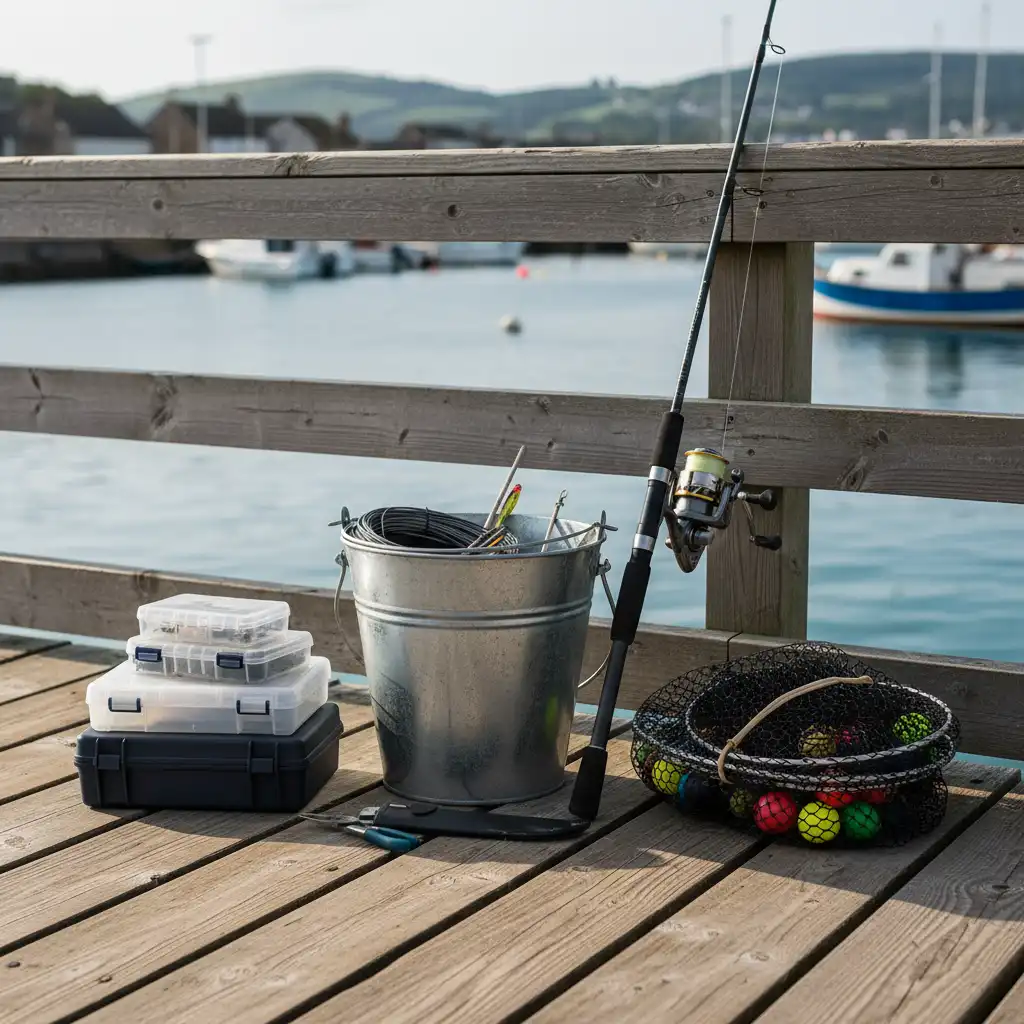
Target Species: Kingfish, John Dory, and Snapper
The hydrology around Leigh is spectacular. Deep water currents sweep past the wharf, bringing nutrient-rich water that attracts baitfish, which in turn attract top-tier predators. While you can catch sprats and piper all day, most serious anglers come here for three specific targets.
Kingfish (The Yellowtail Kingfish)
Leigh Wharf is famous for being one of the few land-based spots where you have a legitimate chance of hooking a legal Kingfish (minimum size 75cm). These powerful predators patrol the wharf piles looking for schools of piper or jack mackerel.
- Strategy: Live baiting is the most effective method. Catch a fresh piper or mackerel using a sabiki rig, hook it through the nose or upper back with a strong live-bait hook (6/0 to 8/0), and deploy it under a balloon or free-lined.
- The Challenge: Hooking a Kingfish is the easy part; landing it is the challenge. The wharf piles are covered in sharp mussels and oysters. A Kingfish will almost instinctively dive for the structure to bust you off. You need heavy gear (24kg-37kg braid) and a heavy drag setting to turn their head immediately.
John Dory
Often known as the “ghost of the wharf,” John Dory are stealth predators that hang motionless near the structure, waiting to suck in unsuspecting baitfish. They are arguably the finest eating fish in New Zealand waters.
- Strategy: John Dory almost exclusively eat live bait. They are slow swimmers and won’t chase a fast-moving lure. Use a small live Jack Mackerel dropped straight down beside the wharf piles. Keep the bait near the bottom, just a meter or two up from the seabed.
- Rig: A simple ledger rig with a live bait hook works well. Detection can be subtle; the rod tip might just load up slowly rather than showing a violent strike.
Snapper
While less consistent than boat fishing, big Snapper do venture into the wharf area, especially during low light periods (dawn and dusk) or after a storm has stirred up the bottom.
- Strategy: Straylining with large baits (whole pilchard or squid) casts well away from the wharf is the best approach. Because the current can be strong, you may need a running sinker to get the bait down, but try to keep the weight as light as possible for natural presentation.
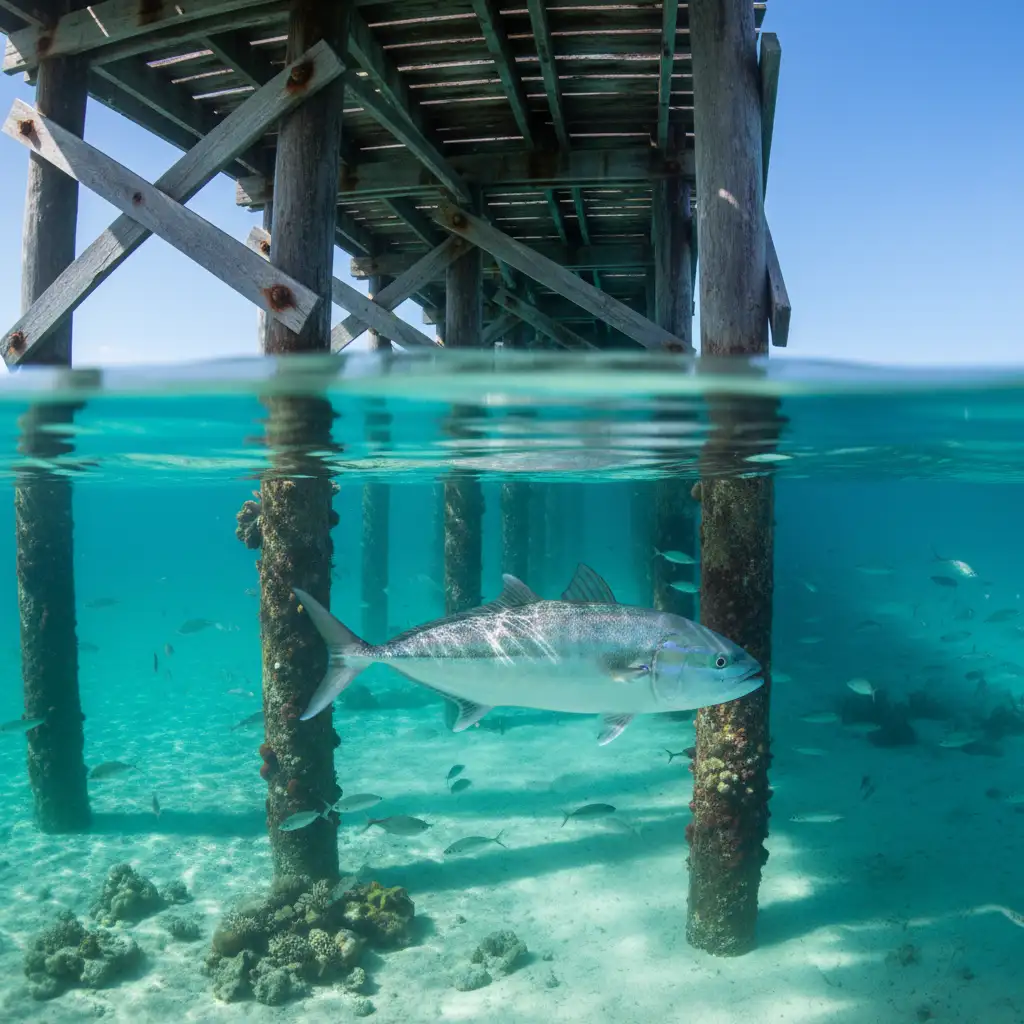
Best Tides and Conditions for Leigh Wharf
Understanding the tide phase is critical for success at Leigh. The harbour entrance is narrow, creating significant current flow during mid-tide.
Incoming vs. Outgoing Tide
Generally, the incoming tide is superior for pelagic species like Kingfish. The clean, oxygenated oceanic water pushes baitfish in closer to the wharf structure. The last two hours of the incoming tide and the first hour of the outgoing are the “golden window” for Kingfish.
For John Dory, the tide flow is less critical than the presence of bait, but they are often caught more frequently on the slower periods around the turn of the tide when the water is less turbulent, allowing them to stalk their prey more effectively.
Wind and Weather
Leigh Wharf is relatively sheltered from the swell but can be exposed to winds. A southerly or south-westerly wind is offshore here, making it pleasant for casting. A strong northerly or easterly can make fishing difficult, pushing swell against the wharf and making it dangerous to land fish. Always check the swell forecast; if large swells are rolling into the harbour, the wharf may be surged with water, making fishing unsafe.
Recommended Gear and Tackle
Because you are fishing from a platform high above the water, your gear choices must account for landing fish. You cannot simply drag a fish onto a beach.
The Rod and Reel
For general fishing (Snapper, Trevally), a 7-foot to 10-foot spinning rod with a 4000-6000 size reel is ideal. Spool it with 20lb braid to handle the occasional larger fish.
For Kingfish, you need a dedicated heavy set. A stiff 8-foot rod (often called a ‘sabre’ or heavy spin rod) paired with a 10000+ size reel and 80lb braid is standard. You need stopping power.
Essential Accessories
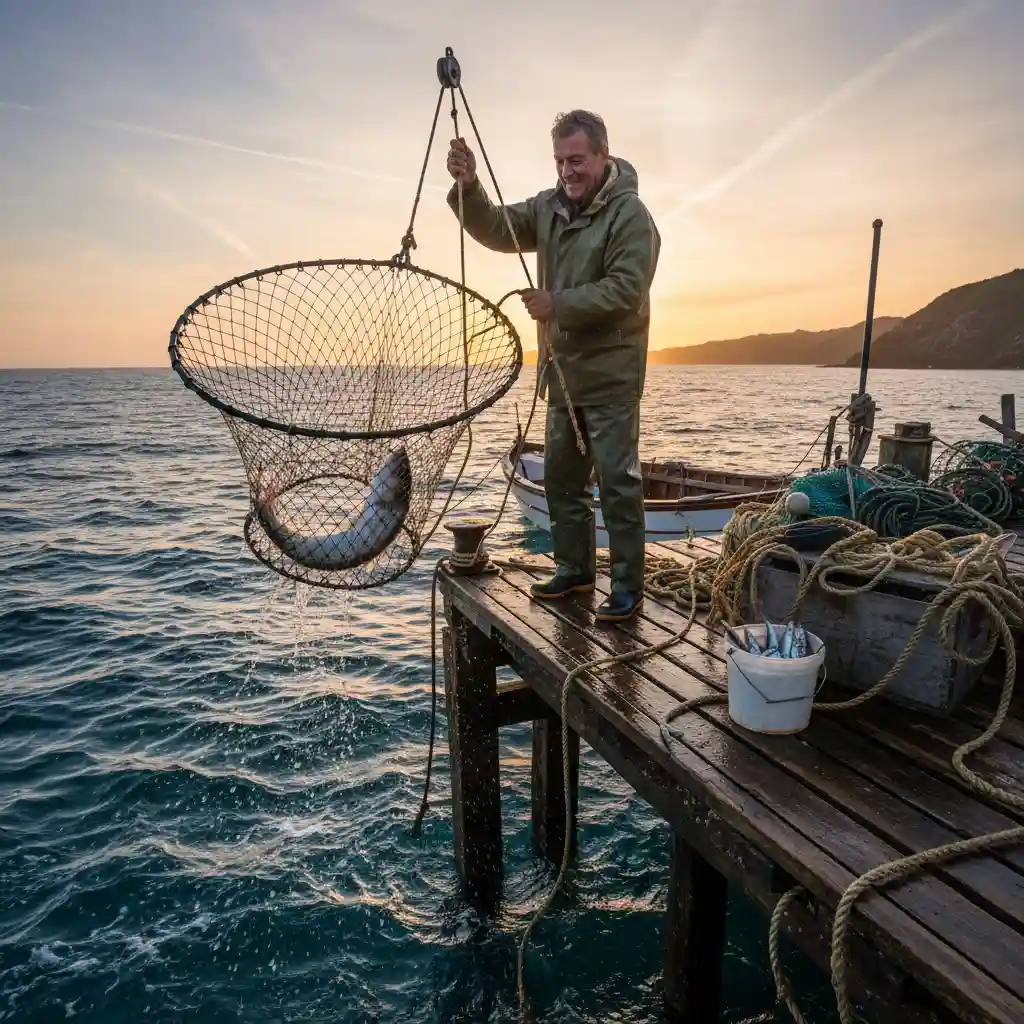
- Drop Net or Gaff: This is non-negotiable. You are several meters above the water. Lifting a heavy fish by the line will result in a snapped line or a broken rod. A long-handled gaff is useful for Kingfish, but a drop net (circular net on a rope) is essential if you plan to release fish or catch John Dory (which have delicate mouths).
- Berley (Chum): Using a berley sack tied to the wharf (ensure it doesn’t interfere with boats) is the best way to attract baitfish like Piper and Mackerel. Without baitfish, the predators won’t come.
Nearby Alternatives and Marine Reserves
It is crucial to be aware of your surroundings regarding conservation zones. Leigh is located right next to the Cape Rodney-Okakari Point Marine Reserve (Goat Island).
Strict Warning: The marine reserve boundaries are strictly enforced. While Leigh Wharf itself is outside the reserve, the boundary is nearby. If you fish from the rocks or move slightly along the coast, ensure you are not casting into the reserve. Heavy fines and confiscation of gear apply for fishing inside the reserve.
Ti Point Wharf
If Leigh Wharf is too crowded or closed for commercial operations, Ti Point Wharf is located just across the harbour. It is smaller and has shallower water but produces excellent Snapper and Squid. It is often a more family-friendly alternative if the industrial nature of Leigh Wharf is too intense.
People Also Ask
What is the best time of day to fish at Leigh Wharf?
Dawn and dusk are universally the best times. These low-light periods encourage predatory fish like Snapper and Kingfish to feed more aggressively. Additionally, commercial activity on the wharf is often lower very early in the morning or late in the evening, providing a more relaxed fishing experience.
Can you catch squid at Leigh Wharf?
Yes, Leigh Wharf is a fantastic spot for Eging (squid fishing), particularly in the winter months. The lights from the wharf attract baitfish at night, which in turn attracts Broad Squid. Using a squid jig around the illuminated areas of the water often yields results.
Is Leigh Wharf suitable for children?
It can be, but extreme caution is advised. There are no safety rails in many areas (to allow boat loading), and the drop to the water is significant. Combined with moving trucks and forklifts, it requires strict parental supervision. Ti Point Wharf is generally considered safer for younger children.
Do I need a fishing license for Leigh Wharf?
No, you do not need a license for saltwater fishing in New Zealand. However, you must strictly adhere to the Ministry for Primary Industries (MPI) recreational fishing rules regarding bag limits and minimum fish sizes for the Auckland/Kermadec area.
What is the bag limit for Snapper at Leigh?
Leigh falls under the ‘Auckland and Kermadec’ fishing area. As of the latest regulations, the daily bag limit for Snapper is typically 7 per person, with a minimum size of 30cm. However, regulations can change, so always check the ‘NZ Fishing Rules’ app before you start fishing.
How do I catch live bait at Leigh Wharf?
Use a small Sabiki rig (size 10 or smaller hooks) with a small sinker. Drop it near the piles or cast it out slightly. Using a small amount of dough or berley in the water will bring schools of Yellowtail Mackerel (Jack Mackerel) and Piper around the wharf, which are easily caught on Sabikis.