
The current recreational minimum size limit for snapper in the Hauraki Gulf (part of the SNA1 management area) is 30 cm. The daily individual bag limit is 7 snapper per person. These limits apply to the entire East Coast of the North Island, ranging from North Cape down to Cape Runaway.
Understanding and adhering to the Ministry for Primary Industries (MPI) regulations is not only a legal requirement but a crucial responsibility for preserving New Zealand’s marine biodiversity. Whether you are a seasoned local angler or a tourist enjoying a charter in the Hauraki Gulf Marine Park, strict compliance ensures the sustainability of this iconic fishery.
What are the Current Snapper Limits for the Hauraki Gulf?
For recreational fishers operating within the Hauraki Gulf, the rules are governed by the SNA1 (Snapper 1) management area regulations. It is imperative to note that these rules differ from the West Coast limits.
Minimum Size Requirements
The absolute minimum legal size for a snapper is 30 cm (approximately 11.8 inches). Any fish caught under this length must be immediately and carefully returned to the sea. Keeping an undersized fish is a strict liability offense, meaning a lack of knowledge regarding the size is not a valid defense in court.
Daily Bag Limits
The maximum number of snapper you can keep is 7 per person, per day. This limit applies to the individual fisher, not the vessel. You cannot catch quota for other people who are not present on the boat.
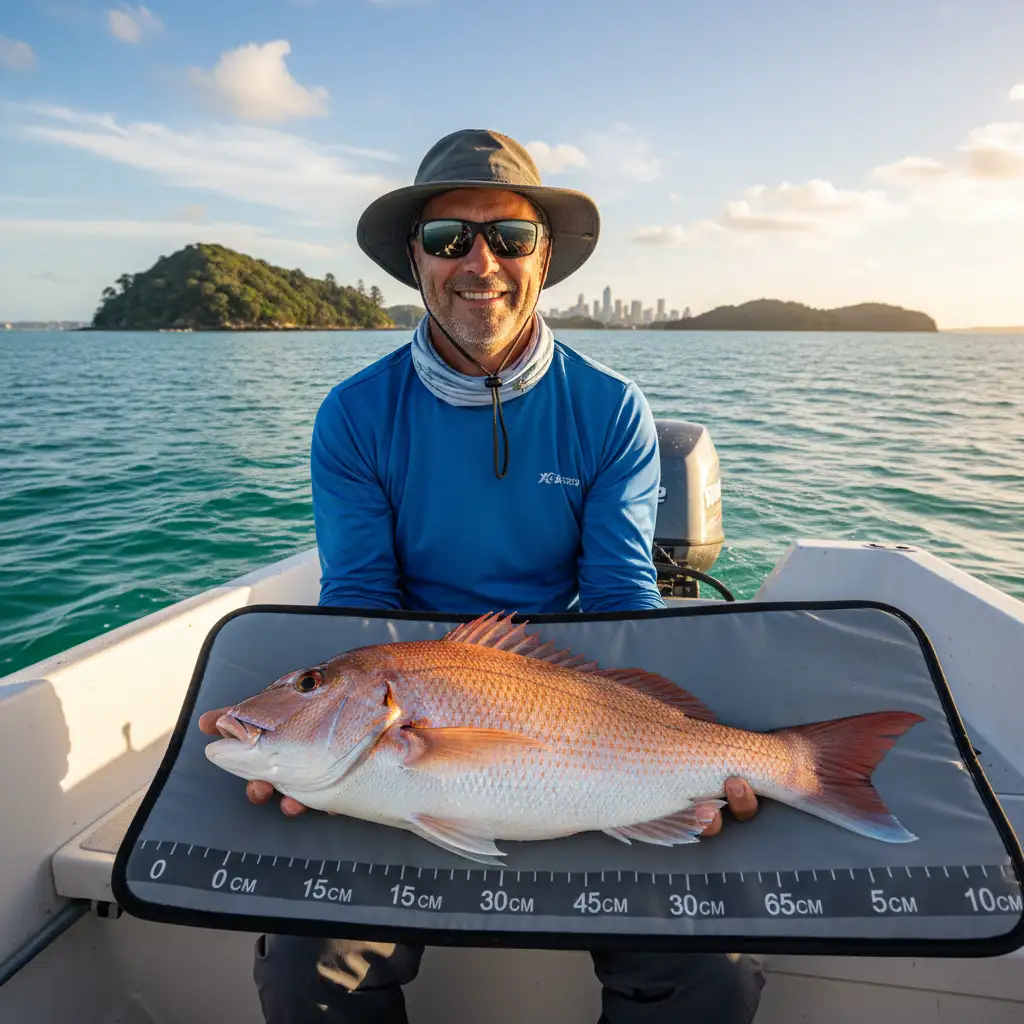
How to Measure Snapper Correctly
Disputes often arise regarding how a fish is measured. MPI Fisheries Officers use a specific methodology, and to avoid infringement notices, you must use the same technique.
The Correct Methodology:
- Length: Measure from the tip of the nose to the “V” of the tail (the fork). This is often referred to as fork length. However, for legal purposes in New Zealand, the measurement is generally taken from the tip of the snout to the end of the tail fin.
- Technique: Place the fish on a flat, wet surface. Use a rigid measuring stick or a flat measuring mat. Tape measures that bend over the curve of the fish’s body will give an incorrect (longer) reading, potentially leading you to keep an undersized fish.
- State: The fish should be measured in its natural state. Do not stretch the fish or manipulate the tail excessively to make it reach the line.
If a fish is exactly 29.9cm, it is undersized. There is no margin for error. If in doubt, the most ethical and safe decision is to release the fish.
Understanding Daily Bag Limits and “Mixed Bags”
The daily limit of 7 snapper is part of a broader “combined bag limit” for finfish. In the Auckland and Kermadec area (which includes the Hauraki Gulf), there is a combined daily limit of 20 finfish per person.
How the Combined Limit Works
While you can catch up to 20 fish in total, only 7 of them can be snapper. For example, you could legally catch:
- 7 Snapper
- 3 Kingfish
- 5 Kahawai
- 5 Trevally
This totals 20 fish. However, you cannot catch 8 snapper and 12 kahawai, as you would have exceeded the species-specific limit for snapper. Certain species, like Kingfish, also have their own specific size limits (75cm) and bag limits (3) which contribute to the total count.
Geographic Boundaries: Where Do These Rules Apply?
The keyword “snapper size limit NZ Hauraki Gulf” refers specifically to the SNA1 fishery, but it is helpful to understand the boundaries to ensure you do not inadvertently cross into an area with different rules (such as SNA8 on the West Coast).
The SNA1 Area Includes:
- East Northland: From North Cape to Cape Rodney.
- Hauraki Gulf: From Cape Rodney to Cape Colville.
- Bay of Plenty: From Cape Colville to Cape Runaway.
If you launch your boat from Auckland’s West Coast (e.g., Manukau Harbour), you are in the SNA8 area. The limit there is 10 snapper per person, with a minimum size of 27cm. However, if you launch on the East Coast (e.g., Waitematā Harbour), you are in the Hauraki Gulf (SNA1) where the stricter 30cm/7 fish rule applies.

Penalties and Reporting Illegal Activity (0800 POACHER)
New Zealand takes its fisheries management seriously. Fisheries Officers regularly patrol boat ramps, marinas, and are present on the water. Non-compliance can result in severe consequences.
Consequences of Breaking the Rules
Penalties range from infringement notices (instant fines) to prosecution in court.
- Infringement Fees: Generally start at $250 and increase depending on the number of illegal fish and the severity of the breach.
- Gear Confiscation: Fishery Officers have the power to seize fishing gear, including rods, reels, dive gear, and even the vessel or vehicle used in the commission of the offense.
- Prosecution: Serious offenders can face fines up to $250,000 and a criminal record.
How to Report Poaching
If you witness suspicious fishing activity, such as setting too many nets, taking undersized fish, or exceeding bag limits, you should report it immediately. The Ministry for Primary Industries relies on public reports to target their enforcement resources effectively.
Call 0800 4 POACHER (0800 47 62 24)
When reporting, try to provide as much detail as possible without putting yourself at risk:
- The location (GPS coordinates or landmarks).
- Description of the vessel (name, color, registration number).
- Description of the people involved.
- The registration number of any vehicles and trailers at the boat ramp.
- Photos or video evidence (if safe to obtain).
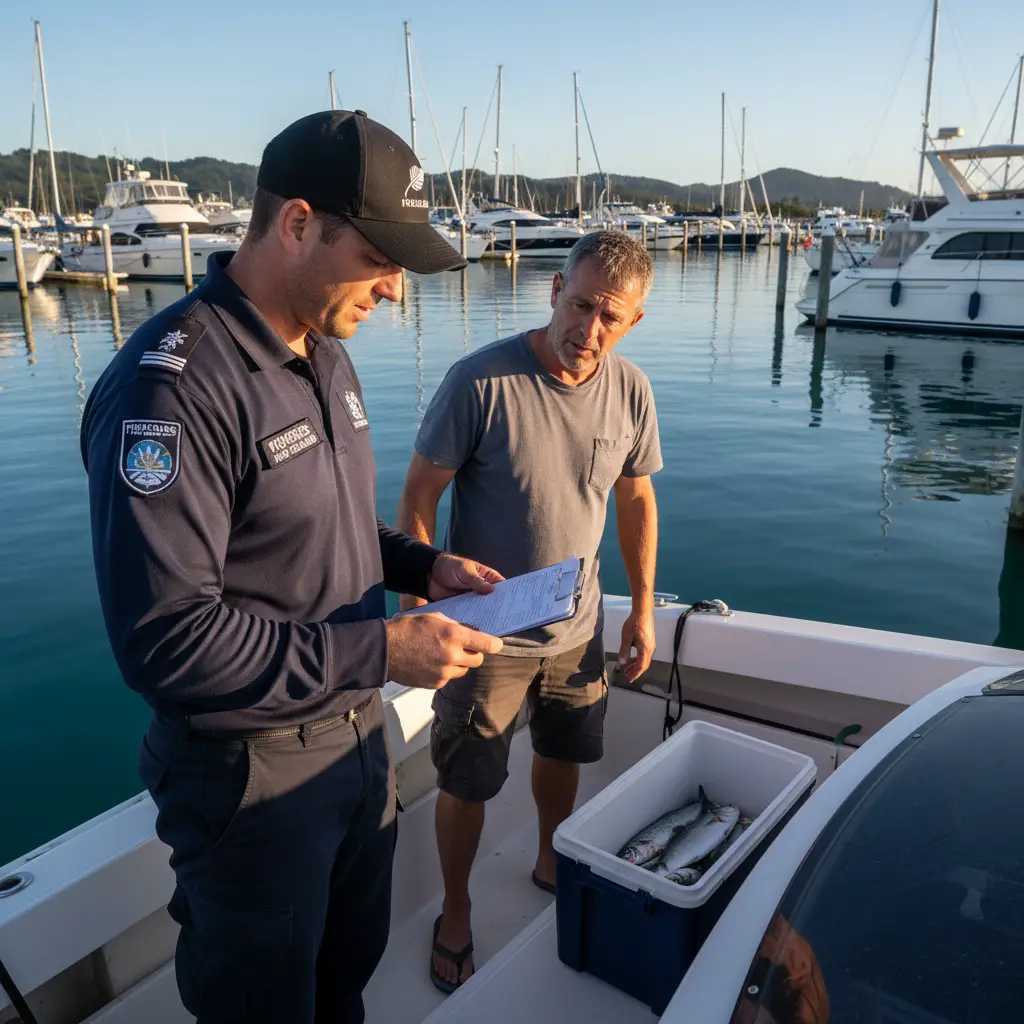
Recent and Upcoming Changes to Recreational Rules
The Hauraki Gulf is currently the subject of a major conservation strategy known as “Revitalising the Gulf.” This government initiative aims to restore the health of the marine park, which has suffered from overfishing, sedimentation, and habitat loss.
Potential Regulatory Adjustments
While the 30cm size limit and 7 fish bag limit are current as of 2024, anglers should be aware that regulations can change. Proposals often discussed in marine management circles include:
- Seasonal Closures: Preventing fishing during spawning seasons to allow stocks to replenish.
- Method Restrictions: Bans on recreational dredging or specific types of bulk harvesting methods.
- Marine Protection Areas (MPAs): The creation of new High Protection Areas (HPAs) where fishing may be banned entirely to allow ecosystem recovery.
Always check the “NZ Fishing Rules” app before heading out to ensure you have the most up-to-date information.
Conservation and Best Practices for Catch and Release
Meeting the legal limit is the baseline, but ethical anglers often go further to ensure the longevity of the sport. Because the minimum size is 30cm, you will likely catch many undersized “pannie” snapper. How you handle these fish determines whether they survive to reach legal size.
Handling Techniques
Snapper have a high survival rate if handled correctly, but poor handling can be fatal.
- Wet Hands: Always wet your hands or use a wet cloth before touching the fish. Dry hands remove the protective slime coat, leaving the fish vulnerable to infection.
- Use Circle Hooks: Studies show that circle hooks are more likely to hook the fish in the corner of the mouth rather than the gut. Gut-hooked fish have a very low survival rate.
- Release Weights: If you are fishing in water deeper than 20 meters, snapper may suffer from barotrauma (expanded swim bladder). Use a release weight to send the fish back down to depth quickly, recompressing the gases and allowing it to swim away. Venting (popping the bladder with a needle) is generally discouraged for recreational anglers as it can cause infection or organ damage if done incorrectly.

People Also Ask
Can I fillet my snapper at sea?
You can fillet your fish at sea, but you must retain the frames (skeletons) until you land. This is so Fishery Officers can measure the frame to ensure the fish was of legal size. If you discard the frames at sea, you cannot prove the fish were legal, and you may be fined.
Does the 30cm limit apply to gut-hooked fish?
Yes. Even if a fish is gut-hooked and unlikely to survive, if it is under 30cm, it is illegal to keep it. You must return it to the sea. This rule exists to prevent anglers from intentionally injuring small fish to justify keeping them.
What is the fine for keeping undersized snapper?
Infringement notices typically start at $250. However, the fine scales up based on the number of fish and previous offenses. For serious breaches involving large quantities of undersized fish, you face court prosecution and potential gear forfeiture.
Is the limit different for commercial fishermen?
Yes, commercial size limits differ from recreational limits to account for different fishing methods and stock management strategies. However, recreational anglers must strictly adhere to the 30cm limit regardless of what commercial vessels are permitted to take.
How do I download the NZ Fishing Rules App?
The free NZ Fishing Rules app is available on both the Apple App Store and Google Play Store. It works offline, meaning you can check the rules even when you are out at sea without cell reception. It is highly recommended for all anglers.
Are there specific rules for the Coromandel area?
The Coromandel Peninsula falls within the SNA1 area. Therefore, the Hauraki Gulf rules apply: 30cm minimum size and a daily bag limit of 7 snapper per person.