
Spearfishing spots near Leigh, New Zealand, offer world-class opportunities for Kingfish and Snapper, provided you stay strictly outside the Cape Rodney-Okakari Point Marine Reserve. Top legal locations include the current-swept ledges of Ti Point, the sheltered reefs of Matheson Bay, and the deeper pinnacles at Daniels Reef, all providing accessible shore or boat entries for intermediate to advanced divers.
Leigh is synonymous with New Zealand marine life, largely due to the fame of the Goat Island Marine Reserve. However, for the spearfishing enthusiast, the magic happens just outside those protected borders. The coastline north of Auckland offers a rugged, nutrient-rich environment where currents collide with volcanic rock structures, creating the perfect habitat for pelagic game fish and resident reef species. Whether you are hunting for a trophy Yellowtail Kingfish or gathering a feed of Snapper and Crayfish, understanding the local geography is paramount to a successful and legal dive.
Navigating Boundaries: Staying Clear of the Reserve
The most critical aspect of planning a spearfishing trip near Leigh is knowing exactly where you cannot fish. The Cape Rodney-Okakari Point Marine Reserve (commonly known as Goat Island) is a strictly no-take zone. The penalties for spearfishing within the reserve are severe, including confiscation of gear, heavy fines, and potential prosecution.
The reserve extends from Cape Rodney to Okakari Point and reaches 800 meters out to sea. As a spearo, you must be able to visually identify the boundary markers on land. There are large triangular markers on the cliffs at both ends of the reserve. If you are diving near the edges, such as near the walkway at the end of Goat Island Road, you must ensure you are well clear of the boundary line. GPS plotters on boats are essential, but for shore divers, lining up the land markers is a skill you must master before entering the water.
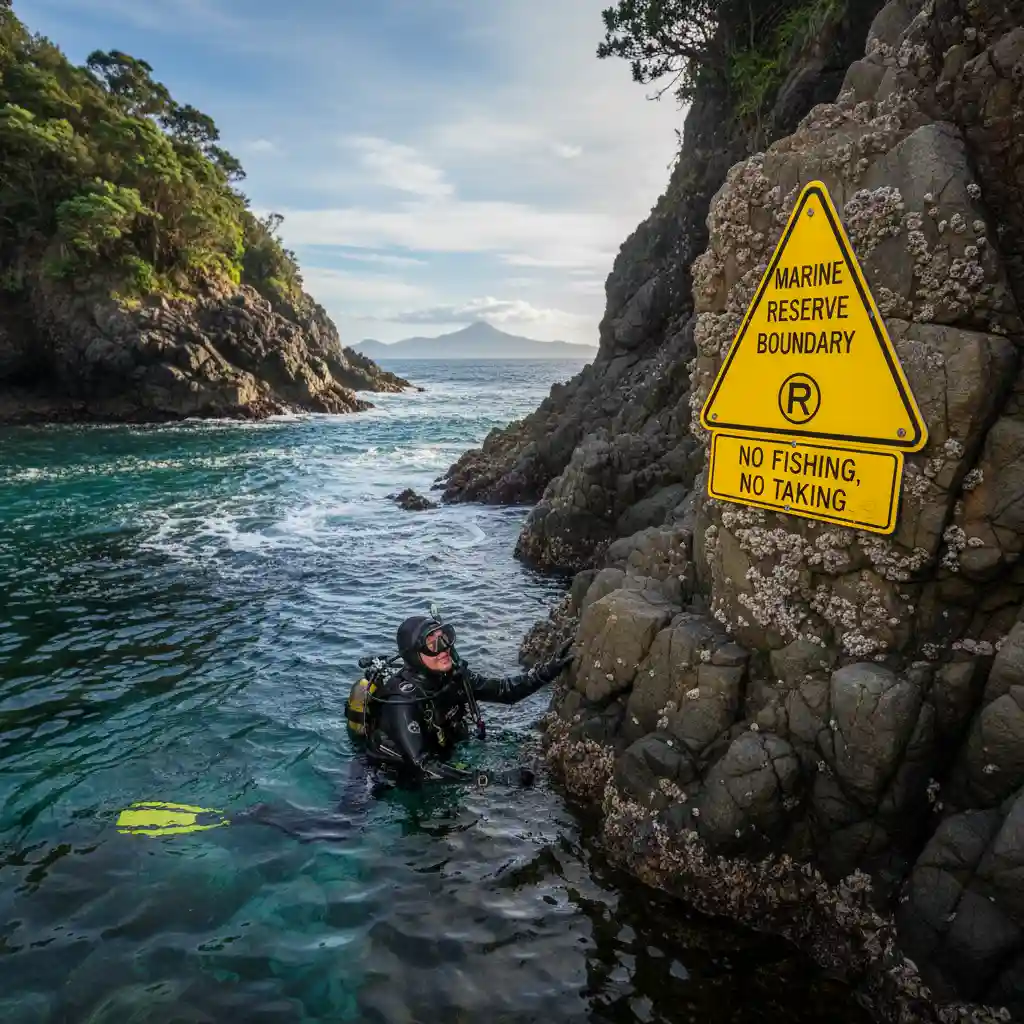
The “buffer zone” concept is not a legal term, but it is a practical safety measure experienced locals use. Do not spear right on the line. Drift, currents, and disorientation can easily push you into the reserve while you are focused on a fish. Give yourself a 100-200 meter buffer from the official boundary to ensure you are compliant at all times.
Top Spearfishing Zones Near Leigh
Once you are clear of the reserve, the underwater topography near Leigh transforms into a hunter’s playground. Here are the primary zones to focus on:
Ti Point
Located opposite the marine reserve across the channel, Ti Point is perhaps the most popular spot for shore-based spearfishing near Leigh. The wharf area is popular for line fishing, so spearos should head further along the rocky walkway towards the open ocean. The terrain here drops off relatively quickly into weed lines and kelp forests.
The current wraps around the point, bringing nutrient-rich water that attracts baitfish (Jack Mackerel and Koheru). Where there is bait, there are predators. This is a prime spot for encountering Kingfish cruising the shallows or Snapper snooping through the kelp. However, be wary of the current; it can be strong on the outgoing tide.
Matheson Bay
For those seeking a more sheltered dive or for beginners, Matheson Bay offers a calmer alternative. While it doesn’t hold the same volume of large pelagics as Ti Point, it is excellent for target species like John Dory, Flounder, and smaller Snapper. The reef structure here is less dramatic, consisting of flat rocks and sandy patches, making it ideal for practicing stalking techniques and breath-hold diving without fighting heavy currents.
Daniels Reef
Accessible primarily by boat or a long surface swim (kayak diving is a great option here), Daniels Reef sits further out. This spot is characterized by deeper pinnacles and ledges. It is a high-percentage area for large Snapper and schooling Kingfish. The visibility at Daniels Reef is often better than the inshore spots as it sits further away from the sediment runoff of the coast.
Targeting Kingfish off the Points
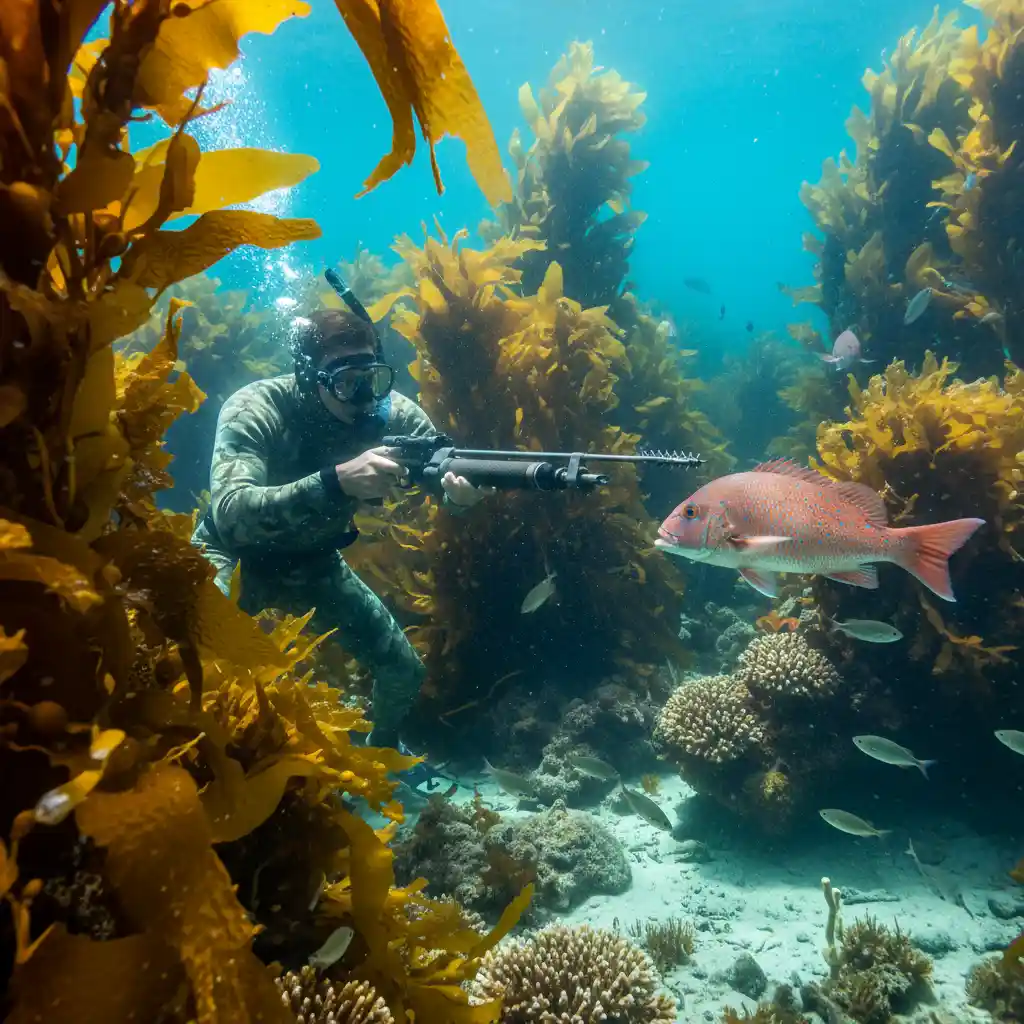
The Yellowtail Kingfish is the crown jewel of New Zealand spearfishing, and the waters near Leigh are famous for them. To successfully land a Kingfish here, you need specific tactics.
The Burley and Flasher Technique
Kingfish are inquisitive predators. They are attracted to commotion and shine. Using a flasher—a series of reflective spinners or mirrors suspended on a line—is highly effective. The flash mimics a school of baitfish in distress. Combined with a steady trail of burley (chum), usually minced pilchards or kina, you can draw Kingfish in from the deeper water.
The Intercept
When diving off points like Ti Point, you don’t chase the Kingfish. You intercept them. Kingfish will often do a “swim-by” to check you out. They may circle once and then leave. The golden rule is to avoid making eye contact and to keep your body language non-aggressive. Dive down, hold onto the kelp, and extend your gun slowly. Wait for the fish to turn broadside before taking the shot. Aim for the “stone shot” (spine) or a solid holding shot in the shoulder, as these fish are incredibly powerful and will bend shafts or tear off if not hit securely.
Gear Requirements for Local Conditions
The Hauraki Gulf and the outer coast near Leigh present variable conditions. Your gear needs to be robust enough to handle big fish but streamlined enough for current.
Wetsuits and Thermal Protection
Water temperatures near Leigh fluctuate between 14°C in winter and 21°C in late summer. A 5mm open-cell wetsuit is the standard all-rounder for most of the year. In the depth of winter, many divers switch to a 7mm jacket to stay warm during long sessions. A hood and gloves are mandatory, not just for warmth, but for protection against kina spines and sharp barnacles on the rocks.
Spearguns and Rigging
For the varied hunting near Leigh, a railgun between 110cm and 120cm is the versatile choice. This length provides enough range for clear-water Kingfish but is still maneuverable enough for reef hunting Snapper.
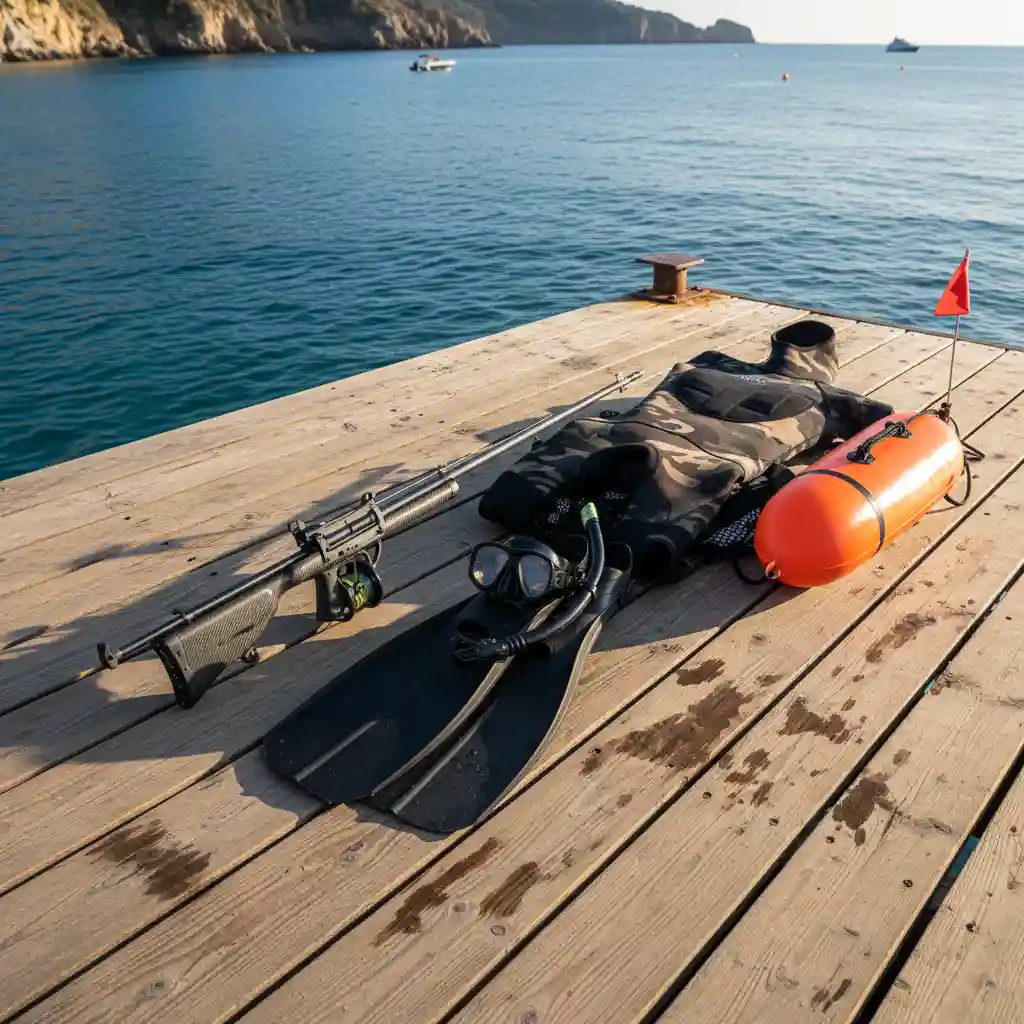
- Reel vs. Floatline: In these waters, a floatline and float setup is superior to a reel for safety. A floatline allows you to drop your gun if a Kingfish drags you down, and the float acts as a marker for boat traffic (discussed in the safety section).
- Shafts: Use a 7mm or 7.5mm shaft. Kingfish have thick bodies and require impact to penetrate.
Safety: Boat Traffic and Shark Management
Safety is the uncompromisable element of spearfishing near Leigh. The proximity to Auckland means this coastline is busy.
Managing Boat Traffic
Leigh Harbour is a hub for commercial fishing vessels, glass-bottom boats catering to reserve tourists, and recreational recreational fishermen. As a diver, you are nearly invisible to a skipper moving at 20 knots.
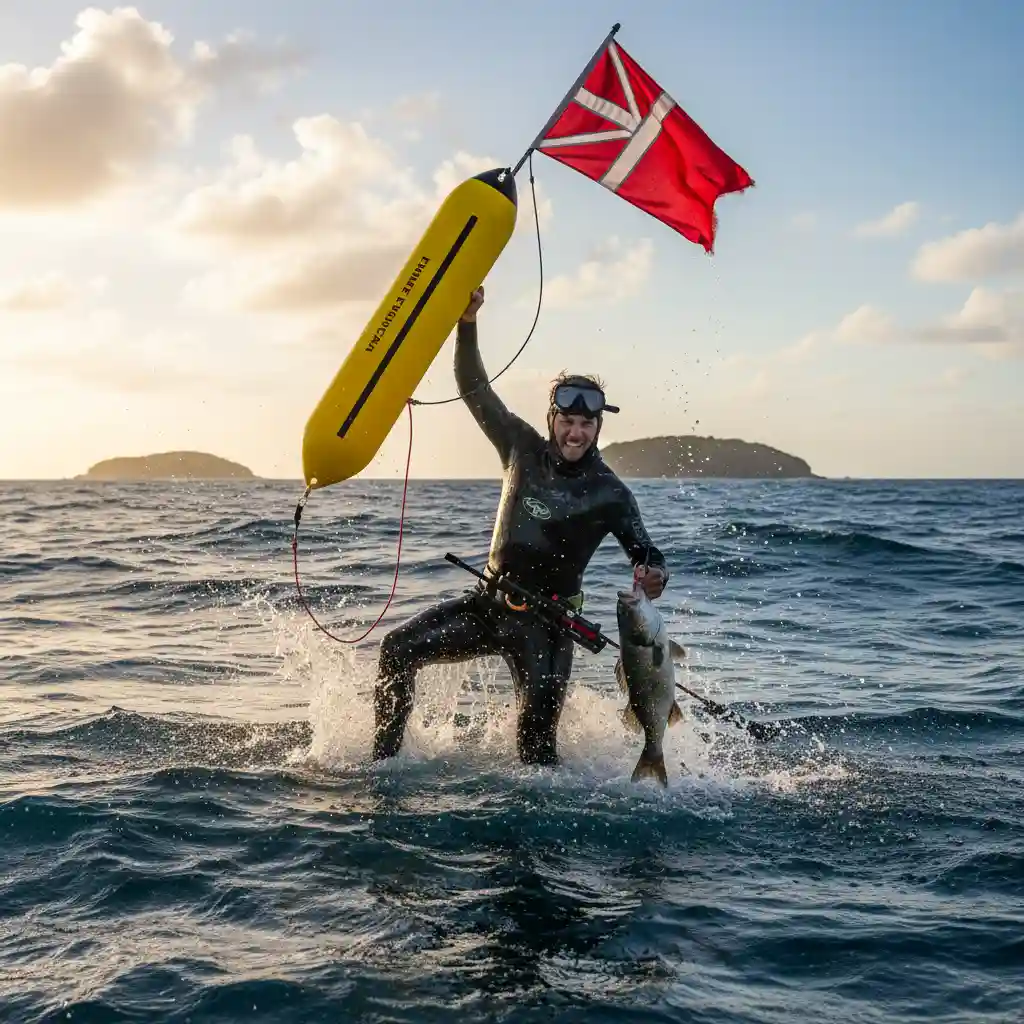
The Diver’s Flag is Law: You must tow a dive float with a visible Alpha flag (blue and white) or the NZ red and white diagonal stripe flag. Do not separate from your float. If you are diving deep, ensure your float line is long enough so the float remains on the surface while you are at depth. When surfacing, always spin 360 degrees and look up to check for hulls and propellers.
Shark Interactions
The Bronze Whaler (Carcharhinus brachyurus) is a common resident in these waters, particularly in summer when the Kingfish are running. They are generally not aggressive toward humans but are highly opportunistic regarding struggling fish.
If you spear a Kingfish, retrieve it immediately. Do not leave it thrashing at the end of your float line. If a Bronze Whaler approaches, maintain eye contact, stay vertical in the water, and use your speargun as a prod if necessary to maintain distance. Do not shoot the shark. If the shark becomes overly persistent or aggressive, give up the fish. No catch is worth a bite injury.
Seasonality and Conditions
Understanding the seasons helps you target the right species.
- Summer (Dec – Mar): The prime season. Warmer water brings Kingfish close to shore. Bronze Whalers are also more prevalent. Visibility is generally best during easterly offshore winds which flatten the sea on the Leigh coast.
- Autumn (Apr – May): Water remains warm, and tourist traffic dies down. This is often the best time for large Snapper moving into the shallows to feed before winter.
- Winter (Jun – Aug): Visibility can be stunning (20m+), but the water is cold. Fish metabolism slows down, making them harder to find, but John Dory are often more frequently encountered.
- Spring (Sep – Nov): Often windy and unpredictable. Dirty water from spring rains can make diving difficult.
Frequently Asked Questions
Can you spearfish anywhere near Goat Island?
No, you cannot spearfish inside the Cape Rodney-Okakari Point Marine Reserve. You must be outside the boundaries. Ti Point and Matheson Bay are popular legal spots nearby.
What is the best time of year for Kingfish near Leigh?
The best time for Kingfish is usually from late December through to April when the water temperature is highest and baitfish are abundant.
Do I need a fishing license to spearfish in NZ?
No, you do not need a license to spearfish in the ocean in New Zealand. However, you must adhere to all Ministry for Primary Industries (MPI) regulations regarding bag limits and size limits.
Are there Great White Sharks near Leigh?
While Great Whites are present in New Zealand waters, they are rare encounters for spearos near Leigh. Bronze Whalers are the most common shark species encountered in this area.
What is the legal size limit for Kingfish?
As of the current regulations, the minimum legal size for Kingfish is 75cm. Always measure your catch immediately. If it is undersized, release it carefully.
Is shore diving safe at Ti Point?
Ti Point is generally safe but is recommended for intermediate divers due to strong tidal currents. It is best to dive at slack tide or be a strong swimmer with high-quality fins.