
Stingrays gather at Goat Island Marine Reserve primarily during the spring and summer months (October to April) for mating and pupping. This seasonal aggregation features large Short-tail stingrays and Eagle rays frequenting the shallow sandy flats near the main beach, offering snorkelers a world-class opportunity to observe these massive elasmobranchs in a protected, natural environment.
The Seasonal Phenomenon: Why They Gather
The annual aggregation of stingrays at Goat Island (officially known as the Cape Rodney-Okakari Point Marine Reserve) is one of New Zealand’s most accessible and spectacular marine events. While stingrays can be found in the reserve year-round, their numbers swell significantly as the water warms.
This behavior is driven by two primary biological imperatives: reproduction and thermal regulation. The shallow, sandy bays of the reserve act as a nursery and a mating ground. The water here warms up faster than the deeper channels further out in the Hauraki Gulf, creating an ideal metabolic environment for these cold-blooded creatures. Furthermore, the protected nature of the bay offers a refuge from apex predators, such as Orca, which are known to hunt rays in open waters.
During the peak of the season, it is not uncommon for visitors to stand in knee-deep water and see large dark shadows gliding effortlessly over the sand. For marine enthusiasts, this offers a unique window into the social behaviors of rays, including the fascinating “mating trains,” where several males will trail a female in a precise formation.
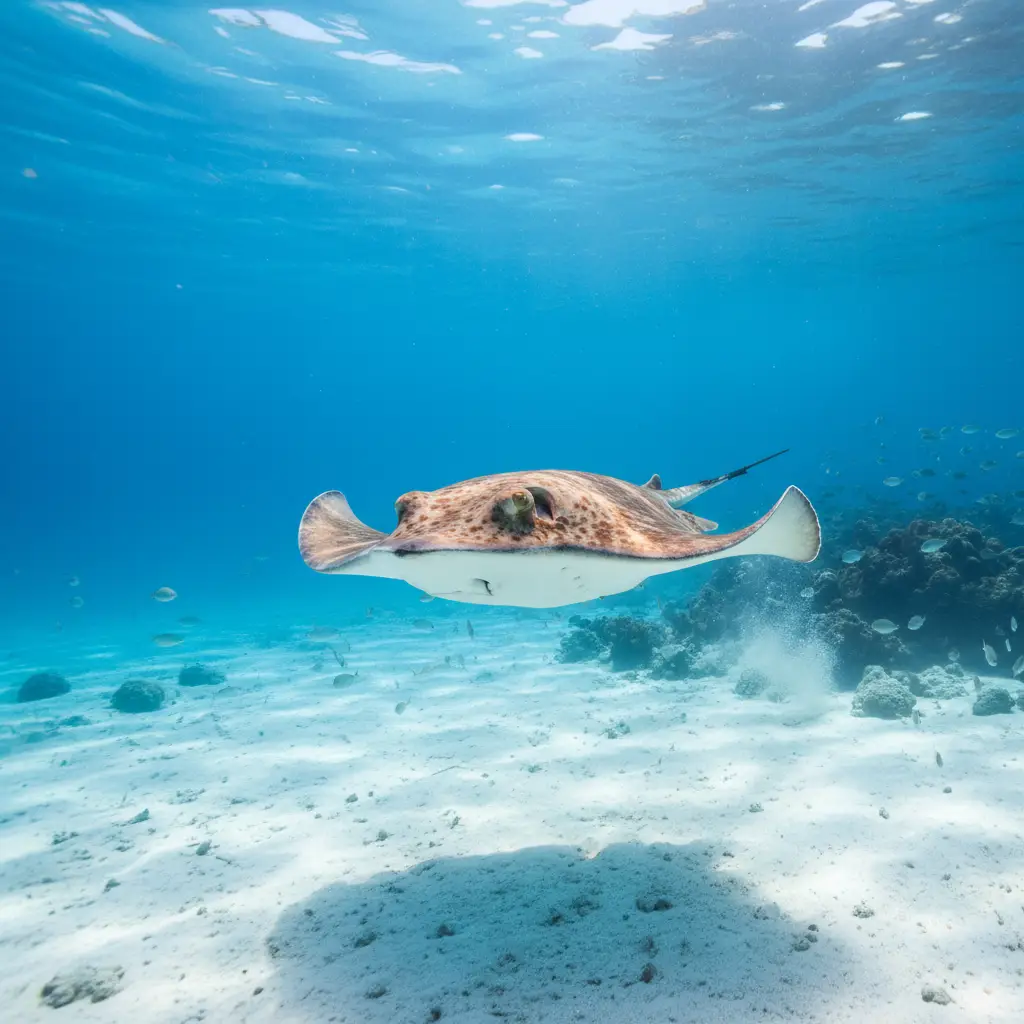
Identifying the Rays: Short-tail vs. Eagle Rays
When snorkeling for stingrays at Goat Island, you will primarily encounter two distinct species. Understanding the differences between them enhances the observation experience and helps in anticipating their movements.
What is a Short-tail Stingray?
The Short-tail Stingray (Dasyatis brevicaudata) is the heavyweight of the reserve. These are the largest stingrays in the world, capable of reaching widths of over 2 meters (6.5 feet) and weighing upwards of 350 kilograms. They are characterized by a round, disc-like shape and a thick, muscular body. They are generally bottom-dwellers, often seen resting on the sand or foraging for crustaceans and mollusks.
Despite their intimidating size and the serrated spine on their tail, Short-tails are generally docile and curious. In the reserve, where they have been protected since 1975, they have become habituated to human presence and will often swim directly underneath snorkelers.
What is an Eagle Ray?
In contrast, the Eagle Ray (Myliobatis tenuicaudatus) is designed for pelagic swimming. They have distinct diamond-shaped bodies with pointed pectoral fins that resemble wings. Their heads are more pronounced, featuring a snout used for digging in the sand.
Eagle rays are active swimmers and are rarely seen resting on the bottom. They “fly” through the water column, often in groups or schools. They are generally smaller than the massive Short-tails but are arguably more graceful. Their coloration—olive-green with blue markings—makes them a stunning subject for observation.
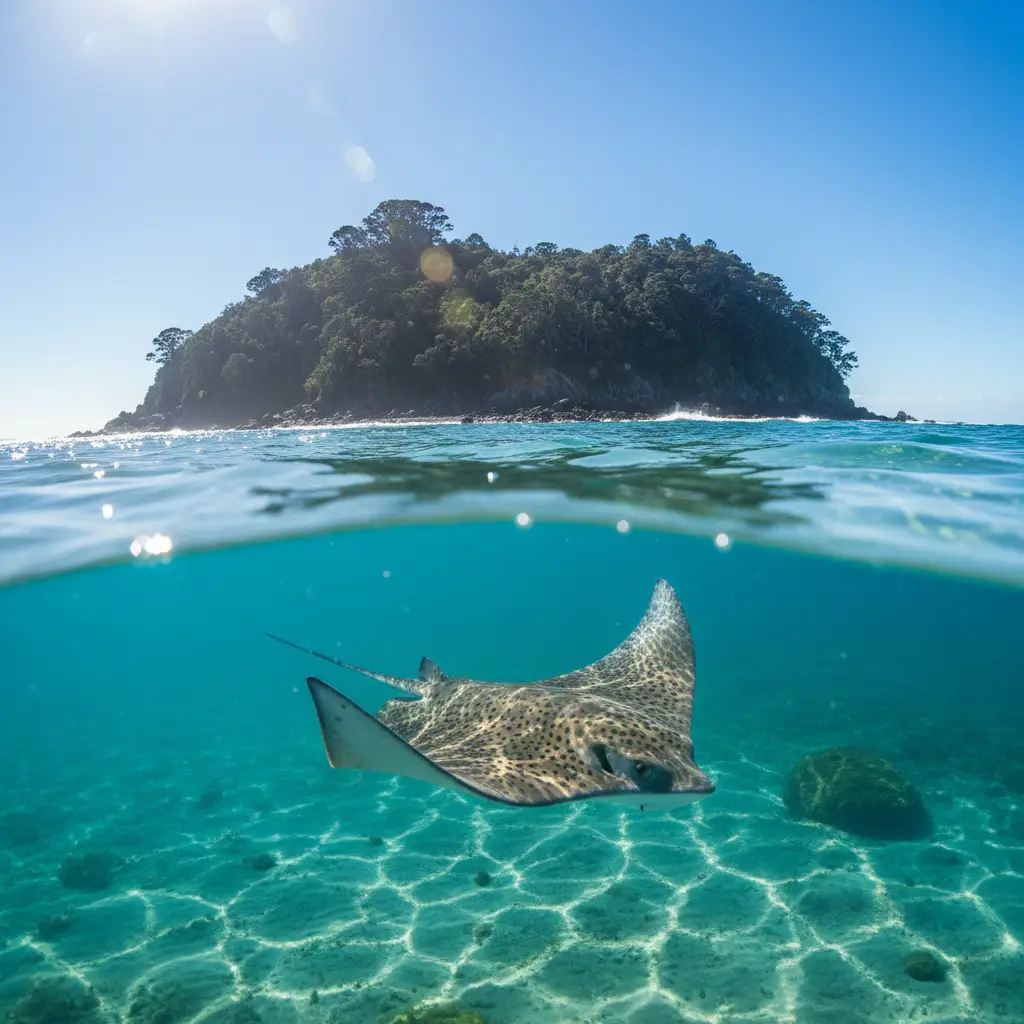
When is the Best Time to See Stingrays at Goat Island?
Timing is critical for the best experience. While nature is unpredictable, following these guidelines will significantly increase your chances of a successful encounter.
Seasonal Timing
The prime window is late Spring through Summer (October to March). During these months, the water temperature rises, triggering the mating aggregation. February and March often provide the warmest water, though the visibility can be affected by plankton blooms. November and December are often excellent for clarity.
Tides and Conditions
Ideally, plan your snorkel around high tide. At low tide, the water in the main channel can be quite shallow, and while rays are still present, the visibility is often reduced due to sediment disturbance. High tide brings in clear oceanic water, improving visibility to 10–20 meters on good days.
Wind direction is the most important factor for water clarity at Goat Island. You want to visit when the wind is blowing offshore (South or Southwest). If the wind is blowing from the North or East, it pushes swell into the beach, churning up sand and making snorkeling difficult and visibility poor.
Safety and Etiquette: How to Behave Around Rays
While the stingrays at Goat Island are accustomed to humans, they remain wild animals with potent defensive mechanisms. A respectful approach ensures safety for both the swimmer and the marine life.
Passive Observation
The golden rule of marine interaction is passive observation. Do not chase the rays. If a ray swims away from you, let it go. Chasing them causes stress and can trigger a defensive reaction. Instead, float on the surface and remain still. Rays are naturally curious; if you are calm, they will often approach you to investigate.
Positioning and Awareness
Never block a stingray’s path, especially if it is in shallow water or near rocks. They need to feel they have an escape route. If a ray feels cornered, it is more likely to use its barb. Always maintain a horizontal position in the water. Standing up in the shallows increases the risk of accidentally stepping on a ray buried in the sand, which is the most common cause of stingray injuries.
The “No Touch” Rule
Touching marine life in a reserve is generally discouraged, but with stingrays, it is a safety imperative. Stingrays have a protective mucus layer on their skin that prevents infection. Touching them can remove this layer, leaving them vulnerable to parasites and disease. Furthermore, touching a ray near the tail can trigger a reflex strike.
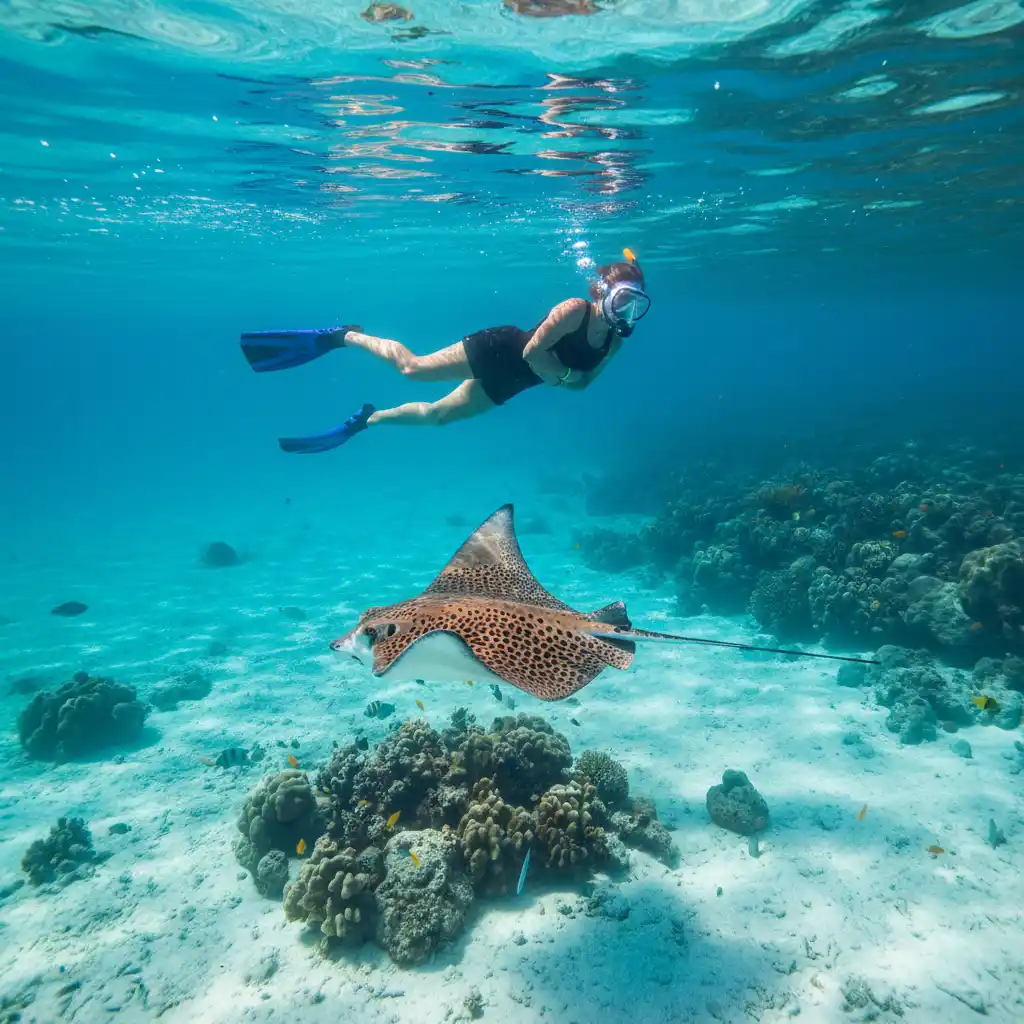
Underwater Photography Tips for Rays
Capturing the majesty of these creatures requires specific techniques, especially given the dynamic lighting conditions of the Hauraki Gulf.
Gear and Settings
Because Short-tail stingrays are large and often come close, a wide-angle lens or a GoPro is essential. A standard lens will force you to move too far back to get the whole animal in the frame, reducing clarity. Shoot in high resolution (4K for video or RAW for photos) to allow for color correction in post-processing.
Composition and Angles
Try to get on the same level as the ray. Shooting from the top down often results in flat, uninteresting images (unless the water is crystal clear and the bottom composition is interesting). By diving down (breath-hold diving) and shooting from the side or slightly below, you capture the grandeur of the animal against the water column. However, ensure you do not dive directly on top of them.
Managing Light
Goat Island is shallow, meaning natural light is abundant. Position yourself with the sun behind you to illuminate the subject. If you are shooting into the sun, you will get a silhouette, which can be artistic but hides the details of the ray’s skin texture and eyes.
Ecological Importance of the Marine Reserve
The abundance of stingrays at Goat Island is a testament to the success of New Zealand’s first marine reserve. Established in 1975, the reserve prohibits all fishing and removal of marine life. This protection has allowed the ecosystem to return to a near-natural state.
Stingrays play a vital role as “ecosystem engineers.” As they dig in the sand for crabs and shellfish, they overturn sediment. This bioturbation oxygenates the seabed and uncovers prey for other smaller fish species, like Snapper and Trevally, which are often seen trailing rays to snatch up leftovers. Observing this symbiotic relationship is a highlight for eco-tourists.
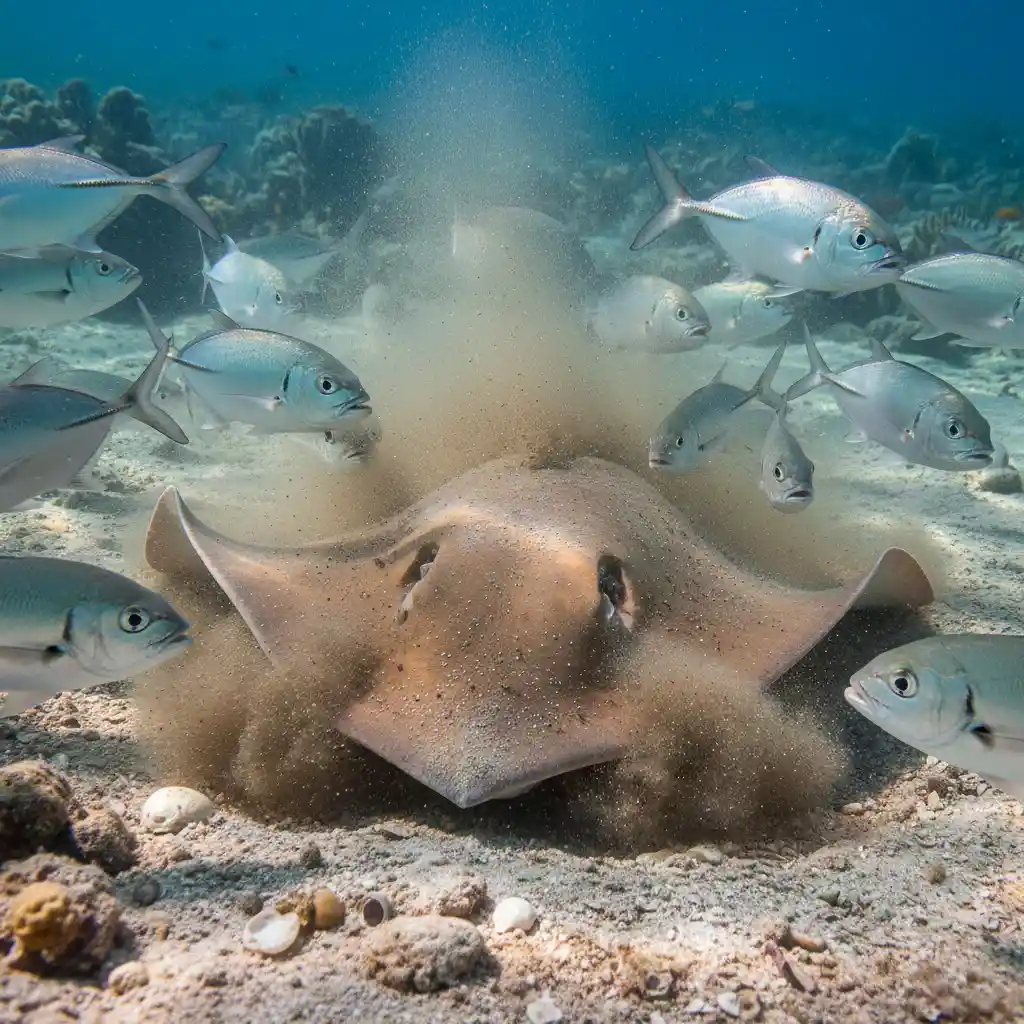
Planning Your Visit to Cape Rodney-Okakari Point
To ensure a smooth trip to see the rays, logistical planning is necessary, as the reserve is a popular destination.
Getting There
Goat Island is located near Leigh, approximately an hour and a half drive north of Auckland. The final stretch of road winds through farmland before descending to the coast.
Facilities and Gear
If you do not own snorkeling gear, you can hire wetsuits, masks, snorkels, and fins from the local dive shops in Leigh or right near the reserve entrance. A wetsuit is highly recommended, even in summer. It provides thermal protection (allowing you to stay in the water longer waiting for rays) and buoyancy, which helps with the passive observation technique.
Parking and Crowds
The car park fills up rapidly during summer weekends and public holidays. It is advisable to arrive before 9:00 AM or after 3:00 PM to secure a spot. The early morning often provides the calmest sea conditions, making it the superior choice for ray spotting.
People Also Ask
Are the stingrays at Goat Island dangerous?
Generally, no. The stingrays at Goat Island are accustomed to humans and are not aggressive. However, they possess a sharp, venomous barb on their tail which they use for defense only. If you give them space, do not corner them, and avoid stepping on them, the risk of injury is extremely low.
Can you touch the stingrays at Goat Island?
No, you should not touch them. Touching stingrays can damage the protective mucus layer on their skin, leaving them susceptible to infection. Additionally, touching them can startle the animal, potentially causing them to strike defensively. The best practice is hands-off observation.
What is the best month to see rays at Goat Island?
The best months are from November to March. During this time, the water is warmer, attracting large numbers of rays into the shallows for mating and pupping. January and February usually offer the highest density of ray sightings.
How deep is the water where the rays are?
Rays can often be found in very shallow water, sometimes less than 1 meter deep near the beach. However, the best viewing is usually in depths of 2 to 5 meters, where the rays cruise over the sand flats and around the rocky reefs.
Do I need a wetsuit to snorkel at Goat Island?
While not strictly mandatory in the height of summer, a wetsuit is highly recommended. The water temperature peaks around 22°C (71°F), which can feel cold after 20 minutes. A wetsuit also provides buoyancy, making it easier to float motionless on the surface while watching the rays.
Is it free to visit Goat Island Marine Reserve?
Yes, access to the Goat Island Marine Reserve and the beach is free for the public. However, you will need to pay if you choose to rent snorkel gear from local providers or take a tour on the Glass Bottom Boat.