
The best time to snorkel at Goat Island is typically two hours before high tide leading up to slack high tide. This window offers the clearest underwater visibility, easiest entry over submerged rocks, and the safest swimming conditions by minimizing the strong currents often present in the channel during outgoing tides.
Goat Island, officially known as the Cape Rodney-Okakari Point Marine Reserve, is New Zealand’s oldest and most famous marine reserve. Located near Leigh, just north of Auckland, it offers a window into a thriving underwater ecosystem. However, the ocean here is dynamic. Understanding the interplay between Goat Island tides, currents, and wind direction is not just a matter of convenience—it is a critical safety requirement. This guide serves as your comprehensive resource for planning a safe and memorable snorkeling experience.
When is the Best Time to Snorkel at Goat Island?
For the optimal experience, you should plan your arrival at the beach approximately two hours before the predicted high tide. This specific timing aligns the environmental factors in your favor for three primary reasons: visibility, accessibility, and safety.
During the incoming tide (the “flood”), clean oceanic water is pushed into the reserve, flushing out the particulate matter and sediment that often clouds the water near the shore. This results in the crystal-clear visibility that Goat Island is famous for, often exceeding 10 to 15 meters on a calm day. Conversely, as the tide turns and begins to go out (the “ebb”), it pulls sediment from the shallows back into the main swimming areas, significantly reducing visibility.
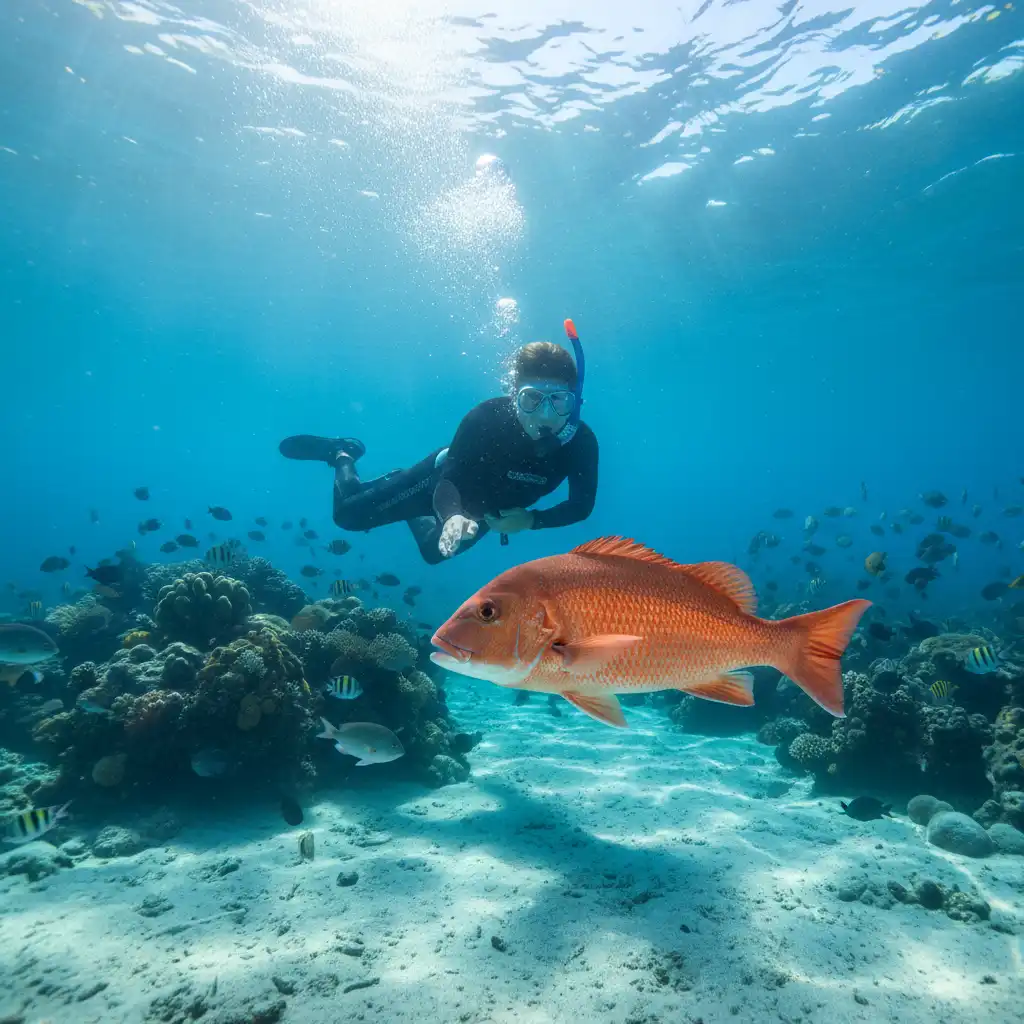
High Tide vs. Low Tide: The Experience Difference
Many first-time visitors arrive without checking the tide charts, leading to a vastly different experience than they anticipated. Understanding the mechanics of the tide cycle at this specific location is crucial for maximizing your enjoyment.
The High Tide Advantage
At high tide, the water covers the rocky, slippery shoreline. This allows snorkelers to float gently off the beach or the concrete ramp without needing to walk over treacherous, uneven terrain. The water depth increases in the shallows, allowing the famous Snapper and Blue Maomao to swim right up to the shoreline. For children and beginners, this is magical; you can stand in waist-deep water and be surrounded by large fish.
The Low Tide Challenge
Low tide at Goat Island presents significant physical challenges. The water recedes to reveal a wide expanse of slippery, barnacle-encrusted rocks. To reach water deep enough to snorkel, visitors must navigate this hazardous terrain, increasing the risk of slips, cuts, and ankle injuries. Furthermore, once you are in the water at low tide, the shallow depth means you are more likely to inadvertently kick the delicate kelp forests or rocky reef, damaging the ecosystem and potentially injuring yourself.
The Channel Current: Understanding Danger Zones
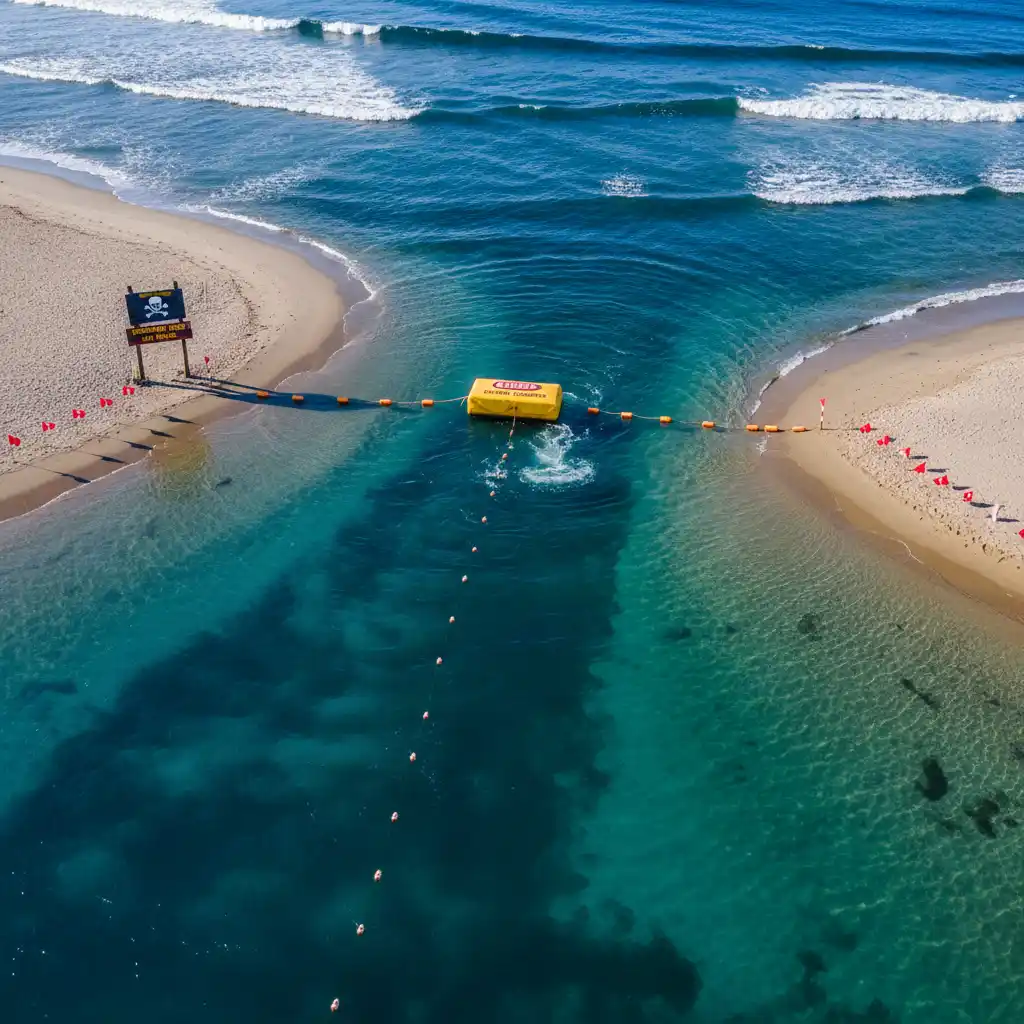
The most significant hazard at the reserve is the channel of water separating the main beach from Goat Island (Te Hāwere-a-Maki) itself. While the island looks temptingly close—only about 100 meters away—the water between these two points acts as a funnel.
How the Current Works
As the tide changes, vast amounts of water move through this narrow gap. During the mid-tide (the period halfway between high and low tide), the current is at its strongest. This is known as the “tidal stream.”
If you attempt to cross the channel during a changing tide, even a strong swimmer can be swept out toward the open ocean or pushed rapidly around the back of the island into rougher waters. The current can move faster than an average person can swim. The safest rule is simple: Unless you are an expert swimmer with fins and local knowledge, do not attempt to swim to the island. Stay within the bay area closer to the beach.
How to Read Tide Tables for Leigh
To plan your trip effectively, you must consult a tide table specific to Leigh or Cape Rodney. Auckland tide times differ significantly (often by an hour or more) because Goat Island is on the east coast of the Northland peninsula, exposed to different tidal flows than the Waitematā Harbour.
Step-by-Step Planning
- Find the Chart: Search for “Tides Leigh” or “Tides Goat Island.”
- Identify High Tide: Look for the peak “High” time (e.g., 14:00 or 2:00 PM).
- Calculate the Window: Subtract two hours from that time. If high tide is at 2:00 PM, you want to be geared up and entering the water by 12:00 PM.
- Identify the Exit Time: Plan to exit the water roughly one hour after the high tide peak to avoid the strengthening outgoing current.
Remember the “Rule of Twelfths” in marine navigation: the rate of tidal flow increases until the third and fourth hours, then decreases. By swimming around the slack tide (the turning point), you experience the least water movement.
Safety Protocols for Weak Swimmers and Families
Goat Island is a wild environment, not a swimming pool. While it is a popular tourist destination, it requires respect and preparation, especially for those who are not confident in the ocean.
Essential Gear for Safety
If you are not a strong swimmer, you must wear a buoyancy aid. A life jacket or a buoyant wetsuit can make the difference between a relaxing float and a panic-inducing struggle. Wetsuits also provide essential protection against the cold (even in summer) and scrapes against the rocks. Fins are highly recommended as they give you the propulsion needed to navigate against mild currents; swimming with bare feet is significantly more exhausting.
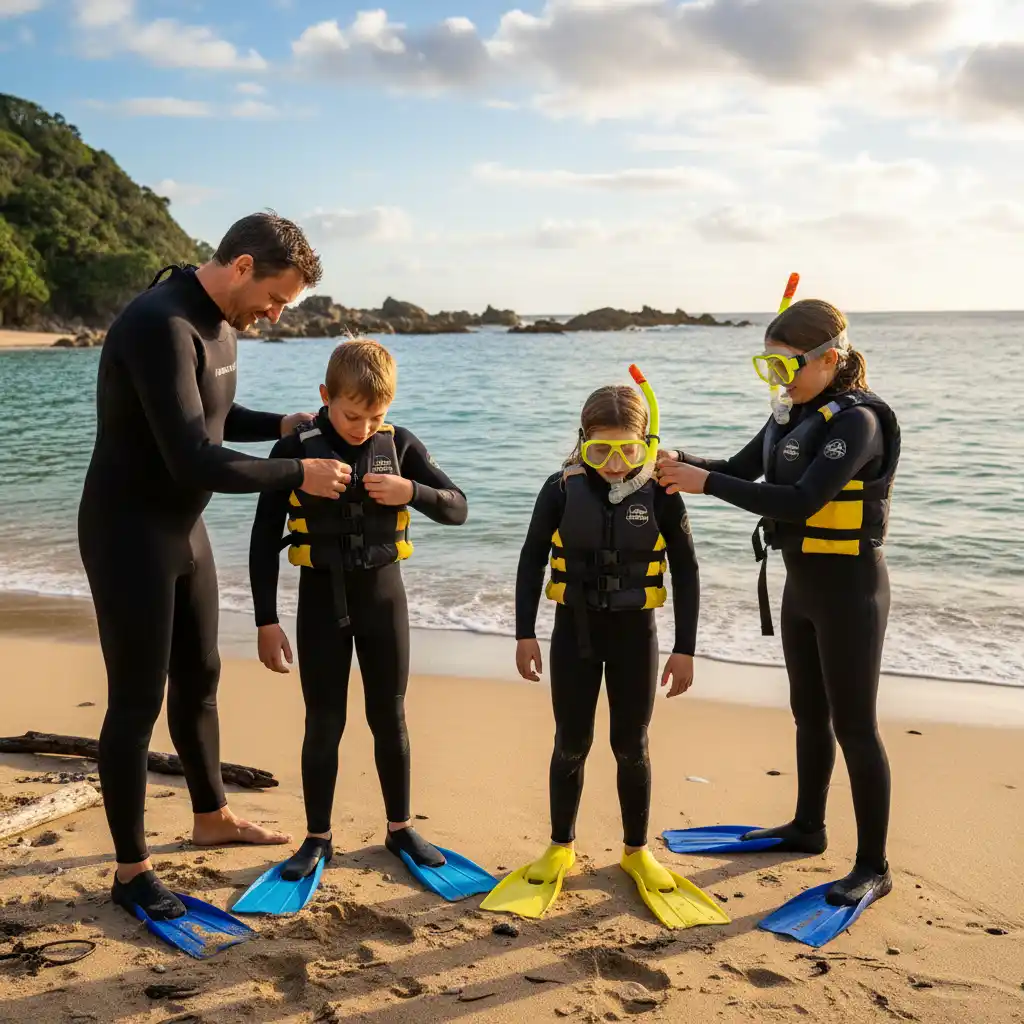
The Buddy System
Never snorkel alone. Always pair up with a buddy and stay within arm’s reach. If one person has an equipment malfunction (like a leaking mask) or gets a cramp, the buddy can provide immediate assistance or signal for help. In the marine reserve, it is easy to get distracted by the fish and drift apart; make a conscious effort to look up and locate your buddy every 60 seconds.
The Impact of Wind and Swell
Tides are only half the equation. The weather conditions, specifically wind direction and swell height, dictate whether the reserve is safe or swimmable. The reserve is north-facing, which means it is exposed to northerly winds and swells.
Ideal Conditions
The best conditions for snorkeling at Goat Island occur when the wind is blowing from the South or South-West. These are offshore winds for this coast, meaning the wind blows from the land out to sea, flattening the waves and keeping the water calm. If the forecast predicts strong North or North-East winds, the bay will be choppy, visibility will be poor (due to churned-up sand), and swimming can be dangerous.
Understanding Swell
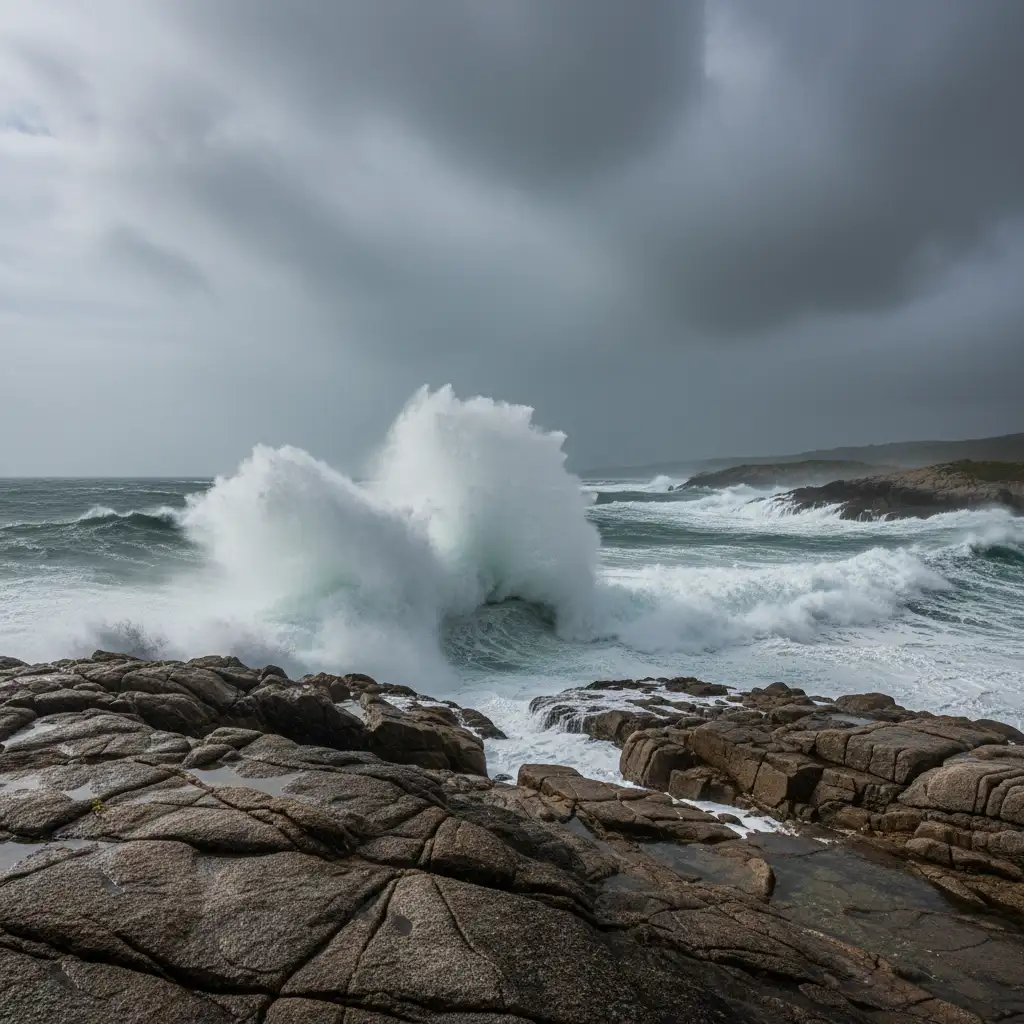
Even if there is no wind, a groundswell from a distant storm can make the water dangerous. If the swell is over 1 meter, the “washing machine” effect occurs near the rocks, making entry and exit difficult. Always check a marine forecast (like MetService Marine or Swellmap) specifically for the Leigh area before driving up.
Seasonal Considerations
While the reserve is open year-round, the experience varies significantly by season.
Summer (December – March)
The water is warmest (reaching 20-22°C), and fish activity is high. However, this is peak tourist season. The beach and car park fill up rapidly. To get a parking spot, you often need to arrive before 9:00 AM. The sheer number of people in the water can sometimes scare the fish away from the immediate shallows.
Winter (June – September)
The water is cold (dropping to 13-15°C), necessitating a thick wetsuit (5mm or 7mm). However, winter often brings days of incredible clarity due to reduced plankton blooms. If you catch a calm winter day with a southerly breeze, you may have the reserve largely to yourself with 20-meter visibility.
People Also Ask
Is it safe to swim at Goat Island at low tide?
While it is generally safe to be in the shallows, swimming at low tide is difficult due to the rocky terrain you must walk over to reach the water. It increases the risk of slips and cuts. Additionally, the channel currents can be more pronounced as the tide moves. High tide is safer and easier.
Do I need a wetsuit for Goat Island?
Yes, a wetsuit is highly recommended year-round. Even in summer, you may be in the water for 45-60 minutes, which lowers body temperature. A wetsuit also provides buoyancy (safety) and protection against jellyfish stings or rock scrapes.
Can you snorkel Goat Island in the rain?
Yes, you can snorkel in the rain. Fish don’t mind the rain! However, heavy rain can wash runoff into the bay, slightly reducing visibility near the surface. The main concern is wind; if it is raining but the wind is Southerly, conditions may still be good.
Are there sharks at Goat Island Marine Reserve?
Yes, sharks frequent the reserve, but they are typically harmless species like the Bronze Whaler or Sevengill shark. They generally ignore snorkelers. Sightings are a highlight for many divers, not a reason for panic. Always respect marine life and give them space.
How much does it cost to go to Goat Island?
Access to the Goat Island Marine Reserve is free. It is a public conservation land managed by the Department of Conservation (DOC). However, if you need to rent gear (mask, snorkel, fins, wetsuit), you will need to pay for hire at the local dive shops in Leigh or at the beach.
What is the best wind direction for Goat Island?
The best wind direction is offshore, which for Goat Island is a Southerly or South-Westerly wind. This flattens the ocean surface. Northerly winds blow directly onto the beach, creating chop and reducing visibility.