
The primary difference between kina barrens vs kelp forest ecosystems lies in ecological balance and biodiversity. A kelp forest is a lush, three-dimensional habitat supporting diverse marine life, whereas a kina barren is a degraded rocky reef stripped of vegetation by unchecked sea urchin populations, usually resulting from the overfishing of primary predators like snapper and crayfish.
For anyone engaged in NZ marine tourism, understanding the dramatic shift from productive kelp beds to desolate barrens is crucial. This environmental change not only impacts the visual beauty of our underwater world but signals a collapse in the food web that sustains the very fisheries and tourism industries New Zealand is famous for.
Visual Differences: What Snorkelers See
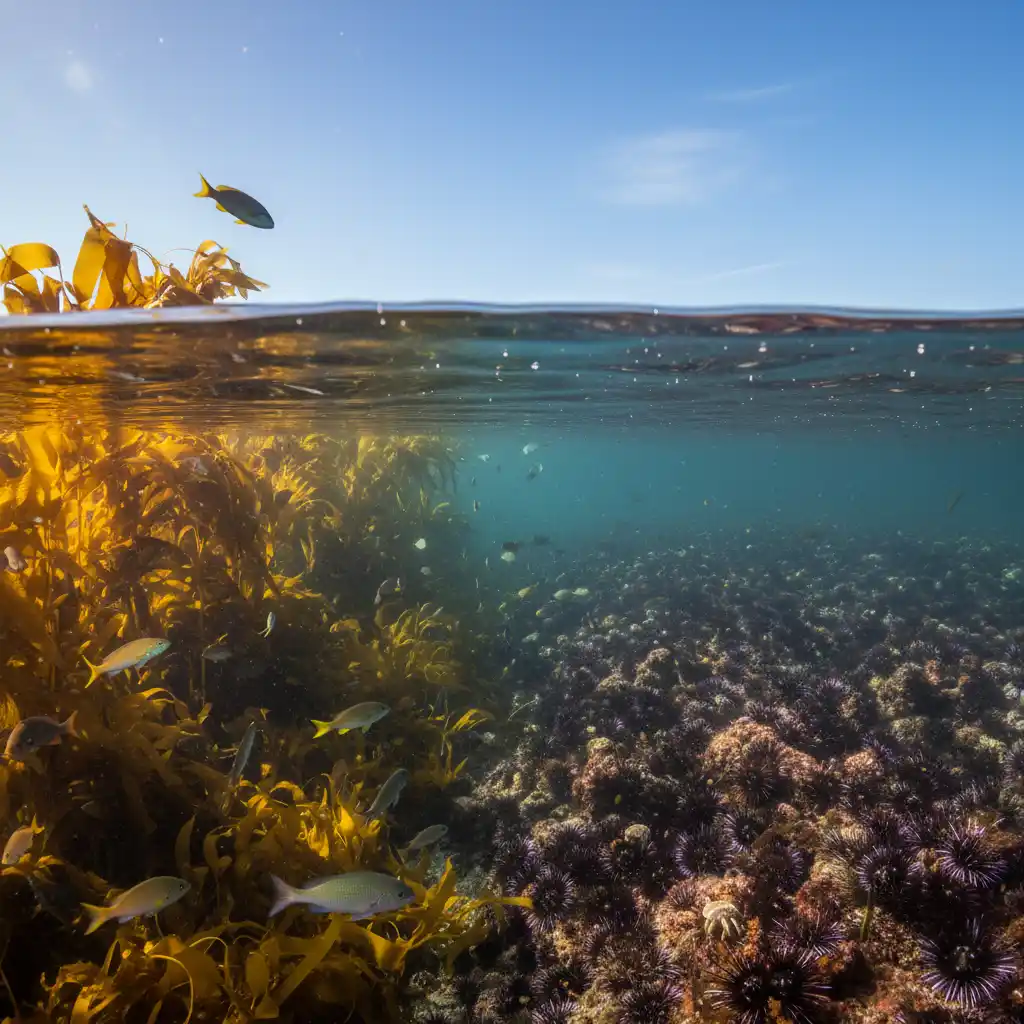
For the underwater explorer, the contrast between a healthy kelp forest and a kina barren is stark and immediate. It is the difference between diving into a lush, golden rainforest and swimming over a paved, concrete parking lot.
The Kelp Forest Experience
In a healthy ecosystem, such as those found in well-protected marine reserves, the underwater topography is dominated by Ecklonia radiata (common kelp). For a snorkeler or diver, this environment is sensory-rich. The kelp fronds sway with the swell, creating a mesmerizing play of light and shadow. This vegetation provides shelter for a myriad of species.
You will typically observe schools of parore, butterfish, and juvenile snapper darting between the stalks. The rocks beneath the kelp are often teeming with sponges, ascidians, and other invertebrates. The water clarity can sometimes be lower due to the nutrients and plankton associated with such high productivity, but the volume of life is staggering.
The Kina Barren Reality
Conversely, entering a kina barren feels like entering a ghost town. These areas are characterized by vast stretches of bare, white or pinkish rock (often covered in crustose coralline algae). The defining feature is the carpet of spiky, dark spheres—the endemic New Zealand sea urchin, or Kina (Evechinus chloroticus).
In these zones, the kina have grazed the rock completely clean of macroalgae. Without the cover of kelp, most fish species abandon the area, leaving it eerily quiet. For marine tourism, this is a significant degradation of value. There is little to see other than the urchins themselves, and the complex, colorful ecosystem that tourists expect is entirely absent.
The Trophic Cascade: Snapper and Crayfish
To understand the “kina barrens vs kelp forest” dynamic, one must look at the food chain, specifically a phenomenon known as a “trophic cascade.” In New Zealand’s temperate reefs, the health of the kelp is dictated top-down by the presence of predators.
The Role of the Spiny Rock Lobster (Crayfish)
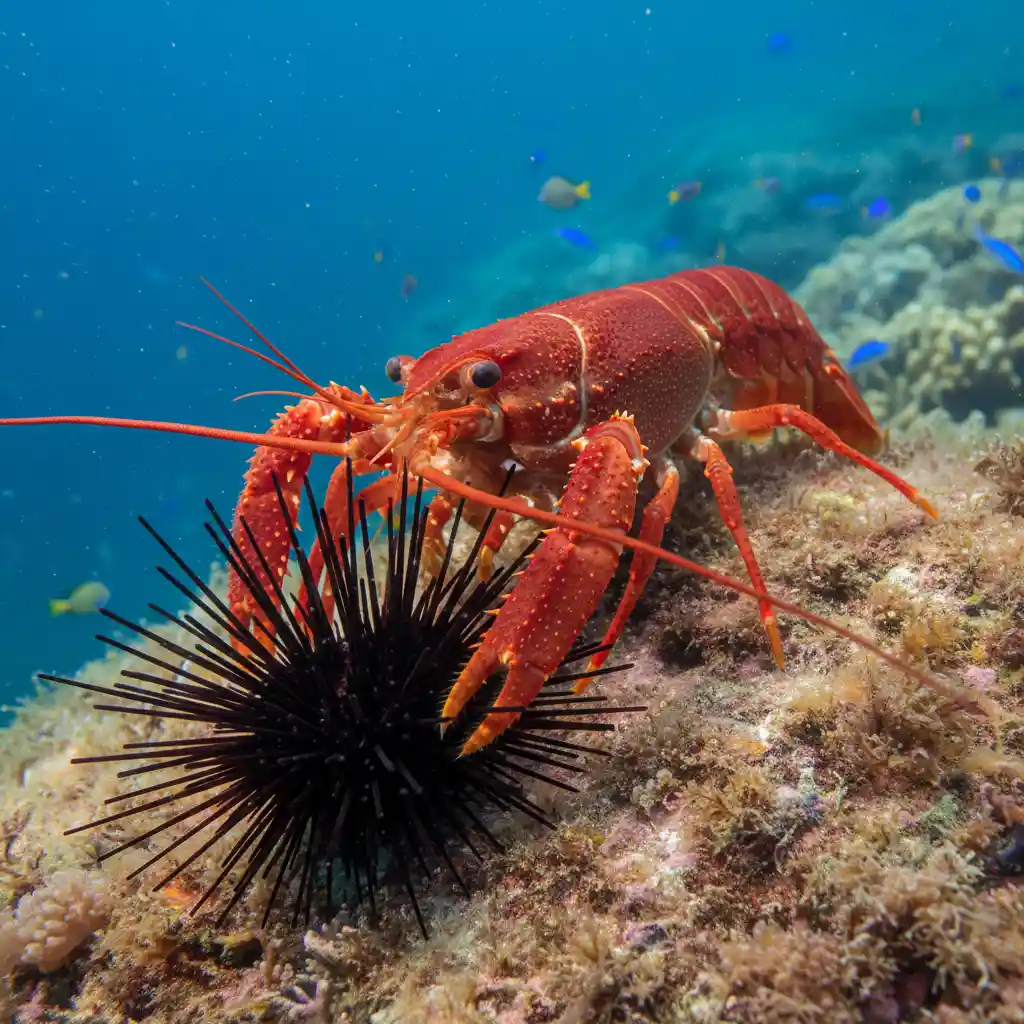
The spiny rock lobster, or crayfish (Jasus edwardsii), is a primary predator of kina. Large, mature crayfish are capable of cracking open the tests (shells) of sea urchins, keeping their populations in check. Historically, New Zealand’s reefs were patrolled by large numbers of these crustaceans.
However, crayfish are highly valued commercially and recreationally. Intense fishing pressure has significantly reduced the biomass of large crayfish in many areas. When the predators are removed, the prey (kina) are released from predation pressure, allowing their numbers to explode.
The Role of Snapper
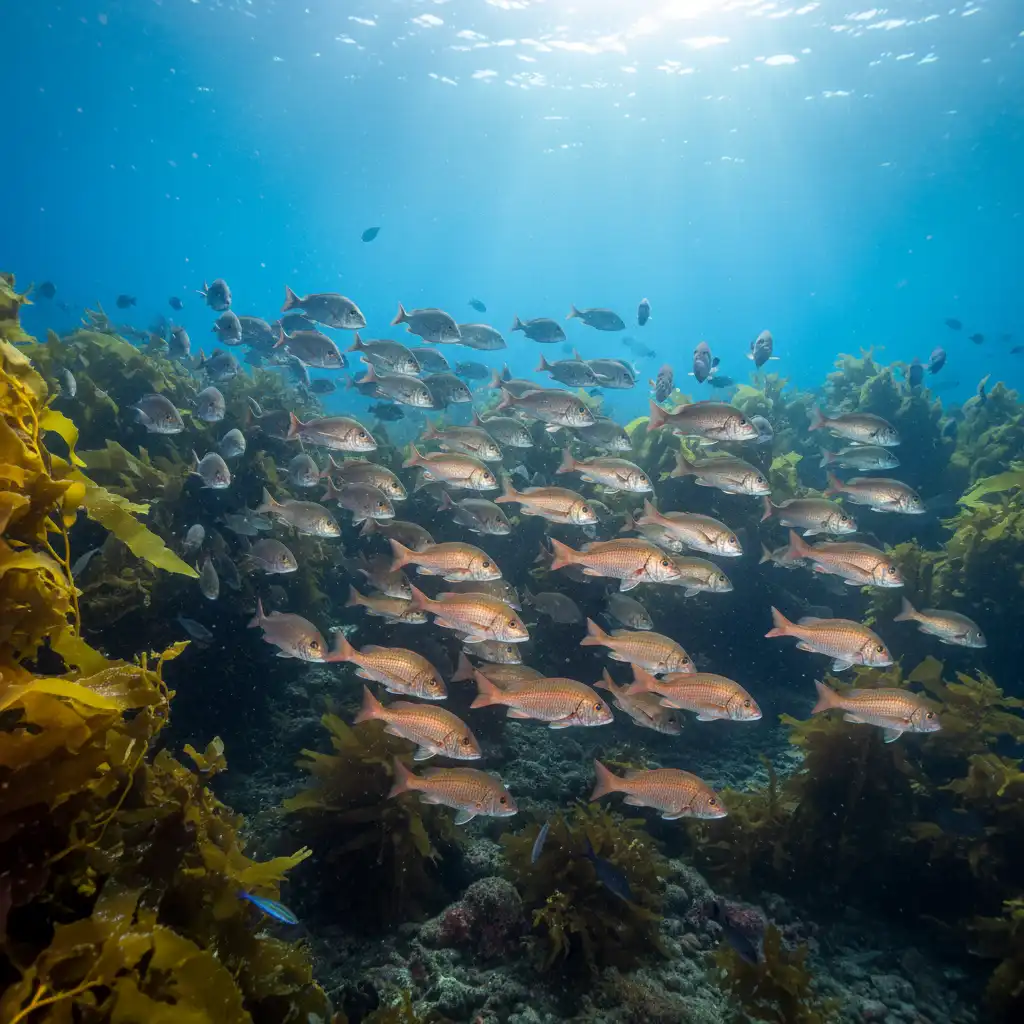
Australasian Snapper (Chrysophrys auratus) are the other critical guardian of the kelp forest. While juvenile snapper feed on smaller invertebrates, large, mature snapper (often exceeding 60cm in length) have jaws powerful enough to crush kina. These “moochers” historically kept urchin populations low enough to allow kelp spores to settle and grow.
Similar to crayfish, snapper are the most sought-after recreational fish in the North Island. Decades of harvesting the largest individuals have left populations skewed toward smaller fish that cannot effectively predate on adult kina. The result is an ecosystem out of balance, where kina can graze unchecked, creating barrens that persist for decades.
The Goat Island Anomaly: A Tale of Two Zones
For those in the NZ marine tourism sector, the Cape Rodney-Okakari Point Marine Reserve (commonly known as Goat Island) serves as the ultimate control group for understanding this crisis. Established in 1975, it offers a window into what the Hauraki Gulf looked like prior to modern fishing pressures.
Inside the Reserve
Within the boundaries of the reserve, fishing is strictly prohibited. Consequently, the density of large snapper and crayfish has rebounded significantly. Research shows that biomass of snapper inside the reserve is many times higher than in adjacent non-reserve areas.
Because these large predators are present, kina populations are controlled. They hide in crevices rather than grazing openly in armies. This allows the kelp forest to flourish. Snorkelers at Goat Island swim through thick forests of seaweed, surrounded by large fish that are unafraid of humans. It is a premier marine tourism destination specifically because the ecosystem is intact.
Outside the Reserve
Just a few hundred meters away, outside the reserve boundaries where fishing is permitted, the underwater landscape changes dramatically. Large snapper and crayfish are rare. In their absence, kina barrens dominate the seafloor. The contrast is visible from the surface; the dark water of the kelp forest inside the reserve abruptly changes to the lighter color of the barren rock outside.
This stark boundary proves that the barrens are not a result of water temperature, pollution, or climate change primarily—they are a direct result of extracting too many predators.
Why Kelp Matters: The Rainforest of the Sea
The transition from kelp forest to kina barren is not merely an aesthetic issue; it is a catastrophic loss of biodiversity. Kelp forests are often referred to as the “rainforests of the sea” because of their immense productivity and structural complexity.
Habitat and Nursery Grounds
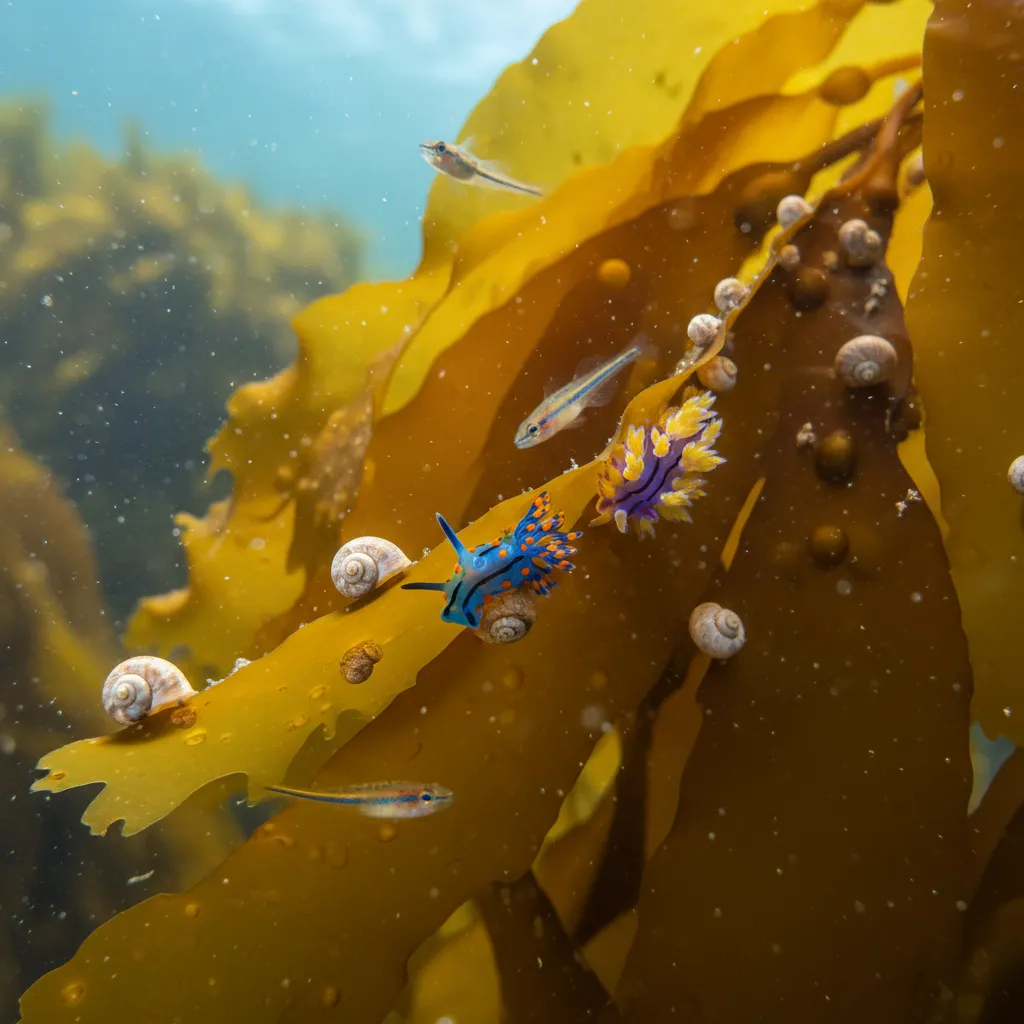
Kelp provides the three-dimensional structure necessary for the survival of juvenile fish. It offers hiding places from predators and a substrate for eggs to attach. Without this nursery ground, the recruitment of fish stocks (including commercially valuable species like snapper) declines. A kina barren offers no shelter, leaving juvenile fish exposed.
Carbon Sequestration
Kelp forests are powerful carbon sinks. They grow rapidly, absorbing carbon dioxide from the water and atmosphere. When kelp detritus sinks to the deep ocean, that carbon is sequestered. The loss of kelp forests contributes to a reduction in the ocean’s ability to buffer climate change, making the restoration of these forests a matter of global environmental importance.
Food Web Foundation
Kelp is the base of the coastal food web. It is eaten directly by some species (like butterfish and paua) and, as it breaks down into drift algae and particulate matter, it feeds filter feeders like sponges and mussels. When the kelp goes, the entire food web collapses, leaving a simplified, low-energy system dominated by urchins.
Restoring the Balance
Is the shift from kelp forest to kina barren reversible? The science suggests yes, but it requires significant intervention. The primary solution is the restoration of predator populations. This can be achieved through:
- Marine Protected Areas (MPAs): As seen at Goat Island, total protection allows predators to regenerate, eventually reducing kina numbers and allowing kelp to return.
- Rahui: Traditional Māori temporary closures have been used effectively in areas like the Bay of Islands to stop the harvest of crayfish and snapper, aiming to restore the mauri (life force) of the reef.
- Active Kina Removal: In some areas, community groups and scientific divers are physically removing or culling kina to clear areas for kelp regeneration. While labor-intensive, this can jumpstart the recovery process while predator populations rebuild.
For the NZ marine tourism industry, advocating for these protections is not just about conservation—it is about economic survival. Tourists do not travel thousands of miles to look at bare rocks. They come for the wild, biodiverse, and thriving ecosystems that only a kelp forest can provide.
Frequently Asked Questions
What causes kina barrens to form?
Kina barrens form when the population of sea urchins (kina) explodes due to the removal of their natural predators, specifically large snapper and crayfish. Without these predators, kina graze down the kelp forests until only bare rock remains.
Can a kina barren recover naturally?
Natural recovery is very slow and difficult once a barren is established. Kina can survive starvation for long periods, maintaining the barren state. Recovery usually requires a significant increase in large predators or human intervention to remove the kina.
Are kina native to New Zealand?
Yes, Kina (Evechinus chloroticus) are a native species and a natural part of the ecosystem. The problem is not their existence, but their overpopulation due to the ecosystem imbalance caused by overfishing.
Why is kelp important for fishing?
Kelp forests act as nurseries for juvenile fish, providing food and shelter from predators. Healthy kelp forests lead to higher survival rates for young fish, which eventually boosts the adult fish populations that anglers target.
Where can I see healthy kelp forests in New Zealand?
The best places to see healthy kelp forests are within established marine reserves, such as Goat Island (Leigh), the Poor Knights Islands, and Tawharanui Marine Reserve, where predator populations are protected.
What is the ‘Urchin Barren Halo’?
This refers to a ring of bare rock often found around patch reefs or islands where urchins hide in crevices during the day and graze outwards at night, creating a halo-like barren strip separating the reef shelter from the surrounding seagrass or kelp.