
Whangateau Harbour snorkeling is a unique drift snorkeling experience located between Point Wells and Omaha, New Zealand. Ideally suited for the last hour of an incoming tide, this sheltered estuary acts as a perfect alternative when open ocean conditions are rough. Snorkelers drift along the channel edge to view eagle rays, flounder, and schooling parore in clear, moving water.
While the Goat Island Marine Reserve usually steals the spotlight for snorkeling north of Auckland, the Whangateau Harbour remains one of the region’s best-kept secrets. It offers a completely different underwater landscape compared to the kelp forests of the open coast. This estuarine system is not only a nursery for juvenile fish but also a playground for advanced snorkelers looking for a dynamic drift experience.
However, snorkeling here requires specific knowledge of tides and safety protocols. Unlike a static beach snorkel, the harbour is a moving body of water with significant boat traffic. This guide covers everything you need to know to safely enjoy the Whangateau drift.
Why Choose Whangateau Harbour for Snorkeling?
The primary appeal of Whangateau Harbour lies in its geography. The Leigh coast is famous for its marine life, but spots like Goat Island are exposed to northerly and easterly swells. When the wind picks up and the waves crash against the rocks at Goat Island, reducing visibility to zero, Whangateau Harbour often remains calm and flat.
This makes it the ultimate “Plan B” for marine tourism in the area. Because the harbour entrance is protected by the Omaha spit, it shields the inner channel from the worst of the ocean swell. However, it is more than just a backup location; it is a destination in its own right for those interested in estuarine ecology.
The experience is distinct from reef snorkeling. Instead of rocky crevices, you are exploring vast seagrass meadows, sandy channels, and mangrove edges. The lighting is different, the species are different, and the mechanics of the swim are unique. It allows for a relaxed style of snorkeling where you let the water do the work for you.

Mastering the Incoming Tide Drift
To snorkel Whangateau successfully, you must understand the hydrology of the harbour. If you attempt to snorkel here at low tide or during the outgoing tide, you will likely be disappointed. The outgoing water pulls sediment from the mangroves, turning the visibility murky and brown. Furthermore, the outgoing current flows toward the harbour mouth, which can be dangerous for weaker swimmers.
The Golden Window: High Tide Minus One Hour
The secret to crystal-clear water in Whangateau is the “incoming tide.” As the ocean pushes into the harbour, it brings clean, blue oceanic water that displaces the murky estuarine water. The visibility can rival Goat Island on a good day, reaching 10 to 15 meters.
The best strategy is to enter the water approximately 60 to 90 minutes before high tide. This ensures you are swimming in clean water and that the current is pushing you into the harbour (inland), rather than sucking you out to sea. This is the safest direction of travel.
How to Execute the Drift
The most popular entry point is near the Omaha Causeway bridge or the steps on the Point Wells side. The drift technique works as follows:
- Entry: Enter the water at the seaward end of your chosen stretch (closer to the harbour mouth).
- The Glide: Allow the incoming current to pick you up. You barely need to kick. Simply float and steer yourself along the edge of the channel.
- The Exit: Once you have drifted past the bridge or to your designated exit flag, swim perpendicular to the current toward the shore to exit.
- The Loop: Many snorkelers walk back up the footpath to the starting point and do the loop again, much like a ski run.
Estuarine Marine Life: What You Will See
The biodiversity within Whangateau is surprising. It acts as a nursery for many species found in the Hauraki Gulf. While you won’t see the large snapper that congregate at Goat Island, the macro life and schooling fish are abundant.
The Residents of the Sand
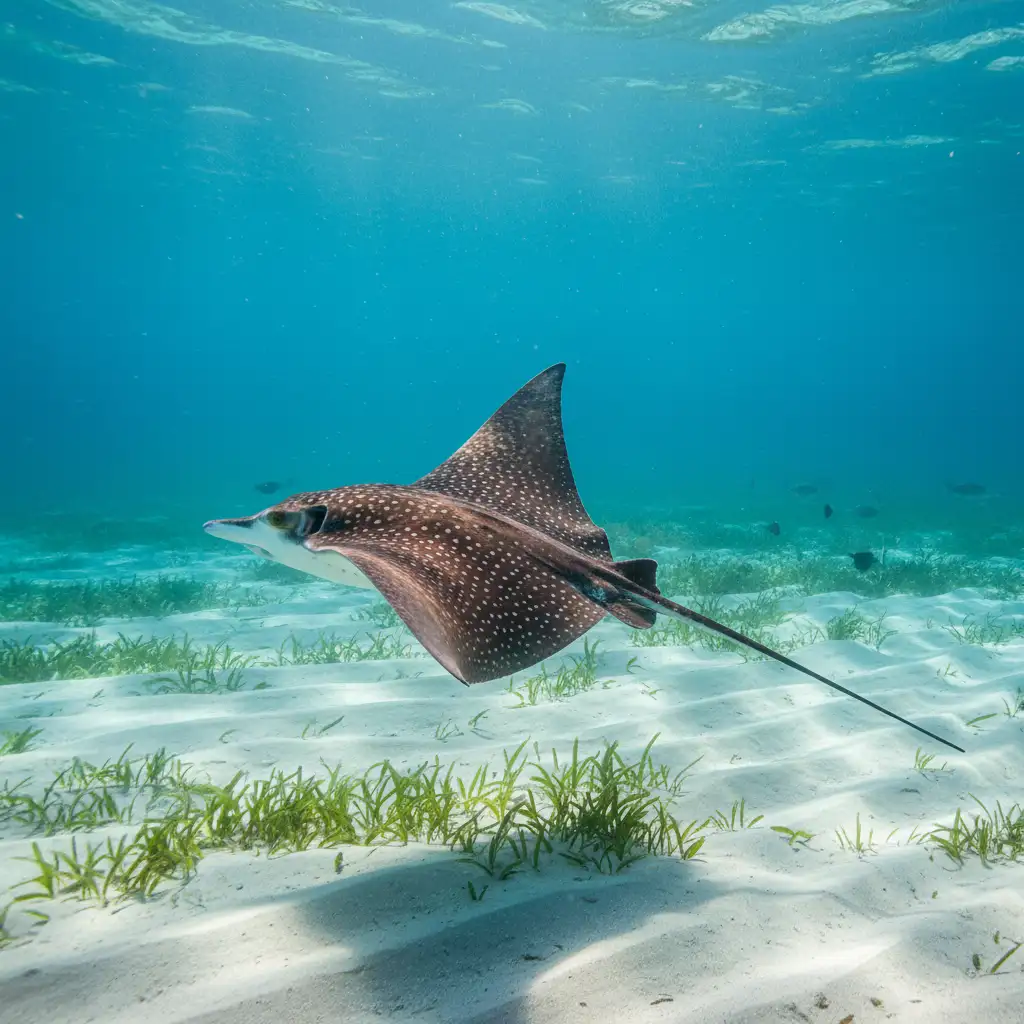
The sandy bottom is the domain of the New Zealand Eagle Ray. These majestic creatures are frequently seen gliding in the current or resting on the sand patches between seagrass. They are generally docile but should be given space. If you see a diamond shape in the sand, it is likely a ray burying itself for camouflage.
Yellow-belly Flounder are also incredibly common here. They are masters of disguise, mimicking the texture and color of the sand perfectly. Spotting them requires a keen eye; look for the outline of their fins or their raised eyes protruding from the sediment.
Schooling Fish and Seagrass Dwellers
The seagrass meadows are teeming with Parore (black luderick) and Spotties (paketi). You will often find large schools of Yellow-eyed Mullet and Piper darting near the surface. The bridge pilings themselves often attract invertebrates, starfish, and triplefins. In the late summer, it is also common to see large schools of trevally entering the harbour with the clean water.
Critical Safety: Boats and Currents
Safety is the single most important aspect of snorkeling Whangateau Harbour. Unlike a marine reserve with designated swimming lanes, this is a working harbour with a high volume of recreational boat traffic.
The Boat Channel Hazard
The deep channel in the center of the harbour is the main highway for boats launching from the Omaha boat ramp. Snorkelers must never swim in the middle of the channel. Boat skippers often struggle to see snorkelers, especially if there is a slight chop on the water.
You must stick to the edges of the channel, following the contour of the bank. Do not attempt to cross from Omaha to Point Wells underwater. If you must cross, do so on the surface, checking constantly for traffic, or use the pedestrian bridge.

Visibility Equipment is Mandatory
To mitigate the risk of boat traffic, specific gear is highly recommended for this location:
- Dive Flag: Towing a float with a “Diver Below” flag (Blue and White in NZ, or the international Red and White) is crucial. It signals to boaties that there are swimmers in the water.
- High-Vis Gear: Wear a brightly colored snorkel hood or cap (orange or neon yellow). Black wetsuit hoods blend into the water and look like debris or shadows to a boat skipper.
Managing the Current
The current at Whangateau can move at several knots. It is faster than most people can swim. Do not try to fight the current; you will exhaust yourself quickly. If you miss your exit point, do not panic and try to swim upstream. Instead, swim diagonally across the current toward the nearest bank. The current is strongest in the deep middle and weaker near the edges.
Gear Essentials for the Estuary
While standard snorkeling gear works, a few adjustments can improve your Whangateau experience.
Wetsuit Selection
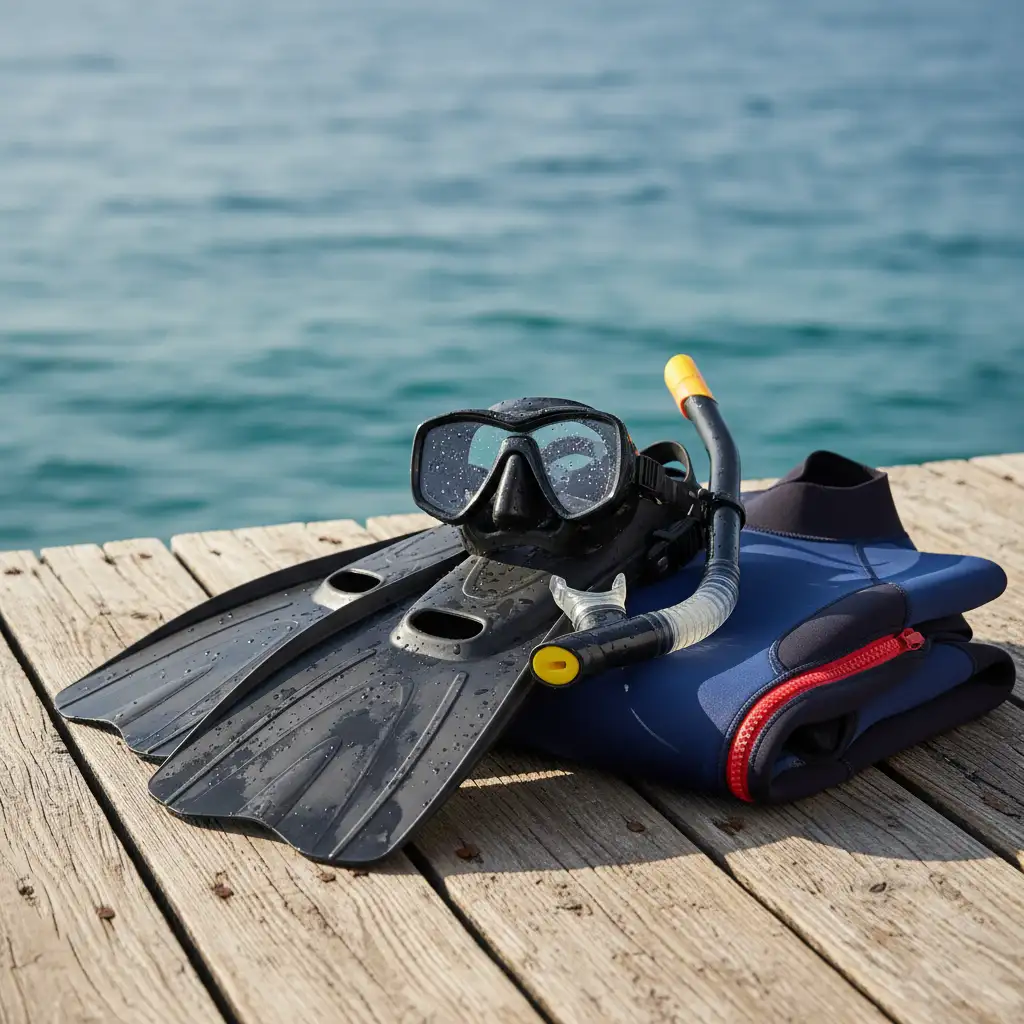
Even in summer, the water can be brisk as it rushes in from the deep ocean. A 3mm to 5mm wetsuit is recommended. The wetsuit also provides essential buoyancy, allowing you to hover over the shallow seagrass without damaging it with your fins. Because you are drifting rather than swimming vigorously, your body generates less heat, making thermal protection more important.
Fins and Mask
Short fins are often sufficient here, but longer freediving fins can give you better control if you need to burst-swim out of a current eddy. Ensure your mask has been treated with anti-fog, as the changing water temperatures between the shallows and the deep channel can cause fogging.
Location, Parking, and Access
Accessing the snorkeling zones is straightforward, but parking can be competitive during peak summer months.
The Omaha Side
Park near the boat ramp or along the causeway (adhering to council signage). There are steps leading down the rock wall into the water. This side gives you quick access to the deeper channel edge but puts you closer to the boat ramp traffic. Be hyper-aware of vessels launching and retrieving.
The Point Wells Side
This is often the preferred side for families and less experienced snorkelers. You can park at the Point Wells reserve near the bridge. The entry is often sandier and slightly more removed from the main boat thoroughfare. There are picnic tables and toilet facilities nearby, making it an excellent spot for a post-snorkel lunch.
Summary of Conditions
Before you go, check the following:
- Tide Times: Aim for 1 hour before high tide.
- Wind Direction: While sheltered, a strong southerly can still chop up the harbour surface.
- Water Quality: Avoid snorkeling immediately after heavy rainfall, as farm runoff can reduce visibility and water quality in the estuary.
Whangateau Harbour offers a magical window into the underwater world of New Zealand’s estuaries. By respecting the tides, the boat traffic, and the marine life, you can enjoy one of the most effortless and scenic drifts in the country.
What is the best time to snorkel Whangateau Harbour?
The best time is strictly during the last hour of the incoming tide (high tide). This brings in clear ocean water. Outgoing tides are murky and have currents that pull toward the open sea, which can be dangerous.
Is it safe to snorkel in Whangateau Harbour?
Yes, but with caution. The biggest risks are boat traffic and strong currents. Always use a dive flag, stick to the channel edges (never the middle), and snorkel on the incoming tide to ensure you drift into the harbour rather than out to sea.
Do I need a wetsuit for Whangateau snorkeling?
Yes, a 3mm or 5mm wetsuit is highly recommended. Even in summer, the incoming water comes from the deeper ocean and can be cold. The wetsuit also provides buoyancy and protection against small jellyfish or scrapes.
Can kids snorkel at Whangateau Harbour?
Yes, older children who are confident swimmers can enjoy it. However, they should be supervised closely due to the current. It is best to stay in the shallows on the Point Wells side rather than the deep channel edge.
Are there sharks in Whangateau Harbour?
While small rig sharks or school sharks may enter the harbour, they are generally harmless and rarely seen by snorkelers. The most common large marine life you will encounter are Eagle Rays, which are not aggressive unless provoked.
How does Whangateau compare to Goat Island?
Goat Island is an open coastal marine reserve with rocky reefs and large snapper. Whangateau is a sandy estuary with seagrass and currents. Whangateau is a better option when Goat Island is too rough due to swell or wind.